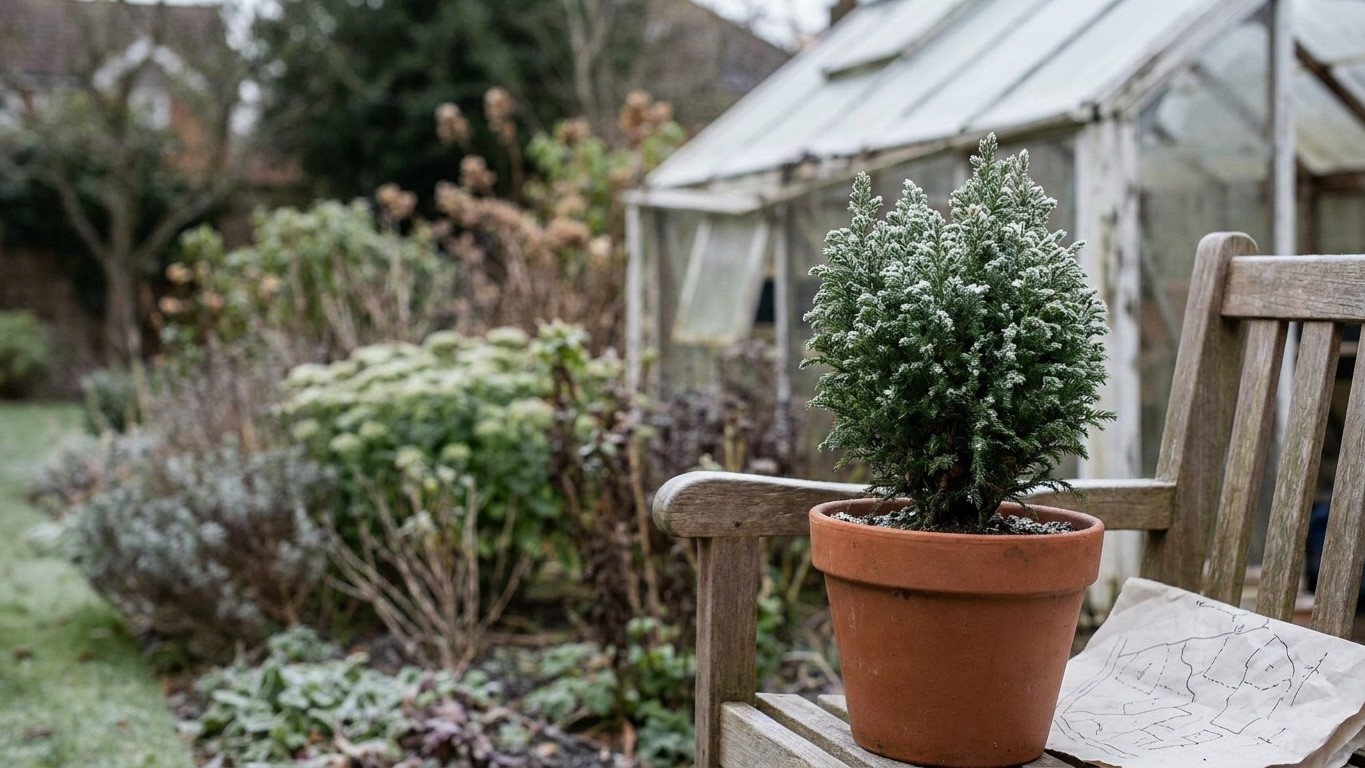

A USDA hardiness zone is a number and letter, like 6b or 7a, based on the average annual minimum winter temperature for an area, as calculated by the USDA Agricultural Research Service from 30 years of weather station data. It says nothing about how hot your summers get, how long your growing season runs, or when your last frost falls. Look up your own ZIP code at the USDA’s interactive map before you buy anything perennial, and treat the number as a cold-survival rating, not a planting calendar.
What a hardiness zone actually measures
A hardiness zone is built from a single input: the coldest temperature a location typically reaches in an average winter, averaged over a 30-year stretch of records. That’s it. Nothing about rainfall, nothing about humidity, nothing about how many warm days you get between spring and fall. The number on your zip code exists to answer one question: will this perennial plant, shrub, or tree survive the coldest night your area is likely to see in a typical year.
That narrow focus is exactly where most confusion starts. Gardeners see “Zone 6” on a plant tag and treat it as shorthand for the whole climate: warm summers, mild winters, a certain kind of soil, a certain planting window. It isn’t any of that. A hardiness zone measures winter cold and only winter cold. Two towns can share the same zone number and have completely different summers, completely different rainfall, and completely different growing seasons. One might sit in the desert Southwest, the other in the coastal Pacific Northwest, and both could technically be Zone 8.
This is also why the zone system was never meant to answer questions like “when do I plant tomatoes” or “how long is my growing season.” Those questions depend on frost dates and heat accumulation, figures the zone map does not track at all. The single most common misreading of a hardiness zone is treating it as a stand-in for the entire local climate, when it was built to answer a much smaller question about winter survival for plants that stay in the ground year-round.
Reading the letters: what 6a and 6b really differ by
Each full zone number, like Zone 6 or Zone 7, spans a 10°F range of average annual minimum temperatures. The “a” and “b” halves split that range into two 5°F bands, with “a” always the colder half and “b” always the warmer half. Zone 5a covers average lows of -20°F to -15°F, and Zone 5b covers -15°F to -10°F. Zone 6a runs -10°F to -5°F, and Zone 6b runs -5°F to 0°F. Zone 7a is 0°F to 5°F, and Zone 7b is 5°F to 10°F. These definitions come from the USDA’s own zone map methodology and are the same everywhere in the country. Only which zone applies to your particular ZIP code changes from place to place.
| Zone | Sub-zone a (colder half) | Sub-zone b (warmer half) |
|---|---|---|
| Zone 5 | -20°F to -15°F | -15°F to -10°F |
| Zone 6 | -10°F to -5°F | -5°F to 0°F |
| Zone 7 | 0°F to 5°F | 5°F to 10°F |
| Zone 8 | 10°F to 15°F | 15°F to 20°F |
A 5°F difference sounds small, and for most of what you grow, it is. A half-zone shift rarely changes what will grow in your yard at all. What it changes is whether a marginal plant, one rated for exactly your zone with no cushion, makes it through an unusually hard winter. A rosemary shrub rated hardy to Zone 7b might sail through most winters in a warm 7a garden and then die outright the one year a cold snap drops below what the label promised. The half-zone matters most for plants sitting right at the edge of their rated range, not for the bulk of your garden.
How to find your own zone

The official tool is the USDA Plant Hardiness Zone Map, and it works two ways. Type in your ZIP code and it returns your zone directly, no map reading required. Or open the interactive map and zoom into your area, which is worth doing if you live near a zone boundary, since those lines can run through the middle of a single county or even a single town.
What to Do With the answer
- Write your zone down somewhere you’ll actually see it again, like a note in your phone or on the inside of a shed door.
- Check it against the plant tag before you buy anything perennial, woody, or otherwise expected to survive winter outdoors.
- Remember that a boundary line on the map can split a town in two, so a neighbor a few streets over may technically sit in a different zone than you.
If you’d rather ask a person than a website, your local garden center staff and your county extension office will both know the zone for your area, and the extension office in particular can tell you about local exceptions the national map can’t capture, like a river valley that runs colder than its surroundings. Treat the ZIP code lookup as your starting point, then confirm it against a local source if you’re planting something expensive or slow to establish, like a fruit tree.
What the zone will not tell you
The gaps in the system
A hardiness zone is silent on season length, meaning how many frost-free days you get between spring and fall to grow warm-season crops like tomatoes and peppers. It says nothing about summer heat either, which is why the USDA maintains a separate Plant Heat Zone Map for gardeners in places where scorching summers, not cold winters, are the limiting factor. Humidity, average rainfall, and soil type are all left out entirely, despite each one mattering as much as winter cold for whether a given plant thrives.
Most importantly for anyone growing vegetables, the zone map includes no frost date information at all. Two towns in the exact same zone can need opposite planting calendars if one sits at high elevation with a short season and the other sits in a long, mild valley. Your last spring frost date and first fall frost date come from a completely different data set, typically NOAA’s 30-year climate normals, and those are the numbers that actually decide when it’s safe to set out tomato seedlings or how many weeks of frost-free growing you have to work with for a crop like winter squash.
This is the gap that trips up the most people, because a plant tag only ever prints one number: the hardiness zone. A seed packet’s “days to maturity” figure is counted from transplant, not from the calendar, and it only becomes useful once you know your frost dates. For that reason, treat your zone number as one piece of planning information among several, not the whole picture, and look up your state guides for the season-length and frost-date figures that actually govern your vegetable garden.
Your garden is not the map

The zone map is drawn from weather station data, and weather stations are usually placed in open, average ground. Your own yard almost certainly is not average. A south-facing wall absorbs heat all day and radiates it back at night, often keeping the ground next to it several degrees warmer than the rest of the yard. A slope drains cold air downhill the way water drains, which means low spots and the bottoms of hills collect cold air on still nights and can run noticeably colder than higher ground just a short distance away. Cities hold heat in pavement and buildings, so urban gardens frequently run warmer than the surrounding countryside, sometimes enough to functionally garden a half zone warmer than the official rating. Large bodies of water moderate temperature swings nearby, and wind exposure does the opposite, stripping heat away and making an exposed ridge colder than its zone would suggest.
These are called microclimates, and every yard has them even if the differences are subtle. The way to find yours is simple observation over a season or two: notice which parts of the yard hold frost latest in the morning, which spots melt snow first, and which corners feel noticeably warmer or colder than the rest of the property on a still evening. Gardeners routinely succeed with a plant rated a half zone warmer than their official rating by tucking it against a heat-holding wall, and just as routinely lose a plant that should have survived because it sat in a frost pocket at the bottom of a slope. The official zone is a regional average. Your specific planting spot can run warmer or colder than that average by a meaningful margin, and only watching your own ground will tell you which.
The 2023 update, and why your zone may have changed
The current USDA hardiness zone map, released in 2023, is built from 1991-2020 climate normals, replacing the previous map’s older data window. According to the USDA, roughly half of the country shifted into a warmer half zone under the new map compared to the previous edition, while the other half stayed put or, in some pockets, shifted cooler.
What that shift means for a gardener is narrower than it sounds. It does not mean every plant you grow suddenly needs rethinking, and it does not mean summers got longer or frost dates moved. It means the 30-year average winter minimum used to calculate your zone changed slightly, which can nudge a marginal perennial from “risky” to “should be fine,” or leave most of your garden completely unaffected since the shift is often just one half-zone band.
The practical takeaway is to check your own ZIP code again rather than trust an old plant tag, an old nursery catalog, or a guide written before 2023, since any of those may reference the previous map’s numbers. A perennial bought years ago under an older zone rating is still the same plant with the same cold tolerance. What may have changed is which zone number your address falls into, and that’s worth confirming directly at the USDA’s tool rather than assuming nothing moved.
How to actually use your zone
Where the zone number matters
Your hardiness zone earns its keep when you’re buying anything meant to live outdoors year after year: perennials, shrubs, trees, and roses. A label reading “hardy to Zone 5” means the USDA data suggests that plant can survive an average winter minimum down to the Zone 5 range without dying back to the ground or dying outright. Buy at or below your zone number for anything you expect to overwinter, and treat anything rated for a warmer zone than yours as a gamble unless you’re prepared to bring it inside, mulch heavily, or accept it as an annual.
Where it doesn’t apply
For annual vegetables like tomatoes, peppers, beans, and squash, the hardiness zone is close to irrelevant, because those plants are grown fresh from seed or transplant each year and never face winter at all. What matters for them is your frost-free season and your last and first frost dates, numbers the zone map does not provide. A tomato variety’s “days to maturity” figure, printed on the seed packet, only becomes useful once you know those local dates, and even then it’s a catalog estimate that can shift by a week or two depending on the season’s weather.
Use the zone number, in other words, as a filter for the permanent plantings in your yard, and set it aside entirely when you’re planning the vegetable garden. For everything past this page, from frost dates to season length to what actually grows well in your specific region, the state guides are the next stop, since they combine the zone with the local numbers this map was never built to provide. A hardiness zone is a starting point for winter survival, not an answer to the bigger question of what and when to plant.
Common questions
Why does my plant tag say a different zone than the USDA map gives me?
Plant tags are often printed years before you buy them and may reference an older version of the map, or a grower’s own more conservative estimate. Trust the current USDA lookup over an older tag, and when in doubt, check with your county extension office.
Can I grow a plant rated for a zone warmer than mine?
Sometimes, if you plant it in a warm microclimate like a south-facing wall, provide winter mulch, or grow it in a container you can move indoors. Without that extra protection, expect it to struggle or die back during a hard winter, even if it survives a mild one.
Does a higher zone number mean better for gardening?
No, it just means milder winters, not a better growing climate overall. A high zone number can come with brutal summer heat that limits what actually thrives there, which is a separate issue the hardiness map doesn’t address at all.
My ZIP code covers a big rural area. How do I know which part I’m in?
Use the interactive map instead of the ZIP lookup, since it lets you zoom to your actual property and see which side of a zone boundary you fall on. Rural ZIP codes especially can span more than one zone.
Does the hardiness zone tell me when to plant my garden?
No, it has nothing to do with planting dates. Planting dates depend on your local frost dates and season length, which come from a different data set entirely and are covered in the state guides rather than the hardiness zone map.