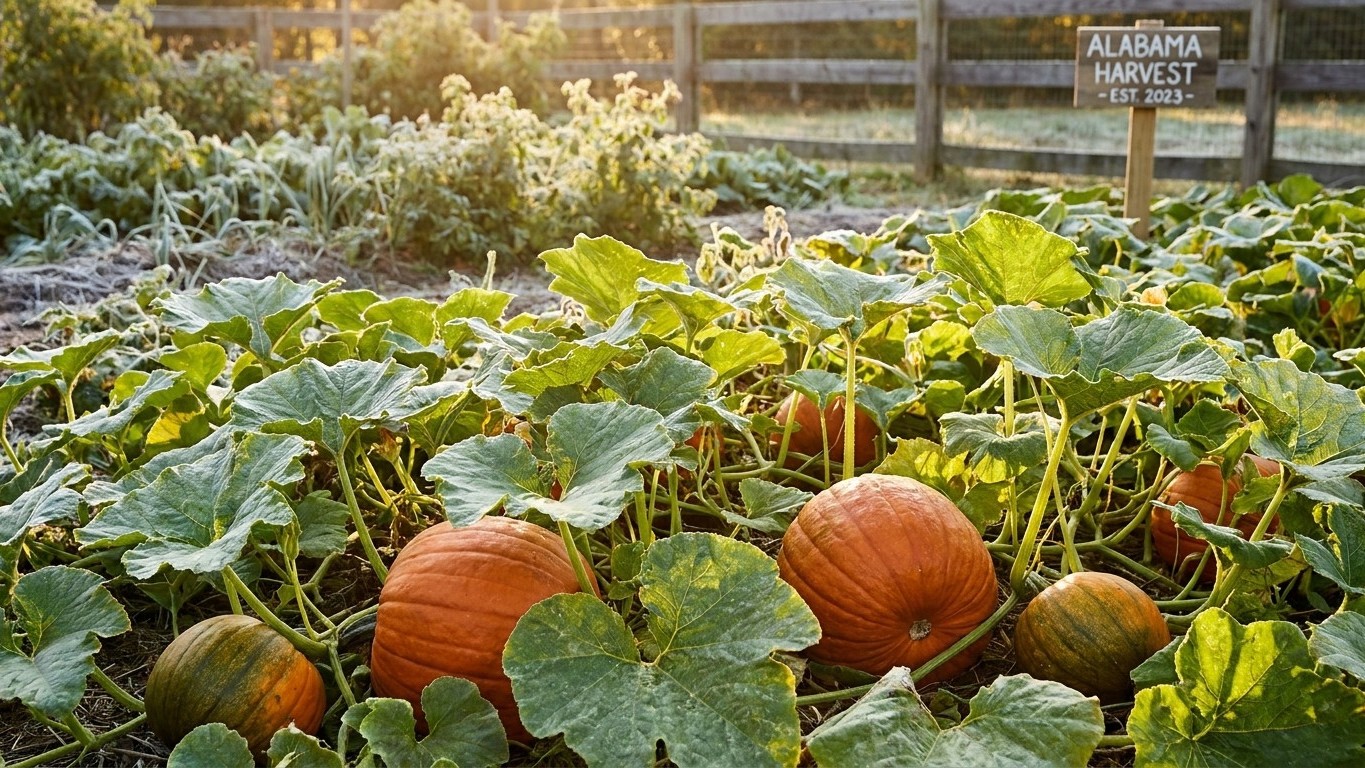

For most of Kentucky, yes, but the margin is tighter than gardeners think. The state’s first fall frost lands between November 2 and November 12, and a pumpkin needs 45 to 55 days from the day it flowers, not the day it’s planted, to reach full color and a hardened rind. Push flowering past mid-September and you’re gambling. The real bottleneck isn’t the frost date, it’s getting flowers open early enough for that clock to finish before frost arrives.
The short answer
Start with the frost window itself: Kentucky’s first fall frost falls somewhere between November 2 and November 12, based on NOAA’s 1991-2020 climate normals for 32°F freeze probabilities. That’s a ten-day spread, and it matters which end of it your garden sits on. NWS Louisville has flagged that its own reporting station runs later in spring and earlier in fall than the rural county around it, which means a garden outside city limits should plan for a tighter window than the raw dates suggest, not a looser one.
Now work backward from that frost window. A pumpkin needs 45 to 55 days after its flower opens to finish sizing, coloring, and hardening its rind, according to Utah State University Extension. Subtract 45 days from November 2 and you land on September 18. Subtract 55 days from that same date and you’re at September 8. Do the same math off the later end of the frost window, November 12, and 45 days back puts you at September 28, with 55 days landing back on September 18.
Stack those numbers together and the safe flowering cutoff for Kentucky sits somewhere between early September and the last week of the month, roughly September 8 to September 28, depending on where you garden and how conservative you want to be. A flower that opens in that window has a real shot at finishing before frost. A flower that opens in October is racing a clock it almost certainly loses, regardless of how mild the fall turns out to be.
This is the detail that trips people up every season: the 45-to-55-day clock starts at flowering, not at the seed going into the ground. Two vines planted the same week can flower two weeks apart depending on weather, soil fertility, and how much competition they get from weeds or pests. That’s why tracking bloom dates on your own vines matters more than counting days since planting. A fruit that sets by mid-September in a normal Kentucky fall has a comfortable path to full orange and a rind hard enough to resist a fingernail. A fruit that sets in late September is still possible, but it’s working with almost no buffer if frost arrives on the early side of the window.
When to sow here
- Watch the soil, not the calendar. Pumpkin seed needs soil at 65°F to germinate reliably, per Utah State University Extension. Kentucky’s last spring frost falls between March 24 and April 4, but soil doesn’t warm at the same pace as air. Bare or heavy ground routinely stays cooler than that mark for weeks after the frost date has passed, so treating the last frost as your green light is a common and costly mistake.
- Expect the gap to run into late spring. Because soil lags behind air temperature, that 65°F threshold typically doesn’t arrive until well into the back half of spring, not the week after frost clears. Checking the ground with a soil thermometer in the morning, when readings are most stable, beats guessing from the weather forecast.
- Use a row cover to move the date earlier. A floating row cover laid over the planting area can warm the soil enough to buy about two weeks, letting you get seed in sooner than open ground would allow without risking a stalled or rotted seed in cold soil.
- Seed as soon as the soil clears 65°F, not before. Once that threshold is reliably met, get seed in the ground promptly. The goal is to give the vine the longest possible stretch of the growing season to reach flowering before the September cutoff described above, since every week of delay at planting tightens the margin at the other end.
- Adjust for your specific location. Rural Kentucky gardens should plan around a tighter version of both the spring and fall windows than an urban reporting station shows, since NWS Louisville has noted its station runs warmer than the surrounding county in both directions.
What goes wrong here
- A late flower opens and the fruit never colors past green. This happens when a bloom sets after the safe cutoff, roughly late September in Kentucky, and simply runs out of days before frost. Once you’re past that point in the season, pinch off new female blossoms so the vine stops spending energy on fruit that can’t finish, and treat any green pumpkins already on the vine as a cooking crop rather than a jack-o’-lantern candidate.
- Frost catches an unripe fruit still on the vine. A pumpkin exposed to a hard freeze while still sizing up will suffer surface damage and won’t continue coloring properly afterward. If frost is forecast and fruit is close but not quite there, cover individual pumpkins with blankets or tarps overnight for a light frost, and if a harder freeze is coming, cut the fruit with the stem attached and move it somewhere it won’t freeze, following Utah State University Extension’s guidance, rather than leaving it exposed and hoping.
- The vine dies back before the rind has hardened. Foliage can collapse from frost, disease, or simple end-of-season decline before the fruit’s skin has toughened enough to resist a fingernail test. Once the vine is gone, cut the fruit with its stem intact and set it in a warm, dry spot out of direct sun; the rind can continue to firm up somewhat off the vine, though how long that curing period should run isn’t specified in the available guidance.
- Pest pressure slows the vine down at the worst possible time. Squash bugs and cucumber beetles both weaken vines and can delay flowering just enough to push fruit past the safe window. If either is showing up in your patch, the state-specific pages on this site cover identification and control for squash bugs in Kentucky and cucumber beetles in Kentucky in more depth than fits here.
Common questions
Can I still plant pumpkins in July in Kentucky?
It depends entirely on the variety and how quickly your particular vines reach flowering, which isn’t a figure covered in the sourcing for this page. What’s certain is that later planting shrinks the buffer between flowering and the September 8 to September 28 cutoff calculated above, so a July planting leaves far less room for a slow or stressed vine to catch up before frost.
What happens if frost hits a pumpkin before it’s ripe?
The fruit’s development stops and the skin won’t continue hardening the way it would if left to finish naturally. A pumpkin caught by frost while still green or soft-skinned generally won’t improve afterward, which is why covering vulnerable fruit or harvesting ahead of a forecasted freeze matters more than trying to salvage it afterward.
Do pumpkins keep ripening after they’re cut from the vine?
Utah State University Extension’s guidance focuses on harvesting with the stem attached and storing fruit where it won’t freeze, without specifying a storage temperature or how much additional ripening happens off the vine. Cutting a fruit that’s already close to done and keeping it somewhere frost-free is the documented approach; expecting a genuinely unripe pumpkin to fully finish off the vine isn’t something the available sourcing supports.
How do I know a pumpkin is actually ready to harvest?
Full color for the variety and a rind that resists a fingernail press are the practical signs growers rely on. Once both are present, or once frost is imminent and the vine is declining, harvesting with the stem intact protects the fruit’s keeping quality far better than leaving it exposed to a freeze while waiting for a few more days of color.