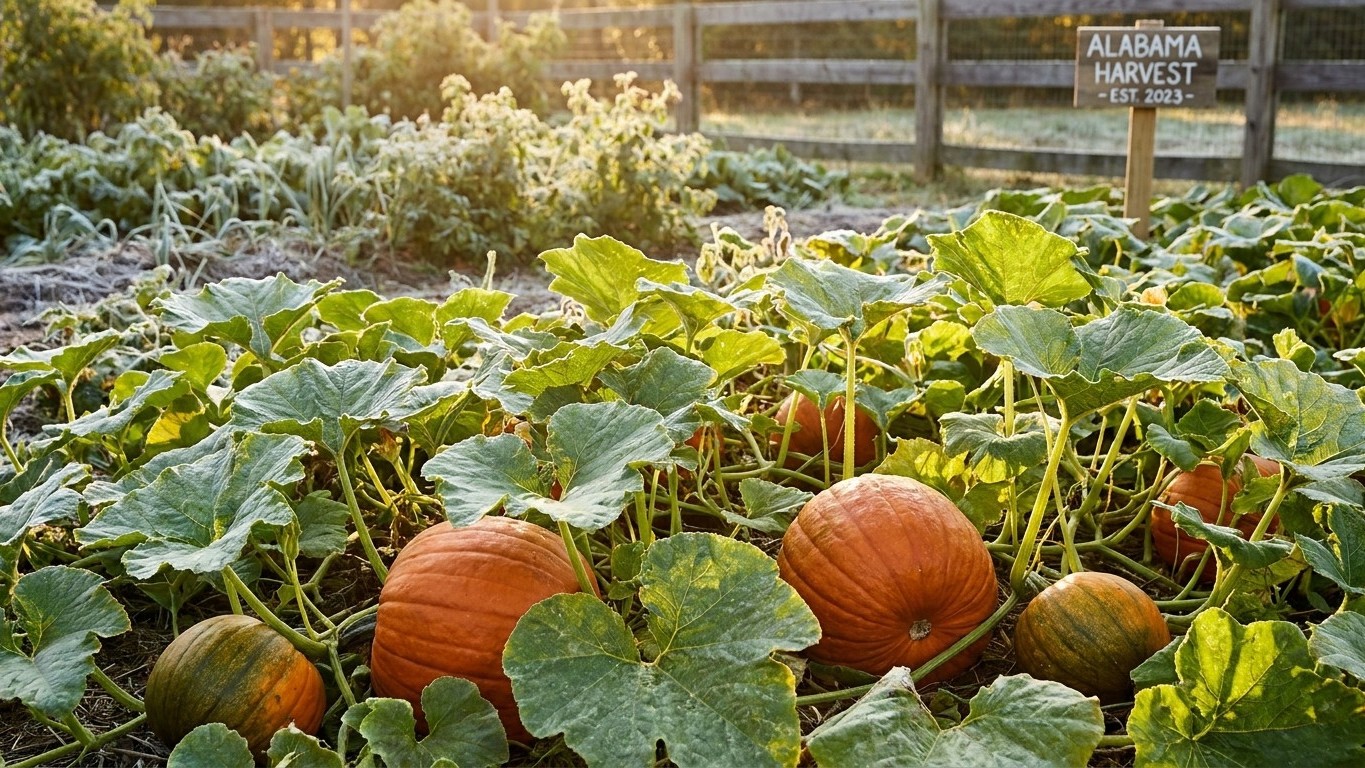

Michigan’s first fall frost lands anywhere from October 6 to October 21 depending on where you garden. Pumpkins need 45 to 55 days after their flowers open to finish ripening. Work that clock backward from your local frost date and you get a hard deadline for flowering, not for planting, that decides whether your pumpkins turn orange or stay green on the vine.
The short answer
Start with the frost window itself: October 6 on the early end, October 21 on the late end, depending on your spot in zone 6a. That fifteen-day spread matters more than most gardeners realize, because it shifts the deadline for flowering by roughly the same amount.
Count backward 45 days from October 6 and you land on August 22. Count back the full 55 days and you’re at August 12. That’s the flowering window for gardeners on the early-frost end of the state: a bloom needs to open by the middle of August, and no later than the third week, to have any real shot at coloring before the cold arrives.
Gardeners on the later end of that frost range have more breathing room. Forty-five days back from October 21 lands on September 6. Fifty-five days back puts you at August 27. So depending on which side of the state’s frost window you fall on, the last safe flowering date moves somewhere between mid-August and the first week of September.
That’s a wider margin than most people assume, and it’s also narrower than the seed packet’s “days to maturity” number would suggest, because that packet number usually counts from seeding, not from the day a flower actually opens. The 45-to-55-day clock starts only once a female flower blooms and sets fruit. A vine can sit for weeks producing male flowers only, doing nothing toward a ripe pumpkin, and that dead time doesn’t show up on any packet.
This is why two gardeners a county apart, both following the same seed packet instructions, can end up with completely different results. One vine flowers in late July because the plant hit its stride early. Another flowers in late August because a cool, wet June slowed everything down. The first grower has a comfortable cushion before frost. The second is flirting with the edge of the window, and if that grower gardens on the early-frost side of the state, near the October 6 end, the math simply doesn’t work out in the pumpkin’s favor.
The practical takeaway: track when flowers actually open on your vines, not when you dropped seed in the ground. If you’re seeing first female flowers appear after the first week of September, on the early-frost side of Michigan, expect at least some fruit to be caught unripe. That’s not a growing failure on your part. It’s the calendar running out.
When to sow here
Soil temperature runs the show here, and it’s a separate number from the frost date entirely. Sowing pumpkins into cold soil, even soil that’s frost-free, wastes days the plant doesn’t have to spare. Here’s the sequence that actually gets vines flowering early enough to matter.
- Let the last spring frost pass first. That’s around April 30 in the Detroit area, and early to mid-May across most of the Lower Peninsula. This date only clears the air of frost risk. It says nothing about whether the ground is ready.
- Wait for soil to reach 65 F. Soil warms far slower than air. The ground stays cold and damp for weeks after the last frost has come and gone, holding onto winter’s chill even while daytime highs feel like summer. Sowing into soil that hasn’t hit that 65 F mark just means seeds sit and rot, or sprout weak and stunted, instead of getting a real start.
- Check soil temperature directly rather than guessing by the calendar. A simple soil thermometer, pushed a few inches down, beats any date on a chart. Air temperature and sun exposure vary too much across a single yard for a fixed date to be reliable.
- Use row covers to buy about two weeks. Covering the bed traps daytime warmth and buffers cool nights, letting the soil underneath climb toward 65 F roughly two weeks sooner than bare ground would. Pull the covers once seedlings are up and the weather has settled, since pumpkins need open pollination from bees once flowering starts.
- Sow directly once that 65 F threshold holds steady, not just for one warm afternoon. A single mild day doesn’t mean the soil has actually warmed through; check over several days before committing seed to the ground.
None of this replaces the frost-date math from the section above, it feeds into it. Every day gained at the soil-temperature stage is a day the plant spends closer to flowering while the season is still long, rather than flowering into the tail end of it.
What goes wrong here
Michigan’s season length causes a specific, repeatable set of failures. None of them are mysterious once you see the timeline behind them.
- A late flower that never colors. A female flower opening after the season’s safe window sets a fruit that simply runs out of time. The pumpkin may reach full size but stays green or pale orange, because size and color don’t develop on the same schedule, and color is often the last thing to finish. The remedy is upstream: use row covers early to shave two weeks off the soil-warming delay, and pick varieties known locally for setting fruit early rather than late in the season.
- A fruit caught by frost before it finishes. Vines left in the ground once frost is forecast can lose fruit overnight, since frost damages the rind and shortens how well the pumpkin will keep afterward. The fix is to harvest ahead of the forecast frost date rather than waiting for a picture-perfect stem, and to keep harvested pumpkins somewhere they will not freeze. That’s the only guidance available on holding conditions; no storage temperature or keeping time is published for this crop, so don’t borrow a number from squash or another crop and assume it applies.
- A vine that dies back before the skin hardens. Cool, wet stretches late in the season, or pest pressure that weakens foliage, can kill vines before the rind has a chance to toughen into a proper storage shell. A soft, thin rind bruises and rots fast even if the color looks fine. Cutting back on late-season watering and watching for the pest pressure already covered on this site’s squash bugs in Michigan and cucumber beetles in Michigan pages helps keep vines intact long enough for the rind to finish hardening.
Notice what all three failures share: they trace back to timing, not to soil fertility or watering habits in the way most garden problems do. Fixing them means managing the calendar, not the fertilizer schedule.
Common questions
Can I still get a ripe pumpkin if my vine just flowered in early September?
It depends heavily on which side of Michigan’s frost window you’re on. If your area typically sees frost closer to October 21, a flower opening in early September still has 45 days to work with before the earliest edge of the 45-to-55-day window closes. If your area tends toward the October 6 end, that same flower is already behind schedule.
Does the seed packet’s “days to maturity” number match the 45-to-55-day flowering clock?
Not directly. Packet numbers typically count from seeding or transplanting, while the 45-to-55-day figure runs strictly from the day a flower opens and sets fruit. A vine can spend weeks in vegetative growth or producing only male flowers before that clock even starts, so relying on the packet number alone can leave a grower misjudging how much season is actually left.
Should I pick a pumpkin that’s still slightly green if frost is coming?
Harvest ahead of the forecast frost rather than risking the fruit overnight. Cut with the stem attached and move the pumpkin somewhere it will not freeze. Whether a partly green pumpkin will finish coloring off the vine isn’t addressed by the available guidance, so treat any fruit harvested early as one to use rather than one to store long-term.
Does soil warming faster near a house or driveway change the sowing timeline?
Soil near reflected heat sources, such as a south-facing wall or paved surface, does tend to warm sooner than open garden beds. Checking soil temperature directly with a thermometer in that specific spot, rather than relying on a general date for the region, is the more reliable way to know when it’s actually crossed 65 F.