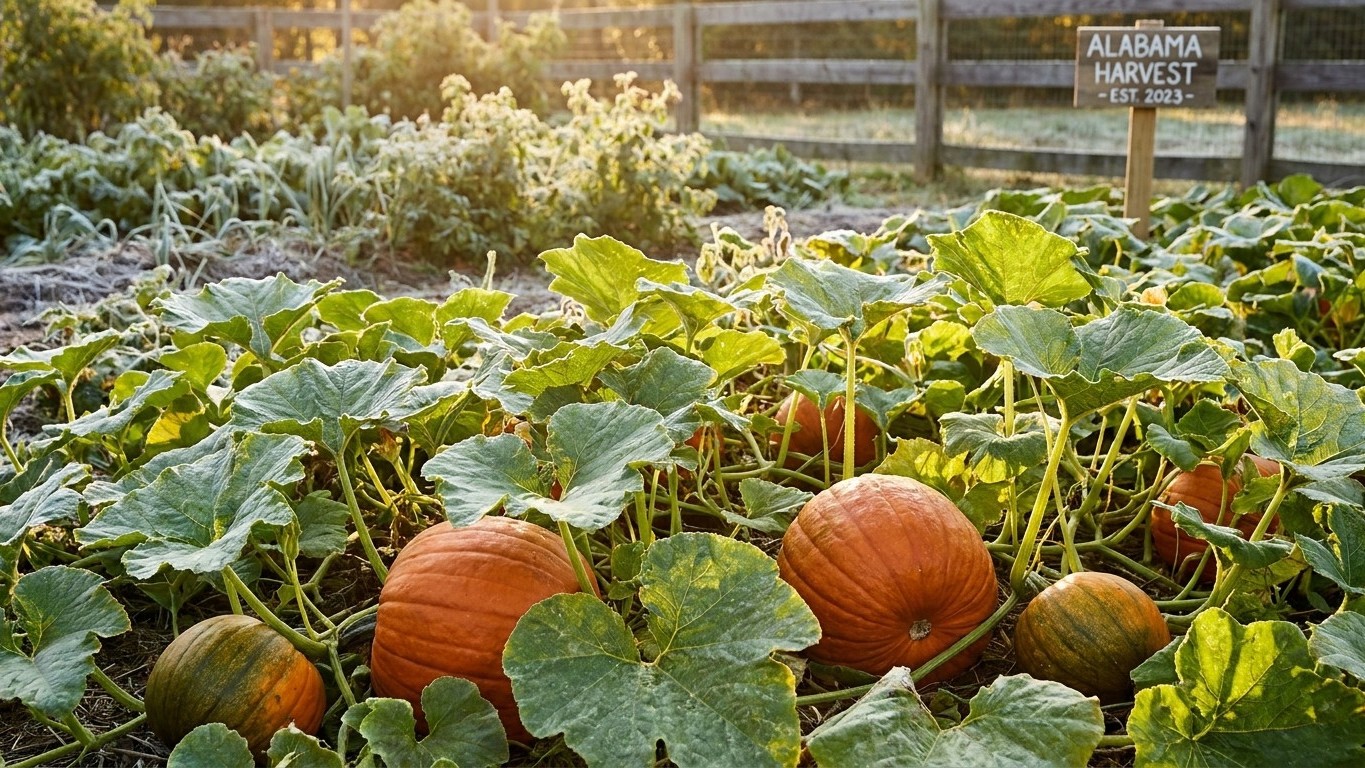

Most pumpkins planted in New Hampshire will ripen before the first fall frost, but the margin is thinner than most gardeners assume. The state’s growing season gives just enough room for a properly timed crop to reach a hardened, colored rind before the cold moves in. The real risk isn’t the calendar month, it’s the flowering date: a vine that blooms too late in August or drifts into mid-September is racing days it doesn’t have. Everything below works backward from frost to find the flowering deadline that actually decides the outcome.
The short answer
New Hampshire’s first fall frost, based on the 1991-2020 climate normals for the Manchester airport station, falls somewhere between October 13 and October 26. That’s a two-week band, not a fixed date, and it matters because a pumpkin doesn’t count down from the day you drop a seed in the ground. It counts down from the day its flower opens. Utah State University Extension puts that count at 45 to 55 days from flowering to a mature fruit.
Run the math from both ends of the frost window and both ends of the maturation window, and you get the true deadline for the last flower that still has a chance. Using the earliest frost date (October 13) and the longer 55-day timeline, the last safe flower has to open around August 19. Using the latest frost date (October 26) and the shorter 45-day timeline, that cutoff stretches to roughly September 11. So the honest answer is a window: somewhere between late August and mid-September, a flower that opens after that point is gambling with green fruit and a frost-killed vine.
That’s not a small detail. A pumpkin patch can look identical on August 15 and still be headed for two very different outcomes, depending on whether the fruit-setting flowers opened three weeks earlier or three weeks later than the plant next to it. Vine vigor, weather that season, and how many earlier flowers aborted all shift where a given plant actually lands inside that window.
One more caveat worth sitting with: the October 13 to October 26 range comes from a single airport weather station. Gardens in river valleys, at elevation, or away from the urban heat that airports tend to sit in in New Hampshire commonly see frost arrive a week or two earlier than that station records. If you garden in one of those spots, treat August 19 as your real target, not September 11, and check your own county’s frost history rather than assuming the airport number applies to your yard.
When to sow here
Working backward from a flowering deadline only helps if the front end of the calendar is set correctly too, and that means understanding what actually triggers a pumpkin seed to sprout well. It isn’t the last frost date. It’s soil temperature, and the two arrive weeks apart.
- Start with the last spring frost window. For the reference station, that’s April 16 to April 27. Gardens away from the airport typically see their own last frost run later than this, sometimes by a week or two, so treat late April as a floor, not a target date.
- Don’t sow the moment frost risk passes. Utah State University Extension is specific that pumpkins go in the ground when soil temperature reaches 65 F, and that threshold is never the same day as the last frost. Soil warms far more slowly than air. Expect a real gap, commonly measured in weeks rather than days, between the last frost passing and the ground actually holding 65 F consistently.
- Check soil temperature directly rather than guessing from the calendar. A simple soil thermometer pushed a few inches down, checked in the morning before the sun has warmed the surface, gives a far more honest reading than counting days since frost.
- Use black plastic mulch or row covers to close the gap. Warming the soil artificially can buy roughly two weeks compared to bare, exposed ground, which means an earlier effective sowing date without pushing seeds into soil that’s still too cold to germinate reliably.
- Leave room before the flowering deadline, not just before frost. Because vines need real vegetative growth before their first flowers open, and Utah State University Extension does not publish a fixed number of days for that stage, the safest approach is sowing as early as 65 F soil allows, so the plant has maximum runway to reach its first bloom well ahead of the August 19 to September 11 cutoff established above.
- Recheck the arithmetic once vines start blooming. If flowers aren’t opening until late September in a given season, that fruit is very unlikely to mature and harden before frost arrives, and effort is better spent on the next flush closer to the plant’s base.
What goes wrong here
- A late flower that never colors. When the first fruit-setting flower opens after the safe window, the pumpkin behind it simply runs out of the 45 to 55 days it needs before frost stops growth cold. The remedy is upstream: sow as early as 65 F soil allows, using row covers to gain that two-week head start, so more flowers land inside the safe range instead of after it.
- A fruit caught by frost while still green or partly colored. Even a fruit that started on schedule can get clipped if frost arrives at the early edge of the October 13 to October 26 range rather than the late edge. Harvest with the stem attached as soon as the rind has hardened and colored fully, rather than waiting for a perfect calendar date, and keep an eye on local forecasts once you’re inside that window.
- A vine that dies back before the skin has fully hardened. Foliage often collapses from disease or cold well before the fruit itself is finished curing, leaving a pumpkin that looks ripe but has a soft, easily bruised rind. If the vine has died but frost hasn’t hit yet, leave the fruit in place in full sun rather than picking early, since the rind can continue hardening off the vine for a short stretch as long as it isn’t exposed to freezing temperatures.
- Storing a borderline harvest incorrectly. Utah State University Extension’s guidance on this point is narrow: keep harvested pumpkins somewhere they will not freeze. No specific storage temperature, humidity level, or keeping time is published in that guidance, so treat “protected from freezing” as the operating rule rather than assuming a cellar or garage temperature that isn’t actually specified anywhere.
Two related pest pressures can also shorten the effective season by weakening vines before fruit finishes sizing: squash bugs and cucumber beetles both show up reliably in New Hampshire pumpkin patches, and each has its own detection and treatment timeline covered on this site’s dedicated state pages.
Common questions
Can I still plant pumpkins in July in New Hampshire?
It’s a tight fit. A July sowing needs to reach 65 F soil (already likely by then) and still push a flower open before the August 19 to September 11 cutoff calculated above. It’s possible with a fast-growing plant and warm soil, but there’s little room for setbacks like a cool stretch or pest damage.
What happens if frost hits before the pumpkin turns orange?
Growth stops and the rind won’t finish hardening or coloring on the vine. A fruit caught this way is unlikely to store well, since Utah State University Extension’s only storage guidance is keeping fruit where it won’t freeze, not how to salvage one that already has been.
Can I ripen a green pumpkin indoors after picking it?
The available guidance doesn’t cover indoor ripening in detail. What’s published is limited to keeping harvested fruit somewhere it won’t freeze, so treat any claims about finishing color indoors as unverified rather than following a specific method.
Does the 45 to 55 day window apply to every pumpkin variety the same way?
Utah State University Extension states the 45 to 55 day range from flowering to maturity as a general figure without breaking it down by variety. Since no per-variety days-to-maturity figures are published in that source, use the full 45 to 55 day range as your planning buffer rather than assuming any single variety lands at the shorter end.