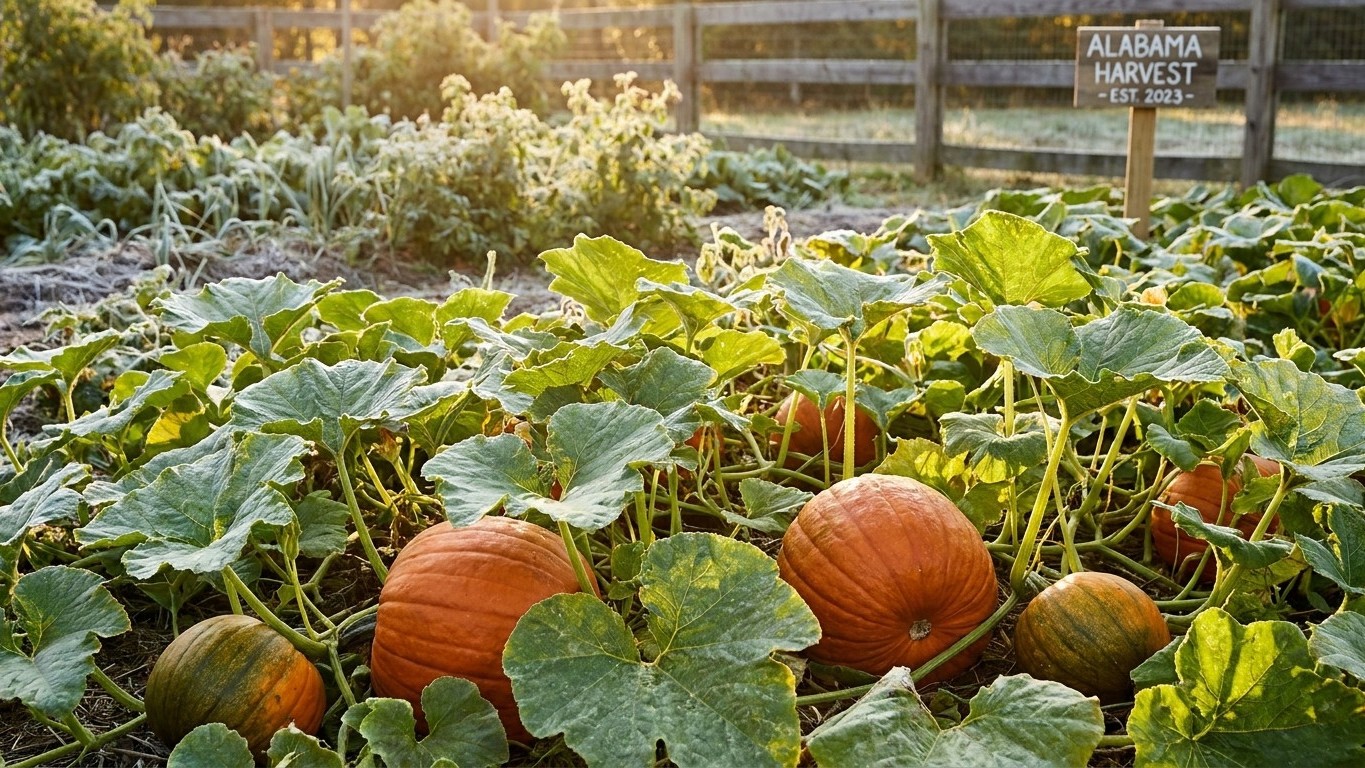

For most Oklahoma gardens, the answer is yes, but only if flowers open by late summer. The state’s first fall frost typically lands between October 29 and November 8, and a pumpkin needs 45 to 55 days from the moment a female flower opens, not from the day the seed goes in the ground, to finish ripening. Miss that flowering window and the vine runs out of season before the fruit turns from green to orange.
The short answer
Start with the frost date, because everything else in the pumpkin calendar gets built backward from it. NOAA’s 1991-2020 climate normals put Oklahoma’s first fall freeze, the 32°F threshold, somewhere between October 29 and November 8. That’s not a single day gardeners can circle on a calendar; it’s a probability band, and the actual date in any given year can land anywhere inside it, or occasionally outside.
Now subtract the maturation clock. Utah State University Extension’s guidance on pumpkins puts the window at 45 to 55 days from flowering to a ripe, harvestable fruit. Run that math against the earlier end of the frost window, October 29, and a flower needs to open by around September 4 to have the full 55 days it might need. Run it against the later end, November 8, and a flower opening as late as September 24 could still squeak by with the shorter 45-day path. So the real answer isn’t a date, it’s a window: somewhere between early September and late September is the last stretch when a new flower still has a realistic shot at becoming a ripe pumpkin before frost shuts the season down.
That’s a wider margin than it sounds, and also a tighter one. Wider, because a healthy vine that’s been flowering steadily since midsummer will have plenty of fruit already sizing up well before that late-September cutoff even matters. Tighter, because any flower that opens after that window, whether from a late planting, a stressed plant that reflowers, or a second flush after the first fruit set failed, is racing a clock it’s likely to lose. The fruit might reach full size. It may never fully color.
One caution worth repeating: the NOAA figures above come from a single reporting station, and suburban yards and rural low spots in Oklahoma often see frost arrive earlier than the airport does, sometimes by a week or two, and more in elevated or sheltered terrain. Treat October 29 to November 8 as the reference point for the state, then check local frost history for the specific county before betting a late planting on it.
When to sow here
Sowing pumpkins isn’t really about the frost date at all. It’s about soil temperature, and the two don’t move together the way people assume. The last spring frost in Oklahoma falls between March 28 and April 10, but pumpkin seed wants soil that has warmed to 65°F, a threshold the ground reaches well after the air stops freezing. Soil holds cold longer than air does, so gardeners who sow the week after the last frost date are usually planting into ground that’s still too cool for reliable germination.
- Mark the last frost window first. March 28 to April 10 is the baseline for this state’s freeze risk, drawn from the same NOAA climate normals used for the fall date.
- Don’t sow on that date. Air temperature crossing above freezing says nothing about what’s happening a few inches underground; the soil is still catching up.
- Watch the soil, not the calendar. Pumpkin seed needs the ground itself, checked with a simple soil thermometer a few inches deep, to hold at 65°F before it germinates well.
- Use row covers to close the gap. A row cover over prepared soil can buy roughly two weeks, warming the bed faster than open ground would warm on its own, which effectively pulls the safe sowing date earlier without gambling on a stray late frost.
- Count backward from the flowering deadline. Since flowers need to open by early-to-late September to have any real shot at ripening, and pumpkins typically take a stretch of vegetative growth before they start flowering at all, sowing too late in the spring shrinks the margin at both ends of the season.
The arithmetic, in words: frost stops in early April, but the ground isn’t ready for seed for a while after that, and row covers can shave roughly two weeks off the wait. Gardeners who sow the moment the calendar says frost is over, without checking soil temperature, are often the ones who reflower late and run straight into the fall problem described above.
What goes wrong here
- A late flower that never colors. When the first fruit set fails, from poor pollination, heat stress, or squash vine borer damage, the plant often throws a second flush of flowers well into September. If those flowers open past the late-September cutoff, the resulting fruit can reach size but stall out green or pale orange when frost hits. The remedy is prevention, not rescue: sow on time using the soil-temperature rule above, and support pollination early so the plant isn’t forced into a late second attempt.
- A fruit caught by frost before the skin hardens. A pumpkin can look ripe in color while the rind is still soft, and a hard freeze will damage that fruit even if it looks orange on the vine. The fix is harvesting ahead of the forecast rather than after it: cut fruit with the stem attached once color and rind hardness both check out, and don’t wait for a “just in case” extra week that a frost event in the October 29 to November 8 window might not allow.
- A vine that dies back before the skin hardens. Powdery mildew, squash vine borer, or simple end-of-season decline can kill the foliage weeks before frost actually arrives, cutting off the plant’s ability to keep feeding sugar into fruit that hasn’t finished hardening its rind. Once the vine is gone, the fruit is on its own; if it’s already colored and the rind resists a fingernail press, cut and cure it. If not, that fruit likely won’t finish properly regardless of when frost shows up. Gardeners dealing with vine decline from pests should check dedicated pages on squash bugs in Oklahoma and cucumber beetles in Oklahoma rather than guessing at the cause.
Variety choice plays into all three failure points, since a shorter path from flower to ripe fruit leaves more room for error on the back end of the season. Oklahoma gardeners commonly grow varieties such as Connecticut Field, Jack Be Little, Cinderella, Big Max, Howden, Sugar Pie, Baby Boo, Autumn Gold, and Long Island Cheese, though the maturation figures in this guide apply to the flowering-to-harvest window in general rather than to any single one of those names specifically.
Common questions
Can I still plant pumpkins in July in Oklahoma?
It depends entirely on whether the plant can flower in time. Since flowers need to open by roughly early-to-late September to have a realistic 45-to-55-day path to ripeness ahead of the October 29 to November 8 frost window, a July sowing only works if the variety moves from seed to flower quickly enough to hit that mark. It’s a tight margin, not an impossible one.
Does soil temperature matter more than the frost date for sowing?
Yes, for this crop. The last spring frost date (March 28 to April 10) tells you when the air stops freezing, but pumpkin seed germinates reliably only once the soil itself reaches 65°F, which happens later. Sowing by the frost date alone, without checking soil temperature, is one of the more common reasons for uneven germination.
What should I do with a pumpkin that’s still green when frost is forecast?
A green fruit that’s still small or hasn’t started to color rarely finishes ripening off the vine in any meaningful way. A fruit that’s already showing color but hasn’t fully hardened its rind is the better candidate to bring in ahead of the frost and let cure indoors, somewhere it won’t freeze, rather than leaving it exposed and hoping.
Should I trust the frost dates for my exact town, or the regional figures?
Treat the October 29 to November 8 window as a reference point drawn from a single reporting station, not a guarantee for every yard in the state. Low-lying, rural, or higher-elevation spots in Oklahoma often see frost arrive earlier than that station does, sometimes by a week or two, so it’s worth checking local frost history rather than relying on the regional figure alone.