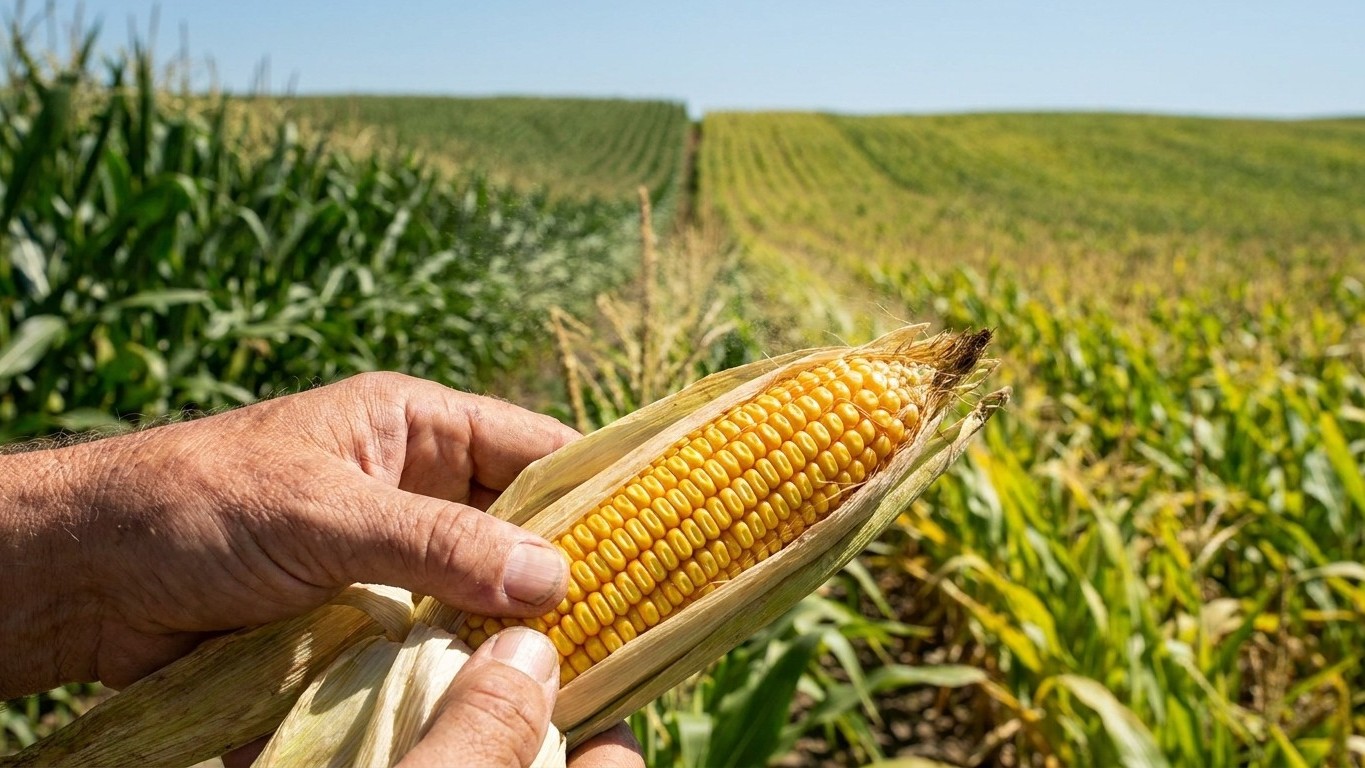

Sweetness in sweet corn isn’t fixed by the seed alone. If a neighboring stand of a different sweet corn type sheds pollen at the same time yours does, the kernels that form can taste flatter, closer to standard corn than the sugary variety you planted. Utah State University Extension has documented this exchange between su, se and sh2 types. The fix has nothing to do with soil, fertilizer or how long the ears hang on the stalk. It comes down to what the tassels are doing in your garden, and your neighbor’s, during the same week.
The short answer
Utah State University Extension states it directly: eating quality, meaning sweetness, may be affected when su, se and sh2 types are planted together and tassel at the same time. If cross pollination occurs, the extra sweetness of the se and sh2 types is lost and they taste more like the standard types.
Those three letters describe genetic categories, not brand names. Su is the older standard sugary type. Se carries a gene that boosts sweetness and tenderness beyond su. Sh2, sometimes called a supersweet type, packs in far more sugar than either. Each kernel on an ear is its own fertilization event, so the genetics of the pollen that reached a given silk decide that kernel’s sugar content, not just the plant it’s growing on.
That’s the part gardeners miss. Two ears can come from seed packets that promise the same flavor, yet if one grew where pollen from a different type was blowing through during silking, some of its kernels carry a diluted version of the sweetness genes. The ear looks identical. It doesn’t taste identical.
This is also, according to the source cited here, the only crop in a home garden where flavor gets decided by what’s growing nearby rather than by the soil it’s rooted in or the weather it endured. Tomatoes taste different because of water and heat. Carrots taste different because of soil chemistry. Sweet corn’s sweetness can be rewritten mid-season by a plant several rows over, simply because of timing.
There’s a second layer to the answer, and it matters just as much once the ears are off the stalk. Sugar doesn’t sit still in a picked kernel. It converts to starch, and that conversion speeds up with heat. Clemson Extension notes that sweet corn loses sugar from the kernel rapidly at high temperatures, and that it can be stored under optimal conditions for about five days, but will lose sweetness with each day of storage. So the corn next to yours can cost you sweetness before harvest through crossed pollen, and the clock in your refrigerator can cost you more of it afterward. Genotype decides how much cushion you start with; su types burn through their sugar fastest, se types hold longer, sh2 types longest of the three.
What actually decides it
Genotype Crossing at Tasseling Time
Corn is wind-pollinated. Tassels at the top of the plant release pollen, and silks lower down catch it, each silk leading to one kernel on the ear. When two different sweet corn genotypes are tasseling in the same window, wind can carry pollen from one planting onto the silks of the other. A silk on an se or sh2 plant that gets fertilized by su pollen produces a kernel with only a partial dose of the genes responsible for elevated sweetness. Multiply that across an ear and the flavor shifts toward standard, even though the plant itself is still labeled se or sh2 on the tag.
The key word from Utah State University Extension is timing, not proximity. The problem occurs when types tassel at the same time. If plantings are staggered so one finishes shedding pollen before the next begins silking, the risk of that exchange drops regardless of how the garden is laid out. Planning around the calendar, not the tape measure, is what the source actually supports.
Sugar Loss After Harvest
Once an ear is picked, its cells keep respiring. That process pulls stored sugar out of the kernel and turns it into starch, and heat accelerates the reaction the way it accelerates most chemical processes in produce. Clemson Extension’s finding that sweet corn loses sugar rapidly at high temperatures describes this directly. It’s the reason a warm car trunk does more damage to flavor in twenty minutes than a cool kitchen counter does in an hour.
This mechanism runs independent of the cross-pollination issue, but the two compound each other. A kernel that already lost some of its enhanced sweetness to a stray pollen grain starts its post-harvest life with less sugar in reserve. Heat and days in storage finish what the crossing started. That’s the practical argument for choosing sh2 or se over su when same-day cooking isn’t realistic: they hold their sugar longer once they’re off the stalk.
How to do it
- Pick one sweetness type for the season, or separate plantings by timing. If you want to grow both an se and an sh2 planting, schedule them so their tasseling periods don’t overlap, since the risk described by Utah State University Extension only applies when different types shed pollen and receive silks during the same stretch.
- Wait for the soil to warm before planting, not just for the last frost to pass. Sweet corn seed does best once soil temperature reaches 60 F, which is a separate milestone from the last frost date and typically comes later in the season.
- Track tasseling as it happens. Walk the rows and note when tassels begin shedding pollen on one planting, and hold off letting a different type’s silks emerge during that same window.
- Confirm ripeness with all three signs together, not one alone. Look for dry, brown silks, husks that are still moist and green, and milky juice from a kernel you’ve punctured with a thumbnail. Any one sign by itself can mislead you into picking too early or too late.
- Get ears out of direct sun the moment they’re picked. Shade, a cooler, or a quick trip indoors slows the sugar-to-starch conversion that heat speeds up.
- Cook or refrigerate the same day when you can, especially with su types. They convert sugar to starch faster than se or sh2 kernels, so they have the least tolerance for sitting around.
What Goes Wrong
- Planting different sweetness types so their tasseling overlaps. This is the exact scenario Utah State University Extension warns about: pollen crosses between su, se and sh2 plants, and the se or sh2 ears end up tasting closer to standard corn. The remedy is timing the plantings so tasseling windows don’t coincide, not spacing them differently in the garden.
- Treating the last frost date as the planting date. Soil often needs weeks after that date to reach the 60 F mark sweet corn seed prefers. Planting into cold, wet soil ahead of that point risks rot before germination. Check soil temperature directly instead of relying on frost timing alone.
- Judging ripeness from a single clue. Brown silks alone can appear before the kernels are ready, and green husks alone don’t confirm sweetness. Use dry silks, moist green husks and milky kernel juice together before pulling an ear.
- Letting picked ears sit in the sun or a hot vehicle. Heat is the accelerant behind sugar loss described by Clemson Extension. Move ears to shade or a cooler within minutes of picking rather than leaving them on a tailgate while other chores get finished.
- Assuming “about five days” is a guarantee. That figure describes storage under optimal, meaning cool, conditions, and it’s a maximum, not a promise. Corn left in a warm kitchen or a poorly chilled refrigerator will lose noticeably more sweetness well before that point.
- Merging the two harvest clocks into one number. The days-to-maturity count that starts at planting answers whether the crop fits your growing season. The much shorter countdown that starts once silks emerge tells you which week to actually pick. Confusing the two leads to checking ears at the wrong time entirely.
Common questions
Does field corn cross with sweet corn the same way?
The finding cited here addresses su, se and sh2 sweet corn genotypes tasseling at the same time. It doesn’t include a separate statement about field corn, so nothing conclusive can be said about that pairing from this source.
Can I fix the flavor once cross-pollination has happened?
No. Each kernel’s sugar content is set at the moment its silk is fertilized. Once that happens, nothing done afterward, including harvest timing or storage, changes the genetics already locked into that kernel. Prevention through timing is the only control point.
Why does refrigerating corn still result in lost sweetness?
Cold slows the rate at which sugar converts to starch, but it doesn’t stop the process. Clemson Extension’s point is that sweetness declines with every day of storage even under good conditions, so refrigeration buys time rather than restoring or preserving flavor indefinitely.
Which sweet corn type is most forgiving if I can’t cook it the same day?
Based on the storage behavior described, sh2 holds its sugar the longest after harvest, followed by se, with su converting fastest. That addresses storage tolerance specifically, not the separate cross-pollination risk, which depends on tasseling timing rather than which genotype you chose.