
Yes, sweet corn can ripen in Michigan, but the calendar math is tighter than most gardeners assume. The state’s last spring frost lands anywhere from late April in the Detroit area to mid-May farther out, and the first fall frost can arrive as early as October 6 in cooler zone 6a counties. Between those two dates sits the real question explored in Will Sweet Corn Ripen in Michigan?: does the soil warm fast enough, and does the variety you picked finish fast enough, to make full use of that window?
The short answer
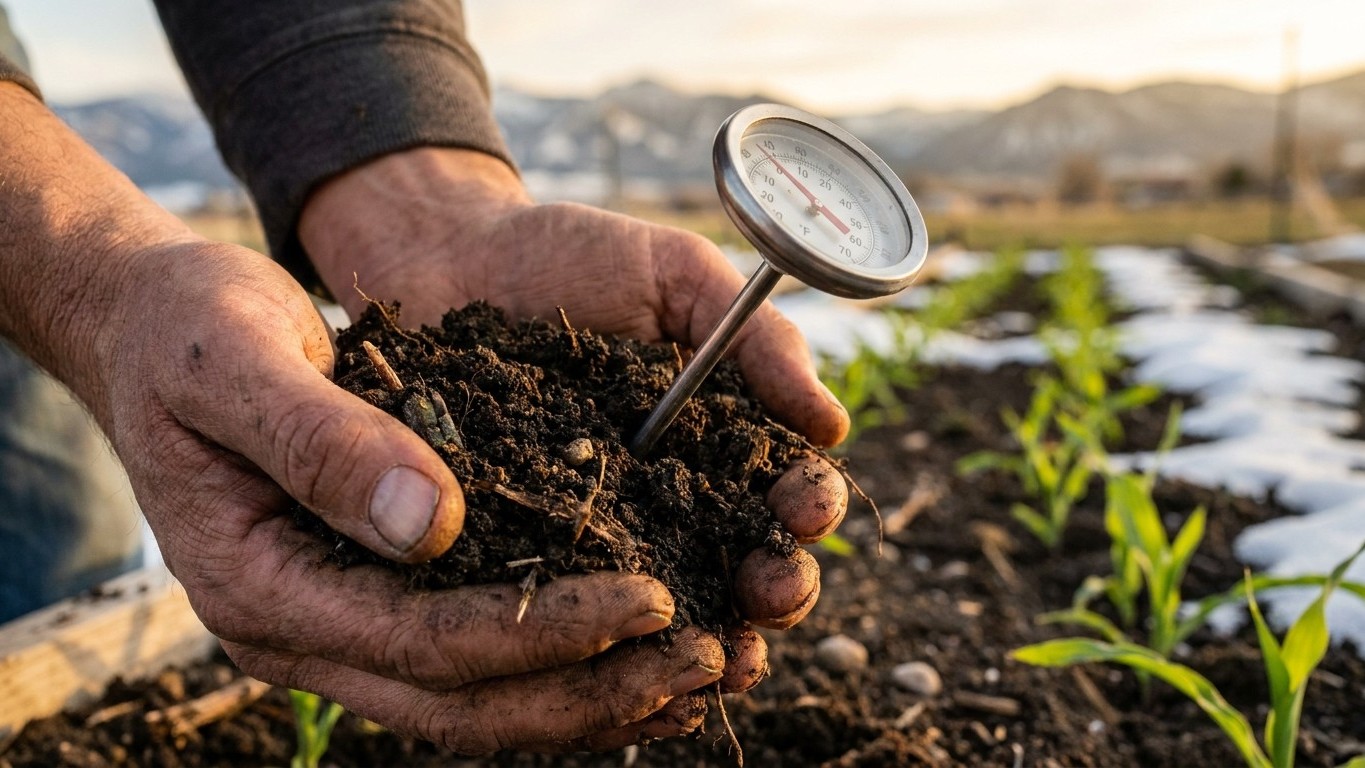
Soil temperature, not the frost date, is what actually starts the clock. Sweet corn seed needs soil above 60°F to germinate reliably, and that threshold arrives well after the last frost, sometimes weeks later, since bare soil warms slower than the air above it. In the Detroit area, where frost typically clears by around April 30, gardeners often wait past that date before the soil catches up to 60°F. Across most of the rest of the Lower Peninsula, where the last frost holds on until early-to-mid May, the same lag pushes usable planting time later still. Knowing exactly When to Sow Sweet Corn in Michigan helps growers avoid planting into cold soil that stalls germination.
That gap matters because sweet corn is sold on a maturity window, not a fixed date: most varieties need 60 to 90 days from the day they’re planted in already-warm soil to reach harvest. Count forward from whenever the soil actually crosses 60°F, not from the frost date, and you get a realistic finish line. Count back from the first fall frost, October 6 to October 21 for zone 6a, and you get the deadline.
Line those two up and the picture is generally workable. Even accounting for a soil warm-up that lags the frost date by a few weeks, most of the Lower Peninsula still has several months of frost-free, warm-soil growing time before the fall frost line closes in. A 60-day variety fits with room to spare almost anywhere in the state. A 90-day variety fits too, in most years, but with far less cushion, especially where the fall frost falls at the early end of that October window.
Heat load during that window is the other piece worth knowing. Around the Detroit reference station, days reaching 90°F or hotter average 10.3 a year, not a huge number, but enough to matter for how fast corn moves through its growth stages and how much water it pulls from the soil during a hot stretch. Sweet corn isn’t especially heat-shy, but a modest number of 90-degree days means the crop isn’t racing through maturity the way it might in a hotter climate; it’s relying mostly on the length of the season rather than a burst of extreme heat. That reinforces the same conclusion the day-count math gives: in Michigan, timing and soil temperature decide the outcome far more than raw heat does.
Does a late variety fit here?
The 60-to-90-day range printed on seed packets isn’t one number, it’s two different bets on the same season. Michigan’s Lower Peninsula has enough frost-free, warm-soil time to cover the short end of that range almost everywhere, but the long end depends much more on where in the state a garden sits.
A 60-day variety
Plant once soil has crossed 60°F, and a 60-day type is finished roughly two months later. Even with soil warm-up trailing the last frost by a few weeks, that finish line lands comfortably in mid-to-late summer almost anywhere in the Lower Peninsula, whether the garden is in the Detroit area with its April 30 frost date or farther out where frost lingers into May. There’s slack left over on both ends: enough that a stretch of cool, wet spring weather delaying planting by a week or two doesn’t put the harvest at risk against an October frost. This is the safer bet for anyone gardening in a county that isn’t sure which side of zone 6a it falls on.
A 90-day one
The math gets tighter here, and it doesn’t work the same way everywhere in the state. In the Detroit area, where the frost-free season runs long on both ends, a 90-day variety generally has room to finish before frost returns. Push that same variety into the broader Lower Peninsula, where the last frost holds off until early-to-mid May and the first fall frost can arrive as early as October 6, and the season compresses on both sides at once. Add a slow spring where soil takes its time crossing 60°F, and a 90-day type can end up pushing right against that early-October frost line, or missing it entirely. Michigan isn’t a place where a 90-day sweet corn variety fits without qualification: it fits in the state’s warmer, longer-season pockets, and it doesn’t reliably fit everywhere the state’s frost dates are quoted. A gardener working from a statewide average instead of their own county’s numbers is taking a real risk with the late end of that range.
What goes wrong here
Most sweet corn failures in Michigan trace back to one of three mistakes, and only one of them has anything to do with the climate itself.
- Soil sown too cold. Planting on the calendar date of the last frost, instead of waiting for the ground itself to warm, is the most common misstep. Seed sitting in soil below 60°F rots or germinates unevenly, leaving gaps in the row weeks before anyone notices a problem. The fix is simple: check the soil, not just the forecast, and hold off until it has actually crossed 60°F, even if that means planting well after the last frost has already passed.
- A variety too late for the season. Choosing a 90-day type out of habit, or because it was on sale, without checking it against a local fall frost date, is the second common failure, especially outside the state’s longer-season pockets, where the first fall frost can arrive as early as October 6. The fix is to count backward from the local fall frost date before buying seed, not after planting it, and to default to a shorter-day variety in any county where that count comes up tight.
- Sweetness lost to timing, not weather. This one has nothing to do with Michigan’s climate at all. Standard (su), sugar-enhanced (se) and supersweet (sh2) types cross-pollinate if they tassel at the same time, and the result is corn that tastes starchy instead of sweet, no matter how well the season went. The source names no isolation distance to plant these apart by; what it does specify is timing. The remedy is to stagger planting dates between types so their tasseling windows don’t overlap, or to grow only one type in a season, and to keep each type planted in blocks of three or more rows rather than a single long row, so pollination within that type stays reliable.
Checking this against your own county
Every number here describes a broad pattern across Michigan’s Lower Peninsula, not a specific back yard. The Detroit area’s frost dates run noticeably longer-season than the rest of the Lower Peninsula, and the state’s frost-free window narrows again heading toward its northern reaches and the Upper Peninsula, neither of which is covered by the figures above. A garden ten miles inland from a large lake, or sitting in a low frost pocket, can run several days colder in spring and fall than the nearest reporting station.
Before locking in a planting date or a variety’s day count, it’s worth checking those specifics against Michigan State University Extension, which tracks frost dates and planting guidance by county rather than by broad regional averages. That’s the difference between a 90-day variety that finishes with room to spare and one that’s still standing in the field when the first hard frost of fall shows up. A county-level check takes a few minutes and costs nothing; guessing wrong on a 90-day crop costs the whole season.
Common questions
How do I know when sweet corn is actually ripe?
Check three signs together, not just one: the silks should be dry and brown, the husk should still feel moist and green, and juice squeezed from a punctured kernel should run milky rather than clear or thick. Utah State University Extension frames the corn’s timeline as two separate clocks: 60 to 90 days from planting decides whether the crop fits the season at all, while 17 to 24 days from when silks first appear tells you which week to start checking ears.
Can I plant sweet corn as soon as frost danger passes in Michigan?
No. Frost clearing and soil warming aren’t the same event. Soil often stays below the 60°F germination threshold for a stretch after the last frost date, and seed planted into cold soil tends to rot or come up unevenly.
Can I grow two sweet corn varieties in the same garden?
Yes, as long as the standard (su), sugar-enhanced (se) and supersweet (sh2) types among them aren’t tasseling at the same time, since overlapping tassels cross-pollinate and dull the sweetness. Stagger planting dates between types, and keep each one in a block of three or more rows for reliable pollination within itself.
Does Michigan’s summer heat push sweet corn to mature faster?
Not much. The Detroit reference station averages only 10.3 days a year at 90°F or hotter, a modest heat load. In Michigan, the length of the frost-free season, not a burst of extreme heat, is what mostly determines whether a variety reaches harvest.