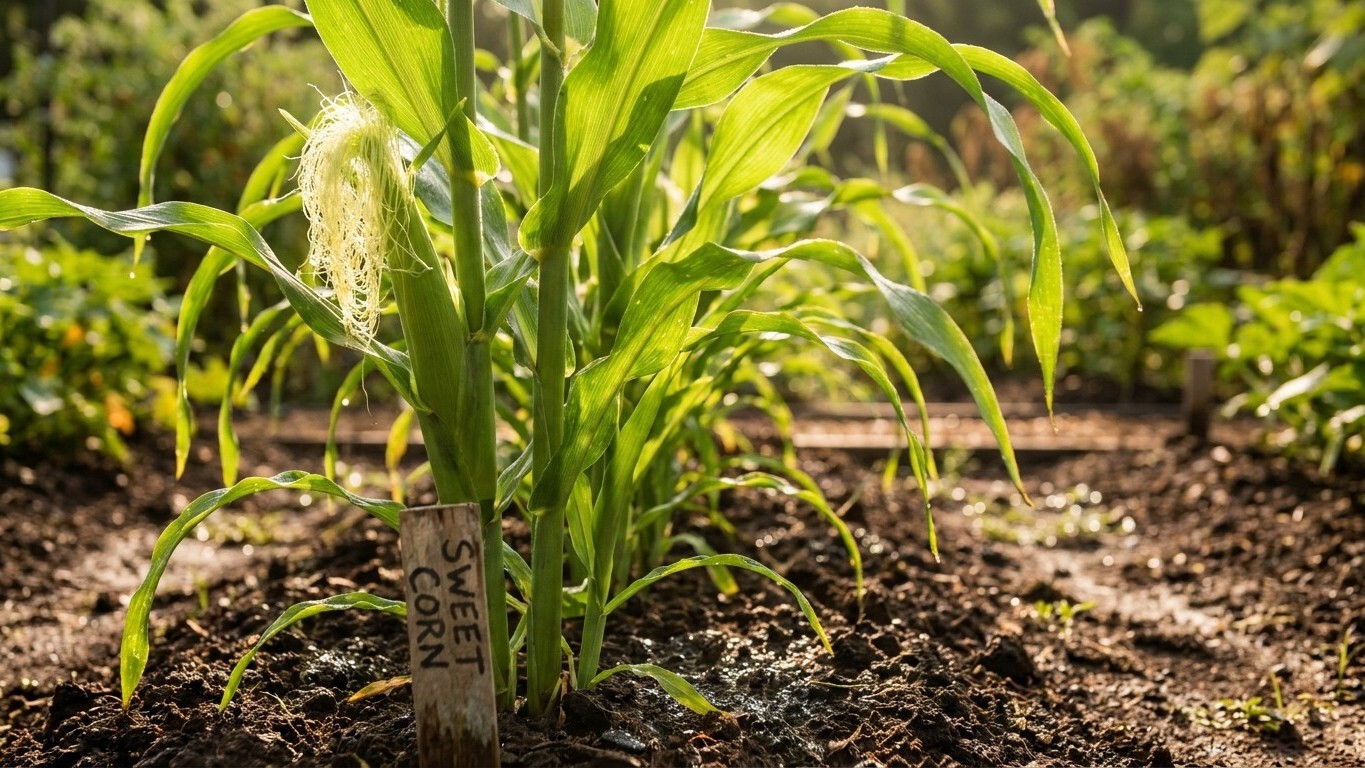

Yes, sweet corn ripens reliably in New Jersey gardens, but the answer hinges on soil temperature more than the calendar date of the last freeze. At the Newark reference station, NOAA’s 1991-2020 climate normals put the last spring frost between March 29 and April 6, and the first fall frost between November 4 and November 16. That gap gives sweet corn, which needs soil above 60°F and 60 to 90 days to mature, plenty of room to work with.
The short answer
Air temperature and soil temperature don’t move together. The last frost date marks when the air stops dropping below freezing, but the ground underneath takes its own time warming up. Sweet corn seed sitting in cold, wet soil won’t germinate evenly, and it can rot before it ever sprouts. So the real starting line for sweet corn isn’t March 29 or April 6, it’s whichever day afterward the soil itself crosses 60°F. That day comes later, sometimes considerably later, than the frost date on the calendar. A soil thermometer pushed a few inches into the bed tells you more than any date printed on a seed packet.
Once that 60°F threshold is met, the countdown to harvest begins, and this is where New Jersey’s growing season shows its strength. Between the last spring frost (March 29 to April 6) and the first fall frost (November 4 to November 16), the reference station shows roughly seven months of frost-free potential. Even after accounting for the weeks it typically takes soil to warm past the frost date, there’s still a wide runway left for a crop that needs only 60 to 90 days from planting to maturity. That’s the mechanism that makes New Jersey a workable state for sweet corn: the season isn’t just long enough on paper, it’s long enough with margin to spare, even if spring soil warms slower than expected in a given year.
Summer heat is the other variable worth tracking, and it doesn’t show up in a frost calendar at all. Newark averages 20.8 days a year at 90°F or hotter. That heat load doesn’t shorten the growing season, but it does stress corn during pollination, when high temperatures can dry out silks before pollen has a chance to reach them. A stretch of 90-degree days landing right at tasseling time can thin out an ear’s kernel fill even in a year with an otherwise perfect season length. It’s a separate risk from the frost math, and one worth watching on the forecast once plants start to tassel.
None of these figures are guarantees for every yard in the state. They come from one airport weather station, and gardens in suburban and rural settings typically see the last frost arrive later and the first fall frost arrive earlier than the reference station shows, sometimes by one to two weeks, more at higher elevation. Treat these dates as a starting point, then confirm the pattern against your own county’s history before you commit a planting date.
Does a late variety fit here?
Variety length matters because it determines how much of that seven-month window actually gets used, and how much slack remains if spring turns cold or fall arrives early.
A 60-day variety
A variety that matures in 60 days from planting is the easiest fit for this territory. Even if soil doesn’t reach 60°F until well into spring, a 60-day crop planted at that point still finishes with months to spare before the first fall frost arrives between November 4 and November 16. This is the safer choice for anyone planting later than they’d like, whether because of a cool spring, a busy schedule, or a desire to succession-plant a second round after an early harvest. The margin here is wide enough to absorb most of the year-to-year variation this climate throws at a garden.
A 90-day variety
A 90-day variety asks more of the calendar, but the math still works in New Jersey. Even with a delayed start while soil climbs to 60°F, a 90-day crop planted well into the growing window still matures with real time left before the first fall frost. The frost-free stretch here, roughly seven months between the reference station’s spring and fall frost windows, is generous enough that a longer-season variety isn’t the gamble it would be in a shorter, colder climate. The tighter concern for a 90-day variety isn’t whether it fits the season at all, it’s whether it lands its tasseling stage during one of those 20.8 average days above 90°F, which can affect pollination regardless of how much calendar time remains. So the late variety does fit here, with heat timing during silking as the detail worth watching rather than the season length itself.
What goes wrong here
- Soil sown too cold. Seed planted before the ground reaches 60°F sits and rots instead of germinating, especially in a wet spring when soil warms slower than the air above it. The remedy is simple: check soil temperature directly with a thermometer rather than planting off the frost date, and wait until it holds above 60°F for a few consecutive days before sowing.
- A variety too late for the season. Even with a roughly seven-month frost-free window here, planting a long-season variety too late in the calendar, or trying to squeeze in a second succession planting after midsummer, can push maturity dangerously close to the first fall frost between November 4 and November 16. The remedy is to count backward from that fall frost window using the variety’s stated days to maturity, and skip a late planting if the math doesn’t leave comfortable room.
- Sweetness lost because two types tasseled together. This one has nothing to do with soil or frost. When su, se, and sh2 sweet corn types release pollen at the same time nearby, cross-pollination dulls the sweetness and texture the sh2 and se types are grown for. The remedy is timing, not distance: stagger planting dates so the different types don’t tassel in the same window, or grow only one type per season if the garden is small. Planting in blocks of three or more rows, rather than a single long row, also helps each block pollinate itself cleanly.
Common questions
Can I go by the last frost date alone when planting sweet corn? No. The last frost date only tells you when the air stops freezing. Soil temperature lags behind and needs to climb above 60°F before sweet corn seed will germinate reliably, so check the ground itself rather than the calendar.
Does New Jersey’s growing season favor short or long-season varieties? Both fit comfortably. The roughly seven-month stretch between the reference station’s spring and fall frost windows gives a 60-day variety wide margin and still leaves real room for a 90-day variety, provided planting isn’t pushed unusually late.
Why did my sweet corn turn out starchy instead of sweet? The most common cause has nothing to do with weather. If two different sweet corn types, such as a standard (su) and a supersweet (sh2), tasseled at the same time nearby, cross-pollination likely dulled the sweetness. Stagger planting dates between types next season.
How much does summer heat affect sweet corn here? Newark averages 20.8 days a year at 90°F or above. That heat doesn’t shorten the season, but it can stress plants during tasseling and silking, drying silks before pollination finishes and thinning kernel fill on the ear.