
There’s no single “best” cucumber for Hawaii, but there is a best type for the islands’ conditions: heat-tolerant, disease-resistant, and suited to your specific microclimate. Because lowland Hawaii never sees frost, the real decision isn’t about season length. It’s about matching a cucumber’s growth habit to your rainfall, humidity, and elevation. That’s a very different question than gardeners on the mainland are asking.
The short answer for Hawaii
Skip the frost-based thinking entirely. At the reference station used for these normals, freeze days average zero per year, and that holds true across every inhabited part of the state. Frost exists only on the summits of Mauna Kea, Mauna Loa, and Haleakala, places no one is growing cucumbers. So the calendar question mainland gardeners ask (when’s my last frost?) simply doesn’t apply here. What replaces it is a heat-and-moisture question, and the answer changes by type rather than by date.
Honolulu’s reference station logs an average of 18.7 days a year at or above 90°F. That’s a moderate but real heat load, enough to cause blossom drop and bitter fruit in cucumber varieties bred for cooler, shorter mainland summers. Parthenocarpic types, the ones that set fruit without needing pollinators, tend to handle heat stress better because they’re not depending on bee activity holding steady through the hottest stretches. Burpless and Asian-style slicing types also carry thinner skin and fewer seed cavities, which matters when fruit sizes up fast in warm soil.
Choosing by type, not by name
Rather than chasing a specific cultivar, work from habit and purpose:
- Pickling types: fast-maturing and compact, useful for succession planting so you’re not carrying one long harvest through a humid stretch.
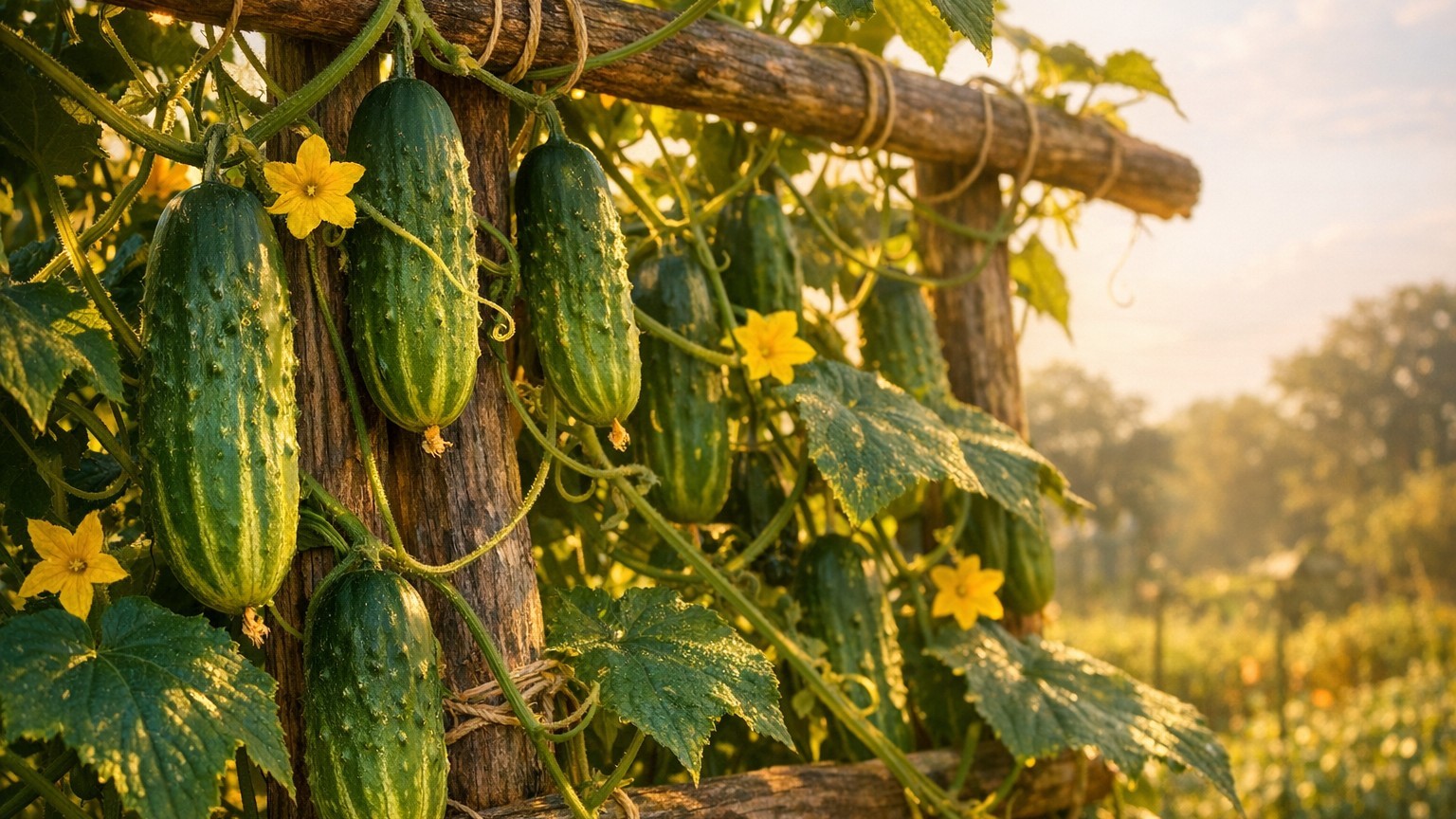
- Slicing types: benefit from trellising in Hawaii’s humidity, since airflow around the fruit matters more here than on a dry mainland summer.
- Burpless/parthenocarpic types: often the most forgiving choice for home gardeners dealing with inconsistent pollinator activity or heat stress.
- Bush types: suited to small lots, patios, and raised beds common in urban and suburban Hawaii gardening.
None of that replaces a local trial list. The University of Hawaii’s Cooperative Extension Service (CTAHR) tracks which named varieties actually perform on your island, and that’s the resource that turns “type” into a specific seed packet.
What will not work here

The biggest mismatch isn’t season length, it’s watering rhythm. Hawaii’s summer is, counterintuitively, its driest stretch: June averages just 0.5 inches of rain, July 0.52 inches, August 0.84 inches, adding up to roughly 1.9 inches across the entire summer. Compare that to the 16.4-inch annual total, and it’s clear most of the state’s rain falls outside the hot months. A cucumber watered on a once-a-week mainland schedule during those 18.7 days above 90°F will show it fast: curled leaves, bitter fruit, and blossom drop. Cucumbers are over 90% water by weight, and a dry summer combined with heat load punishes anyone treating irrigation as a weekly chore rather than a response to actual soil moisture.
Long-vining varieties left to sprawl flat on the ground also struggle, though for a different reason tied to the other side of Hawaii’s rain pattern. Since summer carries so little of the annual 16.4 inches, the bulk of that moisture falls in other months, and humidity stays high year-round regardless of rainfall totals. Cucumber foliage sitting on damp ground with poor airflow is an open invitation to powdery and downy mildew, both of which spread fast in Hawaii’s warm, humid air. A vine trellised a foot or two off the soil dries faster after any rain event and gives fungal spores less to work with.
Varieties bred specifically for short, cool mainland seasons, the kind marketed for quick maturity in places with a hard fall frost, aren’t wrong here so much as beside the point. They’ll grow, but they’re solving a problem Hawaii doesn’t have. What actually determines success is whether a plant can hold fruit quality through repeated heat spikes and whether its foliage can shed humidity instead of trapping it. That’s a different filter than “days to maturity,” and it’s why importing a mainland variety list without adjusting for it tends to disappoint.
What changes across Hawaii
Hawaii spans USDA hardiness zones 9a through 13a, a range wider than almost any other state carries, and it exists entirely because of elevation and wind exposure rather than latitude. The zone system is built on one number, the average annual extreme minimum temperature, so a garden partway up a volcanic slope can sit in a genuinely different zone than one a few miles away at sea level. Honolulu’s own climate normals describe the lowland coastal picture. A garden climbing toward higher elevation runs cooler across the board, which slows cucumber growth and pushes flowering later, even without any frost risk at all.
Windward versus leeward exposure changes things just as much, more, for a plant this sensitive to moisture. Trade winds push rain into windward-facing slopes and valleys, while leeward coasts sit in a rain shadow that can be dramatically drier than the seasonal averages cited above. Two gardens on the same island, a few ridgelines apart, can face genuinely different watering needs and disease pressure. There is no single rainfall or temperature number that describes “Hawaii” as one garden, and treating the state that way is the fastest way to misjudge irrigation.
None of this means guessing. It means checking where your specific plot falls before applying any of the guidance above. The USDA’s hardiness zone map lets you look up the zone for your address rather than assuming it matches the island-wide range, and it’s worth doing before buying seed for a season.
Where to check this for your own county
Everything in this article describes the state as a whole, built from one reference station’s normals. Your county, or your island and elevation band, can differ enough to change which type of cucumber actually thrives. The University of Hawaii’s Cooperative Extension Service (CTAHR) is the resource built to close that gap, and it’s reachable at ctahr.hawaii.edu.
Two things are worth pulling from that resource specifically. First, the local planting calendar for your island, which accounts for windward or leeward exposure and elevation in a way a statewide page simply can’t. Second, the list of cucumber varieties CTAHR or its county-level offices have actually trialled nearby, tested against the real pest and disease pressure of your area rather than a general description of “humid climate risk.” Extension offices exist precisely because a county-level recommendation outperforms a state-level one, and this page, by design, is the state-level one.
If you garden on Oahu, Hawaii Island, Maui, or Kauai, treat the state figures here as a starting frame, not a final answer. The extension office serving your county will know whether local growers are fighting more mildew pressure or more heat stress this season, and that kind of current, hyperlocal read is something a general reference page can’t offer.
Checking this against your own garden
Once you’ve picked a type and checked the local calendar, your own plants become the better guide than any date or average on this page. Three signs are worth watching closely, and each one tells you something specific about your microclimate.
Soil warmth, checked by feel with a bare hand a few inches down, tells you whether your particular spot is running warmer or cooler than the island-wide picture. A bed against a south-facing wall or in full sun can run noticeably warmer than an open, wind-exposed plot even a short distance away, and cucumbers germinate and grow faster in warm soil regardless of what the calendar says.
The first flush of male flowers, which typically appears before the female flowers that actually set fruit, signals that the plant has shifted into reproductive growth. If that flush comes unusually early or late compared to what your neighbors report, it’s a sign your specific spot runs warmer or cooler than the general pattern for your island.
The first true leaves, the ones that appear after the initial seed leaves and actually look like mature cucumber foliage, tell you how the plant is handling your soil and watering rhythm. Pale, slow-to-develop true leaves usually point to either underwatering during a dry summer stretch or soil that’s staying too wet from the wetter parts of Hawaii’s year. Reading that signal on your own plants beats any average this page can offer.