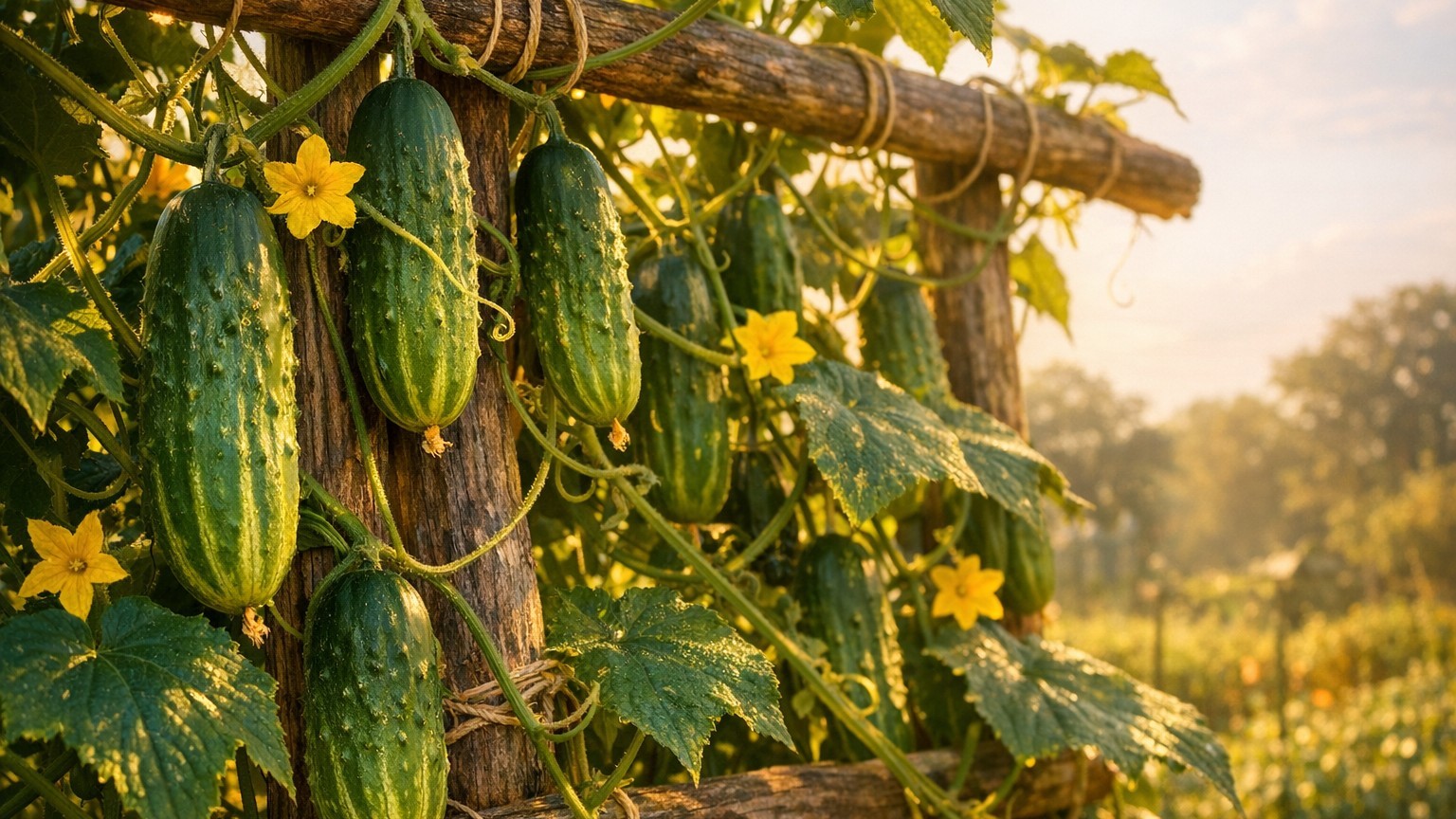

Oregon’s mild, dry summers favor cool-tolerant types over heat-hungry ones: pickling and slicing cucumbers both do fine here, but the real split is between types that need sustained heat to set fruit and types bred for shorter, cooler growing windows, including parthenocarpic and bush varieties that don’t wait on pollinators or a long hot stretch.
The short answer for Oregon
Start with what the numbers actually say about a west-of-the-Cascades garden, since that’s where the reference data for this page comes from. The frost-free window runs from a last spring frost between March 6 and March 21 to a first fall frost between November 11 and November 27. Even in the tighter version of that window, you’re looking at roughly 235 days without freezing weather, which is generous by national standards. Cucumbers don’t need anywhere close to that many days, so season length is not the limiting factor for most of the Willamette Valley and other low-elevation west-side gardens.
Heat is the more interesting constraint. The reference station averages just 11.9 days a year at or above 90°F. That’s a cool summer by cucumber standards, cucumbers are a warm-season crop that ripens faster and sets fruit more reliably with real heat. A variety bred for a hot, humid Midwest or Southern summer may sulk here, growing vines but producing slowly. This points toward types suited to milder, maritime-style summers: bush cucumbers for small beds and containers, since they don’t need the vertical heat buildup a trellised vine gets from reflected warmth, and parthenocarpic (self-fruitful, “burpless” or greenhouse-type) cucumbers, which set fruit without pollination and tend to perform well when cool nights or light pollinator activity would otherwise cut yields.
Pickling and slicing types both work here. The choice between them is about kitchen use, not climate, pickling cucumbers are simply bred for smaller, blockier fruit that holds up in brine, while slicing types run longer and thinner-skinned. Both mature within the frost-free window with room to spare.
Rainfall shapes the decision too. Summer rain totals about 2.7 inches across June, July and August, with July down to just 0.51 inches. That’s not enough to carry a cucumber crop, which is thirsty and shallow-rooted. Any variety you choose here is going to need supplemental watering through midsummer regardless of type, so factor irrigation into the decision, not just which seed packet to buy.
For the actual cultivar names trialled and recommended for your county, that’s a job for Oregon State University Extension, not this page. What this page can tell you is the type of cucumber suited to Oregon’s frost-free length and low heat load: pickling or slicing, leaning bush or parthenocarpic where space is tight or pollinator activity is uncertain.
What will not work here
Long-season, heat-dependent types are the clearest mismatch. Some cucumber varieties, particularly those bred for hot Southern or Midwestern summers, rely on a long stretch of high heat to ripen quickly and produce heavily. With only 11.9 days a year reaching 90°F at the reference station, a variety that expects sustained heat will grow slowly and may still be setting fruit when the first fall frost arrives between November 11 and 27. The frost-free window is long enough in days, but the heat inside that window is thin, and cucumbers respond to heat units more than to calendar days alone.
Weekly watering schedules fail here too, and this is a mistake gardeners transplant from wetter climates. July averages just 0.51 inches of rain, June 1.63 inches, August 0.54 inches. A cucumber plant with shallow roots and broad leaves loses water fast in a dry, low-humidity July, and a once-a-week soak lets the top few inches of soil dry out completely between waterings, especially on sandy or fast-draining soil where that same half-inch of July rain disappears within a day. The plant responds by aborting flowers or producing bitter, misshapen fruit. This isn’t a variety problem, it’s a scheduling one, but it will sink even the right type of cucumber if ignored.
Direct-seeding too early is the other common failure. Cucumber seed wants warm soil to germinate reliably, and planting before the last frost date window closes, especially on the early end near March 6, risks a cold snap or a cold, wet soil that rots seed before it sprouts. The safer play in a cool, damp early Oregon spring is to wait until the frost risk has genuinely passed in your area, or to start seed indoors and transplant once soil has warmed.
Dense, sprawling vining types packed tightly on the ground can also struggle, not from humidity (Oregon’s summer is dry, not damp), but from the plant simply not getting enough light and airflow in a small bed. Trellising solves this for vining types and also helps capture what little extra heat radiates off a wall or fence, a small but real advantage in a low-heat-day climate.
What changes across Oregon
Oregon is not one climate, and this is where a statewide page has to stop short. The USDA hardiness zone range for the state spans 4a to 9b, one of the widest spreads of any state in the country, built on the USDA Plant Hardiness Zone Map’s single variable: average annual extreme minimum temperature. That gap between 4a and 9b is the difference between a harsh mountain winter and a mild coastal or valley one, and it tells you plant survival risk in winter, not summer growing conditions directly, but it’s a useful proxy for how much the state varies overall.
The frost dates and heat figures on this page come from a reference station west of the Cascades, in the milder, wetter part of the state. Central and eastern Oregon sit in high desert country, with a shorter frost-free season and a very different summer heat profile than the numbers cited above. A gardener in Bend, Burns, or the Ontario area is working with a compressed planting window and likely more heat during the day but colder nights, a combination that changes both when to plant and how much season-extension help a cucumber crop needs.
Elevation matters just as much as longitude here. Gain a few thousand feet and the last frost date pushes later, the first frost pushes earlier, and the number of hot days drops further still. A garden at altitude in the Cascades foothills or in southeastern Oregon’s high plateau country is working with a genuinely shorter, cooler season than the west-side figures on this page describe.
None of this means guessing. It means checking your own location against the map rather than assuming the west-side numbers apply. The USDA hardiness zone map and your local extension office are built for exactly this kind of variation, and the next section covers how to use them.
Where to check this for your own county
This page describes Oregon in broad strokes, using one reference station’s frost dates, heat days, and rainfall. Your county’s actual planting calendar, and the cucumber varieties actually trialled and recommended for your soil, elevation, and microclimate, live with Oregon State University Extension. That’s the resource built for county-level specifics, and a county recommendation will beat a state-level one every time, because it accounts for exactly the elevation and east-west variation described above.
When you get there, look for two things specifically. First, the local planting calendar for vegetable crops in your county or region, which will translate the statewide frost-date range into a more precise window for your actual location, whether that’s the Willamette Valley, the Rogue Valley, the coast, or the high desert. Second, look for variety trial results or recommended cultivar lists for cucumbers, since county extension offices and OSU’s horticulture program regularly test which pickling, slicing, bush, and parthenocarpic varieties perform best under local conditions.
Extension offices also tend to publish guidance on irrigation scheduling for vegetable gardens, which matters given how dry Oregon’s summers run. If your county office has a watering guide for vegetable crops, it will be calibrated to local rainfall and soil types in a way the state-level rainfall figures here can’t be.
Master Gardener volunteers, often based out of these same extension offices, are another practical resource if you want a real conversation about what’s working in gardens near you this particular season, since weather varies year to year even within the same normals.
Checking this against your own garden
Every date and figure on this page is a normal, an average built from three decades of weather data, not a promise about this year or your specific yard. Your own garden will tell you more than any calendar once you know what to watch for.
Soil warmth by feel is the first check. Press a hand into the planting bed a couple of inches down in spring. If it still feels cold and damp rather than merely cool, cucumber seed will sit and possibly rot rather than germinate, regardless of what the frost-date window on this page suggests. Wait for that ground to warm before direct-seeding.
The first flush of male flowers is the second signal. Cucumber plants typically produce male flowers before female ones, and a strong early show of male blooms tells you the plant has settled in and started reproductive growth. If female flowers (the ones with a tiny cucumber-shaped swelling behind the petals) are slow to follow, that can point to insufficient heat or stress, useful information if you’re deciding whether to add a row cover for extra warmth.
The first true leaves, the serrated ones that follow the rounded seed leaves, tell you the plant has moved past the fragile seedling stage. Watching how quickly they appear after germination gives you a rough read on how much heat and light your particular bed is actually getting, since a warmer microclimate (near a south-facing wall, for instance) will push that stage along faster than the open middle of a yard. That comparison, your own garden against itself over a season, ends up more useful than any statewide average once you’ve gardened the same spot for a year or two.