
Around Billings and similar valleys, the safe window for summer squash runs from mid-to-late May through late September, bracketed by a last spring frost that falls between April 29 and May 10 and a first fall frost between October 1 and October 14. Those two dates are the entire calendar; everything else in this article explains how to use them.
The short answer for Montana
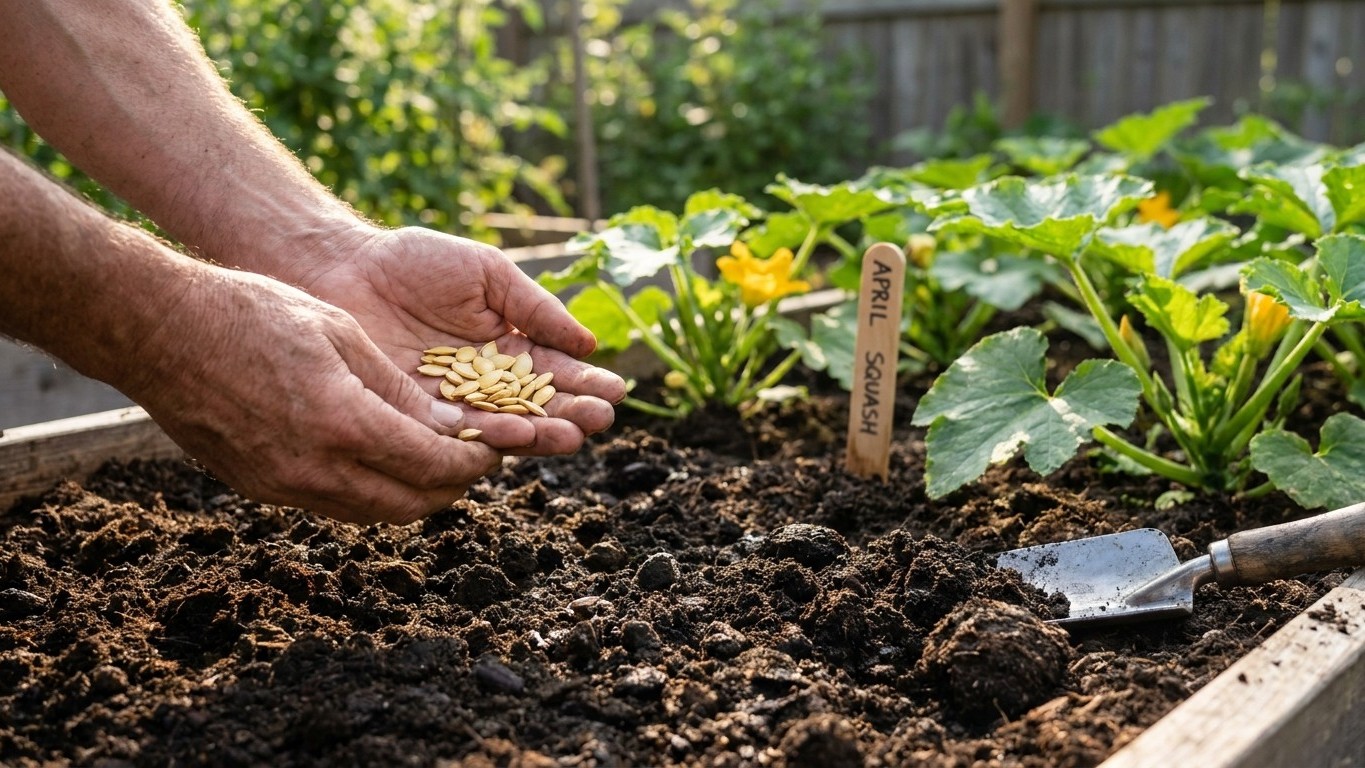
Plant Summer Squash outdoors, whether by seed or transplant, no earlier than the tail end of the frost window given for the Billings reference station: April 29 to May 10 for the last spring freeze. That’s a 30-70% probability band from NOAA’s 1991-2020 Climate Normals, not a guarantee. It means that even on May 10, there’s still meaningful odds of a freeze in a given year. Most gardeners who don’t want to gamble wait until the back half of that window has passed, closer to May 15-20, before seed goes in the ground.
On the other end of the season, the first fall frost sits between October 1 and October 14, again a 30-70% band from the same station and dataset. Counting from the later end of spring frost risk to the earlier end of fall frost risk gives a working season of roughly 144 days, from mid-May to the start of October. Summer squash varieties typically mature in 50 to 65 days from seed, so that window leaves real margin, even allowing two or three weeks for soil to warm enough for good germination.
Heat is the other half of the equation. The reference station averages 28.3 days a year at or above 90°F. Summer squash is a heat-loving crop, so this works in the plant’s favor for germination speed and fruit set, but it also means the plant will need more water than the seasonal rainfall total alone suggests.
| Factor | Value | What it means for sowing |
|---|---|---|
| Last spring frost (30-70% band) | April 29 – May 10 | Don’t sow before this window closes |
| First fall frost (30-70% band) | October 1 – October 14 | Harvest before this window opens |
| Days at or above 90°F | 28.3 per year | Higher water demand during peak summer |
| Working season length | ~144 days | Room for most summer squash varieties (50-65 days to maturity) |
So the short answer holds: mid-to-late May for planting, late September to the first days of October for finishing the harvest, with the heat load pushing water needs higher than the rainfall numbers alone would suggest.
What will not work here
Sowing before the last frost window closes is the single most common way to lose a summer squash crop in this region. Seedlings set out in late April or the first week of May sit inside a period where NOAA’s own data puts freeze odds at 30% or higher. Squash has no frost tolerance at all: one night in the low 30s and the seedlings are gone, and there’s no recovery, only replanting two or three weeks behind schedule.
On the other side of summer, a “water once a week and walk away” approach fails here more often than gardeners expect. Total summer rainfall across June, July and August averages about 4.3 inches, and it isn’t spread evenly: June brings 2.22 inches, July drops to 1.22, and August, the hottest stretch of the growing season, delivers only 0.87 inches. Combine that with 28.3 days a year above 90°F, and a weekly watering schedule that might be fine in a wetter, cooler state leaves squash roots dry and plants wilting through the driest weeks of the year, right when fruit is setting. Sandy soils make this worse, since they let that already-thin inch of rain drain through within a day rather than holding it for the plant to use.
Long-season summer squash varieties, the kind bred for extended harvest in milder climates, also tend to disappoint. A 144-day window is comfortable for most 50-to-65-day varieties, but it leaves little slack if a variety runs long, if soil takes an extra week or two to warm in spring, or if a grower is gardening in one of the state’s cooler mountain valleys rather than the milder reference valley these frost dates come from. Mountain valleys elsewhere in Montana can see frost in any month of the year, which makes a slow-maturing variety a real risk rather than a minor inconvenience.
None of this means summer squash struggles in Montana overall. It means the specific failure modes here are frost timing at both ends of the season and underwatering during the hot, dry back half of summer, not humidity or disease pressure from excess moisture, which is more of a concern in wetter regions.
What changes across Montana
Montana’s USDA Plant Hardiness Zones span 3a to 6a, a spread of six half-zones across one state, which is the range typically found from a warm river valley to a cold mountain basin. That’s a wide enough gap that a single frost calendar can’t responsibly cover the whole state. The frost dates and heat figures in this article come from the Billings reference station, which sits toward the milder end of that range. Higher-elevation and more northerly parts of Montana run colder, later to warm in spring, and quicker to frost in fall.
Practically, this means a gardener at higher elevation or further north should expect the safe sowing date to land later than mid-May, potentially into early June, and should expect the fall frost risk to arrive earlier than October 1, sometimes considerably earlier in a true mountain valley. The margin inside the 144-day window calculated for the reference station simply isn’t available everywhere in the state. In the coldest zone 3a pockets, gardeners often lean on shorter-maturity varieties and season-extension tools like row cover specifically because the growing window is tighter than what the Billings numbers suggest.
There’s no single planting date that covers Montana accurately, and this page won’t manufacture one. USDA’s Plant Hardiness Zone Map (2023 edition, built on 1991-2020 normals) is the tool for narrowing this down, using the average annual extreme minimum temperature as its one variable. It won’t tell a gardener their exact frost dates, but it will show how much colder or milder their specific area runs relative to the reference station used here, which is the first step toward adjusting this calendar for a specific location.
Where to check this for your own county
Montana State University Extension is the authority for county-level detail this page doesn’t have. State-level frost data, like the figures used throughout this article, comes from one reference weather station. A county office works from local trial data, local frost records, and often decades of direct feedback from growers in that specific county.
Two things are worth looking for on the county extension page specifically. First, a local planting calendar, if the county publishes one, which will adjust the frost window given here for local elevation and microclimate rather than relying on the Billings station. Second, a list of squash varieties that have actually been trialled in that county’s conditions, since variety performance under a short, hot, dry Montana season can differ meaningfully from how the same variety performs in a seed catalog’s national description.
A county recommendation will beat a state one every time, because it accounts for local elevation, local soil, and local frost patterns that a single state-level article can’t capture. This page works from one reference station’s data and a statewide hardiness zone range; a county extension office works from that county’s own numbers. Where the two disagree, the county source is the one to trust.
Checking this against your own garden
No calendar date beats what the plant and the soil are actually showing on a given year. Three signs are worth checking before committing seed to the ground, regardless of what the calendar says.
- Soil warmth by feel. Summer squash seed wants soil that feels warm to the touch, not just frost-free air temperature. Cold soil, even after the last frost date has passed, will sit on seed without germinating and can rot it instead.
- The first flush of male flowers. Squash plants typically produce male flowers before female ones. Their appearance signals the plant has moved past establishment and into active growth, a useful check that the plant is thriving in that particular spot’s conditions.
- The first true leaves. The initial round seed leaves aren’t the plant’s real leaves. Once the first true, deeply lobed squash leaves appear, the plant has rooted well enough to handle a bit more sun and less coddling, a sign the local microclimate is treating it well.
These three observations matter more than the calendar dates in this article, because they reflect what’s actually happening in one specific yard, on one specific soil type, in one specific year, rather than a 30-year average from a single weather station miles away. The calendar sets the range; the garden itself narrows it down.