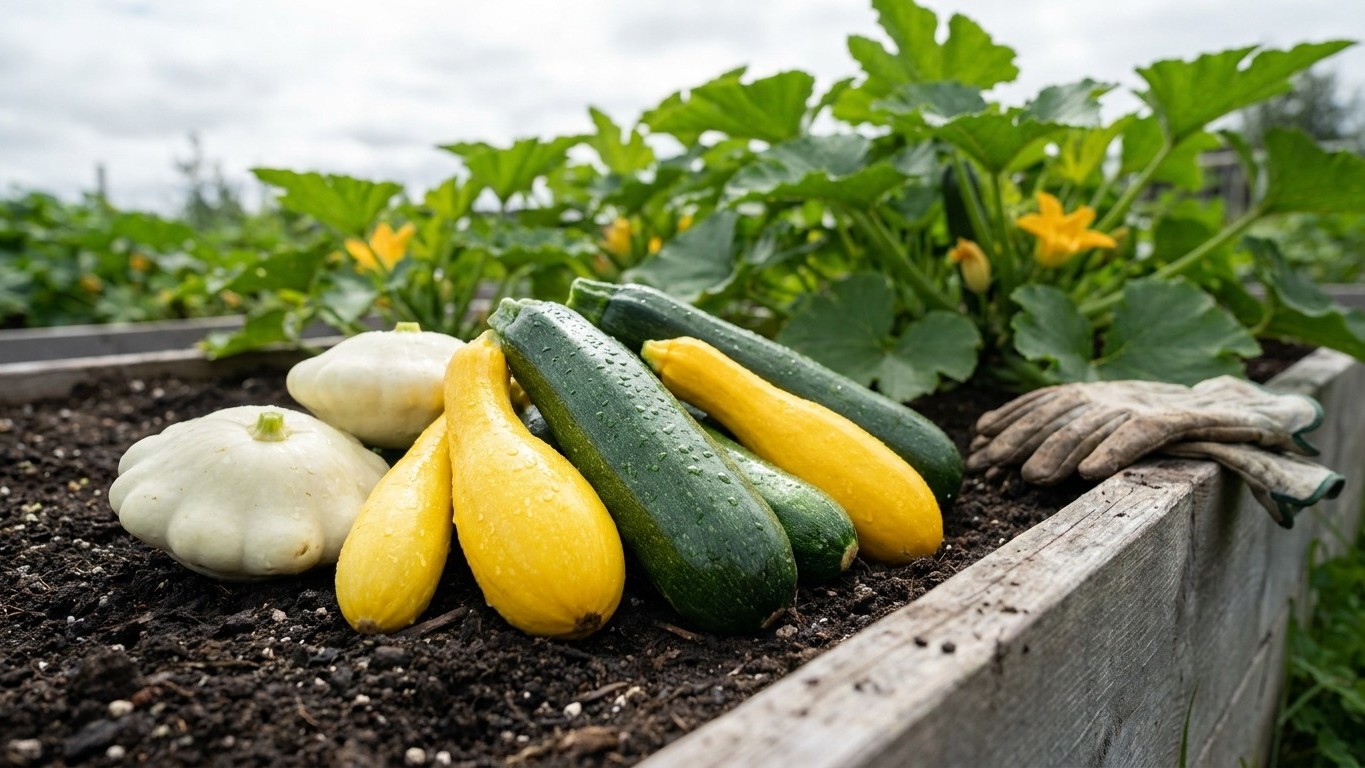

Bush zucchini and bush yellow squash varieties bred for 50 to 55 days to maturity are the reliable choice across Wyoming. Skip anything vining or slow, because the state’s frost window leaves little room for a squash that needs two extra weeks to start producing.
The short answer for Wyoming
Start with the calendar, not the seed catalog. Last spring frost at the reference station runs May 7 to May 18, and the first fall frost arrives September 24 to October 5. That’s roughly 130 frost-free days at 6,000 feet, and the caution attached to those dates matters more than the dates themselves: frost is possible in any month at higher elevations. A squash variety that needs 65 or 70 days just to set its first fruit is gambling with a window that can close early.
Heat isn’t the limiting factor here. The reference station averages only 10.4 days a year at 90F or hotter, a modest heat load compared to states where squash plants fry by July. That number tells you Wyoming gardens aren’t fighting sunscald or blossom drop from extreme heat. They’re fighting time. So the decision by type is straightforward: compact, bush-habit summer squash that mature fast beat anything bred for flavor complexity or extended vining growth.
That points toward three groups worth planting. Bush zucchini varieties bred for the 45 to 55 day range give you the fastest turnaround from seed or transplant to harvest. Bush yellow squash, whether crookneck or straightneck, run on a similar timeline and tend to hold up well once night temperatures start dropping in early September. Scallop and patty pan types, especially the compact bush forms rather than older sprawling strains, also fit the window and add variety to the table without adding risk.
What doesn’t make this list is anything advertised as a heritage or specialty summer squash with a long vine habit, the kind that needs 70-plus days before you see real production. Those varieties exist for gardeners with six or seven frost-free months. Wyoming, even in its warmer valleys, isn’t offering that. The state’s own hardiness zone range, discussed below, confirms how much the growing conditions shift from one county to the next, but the season-length math holds everywhere: fast bush types are the safe bet, and anything marketed as slow-to-mature is a bet against the frost dates already on record.
What will not work here
Vining summer squash types are the first casualty. Trombetta, tromboncino, and other long-vine summer squash varieties are technically summer squash, harvested young and tender, but their growth habit behaves more like a winter squash: sprawling vines, a slow build toward flowering, and 70 to 100 days before the plant is in full production. Set against a 130-day frost-free window that can shrink further at elevation, that math rarely works. A grower who starts one of these in late May, after the last frost risk clears, is often still waiting on real harvest volume when the September frost dates arrive.
Watering on a once-a-week schedule is the second failure point, and it’s easy to miss because Wyoming isn’t a scorching state by the 90-degree-day count. But summer rainfall averages only about 5.8 inches across June, July, and August, with August the driest month at 1.52 inches. Squash plants have shallow roots and large leaves that lose water fast, and even a modest 10.4 days a year above 90F is enough to pull moisture out of soil that isn’t getting refilled by rain. A single deep watering every seven days leaves long dry stretches in between, especially in August, and that stress shows up as stunted fruit, bitter flavor, or blossom drop before the plant has produced much of anything.
Skipping season extension entirely is the third mistake, and it’s specific to this state’s numbers rather than a generic gardening tip. The frost-date caution attached to these facts is blunt about it: season extension is not optional here. Direct-seeding squash outdoors and hoping the last frost lands on the early side of the May 7 to May 18 range is a real gamble, and a late frost after transplants go in unprotected can set a bush variety back by a week or more, which matters when the whole growing window is already tight.
One thing that isn’t the problem in Wyoming: tight spacing. In humid states, crowding summer squash invites fungal disease because leaves stay wet and airflow is poor. Wyoming’s dry summers largely remove that risk, so standard spacing recommendations on the seed packet are usually fine here. The failure points are timing and water, not crowding.
What changes across Wyoming
Wyoming’s USDA hardiness zone range spans 3a to 6a, and that’s a wide spread for one state to carry. There’s no single answer to when or how to grow summer squash across that range, because a 3a garden and a 6a garden are working with genuinely different growing seasons, not just a few degrees of difference. The reference figures in this article come from a station representative of the Cheyenne area, generally on the warmer end of that range, so a garden in a colder zone should shift expectations earlier and more cautiously, not later.
In the coldest zones, typically the higher-elevation and northern parts of the state, the frost-free window is shorter than the state-level averages suggest, and the caution about frost being possible in any month at higher elevations is a real, live risk rather than a footnote. Gardeners in those areas benefit most from starting squash indoors as transplants, using row cover or cold frames to buy an extra two or three weeks on both ends of the season, and leaning hardest on the fastest-maturing bush varieties available, sometimes the 42 to 48 day types rather than the standard 50 to 55 day range.
In the warmer end of the zone spread, closer to 6a, gardeners get a bit more room to work with. The frost-free window opens earlier and closes later, and a 55 to 60 day variety becomes a reasonable bet rather than a stretch. Even there, though, the state’s overall pattern of a modest heat load and limited summer rain still applies, so watering discipline matters regardless of which zone a garden falls into.
None of this tells an individual reader which zone applies to their own yard, because a state-level hardiness map can’t resolve differences at the scale of a single property, especially in a state with mountains, valleys, and elevation swings of thousands of feet within short distances. The right move is checking the USDA Plant Hardiness Zone Map directly for the specific address in question, not estimating from a county name or a nearby town.
Where to check this for your own county
This article gives the state-level picture, built from a single reference station’s climate normals. That’s useful for understanding the general pattern, but it isn’t a substitute for county-level guidance, and Wyoming’s range of elevations and microclimates makes that gap wider than in flatter states. A recommendation built for one county can be wrong for another county two hours away.
The University of Wyoming Extension is the place to close that gap. Extension offices maintain planting calendars built around local frost data rather than a single statewide station, and many county offices publish or can point to variety trial results specific to their growing conditions. That’s information this article simply doesn’t have: which particular squash varieties have actually been tested and performed well in a given county’s soil, elevation, and microclimate.
Two things are worth asking the local extension office for specifically. First, the local planting calendar, which will reflect frost dates for that specific location rather than the statewide range used here. Second, any variety trial data for Summer Squash in that county, since extension services often run comparison trials and publish which bush zucchini or yellow squash varieties held up best under local conditions in recent growing seasons.
A county-level recommendation beats a state-level one every time, because it accounts for the elevation, soil, and microclimate variation that a state average can’t capture. This page is the state one. Treat it as the starting framework, then let the county extension office fill in the specifics that actually apply to one particular piece of ground.
Checking this against your own garden
Every date and average in this article is a regional pattern, not a promise about one specific yard. The most reliable information a gardener has is what’s happening in their own soil and on their own plants, and that beats any calendar.
Soil warmth by feel is the first check. Summer squash seed germinates poorly in cold soil, and a grower can test this without a thermometer by simply digging a couple of inches down in the morning before the sun has warmed the surface. Soil that still feels cold and damp, almost refrigerator-like, to the hand is telling a gardener to wait, regardless of what the calendar says the last frost date should be that year.
The first flush of male flowers is the second signal worth watching. Squash plants typically produce male flowers before female flowers, and a burst of yellow blooms with no small fruit forming behind them is normal, not a sign of failure. It’s an early indicator that the plant has shifted into reproductive growth, and female flowers, recognizable by the tiny swollen squash shape at the base of the bloom, should follow within a week or two if conditions are favorable.
The appearance of true leaves is the third marker. The first leaves a squash seedling produces are rounded seed leaves, not the plant’s actual foliage. True leaves, the larger, more deeply lobed leaves that follow, signal that the plant has moved past its most vulnerable seedling stage. A garden where true leaves are slow to appear, even with seemingly adequate warmth and water, is often flagging a specific local issue, whether that’s a cooler microclimate than expected, compacted soil, or a planting date that ran ahead of the ground’s actual readiness that year.