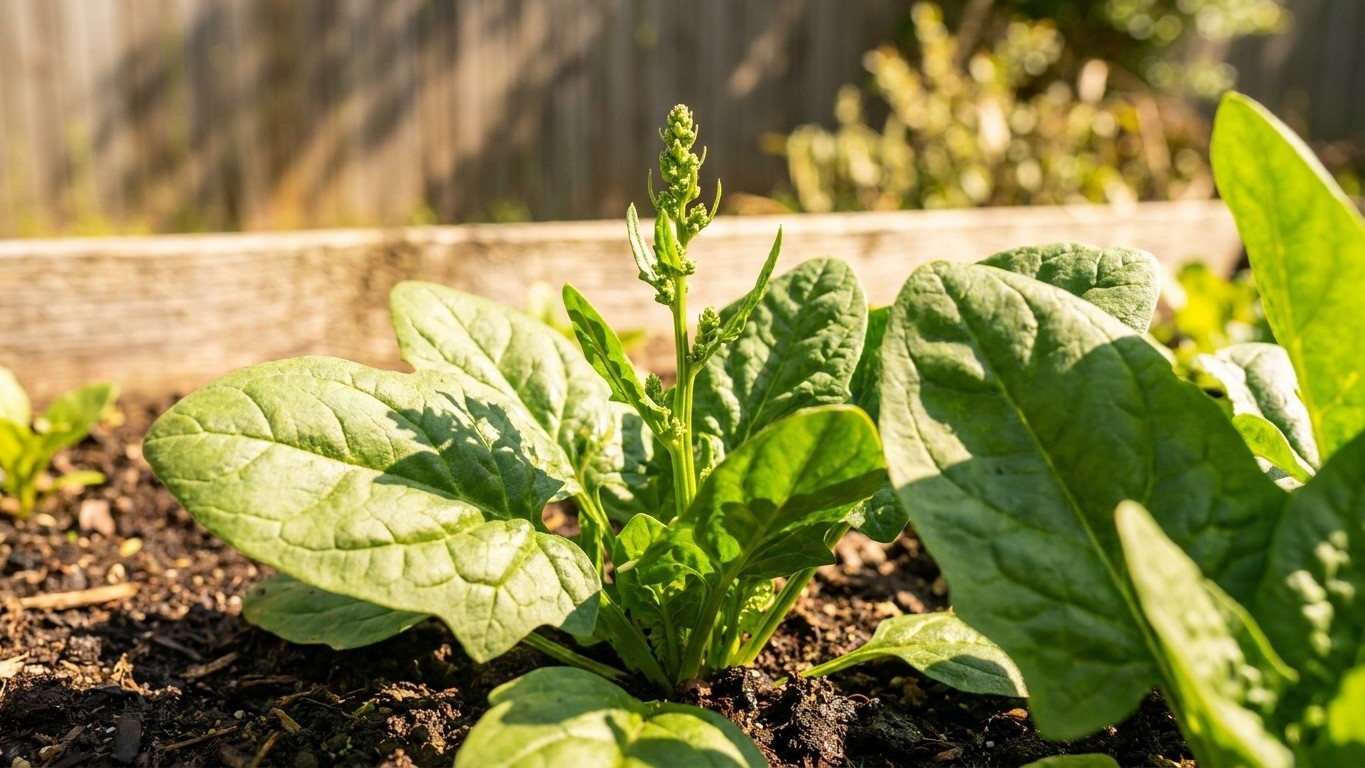

University of Kentucky Extension Entomology does not name a single spinach specialist among the pests it tracks statewide. The species on its list are generalists and specialty feeders tied to trees, shrubs, and vine crops, and what puts them anywhere near a spinach bed is timing, not appetite. Their active weeks happen to overlap the narrow stretch when Kentucky spinach is actually in the ground: right after the last spring frost, and again in fall ahead of the first one.
Which pests attack spinach in Kentucky
University of Kentucky Extension Entomology documents ten pests for this state: Azalea lace bug, Bagworm, Brown marmorated stink bug, Eastern tent caterpillar (Malacosoma americanum), Fall webworm, Japanese beetle, Spotted cucumber beetle, Squash bug, Squash vine borer, and Striped cucumber beetle. That is the full list the service publishes here, and it is short on purpose. It is a general landscape and garden roster, not a spinach-specific one.
Most of it has no business near a spinach leaf. Azalea lace bug feeds only on the undersides of azalea foliage. Bagworm builds its case on conifers and broadleaf shrubs, not on low garden greens. Eastern tent caterpillar strips wild cherry and crabapple canopies. Fall webworm webs over tree branches late in the season. Squash bug and squash vine borer are cucurbit specialists, bound to squash and pumpkin vines, and have no reason to touch a spinach row.
That leaves four names worth watching, and even those come with a caveat: Brown marmorated stink bug, Japanese beetle, Spotted cucumber beetle, and Striped cucumber beetle are all broad, opportunistic feeders. None of them is documented by this service as a primary spinach pest. What they share is a willingness to sample whatever green tissue is available when their preferred hosts are scarce or when a bed of low, tender seedlings is the only thing up. None of the ten species on this list is named by the service as a dedicated spinach feeder, so treat any of the four generalists as an occasional visitor, not a guaranteed threat.
The practical takeaway is that a spinach grower in Kentucky is watching for incidental damage from insects that would rather be somewhere else, during a window when spinach itself is fighting a tighter constraint than any bug: heat. Spinach grows best where temperatures stay under 75°F, and that ceiling, not insect pressure, decides how long the crop stays in the ground before it bolts or gets pulled.
When each one shows up, and what it does first
Spinach’s spring window opens around the last frost date, which falls between March 24 and April 4 at the reference station, and rural gardens should expect it tighter than that. That is also when overwintering adults of the generalist feeders start moving. Striped and spotted cucumber beetles emerge as soon as low seedling foliage is available, and a bed of freshly sprouted spinach can be one of the only tender green targets around before cucurbits are even planted. The first sign is small, scattered holes in the youngest leaves, sometimes clustered near the center of the plant.
Brown marmorated stink bug adults also come out of overwintering in spring and will probe whatever foliage they find. On spinach, the first sign is not a hole but a faint, bleached stippling on the leaf surface, points where the insect pierced and fed without removing any tissue.
Japanese beetle arrives later and heavier, but by the time its populations peak, spring spinach in Kentucky has usually already bolted. Day length keeps climbing through late spring, and combined with rising soil and air temperatures, that is what pushes spinach to flower, not insect pressure. Once the plant sends up a center stalk, it is finished as a leaf crop regardless of what is feeding on it.
A fall sowing changes the calendar again. The source recommends planting 50 to 75 days before the date a gardener wants to harvest, and that sowing has to wait until soil temperatures drop, since germination falls off above 80°F soil. In Kentucky, with an average of 37.2 days a year reaching 90°F or higher, that cooling can take a while to arrive. Brown marmorated stink bug stays active into fall and can still be found on young fall seedlings right up until the first frost, which lands between November 2 and 12 at the reference station.
Telling the damage apart from everything else
Spinach fails for plenty of reasons that have nothing to do with insects, and mixing them up leads to the wrong response. The clearest rule of thumb: if no leaf tissue is actually missing, it probably is not chewing damage.
| Symptom | Likely cause | What tells it apart |
|---|---|---|
| Scattered round or ragged holes in young leaves | Beetle feeding | Tissue is physically gone; check at dusk or early morning for the insects themselves |
| Pale, bleached stippling on the leaf surface | Piercing-sucking feeding (stink bug) | No tissue removed, just discolored puncture points |
| Uniform yellowing between veins, whole plant affected evenly | Nutrient deficiency | Symmetrical across the plant, not concentrated on a few leaves |
| Wilting despite damp soil, leaf edges crisping | Heat stress as temperatures near the 75°F growth ceiling | Shows up across the whole bed during hot stretches, not on isolated plants |
| Center stalk elongating, leaves turning pointed and bitter | Bolting, triggered by long days and warmth together | A life-stage change, not damage; nothing is missing |
| Torn or shredded leaves after a storm | Mechanical or weather damage | Traces back to one date, doesn’t spread day by day the way feeding does |
None of this replaces an in-person look. When two causes seem to overlap, the fastest way to sort it out is a county extension office, not a guess made from a photo.
What actually works here, and what is a waste of time
Given how short Kentucky’s cool window is, timing does more work than any treatment. A floating row cover set down at seeding, before the bed is even up, keeps beetles and stink bugs off entirely, since these are mobile, opportunistic feeders that need to physically land on the plant to sample it. That single step matters more in spring, when cucumber beetles are actively hunting for the first tender green thing available, than any later response once damage is already visible.
Handpicking works too, on a small scale, especially for the slower-moving cucumber beetles, and it avoids disturbing whatever is pollinating nearby crops. Keeping the bed weeded also removes alternate hosts that draw generalist feeders into the area in the first place.
What tends to waste effort is spraying reactively once holes show up. By the time feeding is obvious, the insect responsible has often already moved on, and broad treatments aimed at a generalist that isn’t even a named spinach pest here risk doing more harm to beneficial insects than good. Trying to dodge pest pressure by delaying planting is another losing move: pushing spinach later into spring runs it straight into rising day length and the 75°F ceiling, so it bolts before it even reaches full size. The extension service is the only authority on what is labeled for use on spinach in Kentucky, so any product decision belongs with them, not with a generic garden aisle recommendation.
Where to check this for your own county
University of Kentucky Extension Entomology publishes this pest list at the state level, and a species documented statewide is not a guarantee it lives in any one yard. Presence varies by county, by neighboring plantings, and by what overwinters nearby. A garden three counties away from another can have a completely different pest picture even under the same statewide list.
The next step is a county extension office. They can confirm what is actually present locally, look at a sample or a photo, and say whether a given insect is worth acting on this season or is just passing through. That local check is worth more than anything a statewide list can promise on its own.
Common questions
Does anything on the Kentucky pest list specifically target spinach?
No. University of Kentucky Extension Entomology does not name a spinach specialist among its documented pests; the species listed are generalists or specialty feeders of other plants.
Why does spinach disappear from the garden so fast in Kentucky?
Long days combined with warm temperatures trigger bolting, and spinach grows best under 75°F, so the crop’s own biology, not insect pressure, usually ends the season first.
Is it too late to plant spinach if soil is still hot in late summer?
Germination drops above 80°F soil, so a fall sowing has to wait for the soil to cool, then count 50 to 75 days back from the desired harvest date.
Do the named varieties (Bloomsdale, Melody, Teton, Olympia) resist these pests better?
The source names these four varieties without publishing performance data on any of them, so no comparison can be made here.