
Kentucky’s own extension records don’t publish a species-by-species list of carrot pests for the state. What is verified, from USDA soil mapping and university carrot guidance, is how Kentucky’s typical ground and the carrot root itself produce most of the damage growers actually see, and how much of it gets blamed on insects that were never there. That distinction, and where to send a real pest question, is the answer here.
Which pests attack carrot in Kentucky
No Kentucky extension service is named in the records behind this page, and no list of carrot pest species for the state is published among them. Pages built on real fieldwork name the insect, the county, and the season it showed up; without that data, the honest move is to say what’s actually covered here, then point toward the office that can identify what’s chewing a specific row.
What the sourced material does document is the ground carrots grow in. Kentucky’s official state soil, the Crider series, is a forest-derived Alfisol mapped across much of the state’s cropland: 19 percent clay, 76 percent silt, and just 5 percent sand in the surface horizon, pH around 6.2, organic matter near 3.0 percent, well drained. It’s a silt-heavy soil, and silt packs down under equipment and foot traffic in a way sandy ground doesn’t.
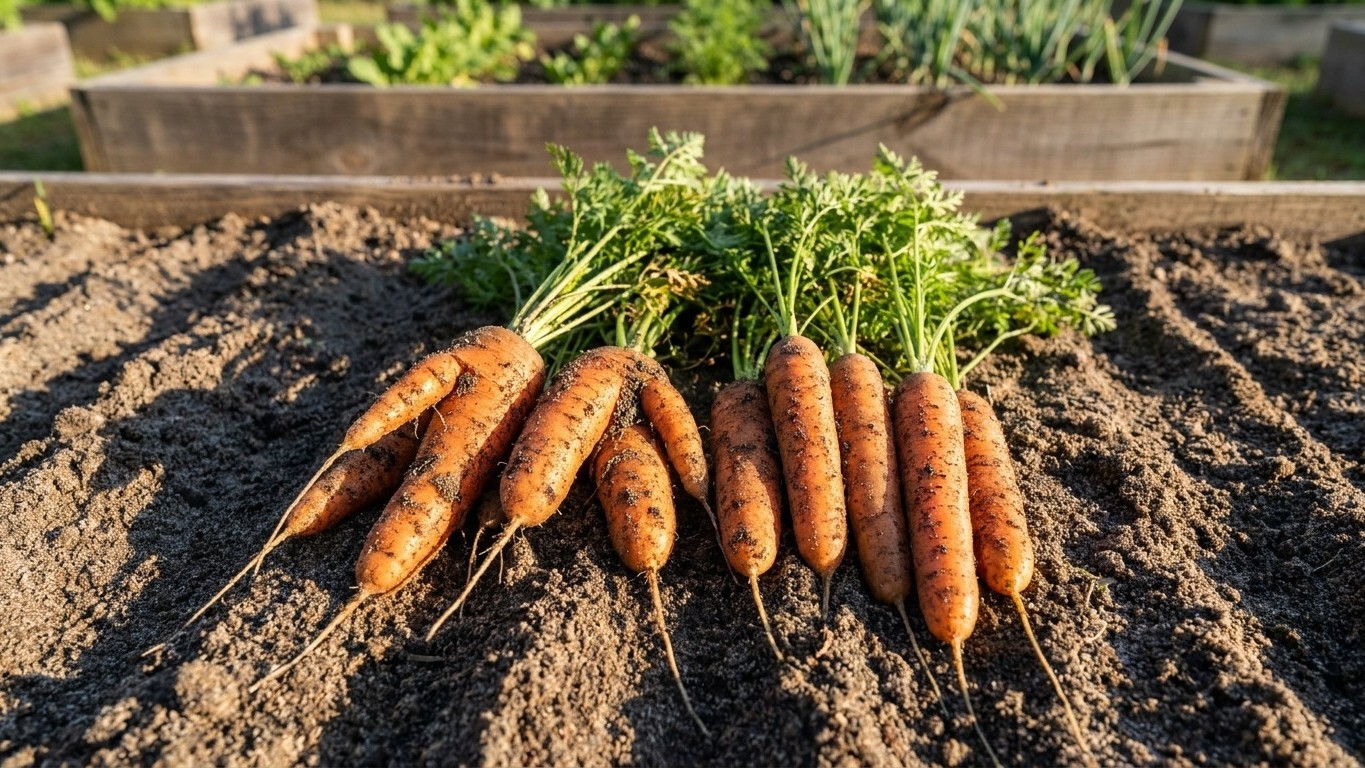
That texture explains a lot of damage that gets blamed on insects. Utah State University Extension is direct about it: carrots want deep, sandy, well-drained soil, and heavy or rocky ground makes the root fork. A forked, stubby carrot pulled from compacted silt loam is often blamed on a wireworm or a root maggot when the real cause never had legs.
None of this rules out insects working a Kentucky carrot bed. It means this page won’t hand out a species list it doesn’t have. A grower who finds actual tunneling, notching, or foliage loss that soil texture can’t explain has a real question, and the real answer lives at the county extension office, not in a pest sheet borrowed from another state.
The lesson from the soil data and the missing pest list points the same direction: rule out the ground before treating anything as an infestation. Heavy, compacted soil produces malformed roots on its own, no insect required.
When each one shows up, and what it does first
Carrots are sown directly in the row, never transplanted, so every count runs from the seeding date. Utah State University Extension puts full maturity at 70 to 100 days from seed; Clemson Cooperative Extension puts a workable harvest window at about 65 to 75 days. Kentucky’s soil records carry no separate maturity figure, so those two ranges are what this page can responsibly repeat.
In the first few weeks after seeding, while the taproot is thin and finding its way through silt loam, is when heavy or compacted ground does its damage. A root pushing into 19 percent clay doesn’t stop growing, it just can’t go straight, and that’s where a fork or kink gets set, often before the tops above ground show anything wrong.
Later, as roots thicken toward harvest size, splitting becomes the more common complaint, usually tied to uneven moisture rather than anything living in the row. A dry stretch followed by heavy watering swells the root faster than the skin can stretch, and the resulting crack gets mistaken for insect entry.
The 65 to 75 day mark is the decision point for pulling roots before storage problems start in the ground rather than the shed. Carrots left too long in wet, heavy soil past that window show more cracking and shoulder rot, whatever caused the first wound.
None of this substitutes for a name on an actual insect. Foliage loss, tunneling in a cut root, or something visibly living in the row runs on its own schedule tied to local temperatures, a figure this page doesn’t have for Kentucky and won’t guess at. That’s a call for the county office.
Telling the damage apart from everything else
Pulling up a bad carrot doesn’t say why it’s bad. Forking, splitting, stunting, and rot all look dramatic at harvest, and all of them can come from soil texture, water, or storage just as easily as from anything that eats. What actually separates the causes is where the damage sits on the root, not how ugly it looks.
| What you see | Likely non-pest cause | What points that way |
|---|---|---|
| Forked or multi-pronged root | Heavy, compacted, or rocky soil blocking the taproot | Fork points show no chewed or hollowed tissue |
| Split root, otherwise firm | Uneven watering swelling the root faster than the skin grows | Cracks run lengthwise with clean edges, not ragged or bored ones |
| Stunted, pale root | Compacted silt loam or low organic matter | The whole bed shows it, not scattered individual roots |
| Soft root after storage | Storage too warm, or tops left on drawing out moisture | Problem appears days after harvest, not in the ground |
| Tunnels, notches, chewed tops | Not explained by soil or storage data on this page | Hollowed tracks or missing tissue with no soil explanation |
That last row matters most. Soil texture and water explain forking, splitting, and stunting well, backed by the state’s own soil survey numbers. They say nothing about actual chewing damage, and this page won’t pretend otherwise. A hollowed root or foliage stripped overnight is a different category, and guessing at the culprit from a description is how misdiagnosis happens.
The safest move for that last row: bag a sample, note where on the row it came from, and take it to the county office rather than treating based on a guess. Soil-driven and insect damage can even show up on the same root the same season, which is why sorting by location on the root matters more than how bad the harvest looks.
What actually works here, and what is a waste of time
For soil-driven damage, the fix is the soil, not a spray. Utah State University Extension says heavy ground needs plenty of compost worked in, and double digging or building a raised bed is what actually loosens silt loam enough for a straight taproot, not a different variety or a later planting date. Kentucky’s representative soil sits at 76 percent silt and 5 percent sand, so working organic matter in deep, below tiller depth, does more for root shape than anything applied to leaves.
Pulling roots inside the 65 to 75 day window Clemson gives, rather than leaving them in wet ground hoping they’ll size up more, cuts down on the late-cycle splitting and shoulder rot that get blamed on pests after the fact.
Cutting the tops off before storage matters more than the storage container. Leaves keep pulling moisture out of the root after harvest, which is why bunched carrots with tops on hold only about 10 to 14 days while trimmed roots keep far longer. Storing at 33°F, just above freezing, with high humidity is the other half; a fridge crisper drawer gets close, a garage shelf at room temperature does not.
A waste of time: treating a fork or split as insect damage and reaching for a chemical response when nothing is chewing. Also wasted: swapping seed source to fix a problem sitting in the ground, and storing carrots with tops on past the 10 to 14 day window, then blaming the softening on age rather than the leaves that caused it.
Where to check this for your own county
The Crider series data behind this page comes from USDA NRCS’s Soil Survey Geographic Database, and it describes a representative mapping unit, not any one garden. A state spans hundreds of soil series, and river-bottom ground, hill-country clay, or anything a builder has cut and filled can behave nothing like the state’s official soil. The same caution applies to pests: an insect documented somewhere in Kentucky doesn’t mean it’s in a specific county, or a specific row, this season.
Two calls settle both questions faster than any general page can. A county extension office can identify an actual pest from a sample, say what’s active locally and when, and confirm what’s legally labeled for use in Kentucky, something this page won’t guess at since pesticide registration is state-specific and changes. A soil test through the same office replaces the state’s representative Crider numbers with the real pH, texture, and organic matter of the bed in question, which is the only number worth acting on.
Kentucky’s land-grant extension system runs through the University of Kentucky Cooperative Extension Service, with an office in nearly every county. That’s the right stop for a sample bag, a soil test kit, or a timing answer tied to this year’s actual weather.
The next step isn’t another general article. It’s pulling a suspect root, noting exactly where on it the damage sits, and walking it into the county office with a soil sample from the same bed.
Common questions
Does Kentucky publish a list of carrot pests by county?
Not in the state-level soil and crop records reviewed for this page. County extension offices track local pest activity and can speak to specific insects; that detail lives with them, not in a general state soil survey.
Can heavy soil alone ruin a carrot crop without any pest involved?
Yes. Utah State University Extension notes that heavy or rocky soil forks the root on its own, and Kentucky’s representative Crider soil runs 76 percent silt with only 5 percent sand, texture that can produce forking, stunting, and splitting with no insect present.
How long do harvested carrots actually keep?
Clemson Cooperative Extension gives 10 to 14 days for bunched carrots with the tops still attached, since the leaves keep drawing moisture from the root. Trimmed carrots stored at 33°F with high humidity keep considerably longer.
Should a gardener treat for pests as soon as a carrot comes up misshapen?
No. Misshapen roots are frequently soil-driven, from compacted or rocky ground, rather than insect damage. Checking the root for actual tunneling or chewed tissue, and getting a county extension identification if something is found, comes before any treatment decision.