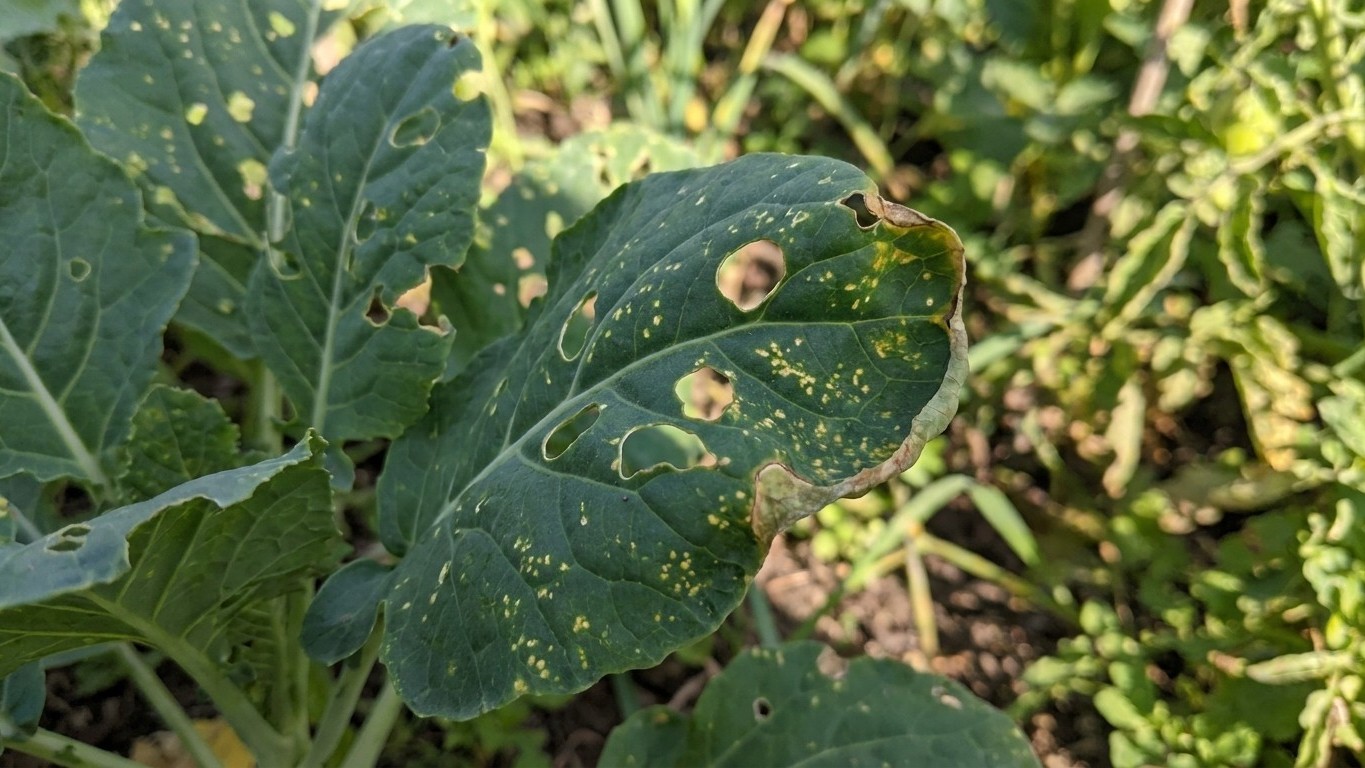

This page has no verified list of squash pests for Nunavut, so it names no insect as present. The climate figures it does have point to one answer: the main thing eating a summer squash plant here is the calendar. Frost, cold and a short gap between them do more damage than anything with mandibles. Whatever chews on a plant in your community is a local question, and it starts with the season.
The short answer for Nunavut
In Nunavut, the biggest threat to a summer squash plant is frost, not a bug. The page has no pest survey for the territory, so it will not tell you which insects or animals show up, or when.
How long the window really is
At the Rankin Inlet A station, Environment and Climate Change Canada’s 1981-2010 normals put the last spring frost on average on June 19 and the first fall frost on average on September 13. Both are means, not promises. In one year out of two the spring frost falls later than June 19, and in about half of years the autumn frost arrives before September 13. Treat each date as the middle of a window.
Between those two averages sit roughly 86 days. Clemson Cooperative Extension, writing for a much warmer garden, says summer squash can be harvested about 55 days after planting. That is a yardstick, not a Nunavut forecast, and cool weather usually stretches it. Still, 55 against 86 leaves about 31 days of slack on a perfectly average year. Not a comfortable cushion.
The slack matters for pests in a way it doesn’t farther south. In a long season a chewed plant can sprout new leaves and carry on. Here, a seedling that loses its first leaves in late June may not have the weeks to catch up. That is my reading of the numbers, not a measured result, but it explains why damage that a southern gardener shrugs off deserves attention early in a Nunavut summer.
What the heat count tells you, and what it doesn’t
Rankin Inlet A recorded 0.0 days a year reaching 32 °C across 1981-2010. The count for 30 °C is 0.03 days a year. That zero is measured, not missing: the daily record is complete and the temperature was never reached. Heat of that order simply does not occur at that station.
Pest calendars in southern garden guides are built on long, hot summers, and they do not transfer to a place with this count. Nothing here says the territory cannot grow warm-season crops. It says a calendar written for Georgia has no business running your garden.
What will not work here
Planting on the average last frost date comes first. June 19 is the midpoint, so a seedling set out that day faces a coin flip on whether another frost comes. Frost is the one thing that reliably kills squash leaves in a night, and no insect works that fast.
Slow varieties and late starts
Any variety that needs much more than the 55 days Clemson quotes runs out of season. With about 31 days of slack between the two average frost dates, each week of delay costs nearly a quarter of it. Waiting for the weather to settle, then planting a week or two late, is how a gardener ends up with flowers and no fruit at the first frost. The When to Plant Summer Squash in Nunavut page works through the sowing window in more detail.
Waiting for a warm spell does not help either. At 0.03 days a year above 30 °C at the reference station, a heat wave is not coming to rescue a late start.
Habits borrowed from warmer places
Weekly deep watering is the wrong default in both directions. Summer rain at Rankin Inlet A runs about 127 mm (5.0 inches) across June, July and August, and 310 mm (12.2 inches) over the year. June is the driest month at 27 mm (1.05 inches), then July rises to about 42 mm (1.65 inches) and August to about 57 mm (2.26 inches). Seedlings go in during the driest stretch, so early watering matters, especially on sandy soil that lets rain through within the day. Clay holds an inch for a week. With no hot days to drive evaporation, soil dries more slowly than it would farther south. These are 1981-2010 normals for one airport station, not a forecast for your plot. A straight-sided can set out near the bed will tell you what your garden actually gets.
Borrowed spray schedules fail for the same reason borrowed planting dates do. They are timed to insects whose presence here this page cannot confirm. Reach for a treatment only once you have seen the damage and know the cause.
The last habit that fails is planning to store a glut. Summer squash does not keep. Clemson gives up to one week in a plastic bag in the refrigerator, and that is the whole answer; freezing or preserving is the only route for extra fruit. The plant also stops setting new fruit once one matures on it, so picking small and often is the yield. The When to Pick Summer Squash in Nunavut and What to Do With a Glut page covers it.
What changes across Nunavut
Nunavut is not one garden. Every figure on this page comes from a single reference station at Rankin Inlet A, and the territory stretches across a huge span of latitude, coast and inland country. This page does not have a spread of zones for it, so there is no single answer to give you.
What it does have is one hardiness reading: zone 0a in the Canadian system, from Natural Resources Canada’s 1991-2020 normals for the reference city. That is a Canadian zone, not a USDA zone, and it does not convert. The Canadian system uses seven climate variables where the USDA uses one, and Natural Resources Canada says plainly that there are no simple conversions between them. Which zone you are in is a matter for the Canada’s Plant Hardiness Site map, where you can look up your own community.
The frost dates carry a second warning. The 1981-2010 normals for Rankin Inlet A are a different period from the 1991-2020 hardiness normals. Northern and upland districts run weeks behind this station. If you garden north of it, or at altitude, shift every date later in spring and earlier in autumn, and expect the 31 days of slack to shrink, possibly to nothing. In that case a plant that never reaches fruit before frost may matter more than anything chewing on it.
The same logic applies to pests, and it cuts both ways. A community farther north may be too cold for some pests, and a sheltered south-facing site may be milder than the station suggests. The page cannot say which. That is why the observation advice at the end of this article carries real weight. The hub page, Growing Summer Squash in Nunavut, sets out the wider picture.
Where to check this for your own county
Nunavut has no counties, so the closest thing is your own community, and the advice that applies to your community beats anything written for the whole territory. This page is the territorial one, built from one station’s numbers.
The federal department is the place to start: Agriculture and Agri-Food Canada. The territorial department’s own site refused our automated checks, so the federal site is linked because we could verify that it works. This page cannot promise it carries a Nunavut-specific pest page. When you get there, look for:
- A local planting calendar, ideally one built on frost dates from a station near your community rather than Rankin Inlet.
- Varieties that have actually been trialled in northern conditions, with days to harvest stated.
- Any pest or wildlife notes for your region, including what to look for and when it tends to appear.
If the federal site comes up thin, ask at your community’s greenhouse project, hamlet office or a neighbor who has grown anything outdoors. A person who has watched the same beds for several summers knows more about your frost pocket than any normals table.
Checking this against your own garden
Every date above is an average at an airport. Your garden’s own signals outrank all of them, and they cost nothing.
Soil warmth by feel. Push your hand into the bed to the depth of a seed. If it feels cold enough to ache after a minute, the soil is not ready, whatever the date says. A bed that warms sooner than a neighbor’s tells you about its slope, shelter and drainage. A slow bed is a bed that will give you fewer days.
The first flush of male flowers. Squash plants usually open male flowers first, then female ones with a tiny fruit behind the bloom. The date the first male flowers open is your own measure of how fast the plant is moving. If weeks pass with males only, the season is slipping, and the 55-day yardstick will not hold for you.
The first true leaves. The seed leaves come up first, then the rough, lobed true leaves. When they appear, the plant is established, and any damage from then on is something to identify. Note the date, what the leaf looks like and where on the plant, and take a photo.
That record is also the best answer to the question in this article’s title. A dated note of a chewed leaf, with a picture, is what a local grower or the federal department can actually work with. And pick the first fruit small: the plant stops setting new ones once one is allowed to mature.
Common questions
Does this page list the pests of summer squash in Nunavut?
No. It has climate and season data for Nunavut but no verified pest survey, so it names no species as present. Local growers and the federal department are better sources.
Can summer squash finish before frost in Nunavut?
It is tight. At Rankin Inlet A the average frost dates are June 19 and September 13, about 86 days apart, against Clemson’s 55 days to harvest in a warm climate. Both are averages, and half of years fall on the wrong side of them.
Is zone 0a a USDA zone?
No. It is a Canadian hardiness zone from Natural Resources Canada, built on seven climate variables. It does not convert to a USDA zone, and it describes the reference city, not the territory.
How long does picked summer squash keep?
Up to one week in a plastic bag in the refrigerator, according to Clemson Cooperative Extension. For anything beyond that, freeze or preserve it.