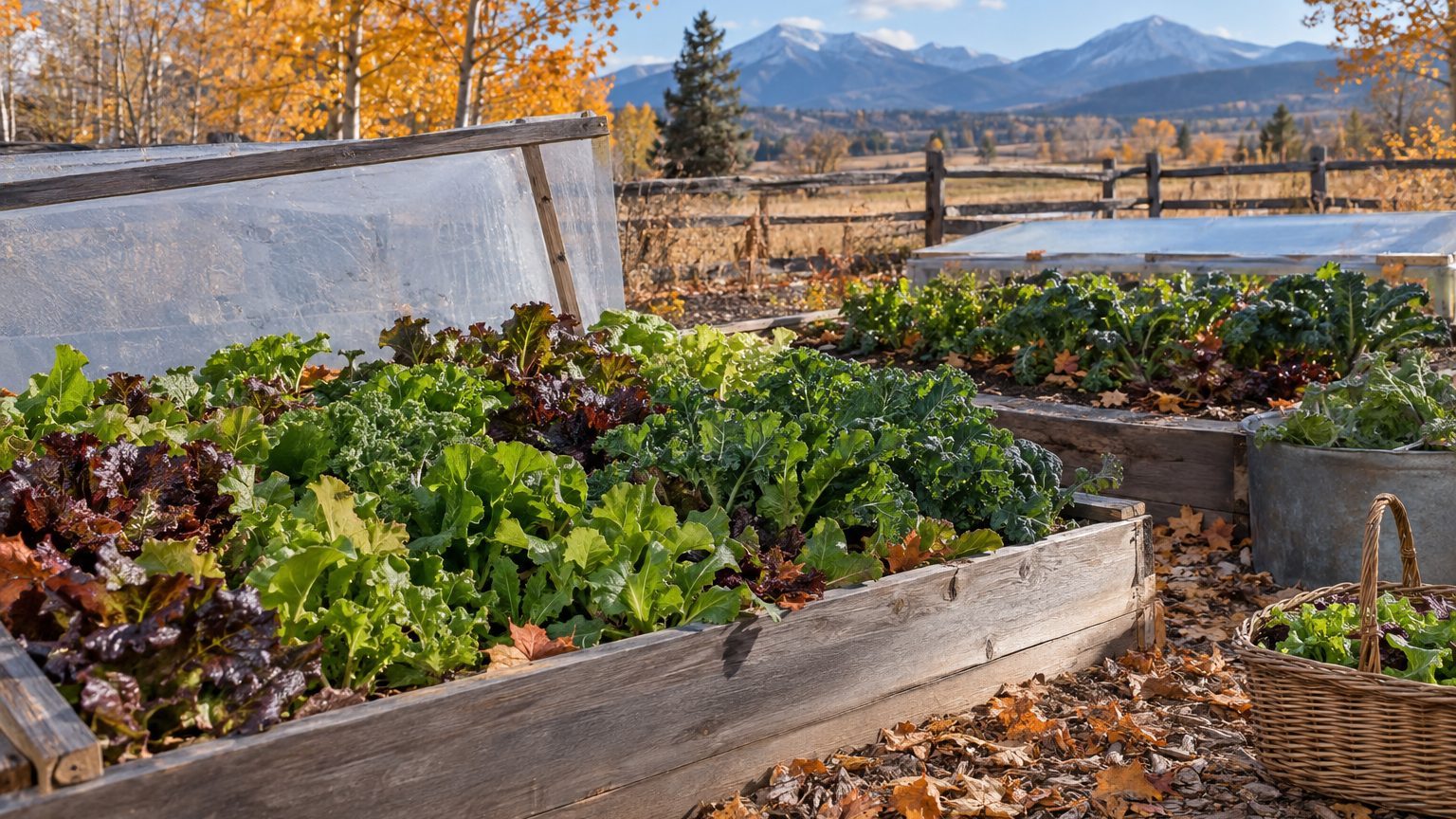

Growing winter salads in Louisiana runs on a calendar that most planting charts get backwards. The last spring frost lands between January 18 and February 8, the first fall frost between December 17 and January 8, and in some years neither shows up. The cold is rarely the problem. Summer heat is, so the real planting date is the day summer loosens its grip on the soil. The season ends when spring warmth pushes the plants to bolt.
When the soil is warm enough in Louisiana
The date most gardeners ask about is the last spring frost. At the NOAA station behind these figures, the NOAA NCEI 1991-2020 Climate Normals put it between January 18 and February 8, using the 30-70% band of 32F freeze probabilities. That is a probability, not a promise. Treat the range as the middle of the odds, not a guarantee in either direction.
Frost is a stand-in for soil
Salad crops do not read calendars. They respond to soil temperature, and soil warms after the frost risk ends, not with it. In most of the country that logic points to spring: wait for the soil, then sow. Louisiana flips it. Cool-season greens start in fall, once the ground finally cools after a long summer, and they finish in spring, when warming soil and longer days push lettuce and its relatives to bolt. The January and February range marks roughly when winter protection stops mattering. It does not mark when sowing begins.
Seed is where heat shows up first. Lettuce sown into still-warm autumn ground can sprout poorly or not at all, which is why many Gulf Coast gardeners shade the seedbed or sow in the evening. A soil thermometer settles the argument faster than a date does. If the bed is warm at midday, wait a week and check again.
When a freeze may not come at all
South Louisiana barely freezes. A 32F freeze occurs in only 86.8 percent of years at this station, so roughly one year in seven has no freeze at all, and the fall window straddles the New Year. A planting calendar built around “after the last frost” has little to say about that. North Louisiana freezes far more reliably, and the USDA Plant Hardiness Zone Map 2023 runs from 8a to 10a across the state. A gardener in the northern parishes should not borrow coastal dates, and a coastal gardener should not borrow theirs.
For which varieties have been trialled where you live, ask the LSU AgCenter. This page talks in types, because a variety name without local trial data is a guess.
How long the season lasts here
Subtract the fall frost from the spring frost and Louisiana produces a number that looks generous. Using both ranges from the NOAA normals gives the shortest and longest frost-free stretches:
| Case | Last spring frost | First fall frost | Frost-free days |
|---|---|---|---|
| Shortest | February 8 | December 17 | 312 |
| Longest | January 18 | January 8 (following year) | 355 |
Ten months at the least, nearly twelve at the most. But the frost-free window is the wrong measuring stick for a cool-season crop. Most of those days are summer, and summer is when salad plants cannot grow. The useful season is the cool stretch inside the window, from the day the soil cools in fall to the day spring heat triggers bolting. The frost figures only tell you that nothing in that stretch is likely to be cut short by a hard, lasting freeze.
What does a long window allow? Mainly a second and third sowing. A first sowing that fails to sprout in warm soil is not a lost season here, because there is time to try again a couple of weeks later. Sowing every couple of weeks through the cool months also spreads the harvest instead of delivering forty heads at once. Transplanting becomes a choice rather than a necessity. Direct sowing avoids the root check that seedlings take when moved, while starting seedlings indoors or in shade lets you hold plants back until the bed is cool enough. For the mechanics of staggering sowings, the parent guide, Winter Salads: What Grows When Lettuce Will Not, is the place to start.
Compare that with a short-season territory. In Winter Salads for Saskatchewan Gardens, the first sowing is often the only one, and every week counts. Next door, Winter Salads for Texas Gardens deals with a different mix of heat and cold. Louisiana’s problem is the reverse of Saskatchewan’s: too much calendar, not enough cool weather to use it.
Heat and water in Louisiana
This page does not carry a verified count of days above 90 F or a summer rainfall total for a Louisiana station, so it gives neither. Any number here would be a guess, and gardeners would catch it. What can be said honestly is that Gulf Coast summers are hot and humid, and the damp ground that follows is the setting every fall sowing starts in.
Everything after that is decided by the cold. The mean daily minimum of the coldest month at the New Orleans reference station is 46.1 F (NOAA NCEI Climate Normals 1991-2020). That is an average of lows, so individual nights run colder, and the freeze figures above show it. Still, it sorts the crops fairly cleanly. Hardy leafy greens, such as mustards, kale and collards, can stand uncovered through a typical south Louisiana winter. Tender lettuces and delicate salad leaves generally need a cover (a row cover or a cloche) on the nights a freeze is forecast, to stay in edible condition. And what cannot manage at all are the warm-season plants that sometimes get sown in the same bed out of habit, such as basil. North of the Gulf Coast, where freezes come reliably, covers move from occasional to routine.
The first frost sets the other limit: how late a sowing can still reach useful size before the light fails. With a first fall frost between December 17 and January 8, cold is not what ends a late sowing. The shortest days around the winter solstice are. Growth slows when light is scarce, so a sowing made in December may hold small plants for weeks. Sowing early in the cool season, as soon as the soil allows, gives plants a head start before light drops.
Water is the quieter factor. Humid air and frequent rain keep leaves wet, and wet leaves invite mildew and other foliar disease. Watering at the base in the morning, giving plants room for airflow, and mulching the root zone to keep soil off the leaves are practices, not products, and they do more than any spray. Raised beds and containers with good drainage help in heavy soils. Both also keep roots cooler than bare ground in the warm weeks of early fall.
Which winter salads suit Louisiana
The choice here comes down to three facts. The window of cool weather is long but starts late, so types that tolerate lingering warmth in the seedling stage have an edge. Heat arrives quickly in spring, so slow-to-bolt types hold on longer. And the humid air makes disease resistance the first criterion, ahead of flavor or looks.
- Cut-and-come-again loose-leaf lettuces are quicker than heading types, giving a harvest before spring heat arrives.
- Mustards and other brassica greens take cold well and handle lingering warmth better than many tender leaves.
- Kale, collards and chard stand uncovered through a typical winter and carry on until heat stops them.
- Chicories and endive add bitter leaves that cope with cool weather but need room for airflow.
Give every type the same treatment: shade at the root zone with mulch, wide spacing, and watering at the soil. Grow them in beds or containers. This site grows salad in beds and containers only, and does not cover gathering greens from ditches, streams or fields.
No variety names appear on this page, and that is deliberate. Which cultivars resist mildew, bolt slowly or tolerate a late-warm October depends on trials done in Louisiana soil, and this page does not hold those results. The LSU AgCenter is the right source: its recommendations come from the state’s own conditions, and the local parish office can say what has worked near you, from the coast to the northern parishes.
Common questions
Do I have to wait for the last frost before sowing winter salads?
No. Frost is a proxy, and in Louisiana most winter salads go in during the fall, well before the January 18 to February 8 range. What matters is that the soil has cooled after summer.
Will winter salads survive a Louisiana freeze?
Hardy greens usually do. Tender lettuces generally need a cover on freeze nights. The mean daily minimum of the coldest month at New Orleans is 46.1 F, but individual nights run lower, and freezes occur in 86.8 percent of years at the NOAA station used here.
Does summer heat matter if I am only growing in winter?
Yes, at both ends. Warm soil in early fall can stop seed from sprouting, and rising heat in spring ends the season by pushing plants to bolt.
Which varieties should I choose?
Ask your state extension service. The LSU AgCenter can point you to what has been trialled in Louisiana conditions, which a general page cannot.