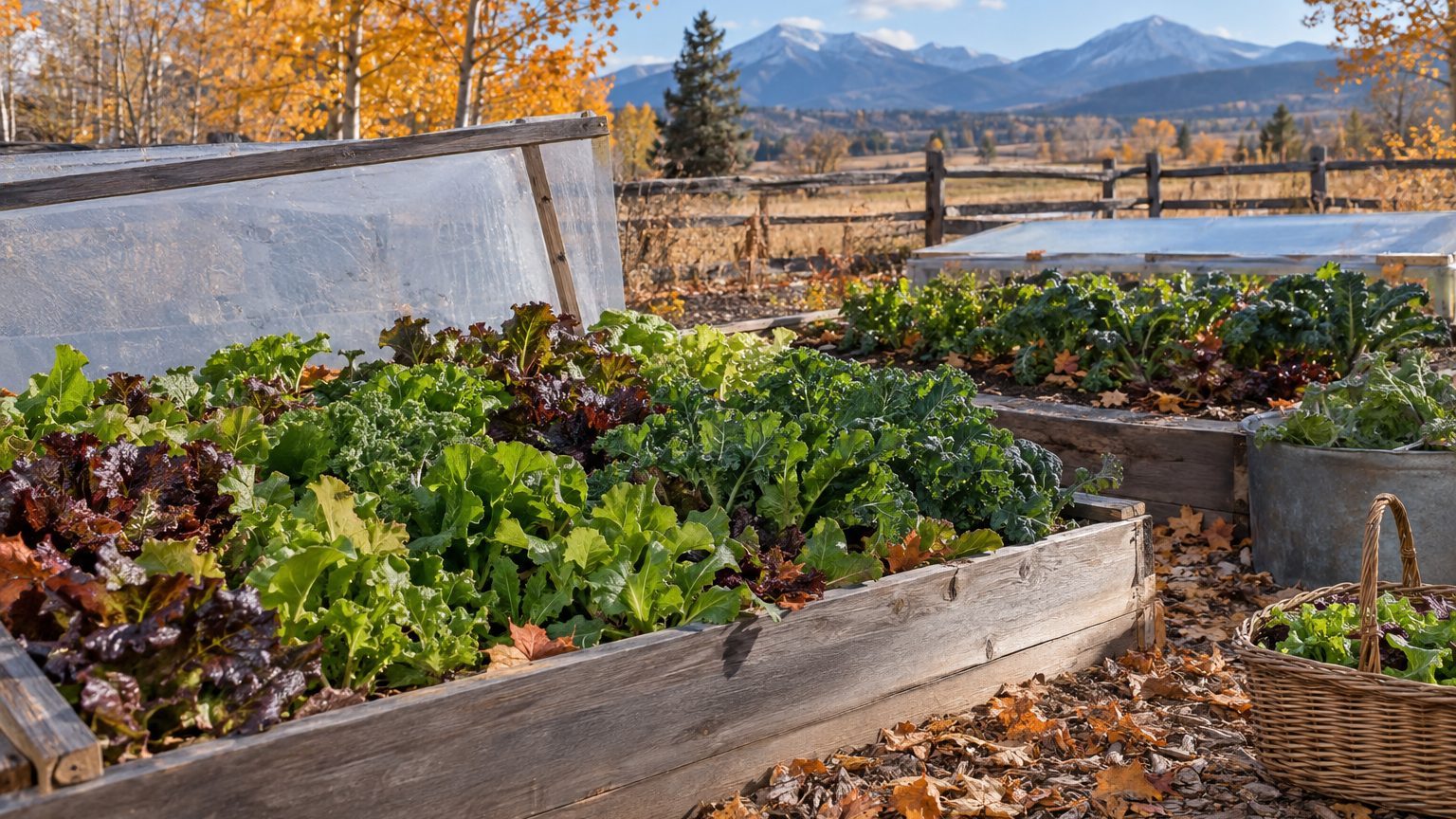

Winter salads work in South Carolina because the cold arrives late and leaves early, so leafy crops can stay in the bed most of the season. The calendar is set by the cold, not the heat. Sow when late-summer soil begins to cool, cut through winter, and clear the bed when spring arrives. Where you garden shifts every date, with the coast and the Upstate far apart.
When the soil is warm enough in South Carolina
The date most gardeners ask about is the last spring frost. At the Charleston airport station (USW00013880), the NOAA NCEI 1991-2020 Climate Normals put it between February 28 and March 17, using the 30-70% band of probability for a 32 F freeze. That is a probability, not a promise. A freeze can still land after the later date in any given year.
Why the frost date is only a proxy
Nobody sows seed into frost. Seed sits in soil, and soil lags the air. It warms after the frost risk ends, not with it. A bed can be frost-free on paper and still be cold and wet enough that seed sits for weeks. Use the frost band to know roughly when to start checking the bed. Then use a soil thermometer and the minimum soil temperature printed on the seed packet to decide when to sow.
The same lag works in reverse in fall, which is when most winter salads here get started. Air cools well before the ground does, and many salad seeds sulk in hot soil. A fall sowing often goes into a bed that still feels like summer, so shade, mulch and steady moisture matter more than the date on the calendar.
The fall end of the calendar
The first fall frost at the same station falls between November 20 and December 5, by the same NOAA normals and the same probability band. That gives a rough frame: sowings in early to mid fall, harvest from the first frost through the cool months, and a bed handed back around the last-frost band.
One caution matters more than any other on this page. The station sits at the Charleston airport. Peninsular Charleston is milder than the airport, and the Upstate runs several weeks tighter at both ends. A gardener near Greenville should expect a shorter, colder season than these numbers show, and should shift every date accordingly.
For the varieties trialled where you live, go to Clemson Extension. This page talks in types, not cultivar names, because it cannot source a local trial result. For the wider picture of what thrives when lettuce balks, the parent guide Winter Salads: What Grows When Lettuce Will Not covers the logic across all regions.
How long the season lasts here
Take the two frost dates and subtract. From the latest end of the spring band (March 17) to the earliest end of the fall band (November 20) is 248 days. From the earliest spring date (February 28) to the latest fall date (December 5) is 280 days. So the frost-free window at the Charleston airport station runs about 248 to 280 days, roughly 35 to 40 weeks.
What a long window allows
A window that long allows a second sowing, and a third. A first planting need not carry the whole season, which takes the pressure off. If a sowing fails, whether to a warm snap, a dry spell or a hungry rabbit, you can reseed two or three weeks later and still reach useful size. Staggered sowings also spread the harvest, so you are not facing a month of lettuce all at once and then nothing. The succession sowing guide on this site covers spacing the sowings and sizing each one.
It also changes the transplanting question. Transplants cost a root check, the stall a seedling takes when its roots are disturbed. That check is worth paying when the first sowing is the only one you will get. With a long window and the option to reseed, direct sowing is often the simpler path, and transplants are best kept for cases where the bed is not ready when the seedlings are.
Why the Upstate does the sum differently
The station figures describe the coast. The Upstate runs several weeks tighter at both ends, but this page has no verified dates for it and will not estimate them. Subtract your own local frost dates from your local extension office or a nearby weather station. If the answer is noticeably shorter, the arithmetic flips. The first sowing becomes the one that counts, and the earliest types become the safer bet.
The same arithmetic is useful turned around. The cold stretch between the fall and spring bands, roughly 85 to 117 days between the extremes of these dates, is the window in which winter salads stand and get cut. That number, not the long warm one, is the stretch these crops are sown to fill.
Heat and water in South Carolina
The count of days above 90 F and the summer rainfall total are not among the verified figures behind this page, so you will not find them here. A number recalled from memory is worse than none. What can be said honestly is that everything about winter salads is decided by the cold, and the cold has verified numbers.
What the winter low tells you
At the Charleston reference station, the mean daily minimum of the coldest month is 38.9 F. That is the average overnight low, not the record low and not the monthly average. It sits above freezing, which is why most hardy leafy crops can stand uncovered through typical winter nights on the coast. But an average hides the dips. The 32 F freeze probabilities that set the frost dates above show that freezing nights do arrive, and that is where the types begin to separate.
Sturdy brassica greens such as kale and collards usually stand uncovered. Many tender lettuces and baby-leaf mixes stay edible only with a light cover on frost nights, since leaf that freezes can turn to mush. A few warm-season salad herbs cannot manage winter at all and belong indoors from the first frost.
For the whole state, the USDA Plant Hardiness Zone Map (2023, built on 1991-2020 normals) lists zones 7a to 9a. That system rests on one variable, the average annual extreme minimum temperature. It is a territory-wide range, so use the map to look up your own ZIP code rather than assuming one zone.
The first frost sets the last useful sowing
The first fall frost, November 20 to December 5 at the reference station, also sets how late a sowing can still reach useful size before the light fails. Growth slows sharply as days shorten. A seedling that is still tiny at the first frost may never get larger. Count backward from the frost band using the days to maturity printed on the seed packet, then add a margin for the slower growth of short days.
Humidity matters too. Heat followed by damp air invites fungal disease in crowded beds. Wide spacing, morning watering and some shade over the root zone for early sowings all help. Gardeners on the humid Gulf coast face a similar problem, discussed in Winter Salads for Louisiana Gardens. Dry-heat gardeners can compare notes with Winter Salads for Arizona Gardens, where the heat problem comes with very little moisture to feed disease.
Which winter salads suit South Carolina
Choose by type, and let the territory’s facts do the narrowing. A short season favors the earliest-maturing types, which matters most in the tighter Upstate. A hot start to the fall favors types you can give airflow and shade at the root. A humid climate makes disease resistance the first thing to look for on a seed packet.
| Type | Cold behavior at the coast | What to watch |
|---|---|---|
| Hardy brassica greens (kale, collards, mustard) | Usually stand uncovered | Disease in humid, crowded beds |
| Spinach and other cold-loving leaves | Usually stand uncovered | Soil too warm at sowing |
| Loose-leaf lettuce and baby-leaf mixes | Cover on frost nights | Freeze damage, mildew |
| Tender salad herbs | Cannot manage winter | Move indoors at first frost |
You will notice there are no variety names. That is deliberate. A cultivar that does well in a Lowcountry fall can fail in the Piedmont, and this page has no local trial data to back a recommendation. Naming one anyway would be guessing, and gardeners spot a guess quickly. The varieties trialled in your own county are the only recommendation worth following. Clemson Extension publishes vegetable guidance for the state, and your county office can say what has worked nearby.
Everything on this site grows in beds and containers. Do not gather salad from ditches, streams or fields. Wild watercress from water grazed by livestock can carry liver fluke, and several plants that look like young salad leaves are seriously toxic.
Common questions
Is the last frost date the date to sow?
No. It is a guide to when to start checking. For spring sowings, the soil warms after the frost risk ends, so go by a soil thermometer and the seed packet. In fall, the problem is often soil that is still too warm.
Do winter salads need cover on the South Carolina coast?
It depends on the type. The coldest-month mean daily minimum at the Charleston reference station is 38.9 F, so hardy greens often stand uncovered. Tender lettuces and baby-leaf mixes usually want a light cover on freezing nights.
Will the Upstate dates match the Charleston ones?
No. The Charleston figures come from the airport station. Peninsular Charleston is milder, and the Upstate runs several weeks tighter at both ends. Use local frost dates for your own county.
What is my hardiness zone?
The USDA system lists 7a to 9a across the state, based on average annual extreme minimum temperature. That is a range, not a single zone. Look up your ZIP code on the official map.