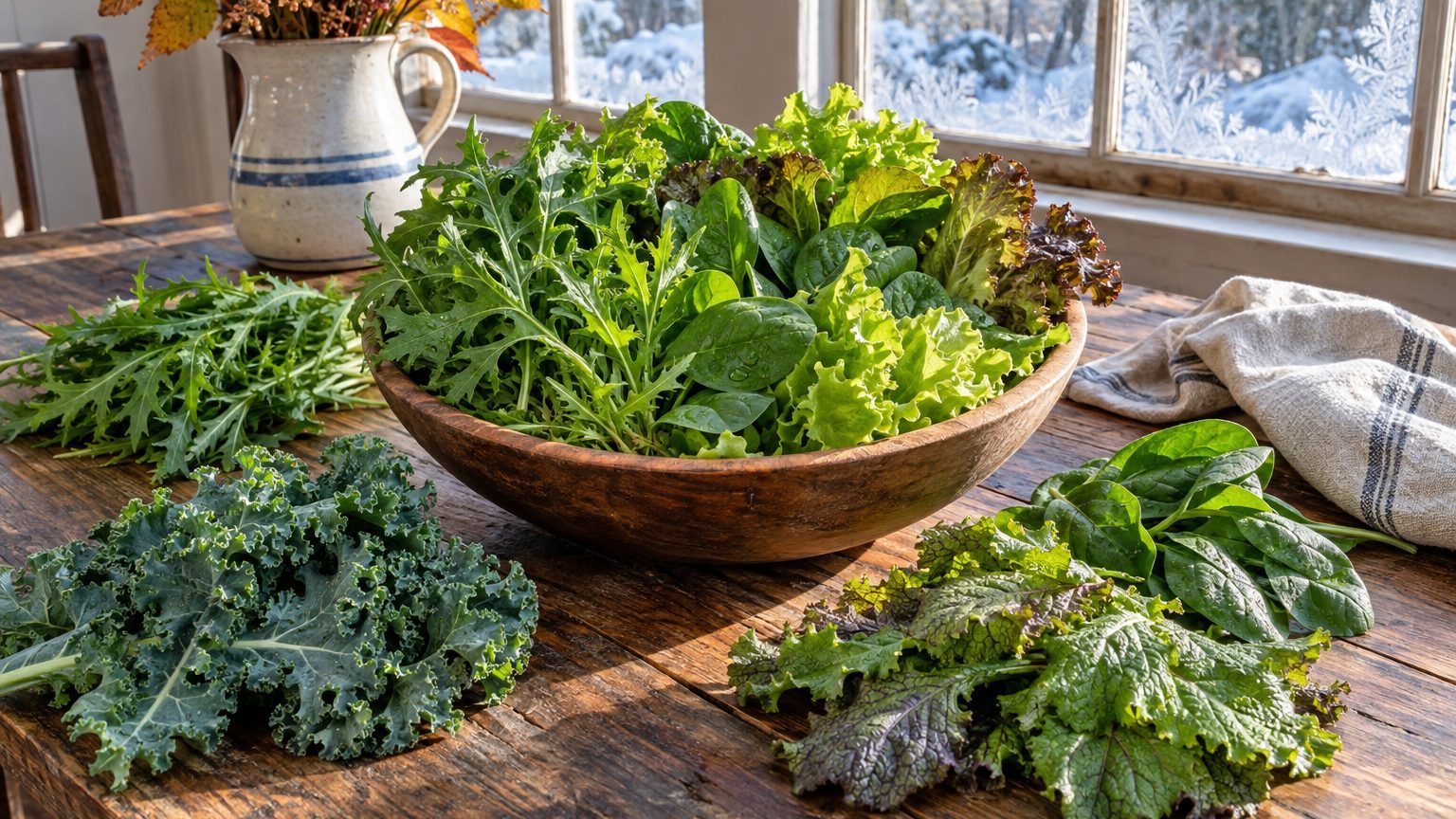

For most of Texas, the best winter salads are cool-season greens that grow fast and shrug off a light freeze: loose-leaf lettuce, spinach, arugula, mustard greens, kale and mizuna. Tight-heading lettuces and slow-maturing types lag behind. The dates below come from Houston, the mild Gulf end of a state that runs from USDA zone 6a to 10a, so they describe one corner of Texas, not the whole map.
The short answer for Texas
Choose fast, loose-leaf, heat-forgiving greens for the Gulf Coast and the milder parts of the state. Add freeze-hardy types such as spinach, kale and mâche as you move north or up in elevation. Houston’s numbers show why. The mean daily minimum of its coldest month is 43.7°F (NOAA NCEI 1991-2020 Climate Normals), which is chilly for people and barely a pause for a spinach plant. Cold rarely stops growth there. Heat, at both ends of the season, does.
The frost figures make the same point. At the Houston Intercontinental station (IAH), the last spring freeze falls between February 4 and March 1, and the first fall freeze between December 1 and December 19. Those windows are a probability, not a forecast: they mark the stretch of dates when the chance of a 32°F freeze sits between 30 and 70 percent. A first freeze that holds off until December leaves a long run of cool-ish weather, and a spring freeze that ends by early March means the season closes quickly once warmth arrives. For sowing dates built on these windows, see When to Sow Winter Salads in Texas.
Here is how the main types sort out on those terms:
| Type | Examples | Cold tolerance | Heat tolerance | Best role in Texas |
|---|---|---|---|---|
| Loose-leaf lettuce | Leaf, oakleaf, romaine-type cut-and-come-again | Light freezes only | Low to moderate; choose bolt-resistant strains | Backbone of Gulf and Central Texas salads |
| Spinach and mâche | Savoyed spinach, corn salad | High | Low | Deep winter, and the north |
| Mustards and Asian greens | Mizuna, tatsoi, red mustard | Good | Moderate | Fast results, strong flavor |
| Arugula | Standard and wild types | Good | Low; bolts fast in warm spells | Quick succession sowings |
| Kale and collards | Lacinato, curly types | High | Moderate | Baby leaves for salad, mature leaves for cooking |
| Chicories | Radicchio, endive, escarole | Good | Moderate | Bitter notes, slower to size up |
If you grow only three, make them a bolt-resistant loose-leaf lettuce, a mustard or mizuna, and spinach. That trio covers the warm shoulders of the season and the cold dips between.
What will not work here
Sowing lettuce in September heat is the classic failure. Houston’s first freeze doesn’t arrive until December, which means fall stays warm long after the calendar says autumn. Lettuce seed in hot soil often refuses to sprout, or sprouts and then turns bitter. The fix is patience, or starting seed in a cool, shaded spot and transplanting once the soil has cooled.
Slow, large-headed crops are the second casualty. Full-size heading lettuce and big radicchio need a long, steady cool spell to form tight hearts. In a place where a 43.7°F coldest-month minimum is normal, a 70-degree afternoon in January is no surprise, and plants trying to head up may bolt instead. Cut-and-come-again types skip the problem because you harvest them young.
Spring brings the opposite trap. With the last freeze window ending by March 1 on the Houston figures, warmth builds fast. Arugula and lettuce planted in late winter for a spring harvest get a short run before they send up flower stalks. Anyone planning on a “spring salad bed” that lasts into May along the Gulf will be disappointed. Treat spring as a bonus harvest of a few weeks, not a second season.
Warmth and humidity also make a mild winter hard on close spacing. Greens packed tightly stay damp, and damp leaves invite mildew and slugs. Give plants room for air to move, water in the morning, and expect that a mild, wet spell will do more damage than a freeze would.
The biggest mistake isn’t a plant at all. It is copying a Houston calendar into a garden that freezes on a different schedule. The Panhandle freezes months earlier in fall and months later in spring, and Hill Country and North Texas each run on their own clocks. Even inside Houston, Hobby airport runs about two weeks milder than IAH. A sowing date from the wrong place can mean seedlings killed by a hard freeze, or seed sown into soil that’s still too warm.
What changes across Texas
Texas has no single answer, and the hardiness map shows it. The USDA Plant Hardiness Zone Map (2023 edition, built on 1991-2020 normals) places the state anywhere from zone 6a to 10a. That system rests on one variable, the average annual extreme minimum temperature. It tells you what a plant survives, not when to sow, but the spread is wide enough to reshape the whole plan.
In the Gulf and South Texas end of the range, winter is a growing season. Lettuce, mustards, arugula and kale can be harvested through the cool months with, at most, a frost cloth for the odd cold night. The challenge is that heat-sensitive greens get a narrow slot, and so selection leans toward bolt-resistant, quick types.
Farther north, and at higher elevations such as the Panhandle, the problem flips. Winter cold becomes real, and tender lettuces left uncovered may not make it. Shift toward spinach, mâche, kale and hardy mustards, sow earlier in fall so plants are established before the hard freezes, and consider a cold frame or low tunnel to carry salads into winter. Central Texas and the Hill Country sit between those extremes, with freezes that come and go.
For the full picture of the state’s growing options, the guide to Winter Salads for Texas Gardens covers the wider context. To find your own hardiness zone, use the USDA Plant Hardiness Zone Map and look up your ZIP code. Don’t assume it from a neighbor’s garden or a state average.
Where to check this for your own county
Your state extension service is the best next stop. In Texas that is Texas A&M AgriLife Extension, part of the land-grant university system. Its county offices employ agents and Master Gardeners who know the local soil, the local freeze history and the pests that show up in your area.
Look for two things in particular. First, a local planting calendar or vegetable guide that lists cool-season sowing windows for your county, not just a statewide chart. Second, any varieties trialled in your county or a close neighbor: lettuce and spinach cultivars differ a lot in bolt resistance, and a variety that does well on the coast can flop in the Panhandle. If your county office publishes a fall garden guide, that is often the most useful single page.
A county recommendation beats a state one, every time. This page is the state one: it gives you the shape of the decision (choose by type, shift by region, watch heat at both ends), but it can’t say whether your county’s first freeze usually comes in mid-November or mid-December. When the extension calendar and this page disagree, believe the extension calendar.
Checking this against your own garden
Your own observations outrank every date on this page. Three things are worth watching, and none needs equipment.
- Soil warmth by feel. Push your fingers a couple of inches into the bed in the morning. If it still feels warm rather than cool, lettuce and spinach seed will probably sulk. A bed that cools sooner than a neighbor’s tells you about shade, drainage or wind exposure in your yard.
- The first male flowers on squash or cucumber. Males open first, before the fruiting flowers. In spring, their arrival says the warm season is taking hold and your salad window is nearly shut. A vine that flowers well ahead of the neighborhood marks a sheltered, warm microclimate.
- The first true leaves. The seedling’s initial leaves are rounded and simple; the second set looks like the real plant. If your seedlings reach the true-leaf stage slowly, your bed runs cooler or shadier than expected, and you may want to sow sooner next year. If they race ahead, it’s warm, so favor bolt-resistant types and pick young.
Write down what you see, even in a few lines on a calendar. After a season or two, you will have a better local guide than any chart.
Common questions
What is the easiest winter salad green to grow in Texas?
Mustards and mizuna are among the most forgiving. They sprout quickly, handle a light freeze and give usable baby leaves fast. Loose-leaf lettuce comes next, as long as you pick a bolt-resistant strain.
Can I use the Houston frost dates for my garden?
Only if you garden near Houston, and even then with care. The February 4 to March 1 spring window and December 1 to December 19 fall window describe the IAH station. They reflect a 30-70% probability band of a 32°F freeze, and they don’t fit the Panhandle, Hill Country or North Texas.
Do I need frost protection for winter salads?
It depends on where you live. Along the Gulf, where the coldest month averages a 43.7°F minimum in Houston, a light cover on the odd cold night may be all you need. Farther north, a cold frame or low tunnel makes the difference for tender lettuces.
Why do my greens keep bolting?
Warm days push cool-season plants to flower, and spring arrives early in Texas. Choose bolt-resistant varieties, sow in succession, and harvest young. Note that Houston’s Hobby airport runs about two weeks milder than IAH, so even across one city the bolting clock can differ.