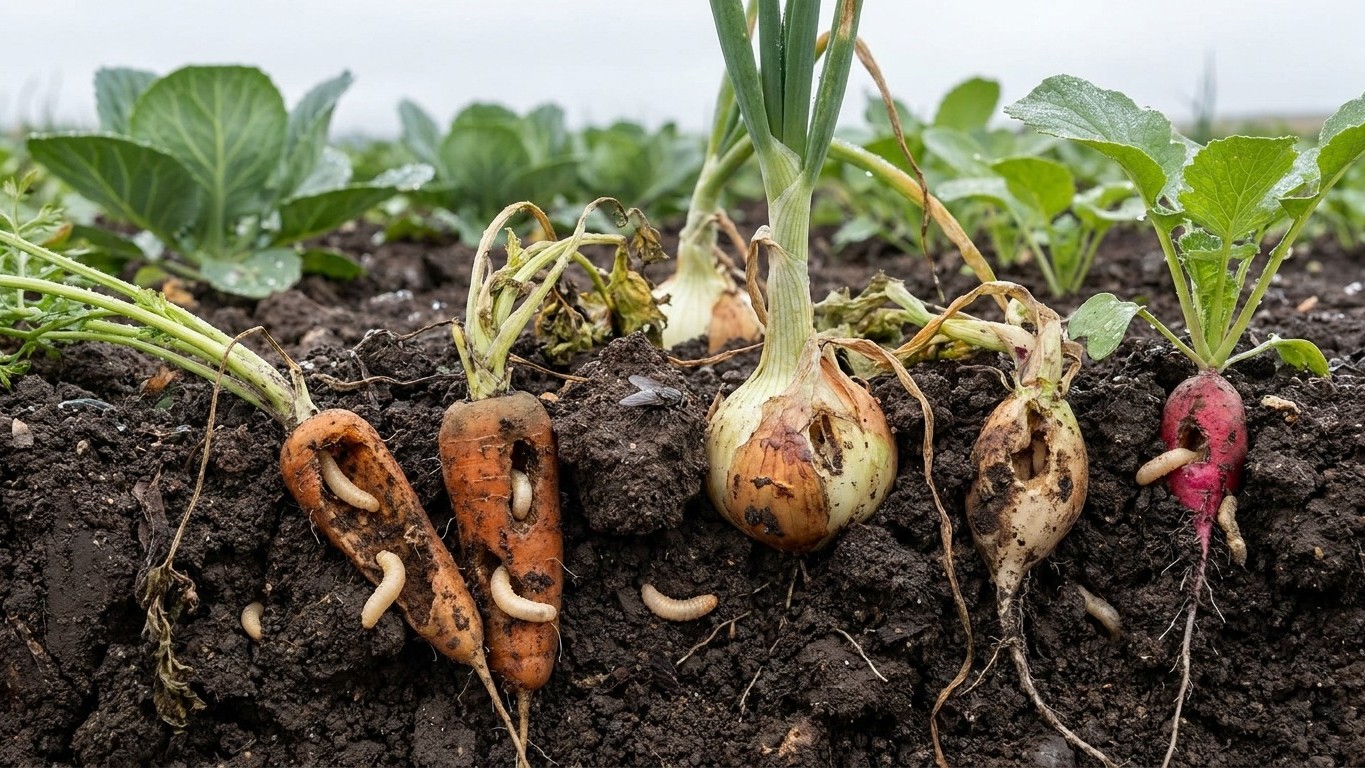

In most of New York, the best unusual roots are the ones that like cold: salsify, scorzonera, parsnip, celeriac, Jerusalem artichoke, horseradish, and fall-sown daikon or black radish. Tender tropical tubers such as yacon and oca are the gamble. The frost dates below describe New York City only. Upstate and the Adirondacks run on a different clock.
The short answer for New York
Choose by how much season a root demands. Hardy taproots and perennial tubers are the safe bets, fast cool-season radishes fill the fall, and tropical tubers belong to the experimenters. The frost dates explain the sorting.
NOAA’s 1991-2020 U.S. Climate Normals for New York City (Central Park) put the last spring frost at March 23 to April 3 and the first fall frost at November 14 to November 27. Those are probabilities, not dates on a calendar. The band marks where the chance of a 32°F freeze falls from 70% to 30% in spring, and where it climbs from 30% to 70% in fall. That leaves a bit more than seven months of frost-free growing between the late edge of spring and the early edge of fall. It is a generous window by northern standards, and it is a city figure. Central Park is a dense urban site, so the rest of the state frosts earlier in fall and later in spring.
The coldest month averages a daily low of 27.9°F at the New York City reference station. That is the number that matters for roots left in the ground over winter, and it is mild enough that parsnips, salsify, and Jerusalem artichokes can wait under mulch for harvest.
The decision by type
| Type | Examples | New York City | Colder upstate sites |
|---|---|---|---|
| Hardy long-season taproots | Salsify, scorzonera, parsnip, celeriac | Reliable | Workable with early sowing; start celeriac indoors |
| Perennial roots and tubers | Jerusalem artichoke, horseradish | Reliable | Reliable |
| Fast cool-season roots | Daikon, black radish, rutabaga | Best sown for fall | Sow earlier in summer |
| Tropical tubers | Yacon, oca | Marginal | Poor |
For a wider view of the category, see Growing Unusual Root Crops in New York. Sowing dates for each type are in When to Plant Unusual Roots in New York.
What will not work here
Tropical tubers top the failure list, and they fail for a specific reason. Yacon wants a long, frost-free stretch to bulk up, and oca forms its tubers late, as days shorten. Both need the season to run to its far end. New York City, with first frost between November 14 and November 27, can sometimes give them that. Anywhere upstate, an early fall freeze kills the tops before the tubers have formed much of anything. Even in the city, treat them as an experiment with a few plants, not a bed.
Late sowing of slow roots is the second failure. Salsify, scorzonera, and parsnip all need months, not weeks. A parsnip seed that goes in at the end of June has the city’s frost-free window to work with, but in colder parts of the state it is racing a frost that arrives much sooner. The ground-up logic is simple: the shorter the season, the less room for a root that sits through a slow, cool germination before it even begins to grow.
Spring sowing of daikon and black radish also disappoints. Sown as days lengthen, these radishes tend to bolt and turn woody. Sown in late summer for a fall harvest, they size up as the weather cools, and that timing fits New York’s long, mild autumn.
Then there is the winter assumption. A 27.9°F average low is a New York City number. It supports the idea of leaving roots in the ground and digging them as needed. In colder zones within the state, the soil can lock solid, and a gardener who waits for a January thaw may find the crop unreachable. Lift those roots before the ground freezes, and store them cold and damp.
This page does not carry summer heat or rainfall figures for the state, so it cannot rule on watering schedules or spacing in humid weather. One soil problem is common enough to mention anyway: compacted or rubble-filled urban soil forks and stunts taproots. Raised beds with loose, stone-free soil to at least a foot deep solve most of it.
What changes across New York
New York is not one garden. The USDA Plant Hardiness Zone Map 2023, built on 1991-2020 normals, runs from zone 3b to zone 7b across the state. That is four full zones of spread, so no single answer fits everyone. Hardiness zones also rest on one variable only, the average annual extreme minimum temperature. They say whether a perennial survives winter. They say nothing about how long your season is.
A reader in the north country or at altitude should shift in three directions. First, sow hardy taproots as soon as the soil can be worked, since the frost-free window is shorter than the city’s. Second, start celeriac indoors and skip the tropical tubers entirely. Third, lean on the plants that shrug off cold: Jerusalem artichoke and horseradish are perennial and tough, and they make a sensible base for a root garden anywhere in the state.
Lower Hudson Valley and Long Island gardeners sit closer to the city’s pattern and can follow the table above with fewer adjustments. Western and central New York land in between, and local lake effects and elevation can change a site’s frost pattern from one hillside to the next.
Look up your own zone on the USDA map instead of guessing from a neighboring town. Then use the zone for what it does well, which is judging winter survival of perennial roots, and use your frost dates for timing.
Where to check this for your own county
A county recommendation beats a state one, and this page is the state one. New York’s frost dates, soils, and growing seasons shift enough between counties that a calendar written for the whole state is a starting point at best.
The place to go is Cornell Cooperative Extension, the state’s land-grant extension service. Find your county association there and look for two things. The first is the local planting calendar, ideally with frost dates for a station near you instead of the city. The second is any list of varieties trialled in your county, since a variety that performed well in a nearby trial is a better pick than one chosen from a seed catalog.
It helps to ask the county office a pointed question. Does anyone locally grow salsify, celeriac, or Jerusalem artichoke, and when do they sow? Extension staff and master gardeners often know which unusual crops have been tried and which ones disappointed. This page does not have county trial results, and it will not pretend to.
Checking this against your own garden
Your own observations outrank every date here. Three are worth watching, and none needs equipment.
- Soil warmth by feel. In spring, push your hand a few inches into the bed. Cold, heavy, clumping soil means wait. Soil that crumbles and feels neutral against your skin is ready for hardy taproots. Beds that reach that point earlier, usually sheltered, sunny, or sandy ones, are your warm microclimates.
- The first male flowers on squash. Squash plants open male flowers before female ones. When they appear in your garden, summer warmth has truly arrived. Compare the date with your neighbors’ and you learn whether your site runs early or late.
- First true leaves. Sow a short test row of radish or beet. Once the first true leaves appear, past the rounded seed leaves, you know how fast seedlings emerge on your soil, and you have a signal for thinning.
Write the dates down for a season or two. A notebook beats a state-wide table.
Common questions
What is the easiest unusual root to grow in New York?
Jerusalem artichoke, by a wide margin. It is a hardy perennial, grows across the state’s zones, and needs little care. Plant it where it can stay, because small tuber pieces left in the soil will resprout.
Can I grow celeriac in upstate New York?
Yes, with a head start. Celeriac needs a long season, so start seed indoors and transplant after the last frost in your area. It tolerates cool weather well, which suits the north.
Are the Central Park frost dates safe for the whole state?
No. March 23 to April 3 and November 14 to November 27 are New York City figures from a dense urban site. Upstate and the Adirondacks frost later in spring and earlier in fall.
Can parsnips and salsify stay in the ground all winter?
In New York City, where the coldest month averages a daily low of 27.9°F, mulched roots can usually wait in the soil. In colder parts of the state, dig before the ground freezes solid.