
Sow hardy unusual roots such as salsify, parsnips and burdock in late winter through early spring, around Charlotte’s March 23 to April 5 last-freeze window. Hold frost-tender crops like sweet potatoes until that window is well behind you. Charlotte sits in the Piedmont, so mountain and coastal gardeners will need to shift these dates. Here is how the numbers work and where they stop applying.
The short answer for North Carolina
The calendar splits by crop type rather than by month. Cool-season roots go in as soon as the soil can be worked and again in late summer. Warm-season roots wait for settled weather. The frost dates below are your anchors, and the table shows how each type hangs from them.
| Type | Examples | Planting window |
|---|---|---|
| Hardy cool-season roots | Parsnip, salsify, scorzonera, burdock | Sow from late winter into the March 23 to April 5 window; sow again in late summer, finishing well before October 30 to November 8 |
| Frost-tender, long-season roots | Sweet potato | Plant after the spring window has passed and nights have settled; harvest before the fall freeze window |
| Hardy tubers | Jerusalem artichoke | Early spring, with no real urgency, since the tubers shrug off cold ground |
Those dates need a careful reading. NOAA’s 1991-2020 Climate Normals for Charlotte give March 23 to April 5 as the band where the probability of a 32°F freeze runs between 30 and 70 percent. It is the stretch where a late freeze is still a real possibility, not a date after which frost is impossible. The fall figures work the same way: October 30 to November 8 is the band where the odds of a first 32°F freeze sit between 30 and 70 percent.
Counting between the two ends of those bands gives a frost-free stretch of roughly 208 days (April 5 to October 30) up to about 230 days (March 23 to November 8). That is a long runway by northern standards. The planting question here is rarely “will it finish?” It is “will it be sown into soil it likes?”
For the winter side, the Charlotte reference figure is a mean daily minimum of 31.8°F in the coldest month. That number is an average of nightly lows, not the record cold, so a hard snap can still go well below it. But it explains why parsnips, salsify and Jerusalem artichokes can sit in the ground through a Piedmont winter and be dug as needed. For choosing what to grow in the first place, see The Best Unusual Roots to Grow in North Carolina. For the wider picture, start with Growing Unusual Root Crops in North Carolina.
What will not work here
A short season is not the enemy in North Carolina, so the usual northern warnings do not apply. With 208 to 230 days between frosts at the reference station, even slow roots have time. What fails is timing against heat and moisture.
Spring sowing that drifts into summer
Cool-season roots sown late are the most common casualty. A parsnip or salsify seeded in May is racing a Piedmont summer it was never built for. Germination gets patchy in hot ground, seedlings stall, and roots that do form tend to turn woody. The March 23 to April 5 window is not just a safety margin against frost. It is also roughly the last comfortable stretch before heat takes over. Treat it as a deadline for cool-season crops, not a starting gun you can ignore for six weeks.
Close spacing in a humid climate
Humid summers punish crowding. Foliage that stays wet, packed tightly together, invites leaf diseases, and slow-growing roots spend months under that canopy. Spacing that works on a dry western bench can become a liability across much of North Carolina. Give roots the wider recommended spacing, thin early, and water in the morning so leaves dry by evening.
Clay, nematodes and the wrong soil prep
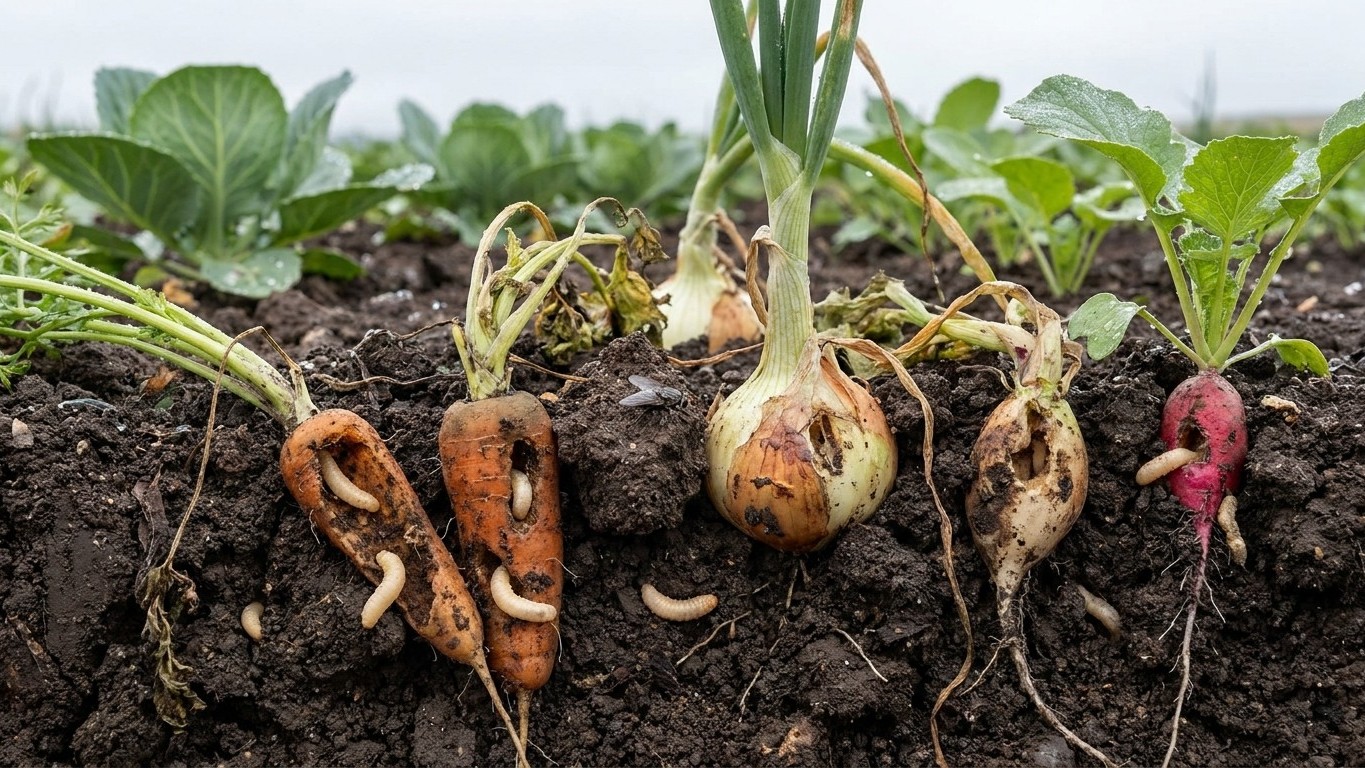
Much of the Piedmont is heavy clay, and long roots fork and stunt when they hit it. Raised rows or beds loosened deeply before sowing make a bigger difference than any variety choice. In sandier coastal soils, root-knot nematodes are a known problem in warm southern gardens, and they leave galled, misshapen roots. If you have had that trouble with carrots or sweet potatoes, expect it with the unusual ones too.
Planting tender crops on the frost date
Because the March 23 to April 5 band is a probability range, a sweet potato slip set out on its first day is gambling on the 30 to 70 percent odds. Frost-tender roots can also sulk in cool soil long after the last freeze. Wait.
One more thing that fails: leaving mature roots in the ground into the first fall freeze band without a plan. Tender crops like sweet potatoes have to come out before October 30 to November 8 is reached, since that is when a first 32°F freeze becomes a coin flip.
What changes across North Carolina
North Carolina is not one garden. The USDA Plant Hardiness Zone Map (2023 edition, built on 1991-2020 normals) places the state across zones 5b to 8b. That is a spread of three full zones, so there is no single answer to “when do I plant?” Zone is built on one variable only, the average annual extreme minimum temperature, which tells you what survives winter but not how soon spring arrives.
The frost dates on this page are for Charlotte, a Piedmont reference point. The Blue Ridge mountains to the west run several weeks later in spring, and the coastal plain runs earlier. In practice, a mountain gardener should push the whole spring calendar later, sowing hardy roots when the ground thaws and dries out rather than by the Charlotte dates, and should allow for a fall freeze that may arrive ahead of the Piedmont’s October 30 to November 8 band. This page does not have frost figures for the mountains or the coast, and it will not guess at them.
Coastal gardeners get the opposite trade. Spring warms sooner, so the cool-season window closes sooner as well. Late-winter sowing matters more there, and summer-planted fall crops have more time before the first freeze.
Altitude matters inside the same region as well. A valley floor can collect cold air on clear nights while a slope a few dozen feet above stays milder. Do not assume your zone from the state’s reputation. Look up your location on the USDA Plant Hardiness Zone Map and read it from there, then treat the zone as a guide to winter survival only. Frost dates and planting dates are a separate question.
Where to check this for your own county
Start with NC State Extension, the state’s land-grant extension service, which runs offices serving individual counties. Two things are worth looking for. The first is a local planting calendar, ideally one that lists vegetables by planting window for your part of the state. The second is a list of varieties trialled in your county or a nearby one, since a trial result from your own soil and climate tells you far more than any general recommendation.
Ask the local office whether it has frost-date information for your area, and whether root crops beyond the common ones have been tried. If an agent knows of a local grower who has raised salsify or Jerusalem artichokes for years, that is worth more than any table.
A county recommendation beats a state one. This page is the state one. It gives you a frame built on one Piedmont reference station, a three-zone range, and general crop behavior. It cannot tell you whether your hollow frosts a week later than the next road over, or whether your county’s clay has a reputation for forking parsnips.
The calendars this page has on hand are from a neighboring state and cover lawns, not root crops, so none are borrowed here. Where a root-specific county calendar exists, it should replace the dates above. Where it does not, use Charlotte’s dates as a starting point and adjust by what you see outdoors.
Checking this against your own garden
Your own yard outranks every date on this page. Three observations cost nothing and tell you more than a chart.
- Soil warmth by feel. Push your hand a few inches into the bed in the morning. If it feels cold and damp, warm-season roots will sit and sulk. If it feels mild, with no chill against your palm, you are ready. Compare a sunny bed against a shaded one, and you will see how big your microclimate swings are.
- The first male flowers. On squash and cucumber vines, male blooms open before female ones. When they appear, nights have usually warmed enough for heat lovers like sweet potatoes. If yours show up early, your site runs warm. If they lag your neighbors’, plant later.
- The first true leaves. On a seedling, the first set after the seed leaves tells you the sowing took. A bed where true leaves come late or the seedlings stall is cooler, wetter or more compacted than you thought.
Write down what you see and the dates. After two seasons, your notes beat NOAA’s Charlotte normals for your own plot.
Common questions
Can I plant unusual roots in the fall in North Carolina?
Hardy ones, yes. Late-summer sowing of cool-season roots lets them grow through the fall and sit through winter. The Charlotte reference figure for the coldest month is a mean daily minimum of 31.8°F, mild enough for in-ground storage in the Piedmont. Finish sowing well ahead of the October 30 to November 8 first-freeze band.
Is March 23 to April 5 a safe date to plant everything?
No. It is a probability band for a 32°F freeze at Charlotte, with odds between 30 and 70 percent. Hardy roots can go in then. Tender ones, such as sweet potatoes, should wait until the window has clearly passed.
What zone is North Carolina?
The USDA Plant Hardiness Zone Map (2023) shows zones 5b to 8b across the state, so no single zone covers it. Check the map for your own location.
How long is the frost-free season?
Between the ends of the Charlotte bands, about 208 to 230 days. That is a Piedmont figure. The Blue Ridge mountains run several weeks later in spring, which shortens the window there, and the coastal plain starts earlier.