
In Nevada, shallot timing is set by elevation, not by the state. Low-desert gardens with mild winters can plant sets in autumn, while high-country beds where the ground freezes hard and stays wet should wait for spring. Frost dates only approximate the answer, and the one frost source on this page covers a single desert station. Here is how to read it.
When the soil is warm enough in Nevada
The date question first. The NOAA NCEI U.S. Climate Normals for 1991-2020, measured at the Las Vegas airport station, put the last spring 32 F freeze between January 7 and February 1 (the 30-70% probability band). That is a probability, not a promise, and a late cold snap can still land outside it.
Those dates are not a Nevada planting window, and the reason matters. Las Vegas airport sits in a desert urban heat island, which makes it an extreme at the mild end. Reno, Carson City and anywhere at elevation frost months earlier in fall and later in spring. The USDA Plant Hardiness Zone Map (2023 edition, built on 1991-2020 normals) runs from zone 4a to 10a across the state, a spread of six zones. No single date can serve both ends of that range.
Frost is a proxy, soil is the real signal
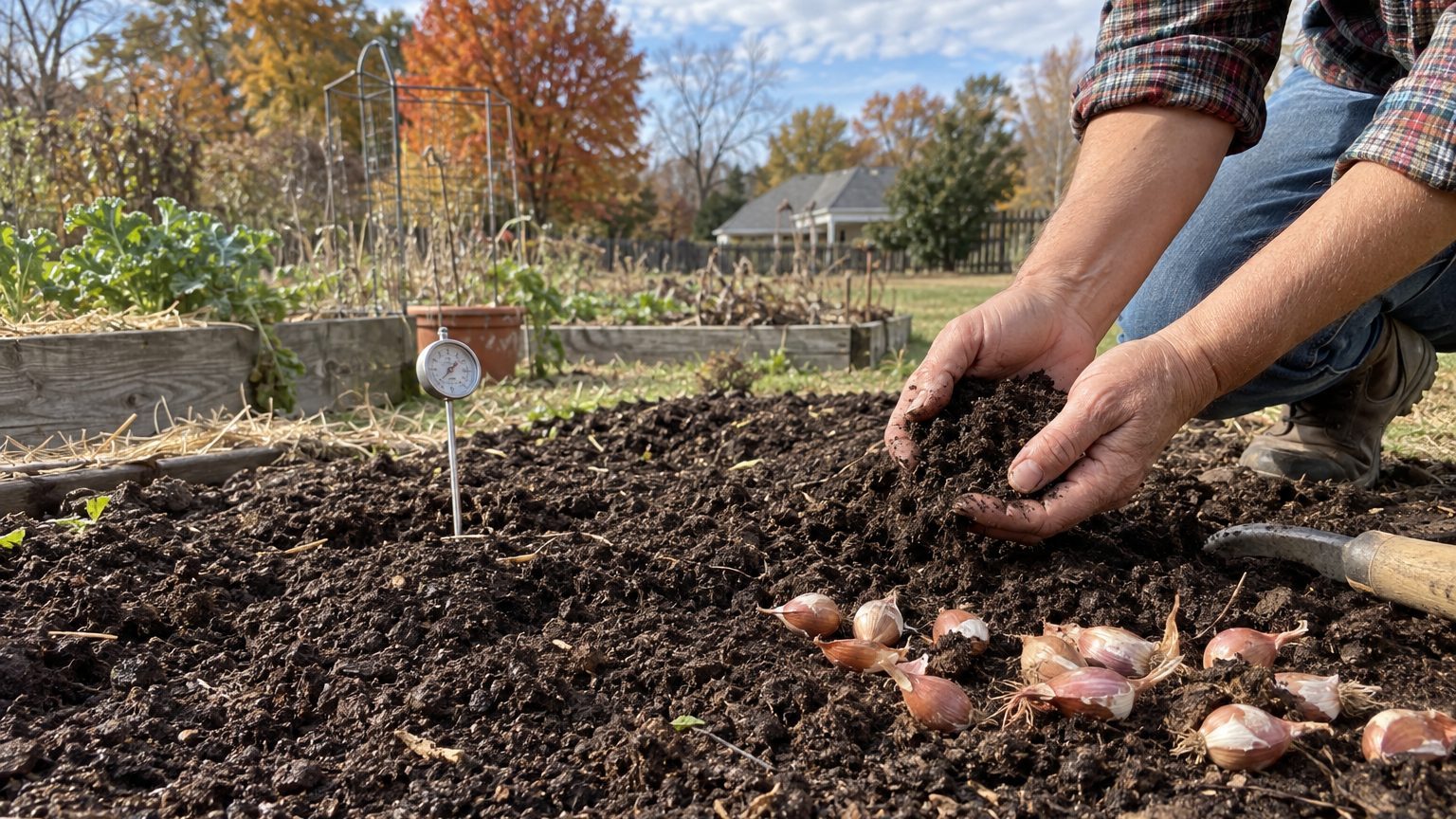
Shallots do not read the calendar, and they barely read the frost date. Spring-planted sets want soil that has thawed, drained and started to warm. Soil lags the air, so it warms after the frost risk ends, not with it. A bed that is technically past its last freeze can still be cold, waterlogged mud, and a set pushed into it will sit and rot instead of rooting. Wait until the bed crumbles in your hand instead of smearing.
Autumn planting follows the same logic in reverse. The aim is roots established before winter and top growth held back until spring. That works where winters are mild enough that frozen, saturated soil is not a threat. In colder Nevada country, the neighboring state is a fair preview. Our Growing Shallots in Wyoming page covers a similar high, cold, dry setting where spring planting is the working default.
Garlic shares much of this logic, and the garlic guides on this site cover autumn planting, curing and allium rotation in detail, so there is no point repeating them here. What differs for shallots is the planting unit and the payoff. A shallot set is a small bulb that divides into a cluster, so each one goes in with its tip at or just below the surface, spaced to give the cluster room. Rotation still applies: keep shallots out of any bed that carried onions, garlic or leeks recently.
The type you start with also changes the date. Sets, which are small bulbs, tolerate cool soil and give the earliest crop. Seed-grown shallots start later and are usually raised as transplants. Which types have been trialed in your area is a question for the University of Nevada, Reno Extension, discussed below. For the general method, start with Growing Shallots: One Bulb In, a Handful Out.
How long the season lasts here
Both frost dates exist for the same station, so the subtraction is possible. The first fall 32 F freeze at the Las Vegas airport falls between December 8 and December 23 (same NOAA NCEI normals, same probability band). Count from the latest spring date to the earliest fall date and you get 310 days. Count from the earliest spring date to the latest fall date and you get 350. So the frost-free window there runs from 310 to 350 days, a figure I derived from those dates.
| Las Vegas airport station | Date range (30-70% band) |
|---|---|
| Last spring 32 F freeze | January 7 to February 1 |
| First fall 32 F freeze | December 8 to December 23 |
| Frost-free window (derived) | 310 to 350 days |
Now the part that matters: what a window that long allows. A year-round frost-free stretch means a gardener has choices. You can plant a first round of sets, then a second sowing a few weeks later so the harvest does not all arrive at once. You can also afford to raise transplants. A seedling set back a week by root disturbance still has time to recover. The succession sowing guide on this site walks through spacing the rounds.
Do not carry that number to Reno or to a mountain valley. At elevation the window is months shorter, and a short window changes the plan. The first sowing becomes the only sowing, because there is no room for a second round to size up before the season turns. Transplanting also gets harder to justify. Every seedling gets a root check when it is moved, and that stall comes straight out of a season with nothing to spare. Sets planted in place avoid the problem, which is another reason they suit short-season beds.
Frost-free days are also the wrong measure for the low desert. A shallot there is limited less by freezing than by the arrival of heat, which pushes the plant to stop leafing out and form its bulb. The planting date has to give the plant enough time to build foliage before that happens. So for the low desert, think backward from the heat. For a cold-winter site, think forward from thaw. Your county extension office can tell you which of those two clocks your garden is running on.
Heat and water in Nevada
This page does not carry a verified count of days above 90 F or a summer rainfall figure for any Nevada station, so I won’t make one up. What the sourced data does show is the winter side. The mean daily minimum of the coldest month at the Las Vegas reference station is 39.6 F. That is the average, not the record low, but it tells you that frozen, saturated soil is not the main risk there. It is the mild end of a state whose hardiness zones run from 4a to 10a.
Winter decides the whole autumn-versus-spring question. Where the ground freezes hard and stays wet, autumn-planted sets rot in cold saturated soil or heave out of it when it freezes and thaws. Spring is the safer call. Where winters are milder, autumn planting rewards you with larger, earlier bulbs, because the roots are already working when spring growth starts. Here is the comparison:
| Factor | Mild-winter low desert | Hard-freeze high country |
|---|---|---|
| Safer planting season | Autumn works | Spring |
| Main winter risk | Low | Rot or frost heave |
| Payoff of autumn planting | Larger, earlier bulbs | Not worth the risk |
| Main summer pressure | Heat ending bulb growth early | Short season |
Water comes next. Nevada is among the driest states in the country, so the summer-rain problem that troubles eastern gardeners is mostly absent, and the water you apply does the work rain would do elsewhere. Shallots have shallow roots, so frequent light watering suits them better than rare deep soaking. A drip line or soaker keeps leaves dry. Taper off as the tops begin to fall, because bulbs sitting in damp soil at harvest time are the ones that fail in storage.
What a cool, damp summer brings instead is worth knowing, because it can appear in a wet year or a cool mountain pocket. Foliage stays wet, downy mildew and other leaf diseases move in, and ripening drags on. That is the everyday problem in the humid East, covered in Growing Shallots in Tennessee. In most of Nevada it is the exception, and heat and irrigation management are the bigger concerns. Mulch helps either way, since it holds moisture in the root zone and keeps the soil surface cooler under the plants.
Which shallots suit Nevada
Choose by type, and let the territory’s facts do the narrowing. A short season favors the earliest-maturing types, the ones that finish before the season runs out. A hot season favors plants that get airflow and shade at the root, which comes from spacing, mulch, and in the low desert a bit of afternoon shade cloth. Humid pockets make disease resistance the first criterion. Because Nevada is mostly dry, that criterion matters less here than in the East, though it climbs the list in a wet year.
Sets suit most Nevada beds. They are forgiving, early and easy to plant in place, and they avoid the root check that costs a short season. Seed-grown types can work in the long low-desert window, but they ask more of the gardener. They need earlier starting, more transplanting and closer watering.
I am not naming a single variety, and that is deliberate. This page has no local trial data, and a variety that thrives in a Las Vegas backyard may bolt or fail to size up at a Reno or Elko elevation. The recommendation that means something is the one from varieties actually trialed near you. Ask the University of Nevada, Reno Extension or your county office what has been grown locally, and buy sets from a supplier who can tell you where they were raised.
The same caution applies after harvest. Cure shallots in a dry, shaded, airy spot until the necks tighten and the outer skins turn papery. Then inspect each bulb. A soft neck or a moldy base ends the question, and that bulb goes to the compost, not the pantry. A bulb that looks sound is not proof that it is sound, so check by touch and smell as well as by eye, and check again in storage. Curing follows the same principles as garlic, and the garlic guides on this site cover them. This page offers no keeping duration, because that depends on the bulb, the cure and the storage conditions.
Common questions
Can I use the Las Vegas frost dates anywhere in Nevada?
No. They come from the Las Vegas airport station, a desert urban heat island at the mild extreme. Reno, Carson City and any site at elevation frost months earlier in fall and later in spring. Use the dates only for the low desert, and ask your county extension office for yours.
Should I plant shallots in autumn or spring in Nevada?
It depends on your winter. Where the ground freezes hard and stays wet, plant in spring, because autumn sets can rot or heave. In mild-winter low-desert gardens, autumn planting gives larger, earlier bulbs. Zones in the state run from 4a to 10a, so the answer differs by site.
Do shallots need much water in a dry state?
They need steady moisture because their roots are shallow, and in Nevada irrigation replaces rain. Water lightly and often rather than deeply and rarely, keep leaves dry where possible, and taper off as the tops fall so the bulbs are not harvested out of wet soil.
How do I know my cured shallots are safe to store?
Inspect each one. Firm necks and dry, papery skins are what you want. A soft neck or a moldy base ends the question, and that bulb should be discarded. Looking sound is not proof, so recheck stored bulbs, and do not trust any fixed keeping time, including one from this page.