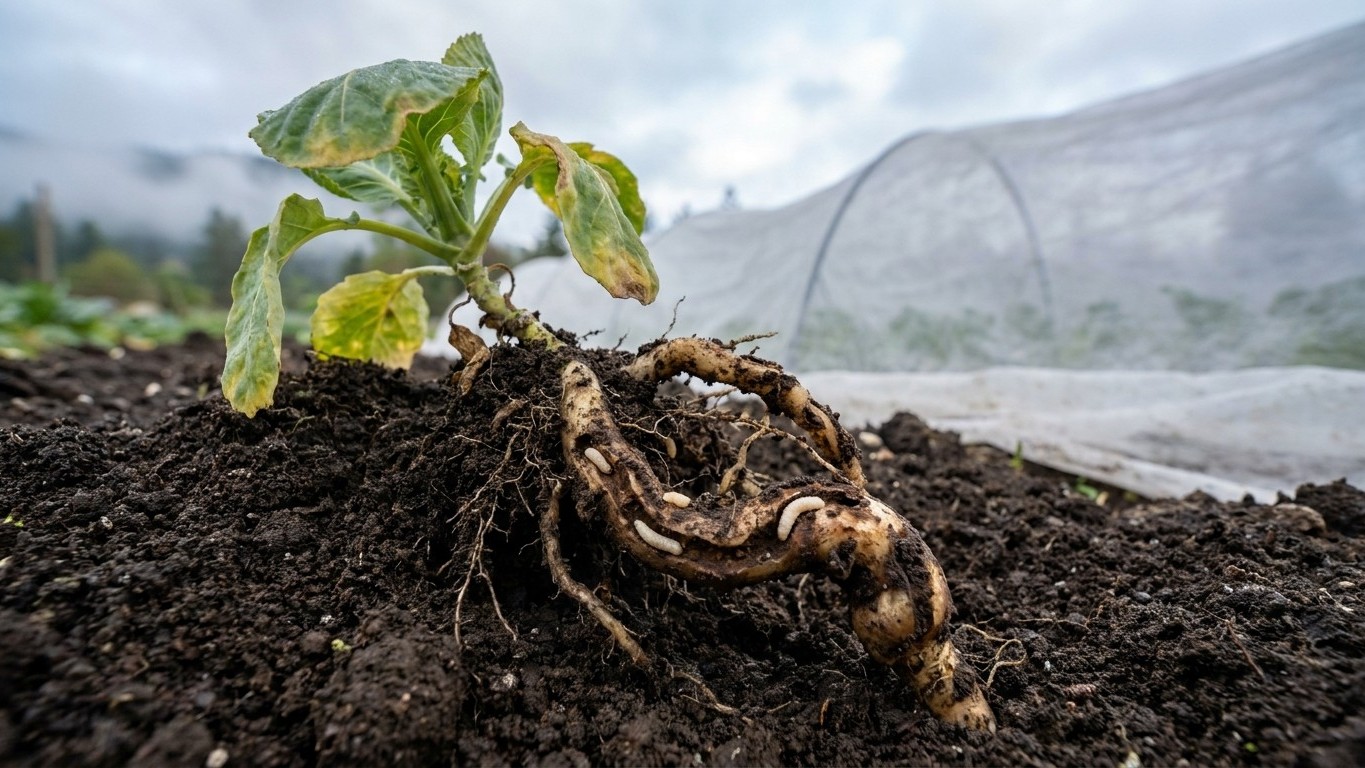

Quick-maturing, orange-fleshed varieties such as Beauregard and Georgia Jet are the safest picks for Iowa gardens. Sweet potatoes are a Southern crop, and Iowa gives them a shorter warm season than they would like. Summer heat is usually enough. The calendar is the limit, so the variety you choose matters more here than it would in Arkansas or Missouri.
The short answer for Iowa
Choose by maturity type first and by flavor or color second. At the Des Moines reference station, the mean last spring frost falls between April 12 and April 24, and the mean first fall frost between October 14 and October 25. Those dates are the band where the odds of a 32°F freeze run between 30 and 70 percent. Ordinary Iowa State Extension county records run about 4 days later in spring and 10 days earlier in fall, so the airport numbers are the optimistic end. A garden outside the city can lose about two weeks of the window.
Sweet potato slips are transplants, so the clock starts when they go in the ground. That happens well after the last frost, because the soil has to warm up. The usable season is therefore shorter than the frost dates suggest. The quicker the variety, the more likely roots reach good size before cold nights return.
Heat is the one thing Iowa supplies reliably. The reference station reaches 90°F or more on 18.4 days a year, enough to keep vines growing hard through midsummer. The crop has no trouble with the heat, and rainfall is moderate as well. June, July and August add up to about 13.2 inches, with July the driest at 3.82 inches. Established vines rarely need more than occasional help.
| Type | Examples | Fit for Iowa |
|---|---|---|
| Quick-maturing, orange-fleshed | Georgia Jet, Beauregard | Best bet. Sizes up in a short season and gives a usable crop in cool years. |
| Standard-season, orange-fleshed | Covington | Works in the warmer southern counties and in hot summers, ideally with black plastic. |
| Long-season specialty | Japanese purple and white types | Risky. Needs the longest warm stretch and often falls short. |
| Compact bush habit | Vardaman | Suits small beds and containers. Check its maturity against your county’s season. |
For a first year, plant one quick-maturing variety as the main row and, if you are curious, a few slips of a slower one beside it. The comparison costs little, and your own bed will tell you more than any list. The full growing sequence is in Growing Sweet Potatoes in Iowa, and the dates for setting slips out are in When to Plant Sweet Potatoes in Iowa.
What will not work here
A long-season variety set out at the usual time is the most common failure. Roots keep bulking until the vines die back, and an Iowa fall can end that growth in the second half of October, or about ten days sooner in many counties. A slow variety reaches that date with small, thin roots. The plants look fine all summer and the disappointment shows up only at digging time.
Transplanting slips on the average last frost date also goes wrong. With that date falling between April 12 and April 24 and a 30 to 70 percent chance of a freeze around it, the vines are exposed to frost and the soil is still cold. Cold ground holds slips back for weeks, and a late frost can blacken the leaves overnight. Waiting until the soil feels warm to the hand costs only a short delay.
Leaving the crop in the ground after the first frost is another mistake. Frost kills the vines, and roots sitting in cold, wet soil begin to deteriorate. Dig on a dry day when frost threatens, or within a few days after the vines blacken. Then cure the roots in a warm place before storing them.
Wet weather causes its own damage. June averages 5.26 inches of rain at the reference station, and August another 4.17. A heavy clay bed that holds that water, followed by a deep weekly soaking on top of it, tends to give cracked, watery roots. Watch the soil and the rain gauge, and water only during dry stretches. Crowded vines are the second problem, because dense leaves stay wet after a humid night and invite rot. Give each plant the room its variety calls for.
Wintering roots in the ground does not work anywhere in the state. The USDA hardiness system measures the average annual extreme minimum temperature, and Iowa’s winters fall well below what a sweet potato root survives. Treat the crop as an annual. Dig everything and replant fresh slips each spring.
Finally, supermarket sweet potatoes make poor planting stock. Many are treated to resist sprouting and some carry disease. Buy certified slips from a grower, or sprout your own from roots you saved from a healthy crop.
What changes across Iowa
Iowa is not one garden. The USDA Plant Hardiness Zone Map (2023, built on 1991-2020 normals) spreads the state across zones 4b to 6a, so there is no single answer for every reader. The zone reflects the average coldest night of the year, which tells you little about a summer crop, but the same north-to-south gradient shows up in frost dates. The northern counties get later springs and earlier falls than Des Moines, and the southern ones get a longer run.
The dates quoted above belong to the Des Moines reference station, and other parts of the state will differ. A reader in the north should shift toward the fastest maturing varieties and take extra steps to warm the bed. Black plastic mulch laid a couple of weeks before planting heats the soil. Row cover or a low tunnel adds protection on cool nights. These steps can recover several days of a short season.
A reader in the south has more latitude. Standard-season types such as Covington become realistic in warm years, and a second variety is worth trying. The reference city gives a central anchor, so adjust from there. Treat dates as a few days earlier or later for each step toward the southern or northern border.
Local terrain matters too. River bluffs, low valley floors and open prairie fields can each differ from town by several degrees on a clear night, and the low ground collects cold air. A bed on a sunny south-facing slope warms earlier than one in a shaded hollow. To find the zone for your own address, look up your ZIP code on the USDA Plant Hardiness Zone Map, and then check the frost dates for your county.
Where to check this for your own county
Start with Iowa State University Extension, which has an office serving every county. Look for two things on the site or by calling the local office. The first is a planting calendar for your county that gives frost dates drawn from long local records. The second is a list of the varieties tested nearby, including which ones matured and which fell short.
That second item carries the most weight. A variety that performed well in a trial a few counties over, in similar soil and a similar climate, is stronger evidence than any general list. Master Gardener volunteers attached to county offices also know which growers sell dependable slips in spring, and when they sell out.
A county recommendation beats a state one. Statewide guidance gives an average over a very wide area. The county knows your frost pockets, your usual soil type and the year-to-year swings that a broad summary smooths away. If the two disagree, go with the county, and if the county office gives a range, aim for the cautious end of it.
Write down the dates they give you, then compare them against your own record from last season. If you kept notes on when you planted and when frost arrived, you have a local calendar that fits your yard better than either source.
Checking this against your own garden
Your own observations outrank every date quoted here. Three are worth watching, and none needs equipment.
- Soil warmth by feel. Push your hand into the bed a few inches deep. If it feels cool and damp, wait. If it feels comfortably warm, the soil is ready. A bed that warms days before the one on the shady side of the house tells you where to plant the slow varieties.
- New leaves on the slips. After transplanting, fresh leaves should open at the tips. If they stay small and pale, the soil is still too cold or the roots are too dry. Plants that start growing quickly signal a warm microclimate.
- The first frost on the grass. In fall, notice which parts of the yard turn white first. The low spots go first, and that is where the vines will die first. Dig those rows before the rest.
A cheap rain gauge, or a straight-sided can set in the open, adds a fourth reading. It shows what your own bed receives, which can differ from the town normals. Note when the weather turns rain-free and water then.
Common questions
Can sweet potatoes grow in northern Iowa?
Yes, with adjustments. Choose a quick-maturing variety, warm the bed with black plastic, and protect young plants on cold nights. The shorter season makes slow varieties a poor bet.
Which sweet potato is best for a small garden?
Compact bush types such as Vardaman take less room than vining ones. Check how long the variety needs against your county’s season before you commit the space.
Do I need to start my own slips?
No. Many gardeners buy certified slips in spring. Starting your own saves money but takes weeks of indoor warmth, and grocery-store roots are a poor source.
When do I dig sweet potatoes in Iowa?
Dig before a hard freeze, or within a few days after frost blackens the vines. Choose a dry day and handle the roots gently, then cure them in a warm spot before storing.