
Summer squash is ready when the fruit is still small, the skin is glossy and a thumbnail pierces it with little effort. In most Wisconsin gardens that means early July to early August, roughly 55 days after the seed goes in. After picking, the clock runs fast. One week in the refrigerator is the limit. A glut belongs in the freezer, the kitchen or a neighbor’s hands, not in a cellar.
When summer squash are ready in Wisconsin
Watch the blossoms first. A female flower has a tiny swelling behind it, and that swelling becomes a pickable fruit within days of the petals opening. Seed packets and Clemson Cooperative Extension agree on the timing: summer squash can be harvested about 55 days after planting. For squash sown directly in the garden, the count starts at sowing. For a transplant from a greenhouse, expect fruit sooner.
The calendar sets the window. NOAA’s 1991-2020 climate normals for the Milwaukee reference station put the last spring 32°F freeze between April 16 and April 29, and the first fall freeze between October 17 and October 29. Both are the 30 to 70 percent probability band. Squash cannot take frost, so seed goes in after the freeze danger is past and the soil has warmed, usually mid-May or later. A mid-May sowing gives first fruit around early July. An early-June sowing pushes it to the first days of August.
Treat those as a range, because Wisconsin is a long state. Lake Michigan delays the first fall freeze along the lakeshore. Inland southern counties typically freeze in early October, and the north freezes far earlier. The USDA Plant Hardiness Zone Map (2023) runs from zone 3b to 6a across the state. That system rests on one number, the average annual extreme minimum temperature, so it describes winter cold and says little about when to expect squash. Your county University of Wisconsin-Madison Division of Extension office can tell you which end of the range your ground sits on. For planting dates and spacing, see Growing Summer Squash in Wisconsin.
How big should summer squash be when you pick it?
Smaller than most people expect. Zucchini and straight yellow squash are best at about 6 to 8 inches, and pattypan types at 2 to 3 inches across. Different varieties finish at different sizes, which is covered in The Best Summer Squash to Grow in Wisconsin. Whatever the type, the skin should be shiny and tender. Dull, tough skin means the seeds inside have hardened.
Pick often, because the plant stops setting new fruit once one matures. Every fruit left on the vine to become a baseball bat tells the plant its job is done. So harvest frequency is yield. Check every other day in July, and daily during a hot stretch. Look under the leaves, where fruit hides and doubles in size over a weekend.
Water matters too. At the Milwaukee reference station the summer normals are about 11.4 inches of rain across June, July and August, and July is the driest month at 3.4 inches. The station also averages 7.0 days a year at 90°F or higher. That is not many, but a few hot days in a dry July speed up evaporation. A thunderstorm that dumps an inch in an hour mostly runs off. Sandy soil lets rain through within the day, while clay holds it for a week. A rain gauge on your own plot will tell you more than any regional average.
When does the squash season end?
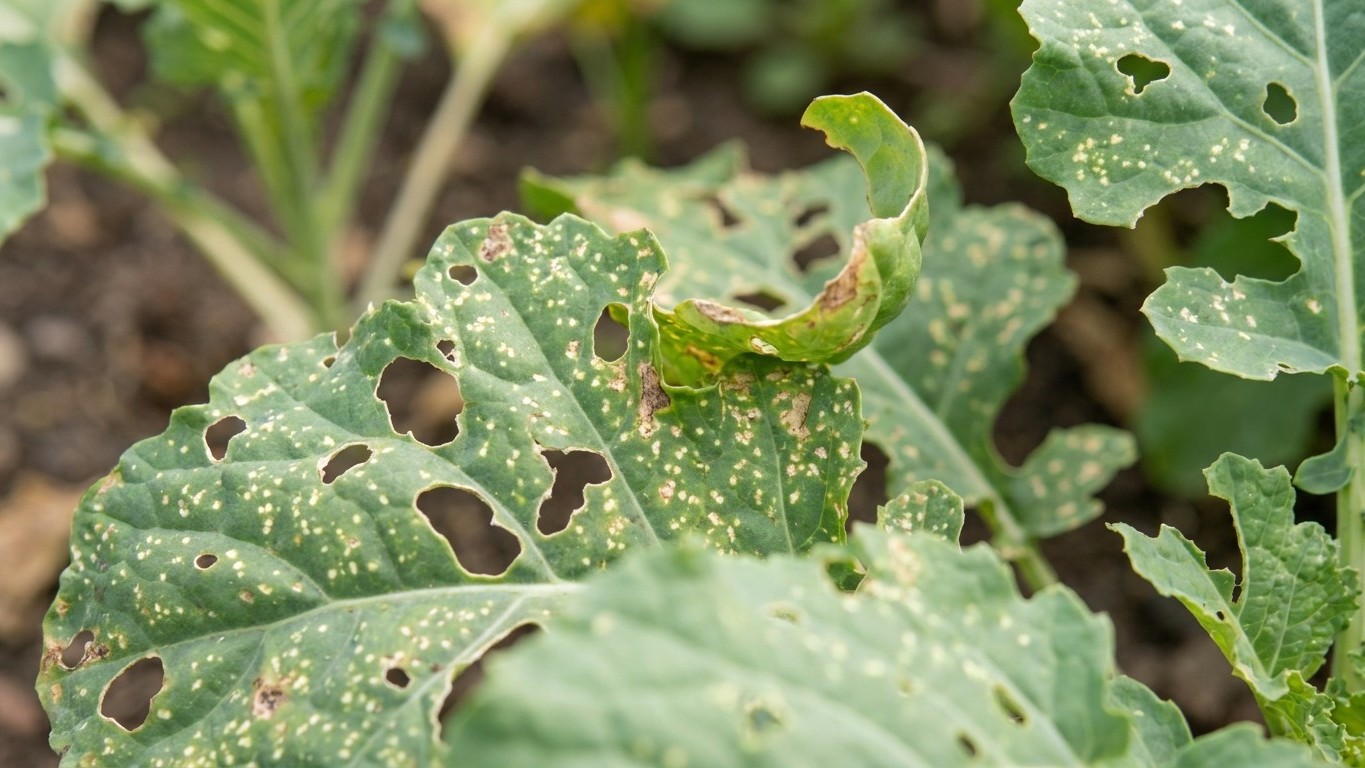
Frost ends it, but pests and disease often get there first. Vine borers and squash bugs can wipe out a planting by midsummer, and What Eats Summer Squash in Wisconsin, and When explains the timing of each. A second sowing in early July, 55 days out, gives fresh fruit by the end of August. Before a frost warning, pick everything of usable size. Small fruit is perfectly good to eat.
Keeping them, and for how long
Summer squash does not store. That is the whole answer. Clemson Cooperative Extension’s Home and Garden Information Center says to keep it in a plastic bag in the refrigerator for up to 1 week. Treat up to 1 week as a ceiling under good conditions. A fruit with a nick, a soft spot or a day already spent on a warm porch will go sooner.
Winter squash is the opposite. Butternut, acorn and Hubbard types are picked mature, with a hard rind, and they keep for months in a cool, dry spot. Summer squash is picked immature. The skin is thin, the flesh is mostly water, and nothing protects it. That is why the same plant family gives you one vegetable you can stack in a basement and another that goes limp in ten days.
A few habits help during that one week. Pick in the morning when the fruit is cool. Leave a short stub of stem on. Keep the fruit dry, since moisture on the skin invites rot, and wash it just before cooking. Put it in the bag loosely so condensation does not pool at the bottom.
What can you do with a glut of summer squash?
Freeze it. Shredded squash is the easiest form. Grate it, squeeze out the liquid, and pack it in portions sized for a loaf of bread or a pot of soup. Slices can be frozen too. Blanch them briefly, cool them quickly, drain them well and freeze them in a single layer before bagging. They come out soft, which suits soups, casseroles and baking. They will not hold up for sautéing.
Canning is different. Extension guidance generally steers home canners away from plain jarred summer squash, because the dense, low-acid pieces are hard to heat safely all the way through. Pickles and relishes made from a tested recipe are the canning route. Your county Extension office can point you to approved recipes.
Cooking ahead stretches the week too. A big pan of ratatouille, a tray of roasted squash or a couple of loaves of zucchini bread use up several pounds at once, and those finished dishes also freeze well. And there is always the porch-bag route. Neighbors, coworkers and food pantries are glad to take garden produce, and most pantries prefer it fresh and delivered within a day or two of picking.
Where in the house that actually is
The refrigerator is the closest match, because it is the place the extension recommendation names. The other spots each miss in a different way, and the table sums them up.
| Spot | What it does to summer squash | Verdict |
|---|---|---|
| Refrigerator crisper drawer | Cool and humid enough to hold the fruit for up to a week in a bag | Best option |
| Kitchen counter | Warm, so the fruit softens and wrinkles quickly | Fine until dinner |
| Garage | Swings with the weather, hot in August and below freezing in late fall | Unreliable |
| Basement or cellar | Cool and dry, which suits winter squash but not a thin-skinned fruit | Not for summer squash |
Is the refrigerator the right place for summer squash?
Yes, with one catch. A home refrigerator runs colder than some crops like, and the coldest air sits at the back wall and near the vents. If summer squash gets chilled too hard or touches a frozen surface, the skin pits and the flesh turns watery once it warms up. The crisper drawer is the safer spot, since it is usually a little warmer and more humid than the main shelves. Leave an appliance thermometer in the crisper drawer for a day before you trust it with a week’s harvest. If it reads at or below freezing at any point, move the squash to a middle shelf.
Heated rooms are too warm for anything past a day. A kitchen counter in July can turn a fruit soft in a couple of days. The garage swings too much, and an October night can drop below 32°F while an August afternoon cooks the fruit. A basement is cool, but cool alone does not keep a thin-skinned fruit. Moisture and a tight bag count as much as temperature here.
Common questions
How often should I pick summer squash in Wisconsin?
Every day or two once the plants are producing, which for most gardens means July and August. Frequent picking keeps the plant setting new fruit.
What if I miss a few and they grow huge?
Pick them anyway and remove them from the plant, so it keeps producing. Oversized squash has tough skin and big seeds. Scoop out the seeds, shred the flesh and freeze it for baking.
Can I keep summer squash in a root cellar like winter squash?
No. A cellar holds winter squash for months because of its hard rind. Summer squash has a thin skin and keeps up to about one week in the refrigerator at best. For anything longer, freeze or preserve it.
Should I pick everything before the first frost?
Yes. A frost kills the plant, and the fruit does not keep growing afterward. Frost typically arrives in early October inland, later along Lake Michigan, and earlier in the north. Pick all usable fruit, even small ones, the day a frost warning is announced.