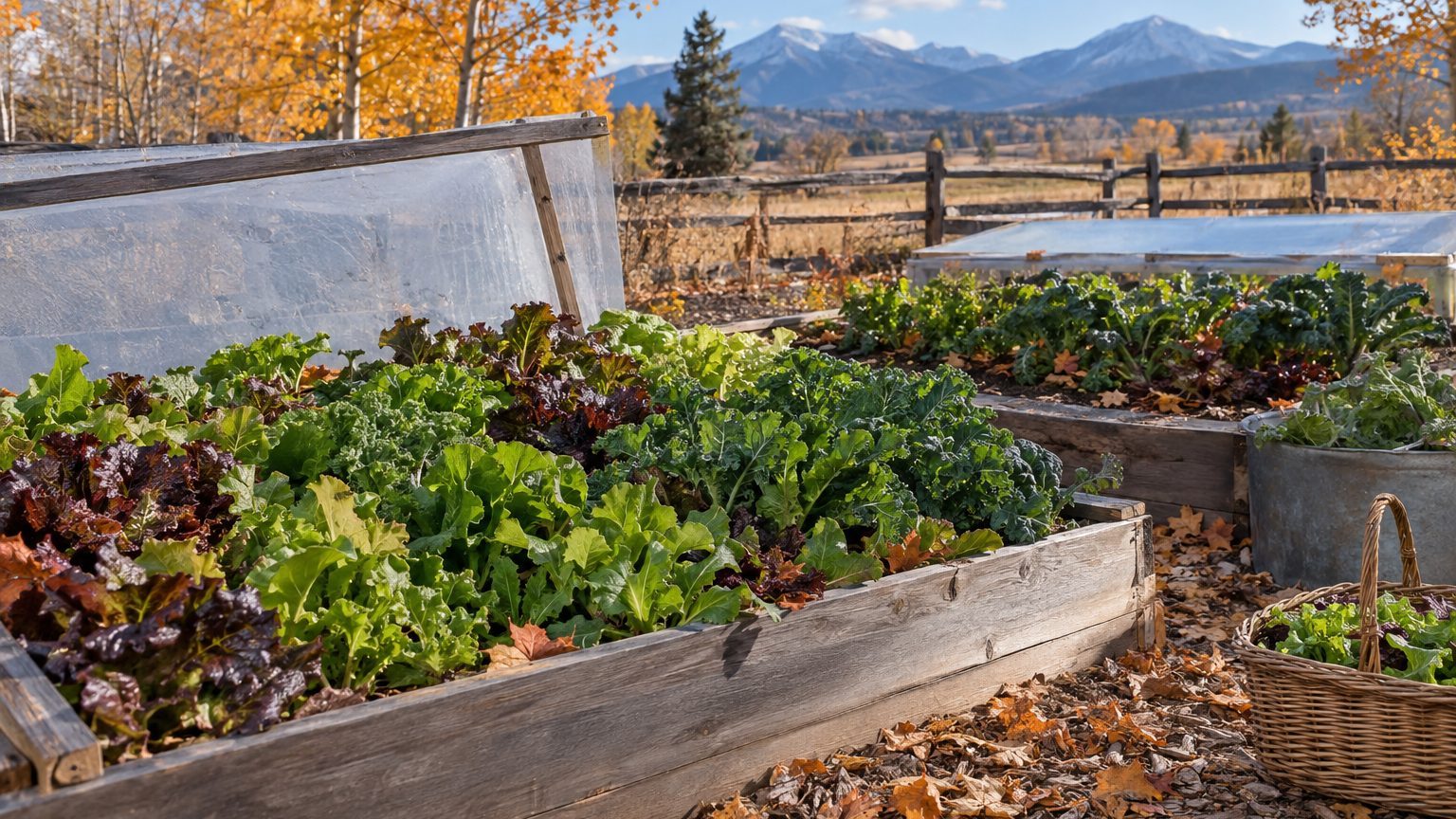

Delaware gardeners can pick fresh salad from fall into early spring. Seed goes in from late summer into early fall, once the soil stops baking, and the hardy types carry on through winter under a simple cover. The USDA hardiness zone here runs 7a-8a, so the cold is manageable. The hard parts are getting seed to sprout in hot ground and sowing early enough that plants reach picking size before the light fades.
When the soil is warm enough in Delaware

At the airport weather station (NOAA station USW00013781), the last spring frost falls between April 3 and April 14. That range comes from the NOAA NCEI 1991-2020 Climate Normals, using the 30-70% band of 32°F freeze probabilities. A freeze can still arrive after the later date, because those odds never reach zero. Suburban and rural gardens usually get their last frost one to two weeks after the airport, so check the date for your own county before you mark a calendar.
Frost date stands in for soil temperature, and the two do not move together. Soil warms after the freeze risk ends. Early April ground can be cold, soggy and slow, even on a sunny afternoon. For winter salads the soil question runs in both directions. In spring, hardy greens sprout slowly but steadily in cool, crumbly soil, while seed sown into cold, waterlogged clay tends to rot. In late summer the problem flips, and lettuce seed in particular refuses to sprout in hot soil.
How can you tell the soil is ready to sow?
Skip the calendar and use your hand. Squeeze a fistful from the top few inches. If it holds a ball that breaks apart when you poke it, the bed is workable. If it stays slick or drips, wait a few days. A soil thermometer pushed in an inch or two takes the guesswork out, though the squeeze test works fine for hardy greens.
In late summer, check the bed at midday. If the soil feels hot, sow in the evening so the seed gets a cool night. Water the row, then lay a board or a sheet of shade cloth over it until sprouts show. Sowing in the shade of taller crops, such as a tomato row, buys a few cooler degrees at the root.
When do the spring and fall sowings fall?
Spring is the shorter job. Beds that carried greens through winter start to bolt as days lengthen, so pull them, and sow a last round of the same hardy greens as soon as the soil is workable. Those plants finish once warm weather arrives.
The main sowing is in fall, and it is counted back from the first fall frost. At the same airport station that frost falls between October 26 and November 7 (same NOAA normals and probability band). Working backward from there puts most direct sowings in late August into September. Inland gardens, where the first frost comes one to two weeks earlier, should sow toward the early end of that range.
How long the season lasts here
The station has about 195 to 218 frost-free days between the mean last spring frost and the mean first fall frost, running from April 14 to October 26 at the short end and from April 3 to November 7 at the long end. Gardens inland or at higher elevation lose a week or two at each end.
That is a generous window, and for winter salads it allows a second sowing. A first round of hardy greens goes in late in the summer. A second follows a couple of weeks later, so some plants are small enough to ride out the winter under a cover while others are already at picking size. Spinach sown all on one day gives you one big flush and then a gap. Staggered rounds spread the picking across the cold months.
The long window also changes how you handle transplants. Spinach, mâche and arugula resent root disturbance, so sow them where they will grow. Lettuce and chicories take transplanting well, and in a hot late summer it helps. You can start them in cells in a cool, shaded spot while the bed itself is still too warm for germination. Before planting out, slide a few plants from their cells and look at the roots. White, loosely filled roots are ready. A dense, circling mat means the plant has waited too long and will lose time re-establishing.
Where the window is short, the picture changes. Gardeners in Winter Salads for Nova Scotia Gardens typically get one sowing, and every transplant has to earn its place. In Winter Salads for Indiana Gardens, colder interior winters lean harder on covers. Delaware sits comfortably between the two, with room to plan rounds.
Heat and water in Delaware

Delaware summers are hot and humid, and that sets up the fall sowing as much as winter does. A bed that has sat in full sun since June dries into a crust by late August, and the crust stops small seed from emerging. Keep the row evenly damp until sprouts appear, using a light mulch of straw or a board laid over the row. Pull it off at the first sign of green.
Rain is rarely the shortage here. Humidity is the issue. Wet leaves in warm, muggy fall weather favor fungal problems such as downy mildew on lettuce and spinach. Water at the soil line in the morning so foliage dries by afternoon, thin seedlings so air moves between them, and avoid sowing so thickly that leaves overlap and stay damp. Disease resistance matters more here than in a dry climate, and it is the first thing to look for on a seed packet.
How cold is too cold for winter salad greens in Delaware?
The mean daily minimum of the coldest month is 25.6°F at the Wilmington reference station. Most winter nights dip below freezing, but not by a wide margin on average. The USDA hardiness zone is 7a-8a, a system built on the average annual extreme minimum temperature, and it shifts across the state. What actually damages leaves is the occasional hard snap well below that monthly average.
| Type of salad crop | Uncovered | Under a low cover |
|---|---|---|
| Spinach, mâche, claytonia | Usually stands through the winter | Cleaner leaves, steadier picking |
| Kale and hardy mustards (baby leaf) | Stand, though leaf edges may burn in a hard snap | Stay tender and unmarked |
| Arugula, loose-leaf lettuce, endive, escarole | Leaves suffer in hard freezes | Stay in edible condition |
| Tender head lettuce, basil | Cannot manage | Cannot manage reliably |
A cover can be row fabric over hoops, a low tunnel of clear plastic or a cold frame. It adds a few degrees and blocks wind, which does as much damage as cold on leaf tissue. On mild, sunny days, open the ends or lift the lid, since a closed cover in sun gets hot and humid inside and invites the same fungal trouble you avoided in September.
How late can you sow before the light fails?
The first fall frost sets the deadline, but light does the real limiting. Days shorten fast through November, and growth slows to a crawl well before the coldest weather arrives. A plant that is already a good size by then keeps supplying leaves all winter. A late sowing mostly yields small plants that hold in the bed without growing much. That is why sowing earlier than feels natural, while the weather is still warm, pays off. If a round goes in late anyway, put it under a cover and expect a thin harvest.
Which winter salads suit Delaware
Start from what the territory gives you. The season is long enough for any hardy type, so earliness is not the main filter. Hot summer soil at sowing time favors types that germinate in warm ground, or those you can start in cells and transplant, and it favors giving every plant shade and a mulch at the root. Humid fall weather puts disease resistance first, and the packet is where it is listed. Look for resistance to downy mildew on lettuce and spinach, and give every plant room for air.
By type, spinach (smooth or crinkled leaf) and mâche carry the coldest stretches with the least help. Claytonia, hardy mustards and baby kale fill in the cut-and-come-again picking. Loose-leaf lettuce, arugula, endive and escarole give variety but need a cover through the hardest snaps. Mixes sold for winter growing often combine several of these and save you the sowing of each. The parent guide, Winter Salads: What Grows When Lettuce Will Not, compares the types across the country.
Cultivars behave differently from one county to the next, depending on soil, shade and how humid a given fall turns out, and the only recommendation worth following is one tested nearby. The University of Delaware Cooperative Extension and its county offices know which varieties have done well in local trials and can tell you the sowing dates that suit your part of the state. Ask them, then check the packet for the disease-resistance listing.
Everything above is a bed, container or cold-frame crop. Salad should not come from ditches, streams or fields. Wild watercress growing in water grazed by livestock, for one, can carry liver fluke, and that is reason enough to buy seed.
Common questions
Can you grow winter salad greens in Delaware without a greenhouse?
Yes. Spinach, mâche and claytonia often stand uncovered through winter, and a simple row cover or low tunnel handles the tenderer greens. A heated greenhouse is not needed at the cold levels typical of zone 7a-8a, though the occasional hard snap can scorch uncovered leaves.
When should you sow winter salads in Delaware?
Most direct sowings go in from late August into September, counted back from a first fall frost that falls between October 26 and November 7 at the airport station. Inland gardens should lean earlier. Your county extension office can narrow that range for your location.
Is the airport frost date right for my garden?
Suburban and rural gardens typically see the last spring frost one to two weeks later and the first fall frost one to two weeks earlier. Low ground where cold air settles can frost earlier still.
Does frost kill winter salad greens?
Light frost does not harm the hardy types, and a touch of frost on spinach is routine. Damage comes from hard freezes and drying wind. Cover tender greens such as arugula and loose-leaf lettuce before a hard snap, and open the cover again the next sunny day so the plants do not stay damp.