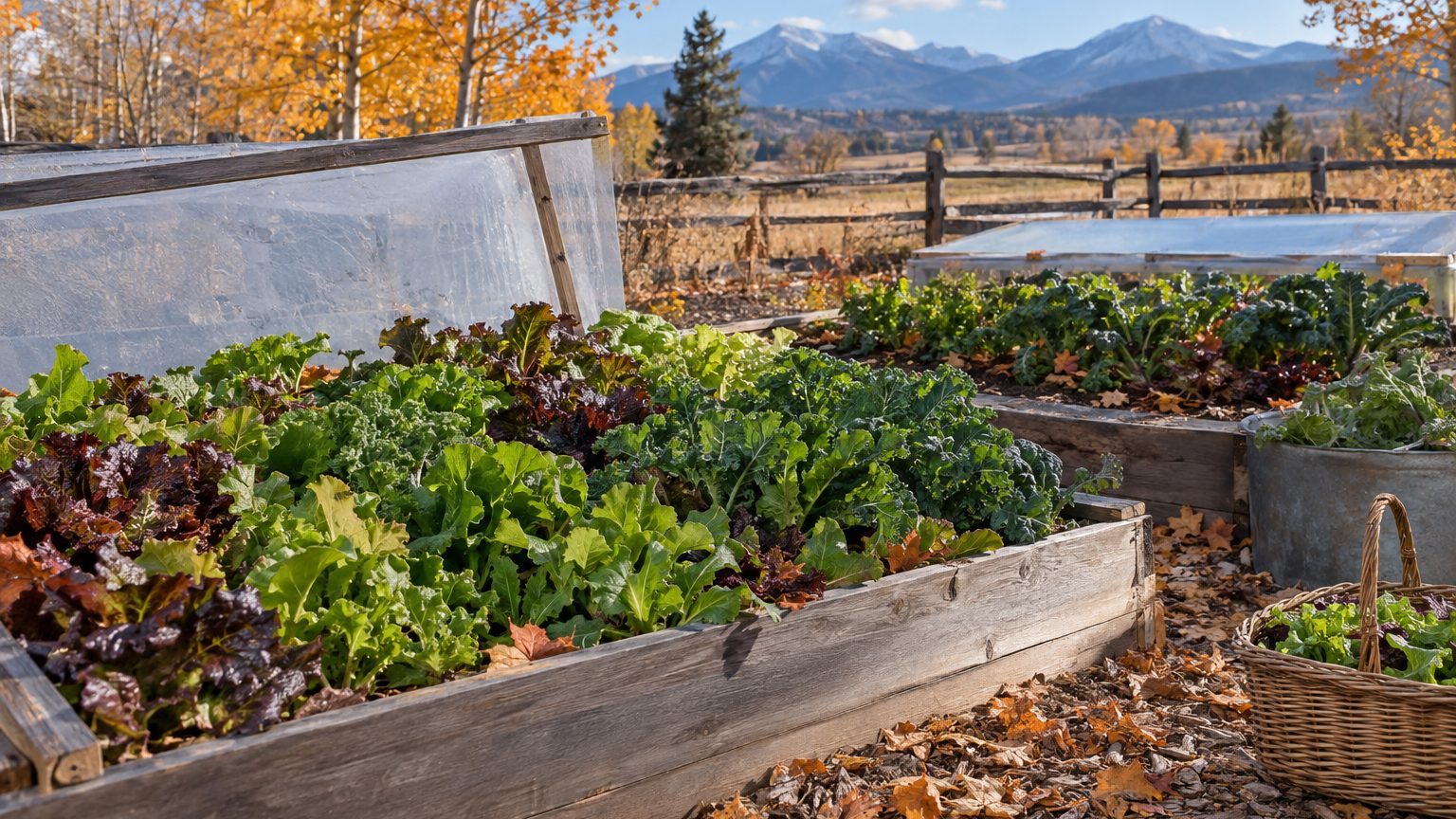

Winter salads in Georgia go in when summer heat finally lets go of the soil, and the last round is timed around a spring frost window that runs from March 11 to March 29 at Atlanta. Hardy greens stand through most Georgia winters with no cover. Tender lettuces want a sheet of row cover on the hardest nights. The mountains and the coast shift every one of these dates by weeks.
When the soil is warm enough in Georgia

When is the last spring frost in Georgia?
At Atlanta, the last spring frost falls between March 11 and March 29. That range comes from the NOAA NCEI 1991-2020 Climate Normals, the 30 to 70 percent band of 32F freeze probabilities at station USW00013874. A frost date is a probability, so any given year can freeze on either side of it.
Atlanta’s airport sits in an urban heat island, which flatters the numbers a little. North Georgia and the mountains freeze several weeks earlier in the fall, and the coastal plain runs milder. Someone gardening near the Tennessee line should pull every date in this article earlier. Someone near Savannah can push them later.
Why does soil temperature matter more than the frost date?
A frost date tells you when the air stops dropping below freezing. Seeds respond to the soil, and soil lags behind the air in both directions. In spring, it warms after the frost risk ends. In fall, it holds summer heat long after the nights turn cool.
That second lag is the one that trips up Georgia gardeners. Lettuce seed sown into hot September soil often fails to sprout, or sprouts thinly and unevenly. Sow fall salads when the top few inches of bed have cooled, which in much of the state means waiting past the first run of cool nights rather than following the calendar. A cheap soil thermometer pushed in 2 to 4 inches deep gives a better answer than a seed packet date.
Shade helps while you wait. A board or a piece of shade cloth laid over a freshly sown row keeps the surface cooler, and an evening watering pulls some heat out of the bed. Lift the cover as soon as seedlings show.
Which salad crops can go in around the spring frost window?
The hardy types, such as spinach, mustard greens, kale, and arugula, can be sown in late winter, weeks ahead of the March 11 to March 29 window, because the seed germinates in cool soil and the seedlings tolerate a light frost. Tender lettuces can follow once the worst freezes have passed. Warm-season salad ingredients such as basil wait until the soil has warmed well after the frost window closes.
Sowing ahead of the window is a bet that cold snaps stay mild, and Georgia sometimes loses it. Keep a roll of row cover on hand for those nights. Everything in this article is grown in beds and containers. Salad leaves are never gathered from wild ground, where look-alikes can be toxic and wild watercress can carry liver fluke.
How long the season lasts here
The first fall frost at Atlanta arrives between November 13 and December 1, from the same NOAA NCEI 1991-2020 normals and station. Set against the spring window, that leaves about 229 to 265 frost-free days between the late end of the spring window and the early end of the fall one.
That is a long stretch by national standards, and it changes what a gardener can do. A short season forces everything into one sowing, and transplanting becomes risky because a checked root can stall a plant that has no weeks to spare. Georgia’s window forgives that. A first sowing that fails, or a row that bolts, can be replaced without losing the whole winter.
Can you sow winter salads more than once in Georgia?
Yes, and it is the best use of the long window. Instead of one big sowing in a single weekend, sow a short row every two to three weeks from early fall onward. Each row matures a little behind the last, so the cutting never stops and one bad week of weather takes out only a slice of the crop.
The first fall sowings carry the most risk, because the soil is still warm. The sowings of late fall carry the least, because the soil is cool and germination is reliable. By late fall, though, growth slows as days shorten, so a row sown then is a small, slow row. Plan for it to yield in modest cuttings through winter rather than a flush.
Our Winter Salads: What Grows When Lettuce Will Not guide covers the succession approach in detail, including how to space the rows and what to sow in each round.
Is transplanting worth it with this much time?
Mostly yes. With a long window, a seedling started in a cool spot and moved into the bed after hardening off has time to recover from any root disturbance. Starting seed in shade or indoors also sidesteps the hot-soil problem of early fall. Direct sowing remains simpler for the root-sensitive and fast crops, and for the late rounds when nothing is hot anymore.
Compare that with a climate where the window is half this length. The Winter Salads for Ohio Gardens page describes a season in which the first sowing is nearly the only one. Georgia gardeners get to treat mistakes as cheap.
Heat and water in Georgia

How do hot, humid summers affect fall salads?
Summers in Georgia are hot and humid, with frequent thunderstorm rain. Salad greens are not growing through that stretch, but the heat decides how and when you start. Beds sit baking into September, soil stays warm, and fungal disease pressure from humid air lingers into early fall. A bed that dries out between thunderstorms and then gets soaked is a hard place for a germinating lettuce seed.
Three habits help. Give seedlings morning sun and afternoon shade, since shade at the root keeps the soil cooler. Space plants so air moves between them, which cuts the leaf wetness that feeds mildew. And water in the morning so foliage dries before evening. Mulch with straw or shredded leaves once seedlings are up to hold moisture and keep the root zone cooler.
Cooler temperatures change the picture. Once nights cool in late fall, disease pressure drops, and the main enemies become slugs and cold, not mildew.
What does winter cold decide for each crop?
Everything after summer is settled by the cold. At Atlanta, the mean daily minimum of the coldest month is 35.6 F (NOAA NCEI Climate Normals 1991-2020). That sits just above freezing, so an ordinary winter night does not hurt a hardy green. The USDA Plant Hardiness Zone Map (2023) puts Georgia anywhere from zone 6a to 9b, a range built on the average annual extreme minimum, so the mountains and the coast live in very different winters. Use the Atlanta figure as a reference, then adjust for your own ground.
That average hides the cold snaps, and plants answer to the snaps. The practical sorting looks like this:
- Stand uncovered: kale, collards, mustard greens, spinach, and other hardy leafy types.
- Need a cover on hard-freeze nights: loose-leaf and butterhead lettuces, and young seedlings of any type.
- Cannot manage: warm-season salad crops such as basil, which end with the first frost.
Row cover gains a few degrees and blocks wind. A low hoop of wire and fabric over a bed is enough for most Georgia winters. Pull it back on mild days so the plants do not overheat and so pollinators and rain can get in.
How late can you sow before the light fails?
The first fall frost, between November 13 and December 1 at Atlanta, marks the point where growth slows hard. Days are short, and cool-season plants that have not reached a few inches of leaf by then mostly sit and wait for spring. A late sowing is not wasted, but it behaves as a small, slow crop. Sow so that plants are well started before that window opens, and treat later rows as bonus cuttings.
The Winter Salads for Arizona Gardens page shows the reverse problem. There, the heat runs so long that fall sowing barely begins before the cool season is half spent.
Which winter salads suit Georgia
Georgia’s long window, hot start, humid air, and mild winters point to a clear order of criteria. Disease resistance comes first, because humid weather feeds mildew and leaf spots. Heat tolerance at germination comes second, because fall sowing starts in warm soil. Cold tolerance comes third, since mild winters let most hardy types stand uncovered. Earliness matters least, since the season is long.
| Type | Uncovered through a typical winter | Main concern in Georgia |
|---|---|---|
| Kale and collard-type greens | Yes | Aphids and caterpillars in warm spells |
| Mustard and arugula types | Yes, in most winters | Bolting when days warm in late winter |
| Spinach | Yes | Sprouting in warm soil; leaf diseases in humid air |
| Loose-leaf lettuce | Usually needs a cover on hard-freeze nights | Hot-soil germination; mildew |
| Butterhead and head lettuce | Needs a cover on hard-freeze nights | Mildew and rot in wet weather |
Within each type, look for seed labeled for bolt resistance and for mildew resistance. Seed packets often carry those claims, and in Georgia they are worth more than a pretty photograph.
Which varieties should a Georgia gardener plant?
Georgia runs from mountain valleys to coastal plain, and a variety that performs well in Athens may struggle in Valdosta. The only recommendation worth following comes from trials run on local soil in local weather. University of Georgia Extension and your county office keep exactly those records and can tell you which varieties have done well where you live.
Call the county office before ordering seed, and ask about the sowing dates that work in your part of the state as well. A variety name from a national catalog says little about how it handles a September in the Piedmont.
Common questions
When should I plant winter salads in Georgia?
Sow hardy greens once the soil has cooled after summer, usually after the first run of cool nights in early to mid fall, and keep sowing short rows every two to three weeks. In late winter, sow hardy types ahead of the March 11 to March 29 spring frost window at Atlanta. Adjust earlier for north Georgia and later for the coast.
Do winter salads need a cover in Georgia?
Hardy greens such as kale, collards, mustard, and spinach generally stand through winter uncovered. Lettuces and young seedlings do better under row cover on nights forecast to fall well below freezing. The coldest month at Atlanta averages a daily minimum of 35.6 F, so most nights are mild, but individual freezes still happen.
Why do my lettuce seeds not sprout in September?
Warm soil keeps lettuce seed from germinating well. Shade the row with a board or cloth, water in the evening, and wait for cooler nights. Starting seedlings in a shaded spot and moving them to the bed also works.
Where can I find varieties that work in my county?
Contact University of Georgia Extension and ask your county office for varieties trialled near you. Local trials account for the humid summers, the soils, and the gap between north and south Georgia, which a national seed catalog cannot do. The office can usually also tell you what sowing dates have worked best in your area.