
The best unusual roots for Louisiana suit a long, hot, humid summer and a winter that rarely bites. Ginger, turmeric, taro, eddoe, sunchokes and yacon thrive in the warm months. Daikon, black radish, rutabaga and burdock thrive in the cool ones. Frost seldom sets the schedule here. Summer heat does, so choose by season first and by variety second.
The short answer for Louisiana
Sort your roots into two groups and plant each in its own season. Heat-lovers go in after the soil warms in spring, and cool-season roots go in from fall into winter. Anything that wants a long cold dormancy, like parsnips or horseradish, is a gamble.
The reason is in the climate normals. At the New Orleans reference station, the mean daily minimum of the coldest month is 46.1°F. Winter is cool, not cold, and roots keep growing through it. The last spring 32°F freeze falls between January 18 and February 8, and that range is the band where the chance of a last freeze sits between 30 and 70 percent. The first fall freeze falls between December 17 and January 8, so the fall window straddles the New Year. A freeze occurs in only 86.8 percent of years at this station, which means roughly one year in seven has no freeze at all. North Louisiana freezes far more reliably.
Which unusual roots handle Louisiana summers?
Ginger, turmeric, taro and eddoe are tropical plants that treat a Gulf Coast summer as home. Taro and eddoe also tolerate wet ground that would rot most vegetables. Sunchokes (Jerusalem artichokes) grow almost anywhere and give a big harvest from a few tubers. Yacon is a South American tuber that wants a long warm season, and Louisiana gives it one.
Which unusual roots grow best in the cool months?
Daikon, black radish, rutabaga and burdock go in from fall into winter. They size up in cool soil and finish before spring warmth pushes them to flower. With the first fall freeze arriving so late, the fall sowing window runs long. Exact sowing months for each crop are laid out in When to Plant Unusual Roots in Louisiana.
| Type | Examples | When it goes in | Louisiana verdict |
|---|---|---|---|
| Heat-lovers | Ginger, turmeric, taro, eddoe, yacon | Spring, once soil is warm | Reliable, harvest in fall or winter |
| Tough perennials | Sunchokes | Late winter to spring | Reliable, can spread |
| Cool-season roots | Daikon, black radish, rutabaga, burdock | Fall into winter | Reliable if sown on time |
| Cold-dependent roots | Parsnip, celeriac, horseradish | Fall | Poor, small and slow |
What will not work here
Roots that need a long, truly cold winter come first. Parsnips and horseradish want weeks of chill to size up and sweeten, and a station with a coldest-month minimum of 46.1°F rarely delivers it. In about one winter in seven, the reference station never reaches 32°F at all. Celeriac has the same problem plus a very long season that collides with early warmth. You will get roots, but small and mild ones.
Why do spring-sown cool-season roots fail?
The last freeze comes in late January to early February, and warm days follow quickly. A daikon or radish sown in March has little time before heat triggers a flower stalk, and the root turns woody and hot-flavored. The same goes for summer sowing. Hot soil keeps the seed of cool-season roots from sprouting evenly. Treat the cool season as fall and early winter, and skip the rest.
What does Louisiana’s humidity do to roots?
The usual advice is to water deeply once a week, and here that advice backfires. Rain in summer is frequent and heavy, and the air stays damp for weeks. Ginger and turmeric rot in beds that hold water, and tight spacing keeps foliage wet, which invites fungal disease. Plant them in raised beds with loose, well-drained soil, and leave room for air to move between plants. Taro and eddoe are the exceptions, since they handle wet feet.
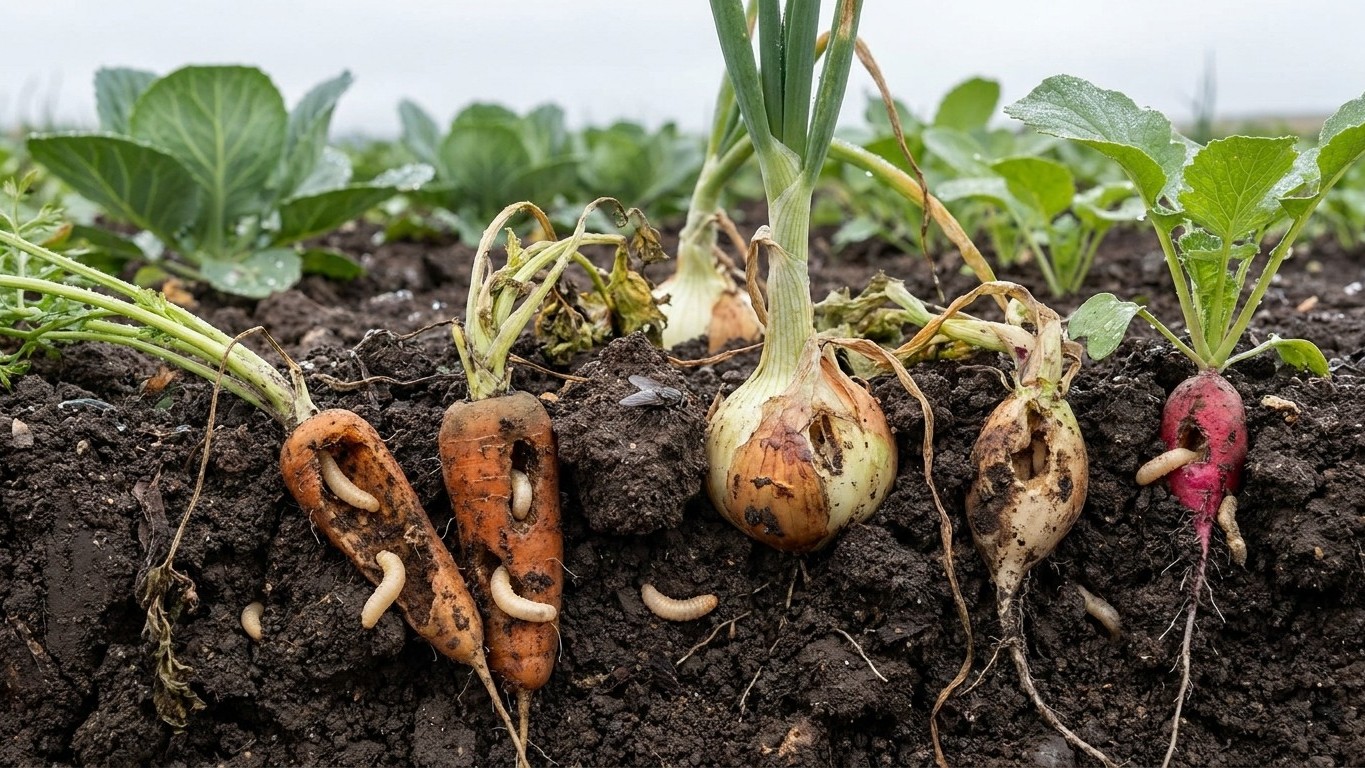
Warm sandy soil brings another problem. Root-knot nematodes thrive in it and leave roots knotted, forked or stunted. Rotating beds and adding compost help, and a county extension office can tell you how common the problem is in your area.
Finally, do not plant by the frost dates alone. A date range tied to a 30 to 70 percent probability means a late freeze can still arrive after you plant tender ginger or yacon. Watch the forecast through early February.
What changes across Louisiana
Louisiana does not have one garden. The USDA Plant Hardiness Zone Map (2023, built on 1991-2020 normals) runs from 8a to 10a across the state. That map rests on a single variable, the average annual extreme minimum temperature, so there is no single answer for the whole state. The dates above belong to the New Orleans reference station, and other parts of Louisiana differ.
On the coast, winters are mildest. Tender roots like ginger, turmeric and taro often overwinter in the ground under a few inches of mulch, and fall sowing of daikon and rutabaga can stretch later into the season. Freezes still happen in most years, so mulch is cheap insurance.
Farther north, freezes arrive earlier in fall and linger later in spring, and they come more reliably. Shift the heat-loving crops later in spring and be ready to dig ginger, turmeric and yacon before the first hard freeze, or mulch them heavily. Fall sowing of cool-season roots should start earlier so they size up before the deepest cold. A hard freeze does help rutabaga and burdock, which taste sweeter after it. Sunchokes shrug off the whole range.
To see where your own garden falls, enter your ZIP code in the USDA Plant Hardiness Zone Map online. Zones shift within a single parish, and a low-lying yard can sit a full half-zone colder than a ridge a mile away. For the full set of crops and how they fit together, see Growing Unusual Root Crops in Louisiana.
Where to check this for your own county
Louisiana’s counties are parishes, and each has an office of the LSU AgCenter, the state’s extension service. A parish recommendation beats a state one, since it reflects local soil, rainfall and the freeze history of your corner of Louisiana. Everything above is the statewide picture, a starting point for choosing crops and months.
Look first for the vegetable planting guide that applies to your parish. It gives sowing and transplanting months by region, which are tighter than any statewide range. Then look for the crops and varieties that have been trialed near you. A root that does well in a research plot in one part of the state may struggle in your soil, and local trials show it.
Ask about soil testing too. A soil test tells you your pH and nutrient levels, and it takes the guesswork out of adding lime or compost before planting ginger or daikon. Staff can also tell you whether nematodes are a known problem in your area and where to find planting stock, such as ginger and turmeric rhizomes or taro corms, that suits local conditions. If you can, call or visit before you buy seed or rhizomes. A short conversation can save a season.
Checking this against your own garden
Your own observations outrank every date here. Three things are worth watching.
Start with soil warmth. Push your hand into the bed a few inches deep. If it feels cool to the touch, ginger, turmeric and yacon will sit and wait. If it feels pleasantly warm, they will move. A bed that warms early, usually one with sun and good drainage, lets you plant sooner than a shaded or heavy spot.
Next, watch for the first true leaves on direct-sown seedlings, the second set after the seed leaves. Note the date and how fast they come. Quick, even emergence tells you the soil is right for that crop. Patchy, slow emergence means the soil is too hot, too cold or too wet, and you can adjust the next sowing.
Last, notice where frost lingers on the lawn on a cold morning. White patches that last until mid-morning mark low spots where cold air pools. Plant tender roots away from those spots, and put hardy crops there instead. Write the date of your first frost in a notebook, because the pattern over a few years is more reliable than any chart.
Common questions
Can you grow ginger and turmeric in Louisiana?
Yes, and they suit the climate well. Plant rhizomes in spring once the soil is warm, in partial shade and well-drained soil. Harvest in fall or early winter after the tops die back. Since both need a long season, the late first freeze helps.
Are parsnips worth trying?
Rarely. Parsnips want a long, cold stretch to size up and sweeten, and Louisiana winters are too mild for that. If you try them, sow in fall and expect small roots. Daikon or rutabaga will give a better return in the same bed.
Do I have to dig roots before the first freeze?
It depends on the crop and the region. Taro, ginger and turmeric tops die back in a freeze, and on the coast the roots often survive under mulch. In north Louisiana, where freezes are harder and more reliable, dig tender roots before the first hard freeze or mulch them thickly. Sunchokes and cool-season roots can stay in the ground.
What is the easiest unusual root for a first try?
Sunchokes and daikon are the most forgiving. Sunchokes need little care once planted, though they spread, so give them their own corner. Daikon sown in fall grows quickly in cool soil and can be harvested within a couple of months.