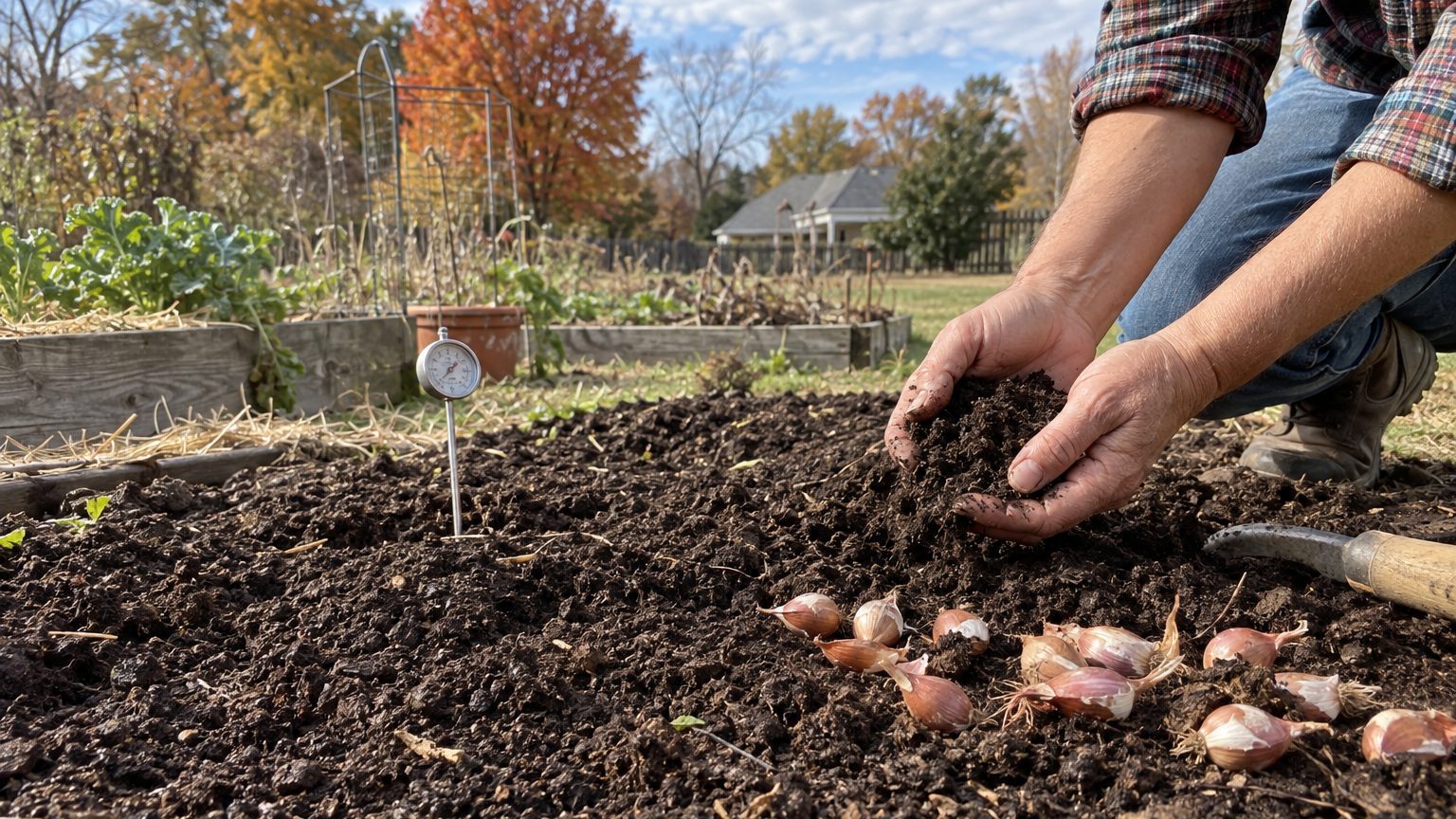

In New York City, shallot sets go into the ground from late spring-frost time into April, and fall planting also works where winters stay mild. The Central Park station puts the last spring freeze between March 23 and April 3. Upstate and the Adirondacks thaw weeks later. Spring planting is the safe default across the state, and fall planting is a bonus for the milder south. The full crop story is in Growing Shallots: One Bulb In, a Handful Out.
When the soil is warm enough in New York
Start with the date everyone asks about. NOAA’s 1991-2020 U.S. Climate Normals for Central Park place the last spring 32°F freeze between March 23 and April 3. That band covers the 30 to 70 percent probability range, so any given year can land on either side of it. Central Park is a dense urban site, and it runs warmer than most of the state. Treat these dates as the New York City answer. The Hudson Valley, the Finger Lakes, the Southern Tier and the North Country all frost later in spring and earlier in fall.
Why does soil temperature matter more than the frost date?
Shallot sets are tougher than most garden vegetables, and a light frost on the green tops will not kill them. The frost date only tells you when the air stops dropping below freezing. Soil lags behind the air by a couple of weeks in a normal spring, and cold, saturated ground is where sets stall and rot. The better signal is the ground itself. Wait until a handful squeezed in your fist crumbles instead of forming a wet ball, and until a soil thermometer shows readings climbing from one week to the next. In practice, that means the first workable days after the freeze risk eases. In the city that is often early to mid April. Upstate it can be late April or even May.
Can you plant shallots in fall in New York?
Yes, in the milder parts of the state. Fall-planted sets root before winter and start growing early the next spring, which is how growers get larger, earlier bulbs. The goal is roots but no tall top growth before the ground freezes. The usual planting window sits a few weeks before the soil freezes hard. In New York City that falls well after the mean first fall freeze of November 14 to November 27, since the soil stays workable for a while. Colder regions need a much earlier window and a thick mulch. The approach is close to the autumn planting you would do for garlic, and the garlic guides on this site cover depth and mulching. What differs for shallots is that the sets are smaller and sit shallower. They also push out of the ground more easily during freeze-thaw swings.
Sets from a spring planting come out of the ground when the tops fall over and yellow. Cure them in a dry, shaded place with good airflow until the necks are tight and the skins turn papery. Before storing, check every bulb. A soft neck or a moldy base ends the question for that bulb, no matter how good the rest of it looks. Pull it out and don’t store it.
How long the season lasts here
At the Central Park reference station, the mean last spring frost falls between March 23 and April 3 and the mean first fall frost between November 14 and November 27. That leaves roughly 225 to 249 frost-free days. It is a long window by northern standards, and it is the reason New York City gardeners have options that upstate growers do not.
A window that long allows two plantings in the same year. One goes in during early spring, and a second follows in fall for the next summer’s crop. Spring plantings can also be staggered a couple of weeks apart if you want green shallots for the kitchen over a longer stretch. Bulbs from the first planting finish in summer, which frees the bed for the fall batch. The succession sowing guide on this site covers how to space those plantings.
Upstate the picture changes. The window shrinks as you climb in elevation or latitude, and in the Adirondacks it is short enough that the first planting is the only one. That makes timing tight. Sets planted late have less time to size up before the tops fall over, and shallots in cold ground go in as early as the soil allows. Growers in short-season spots also weigh transplanting. Shallots started indoors from seed, or sets started in cells, gain weeks, but their roots resent disturbance. Handle the root ball gently, set the transplant at the same depth it grew, and harden the seedlings off before they go out. Where the season is long, direct planting is simpler and usually does just as well.
Elevation matters as much as latitude here. A south-facing slope in the Hudson Valley can warm a week or two ahead of a low pocket a few miles away, because cold air settles into the hollows. If you are not sure where your garden falls, the nearest county extension office keeps local frost records.
Heat and water in New York
Summer in New York varies a lot with location. The city and the lower Hudson Valley see stretches of hot, humid weather. Much of the rest of the state has cooler summers, with frequent rain and damp mornings. Shallots do best with steady moisture while the tops are growing, followed by a dry spell when the leaves yellow and fall over. In a cool, damp summer the second half of that cycle does not happen. Bulbs ripen slowly, the tops stay green and wet, and diseases such as downy mildew and neck rot find easy footing. Heat stress is less of a worry than humidity and slow drying, so airflow and drainage deserve more of your attention than shade cloth.
The same logic holds in the city. A wet July followed by a muggy August leaves the bulbs sitting in damp soil just when they want to dry. Raised beds, spacing that lets air move between plants, and mulch pulled back from the necks late in the season all help. Skipping irrigation for the last few weeks before harvest helps too.
Does winter cold decide autumn versus spring planting?
It does, and it is the main question for New York. At the New York City reference station, the mean daily minimum of the coldest month is 27.9°F. That is a cold month, but the ground freezes only lightly and thaws often, which suits fall-planted sets. The USDA Plant Hardiness Zone Map, built on the average annual extreme minimum temperature, runs from zone 3b to 7b across New York State. That is a huge spread, and the cold end sits upstate. So use the city as your reference and adjust from there.
Where the ground freezes hard and stays wet, fall-planted sets rot in the cold mud or heave out as the soil freezes and thaws. Spring planting is the safer call in those places. Where winters are milder, fall planting gives the larger, earlier bulbs. A few inches of straw or shredded leaves over the bed, laid after the surface has chilled, cuts down on heaving. If sets pop up in late winter, press them back in or cover them again.
For comparison, Growing Shallots in Utah deals with dry high-elevation winters, and Growing Shallots in Arkansas covers a warm, humid South where the questions change again.
Which shallots suit New York
Choose by type first. Shallots grown from sets, the small bulbs that multiply into clusters, are the easy route and give a harvest in one season. Seed-grown shallots behave more like onions, and need an early start indoors. They make sense for gardeners who want to raise a lot of plants at low cost. Most home growers in New York do well with sets.
In a short season, as in the North Country and the higher parts of the Adirondacks, the earliest-maturing types are the better bet. They size up before the tops fall over and give you time to cure the bulbs. Where summer runs hot and humid, as in the city and on Long Island, favor types that tolerate warm nights and give them airflow at the root zone. Mulch keeps the soil cool, and spacing keeps leaves dry. In the damp, cool parts of the state, disease resistance comes first. Look for types with a record of standing up to mildew and neck rot.
Variety names are where gardeners get burned. The best recommendation for a cultivar comes from trials run in nearby soil and weather, and a name picked from a catalog or a forum post in another state may do poorly in your yard. Cornell Cooperative Extension runs offices in every county and can tell you which shallots have been trialled in your region. Ask about the Hudson Valley, Long Island or western New York separately, since conditions differ a lot among them.
Common questions
When do you plant shallots in New York?
In New York City, spring sets go in once the soil is workable, usually around the last spring freeze of March 23 to April 3 or a little later. Upstate, wait until the ground thaws and dries, which can be late April or May. Fall planting is an option in milder areas.
Do shallots survive a New York winter?
Fall-planted sets can, especially in the city and the lower Hudson Valley, where the coldest month averages a daily low of 27.9°F. In colder zones, rot and heaving cause losses, so spring planting is safer, and mulch helps either way.
Can I grow shallots upstate or in the Adirondacks?
Yes, with spring-planted sets or transplants started indoors. Plant as soon as the soil is workable and pick early-maturing types so the bulbs finish before the cold returns.
How do I know a cured shallot is safe to store?
Check each bulb. The neck should be tight and dry, the skins papery and the base firm. A soft neck or a moldy base means the bulb should not go into storage, however good it looks otherwise.
One more local detail: some county extension offices run soil testing, and a quick pH check before planting costs very little. Shallots prefer a soil that is close to neutral, and many New York soils lean acidic.