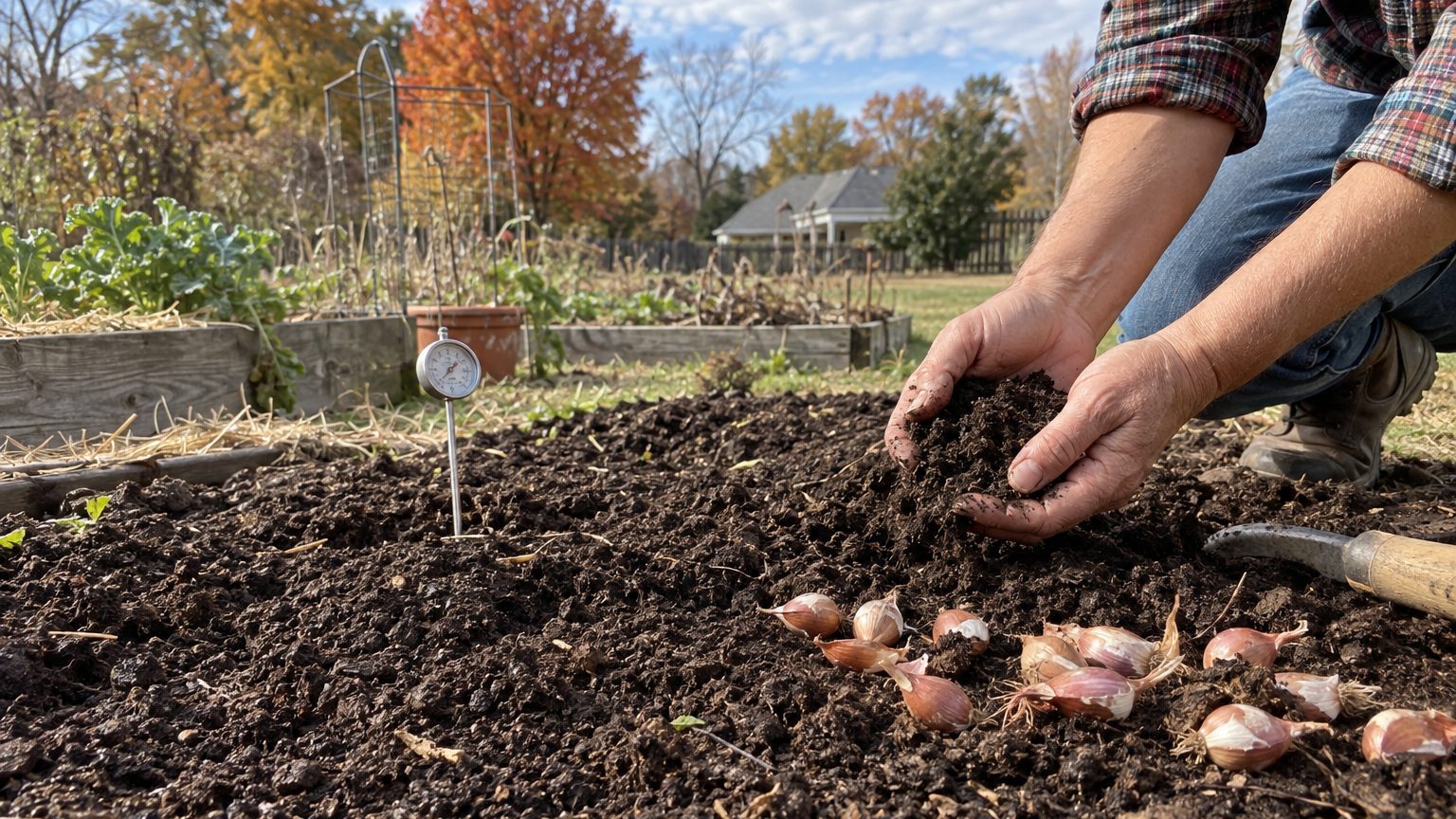

In North Dakota, shallots go in during spring, as soon as the ground has thawed and dried enough to dig. Fall planting is a gamble where the coldest month averages a daily low of 0.2°F at Fargo. The growing window is short but workable. What decides the crop is soil warmth, how you handle a hard winter, and what a cool, damp summer does to the leaves.
When the soil is warm enough in North Dakota
At the Fargo airport reference station, the last spring freeze falls between May 4 and May 15, based on NOAA NCEI U.S. Climate Normals for 1991-2020 (the 30-70% probability band for a 32°F freeze). Treat that as a window, since any given spring can fall outside it. Gardens outside town usually see their last frost one to two weeks later than the airport, and more at elevation, so check the date for your own county before you mark a calendar.
The frost date is a stand-in for what shallots actually respond to, which is the temperature of the soil. Soil warms more slowly than air and lags behind it, so it reaches a comfortable temperature after the frost risk has passed. Sets (small bulbs planted whole) will push roots in cold ground, and a light frost will nip the green tops without killing the plant. But the bulb itself only starts to swell once the soil has warmed and the days lengthen.
How do you know the soil is ready for shallots?
Start with the squeeze test. Grab a handful from about 4 inches down and press it into a ball. If it stays in a sticky lump, wait. If it crumbles when poked, you can plant. Digging wet clay compacts it, and shallot roots are shallow and fine, so they struggle in a crust. A cheap soil thermometer helps too. Watch for a run of days when readings climb steadily rather than a single warm afternoon followed by a cold snap.
North Dakota’s slow spring thaw and wet snowmelt make this check matter. Low spots and heavy Red River Valley clay stay cold and soggy well after the garden on a gravel rise has dried. Plant the dry spot first.
Is fall planting an option for shallots?
Fall planting is covered in detail in the garlic section of this site, and shallots follow similar rules: sets go in several weeks before the ground freezes so they root but do not sprout tops. For shallots, the difference is that the bulbs are smaller and shallower, with less stored energy than a garlic clove. That makes them more exposed to a heave or a wet freeze. For the general method, see Growing Shallots: One Bulb In, a Handful Out.
How long the season lasts here
The reference station has roughly 133 frost-free days if you count from May 15 to September 25 (the later spring date to the earlier fall date), and roughly 154 if you count from May 4 to October 5. The first fall freeze lands between September 25 and October 5 in the same NOAA normals. Rural and suburban gardens run shorter at both ends. For most North Dakota gardeners, that means a real season, but one with little slack.
Is there time for a second sowing?
Mostly no. A second shallot planting would go in after midsummer and would have to size up before the first hard freeze. With the window shut in late September, the first sowing is the only one. That makes the timing of the first planting the main decision. Putting sets in as soon as the soil is workable gives the plants the longest stretch of cool weather to build leaves, and leaves are what the bulb is built from. Each leaf above ground becomes a layer below it.
If you want a steady supply of fresh green shallots, the better approach is to stagger plantings a week or two apart in spring, rather than waiting for summer.
Should you start shallots from seed and transplant?
Seed-grown shallots are a separate type from set-grown shallots. They need an early indoor start, and transplanting seedlings into the garden calls for a root check at planting: lift one out of its cell and look for white roots that hold the soil together. In a longer season, a few weeks lost to transplant shock hardly matters. In North Dakota it can, because there is no room to recover. Sets are the safer route for most gardeners. If you do try seed, start early enough that seedlings are sturdy by the time the soil is workable.
Harvest comes as the tops yellow and fall over, ahead of the first fall freeze. Then the bulbs need curing in a dry, airy, shaded place. Curing and storing work much as they do for garlic, with one shallot note: the necks are thinner, and they dry faster. Before storing anything, check each bulb. A soft neck or a moldy base ends the question. Put that bulb in the compost, because a bulb that looks fine on top can still be rotting at the base.
Heat and water in North Dakota
Shallots are a cool-season crop that finishes in warm weather, and North Dakota usually gives them that. Hot spells above 90°F can arrive in midsummer, but the hotter the stretch, the more the plant shuts down growth and starts to ripen. Mulch over the root zone and an even supply of water through those spells keeps the bulb from stalling. Nobody’s shallot bed needs the shade cloth and airflow tricks that a Gulf Coast garden does.
The bigger concern is the opposite kind of summer. In a cool, damp year, leaves stay wet for long stretches. Fungal diseases such as downy mildew and botrytis leaf blight find that easy, and ripening drags on into a season that has no extra weeks. Give plants room so air moves between rows, water at the soil rather than overhead, and water in the morning so leaves dry by evening. Rotating alliums to a bed that has not held onions, garlic, or leeks for a few years cuts the carryover of soil-borne disease.
Should you plant shallots in fall or spring here?
The winter low settles it. USDA’s 2023 Plant Hardiness Zone Map puts North Dakota in zones 3a to 4b, and that system is built on the average annual extreme minimum temperature. The ground freezes deep and stays frozen for months, and snowmelt leaves it wet. Autumn-planted sets in that setting can rot in cold, waterlogged soil, or heave out of it when it freezes and thaws repeatedly. A winter with deep, steady snow cover insulates the ground and helps, but you cannot count on it.
Where winters are milder, fall planting produces larger bulbs that mature earlier, and that is why gardeners in those places favor it. Compare Growing Shallots in Washington and Growing Shallots in California, where that trade works. In North Dakota, spring is the safer call. If you want to try fall anyway, plant a short test row alongside your spring planting, mulch it deeply after the ground freezes, and see what comes up. Never risk the whole crop on it.
Which shallots suit North Dakota
Choose by type, and let your local extension service name the varieties. Cultivar names change by seed company and trial year, and a variety that thrives in a Pacific Northwest garden may fail in Fargo. The varieties that have been trialed in North Dakota soil and winters are the only recommendation worth following. NDSU Extension and your county office can tell you which ones have been grown nearby.
In the meantime, the local climate points to a few types.
| Local condition | What to look for |
|---|---|
| Short season, first fall freeze between September 25 and October 5 at the reference station | Earliest-maturing types, grown from sets |
| Cool, damp summers | Types sold with disease resistance, especially to mildew and leaf blights |
| Occasional summer heat spells | Types that hold up with mulch and steady moisture; give the root zone cover |
| Hard winters in zones 3a to 4b | Spring-planted sets; treat fall planting as a test row |
Short seasons favor the earliest types because a late-maturing shallot may still be green when the freeze arrives, and green-necked bulbs cure poorly and store badly. Where dampness is the bigger risk, disease resistance should come first on the seed packet or in the grower’s description. Ask the seller how the type has performed in cool, humid summers.
Buy sets from a supplier that sells for northern climates, and inspect them on arrival. They should be firm and dry, with no soft spots and no mold at the base. If you save your own bulbs for replanting, keep only the sound ones, and discard any with a soft neck or a moldy base. A cured, healthy bulb replants well, and one shallot set can multiply into a cluster by harvest.
Common questions
When should I plant shallots in North Dakota?
Plant sets in spring once the soil can be worked and crumbles in your hand. At the Fargo airport station the last 32°F freeze falls between May 4 and May 15, and country gardens usually run one to two weeks later. A light frost on the tops will not kill the plants.
Can shallots survive a North Dakota winter in the ground?
Sometimes, but it is a gamble. The coldest month averages a daily low of 0.2°F at Fargo, the ground freezes hard, and wet soil can rot sets or heave them upward. Spring planting is the safer choice, and a fall test row with heavy mulch is the cautious way to try it.
What is the best shallot variety for North Dakota?
The best answer comes from the varieties trialed locally, so ask NDSU Extension or your county office. In general, pick early-maturing types with good disease resistance and plant them from sets.
How do I know if a cured shallot is safe to store?
Look at the neck and base of every bulb. The neck should be dry and tight, and the base firm with no mold. A soft neck or a moldy base means the bulb goes in the compost, however good the rest of it looks. Check stored bulbs often, because one bad bulb can spread rot to the rest.