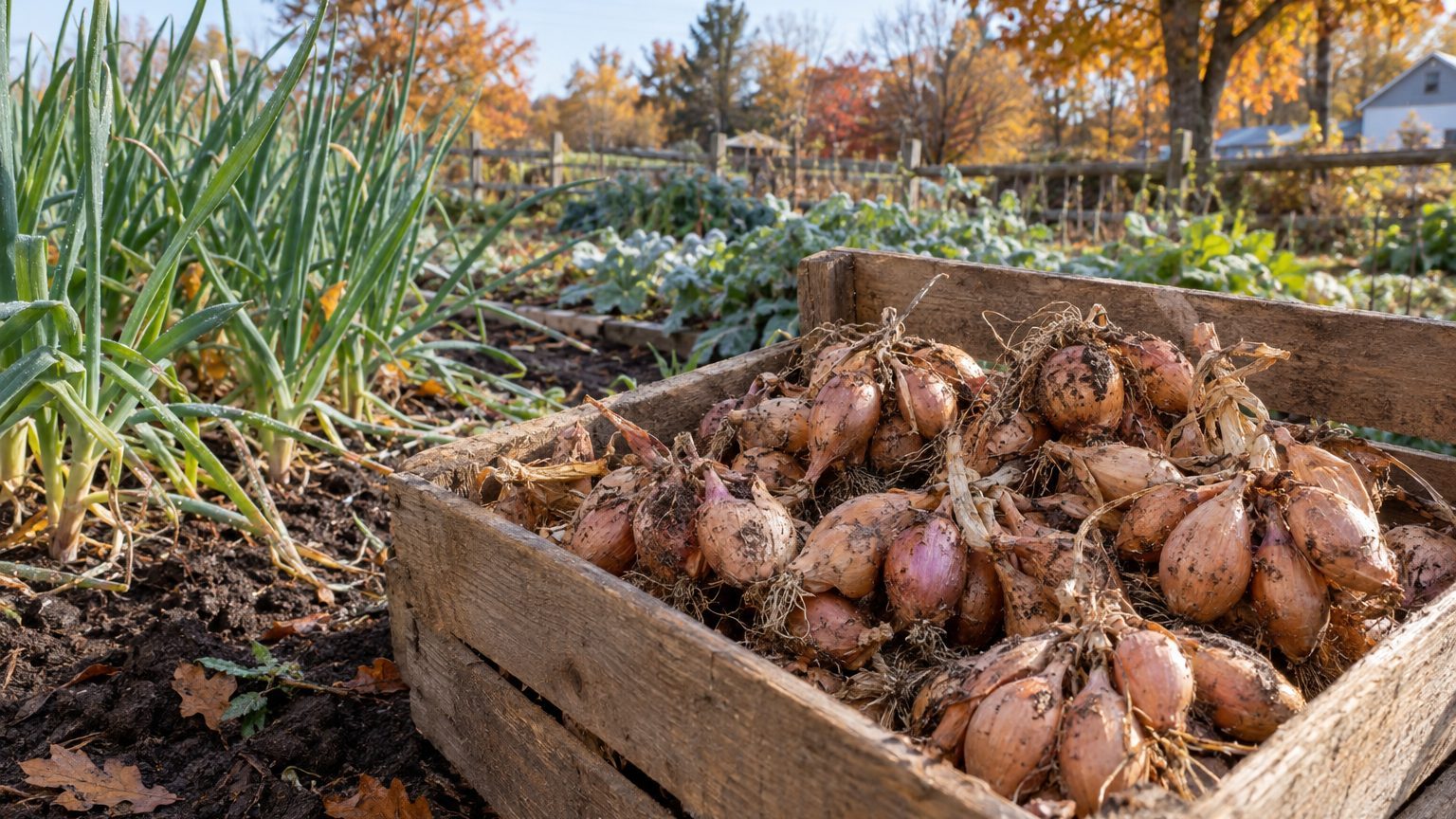

For most West Virginia gardens, the best shallots are hardy multiplier types grown from bulbs planted in October and harvested the following summer. Spring-planted bulbs of the same kind are the backup. Seed-grown shallots suit gardeners willing to start them indoors. Specialty types that need a long, dry finish are the ones to skip.
The short answer for West Virginia
Choose by type first and by cultivar name second. Fall-planted multiplier shallots, grown from bulbs, are the first pick. Spring-planted multipliers come second, and seed-grown shallots come third. At Charleston, the last spring freeze at 32°F falls between April 9 and April 23, and the first fall freeze falls between October 18 and November 1. Those dates mark the band where the odds of a 32°F freeze sit between 30 and 70 percent. A freeze can still come after the later spring date or before the earlier fall one. Charleston is a river valley, and higher ground across the state freezes noticeably earlier in fall.
Why do fall-planted multiplier shallots suit West Virginia best?
The coldest month at Charleston has a mean daily minimum of 26.1°F. That is cold enough to stop top growth for a while, but shallot bulbs sit through it without trouble, especially under a few inches of straw. Planting in October gives the roots several weeks of cool soil to settle in before the ground stiffens. Green leaves then start moving in late winter, and the plants have a head start when the days lengthen in spring. A fall planting also tends to finish bulbing before the heavy, humid heat of midsummer arrives.
Each planted bulb divides into a small cluster of new bulbs. That is the multiplier habit, and it is why a handful of bulbs saved from one harvest can plant the next year’s bed. Set each bulb with its tip at or just under the soil surface, then mulch lightly. The exact dates for each part of the state are laid out in When to Plant Shallots in West Virginia.
Which shallot type fits which gardener?
| Type | When it goes in | Best for | Main risk here |
|---|---|---|---|
| Multiplier shallots from bulbs, fall-planted | October, several weeks before the ground freezes hard | Most gardens, earliest and largest harvest | Rot in soggy winter soil, heaving on bare ground |
| Multiplier shallots from bulbs, spring-planted | As soon as the soil can be worked | Gardeners who missed fall, or heavy ground that stays wet | Smaller bulbs if planting slips into late spring |
| Seed-grown shallots, started indoors | Seeded indoors in late winter, set out in early spring | Gardeners who want to avoid saving or buying bulbs | Slow seedlings, extra work, a tight season |
Within each type, round, banana-shaped and gray shallots are mostly matters of kitchen taste. Ask the supplier which cultivars they sell for fall planting in a climate like yours. The full routine from soil prep to curing is in Growing Shallots in West Virginia.
What will not work here

A few common plans fail in West Virginia, and the reasons come straight from the calendar. Shallots depend on cool weather early and a dry finish late. Anything that pushes the crop out of that rhythm costs bulb size.
Can you plant shallots late in West Virginia?
Late planting fails first. Shallots start bulbing as days lengthen and temperatures climb. A bulb set in May has only a few weeks to build leaves, and leaf count sets bulb size. The result is a cluster of marbles instead of full bulbs. Waiting until after April 23 for the freeze danger to pass is also a mistake, because shallots tolerate frost. The cool weeks of March and early April are the plant’s best growing time, so bulbs should go in as soon as the soil crumbles in your hand.
Seed-grown shallots punish the same mistake harder. Sowing seed directly into cold, wet spring ground gives weak seedlings that fall behind the weeds. Seedlings started indoors and set out early do better, but the margin is thin.
Do shallots rot in West Virginia’s wet soil?
Wet ground is the second problem. Much of the state’s garden soil is heavy clay on a slope, and summers are humid. Bulbs sitting in saturated soil through winter can rot before they root. Crowded leaves also stay damp in early summer and invite fungal disease and neck rot. A spacing of about 6 inches between bulbs, with rows 12 to 18 inches apart, keeps air moving. Raised beds, or at least raised rows, drain much better than flat clay.
Harvest and curing need the same attention. Pull bulbs when the tops have yellowed and fallen, then cure them in a shaded, airy spot such as a covered porch or a garage with the door open. A sealed shed is the wrong place, because damp air slows drying and invites mold.
What about planting too early or too late in fall?
Bulbs planted in September, while the soil is still warm, can send up a lot of top growth that winter damages. Bulbs planted after the ground is nearly frozen may not root at all and can be pushed out of the soil by freezing and thawing. On higher ground, where the first freeze comes earlier than Charleston’s October 18 to November 1 band, the safe window opens and closes sooner. Mulch placed after the soil has cooled protects against heaving, and mulch laid down too early on warm soil holds moisture against the bulbs.
What changes across West Virginia
West Virginia does not have one garden climate. The USDA Plant Hardiness Zone Map (2023 edition, built on 1991-2020 climate normals) places the state between zone 5a and zone 7a, so there is no single answer for the whole state. The zone map rates one thing only, the average annual extreme minimum temperature. The Charleston numbers above describe a river valley, and a ridge top in the eastern mountains behaves very differently.
Readers in the northern part of the state or at altitude should expect colder winters and a shorter growing season than Charleston. In practice, that moves three things. Fall planting happens earlier, because the first hard freeze arrives sooner. Mulch goes on thicker, about 3 to 4 inches of straw or shredded leaves once the ground has cooled. And spring work starts later, because soil stays frozen or soggy longer on high, shaded ground. Hardiness is rarely the issue, since shallots handle cold well. Bare, windswept ground without snow cover is where bulbs get heaved or desiccated.
Gardeners in the warm river valleys and low southern counties have the opposite adjustment. Fall planting can wait until October without much risk, spring growth starts earlier, and harvest comes sooner. That brings the harvest into the wettest and most humid stretch of summer, so quick drying, spacing and bed drainage matter more there.
To see where your own garden sits, look up your location on the USDA Plant Hardiness Zone Map by ZIP code. Do not assume your zone from the county name alone, because a county can hold both a valley and a ridge.
Where to check this for your own county
The best local source is West Virginia University Extension, the state’s land-grant extension service. Every county has an office with agents who know the soils, the elevations and the disease pressure in that area. A county recommendation beats a state one, and the advice in this article is the state version.
Look for two things. The first is a local planting calendar for onions and shallots, with fall and spring dates for your county. If the county does not publish one for shallots, the dates for garlic and onions in your area are the closest guide, since shallots are planted on much the same schedule.
The second is a list of varieties known to perform in your county. Extension offices, and the Master Gardener volunteers who work with them, often know which suppliers’ bulbs hold up locally and which ones rot in wet springs. Bring a few details when you ask: your approximate elevation, whether the bed drains quickly or stays wet, and whether you plan to plant in fall or spring.
Checking this against your own garden
Every date in this article is a starting point, and what you see in your own bed outranks all of them. Three observations tell you more about your microclimate than any chart.
- Soil warmth by feel. In fall, shallots go in when a handful of soil feels cool, not warm, and in spring when it crumbles instead of smearing into a wet ribbon. If your soil reaches that state weeks before or after a neighbor’s, adjust your planting dates to match.
- First green shoots. Fall-planted shallots send up green tips in late winter or early spring. Shoots up early on a south-facing bed point to a warm pocket, and shoots weeks behind point to cold air pooling or shade.
- Tops yellowing and falling over. When roughly half the leaves lean over and turn yellow, the bulbs are ready to lift. The date you see this each year tells you how fast your site moves through the season, and it sets next year’s planting date.
Write the dates down for a couple of seasons. A short note in a garden notebook will give you a more accurate local planting window than any published range.
Common questions
Can shallots survive West Virginia winters?
Yes. The mean daily minimum in the coldest month at Charleston is 26.1°F, and shallot bulbs tolerate cold well below that. Colder, higher ground calls for a few inches of straw mulch to prevent heaving. Winter wet is the greater danger, so well-drained soil matters more than extra protection.
Should I plant shallots in fall or spring in West Virginia?
Fall planting in October usually gives the biggest bulbs and the earliest harvest. Spring planting works well on heavy, wet soil or if the fall window was missed, provided the bulbs go in as soon as the ground is workable.
Are seed-grown shallots worth trying?
They are worth trying if you enjoy starting seedlings indoors and want to avoid buying bulbs each year. They need an early start and careful timing, and results are less certain than with bulbs.
How far apart should shallots be spaced in humid summers?
Plan on about 6 inches between bulbs, with rows 12 to 18 inches apart. In humid conditions, wider spacing lets leaves dry faster after rain and cuts down on fungal disease. Planting on a raised row adds drainage, which helps bulbs finish cleanly in early summer.