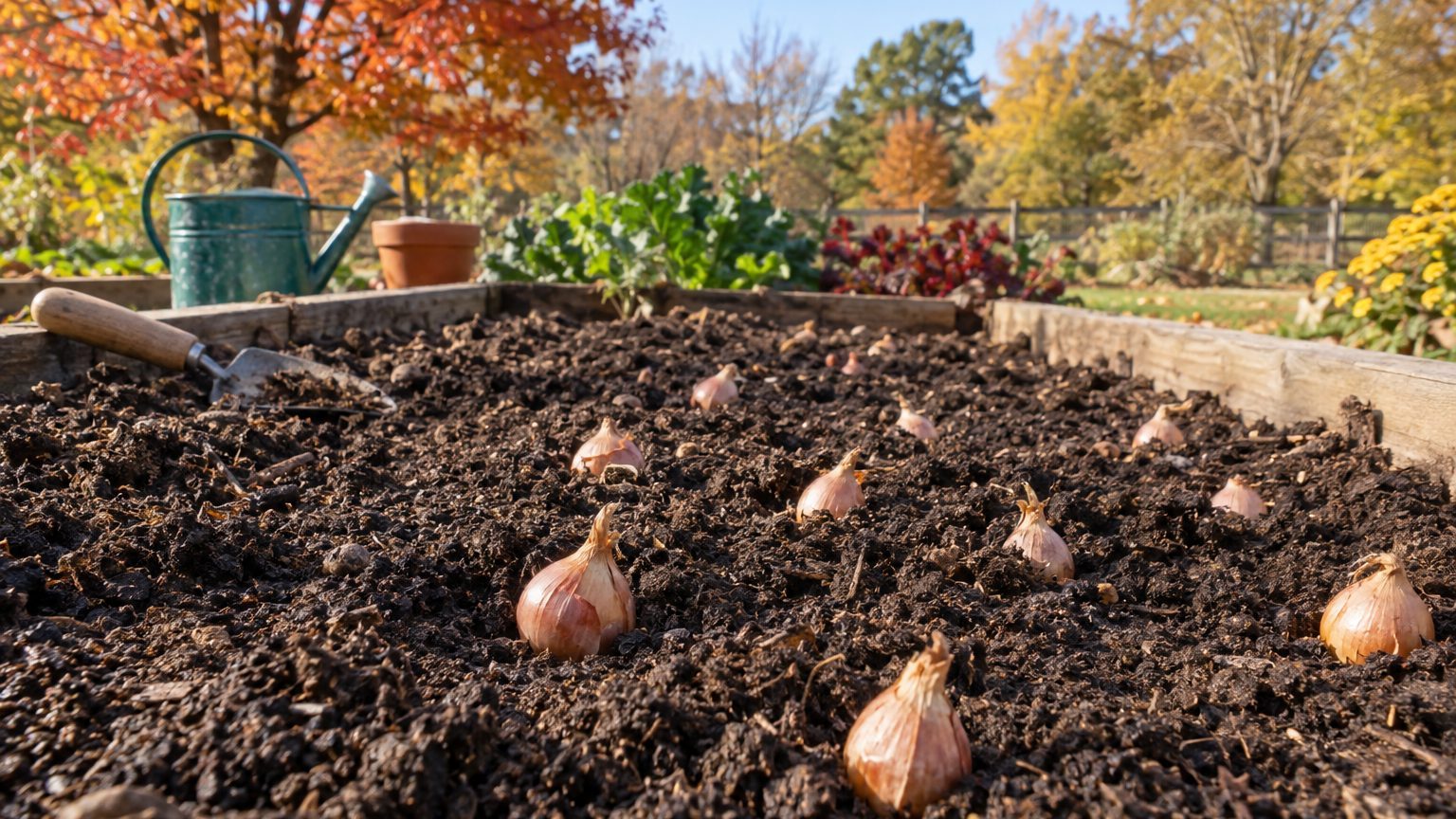

In West Virginia, plant shallots in the fall, from roughly mid-October into early November, or in spring as soon as the soil crumbles in your hand, usually March into early April. Fall planting generally gives bigger bulbs and an earlier harvest. In the mountains, move the fall window earlier by a couple of weeks and expect spring planting to start later.
The short answer for West Virginia
The calendar comes from Charleston’s 1991-2020 climate normals from NOAA. The last spring freeze there falls between April 9 and April 23. That is the band in which the odds of a 32°F freeze run between 30 and 70 percent. The first fall freeze falls between October 18 and November 1, on the same 30 to 70 percent odds. Those dates describe a river valley, and the fall ones arrive noticeably earlier on higher ground.
Shallots are tougher than most garden crops, so the frost dates are a rough guide rather than a deadline. The mean daily minimum of the coldest month at the reference station is 26.1°F. A mulched shallot clove handles that easily. What it needs is time to root before the ground locks up.
When is the best time to plant shallots in fall?
Aim for the weeks around the first fall freeze, so the last half of October in the Charleston area. Roots grow while the soil is cool and green tops stay short, ideally an inch or two at most. Set each clove with the pointed end up and the tip just at the soil surface. Once the ground has chilled, spread 3 or 4 inches of straw or shredded leaves over the bed. The mulch keeps the soil from heaving in freeze and thaw cycles, which can push shallow cloves right out of the ground.
Planting in warmer parts of the valley can run into early November without trouble. Where fall freezes come early, start in early October.
When can you plant shallots in spring?
Shallots take light frost without harm, so spring planting can start a few weeks ahead of the April 9 to April 23 band. In practice that means March in the lower valleys, as soon as the soil is workable. Workable means it crumbles rather than smearing into a ribbon. Spring-planted shallots form smaller bulbs on average because they have less cool weather to build leaves before the long days trigger bulbing. Getting them in early matters more than getting them in perfectly.
For more on the crop in general, see Growing Shallots in West Virginia.
What will not work here

Planting too early in fall is the common mistake. September soil in the valleys is still warm, and cloves set then send up tall tops that go into winter soft and exposed. With the first freeze not due until the second half of October at Charleston, there is no reason to rush. Wait until the soil has cooled and the weather turns reliably crisp.
Late spring planting fails for the opposite reason. A bed planted in May has a short run of mild days before summer heat arrives, and the plants bulb up small, with thin necks that are slow to cure. If March and April both slip away because of wet ground, the better move is often to buy sets for the following October rather than force a weak crop in a hot, humid June.
Seed-grown shallots are another route that works only with a head start. Start seed indoors in late winter and transplant, or skip seed and use bulbs.
Humidity is the quieter problem. West Virginia summers are warm and damp, and shallots crowded at 3 or 4 inches apart hold moisture in the canopy, which invites fungal disease and neck rot. Give each bulb 6 inches in the row, and a bit more where air movement is poor, such as a sheltered hollow. Pull heavy mulch back from the plants in late spring, once the weather warms, so the base of each plant can dry between rains.
Soil drainage can sink a fall planting. Many hill and hollow gardens have slow-draining clay, and a winter of standing water rots cloves before they root. A raised bed or a ridge of soil about 4 to 6 inches high solves most of it.
Curing is where humidity catches the last of the harvest. Bulbs pulled in a wet spell and left in a damp garage turn soft. Spread them in a single layer somewhere shaded, dry and breezy, such as a covered porch with a fan, until the necks are fully dry.
What changes across West Virginia
The state spans USDA hardiness zones 5a to 7a, from the Panhandle and the Allegheny Highlands down to the warmest valleys of the south and east. That zone system rests on one variable: the average annual extreme minimum temperature. So there is no single answer for the state, and the Charleston dates above are a reference point. They are not a statewide rule. Charleston sits in a river valley, and freezes arrive earlier on higher ground.
If you garden in the north or up in the mountains, shift in three ways. Plant in early October instead of late, so roots establish before the ground cools hard. Mulch deeper, with straw or leaves, because winters there swing colder than the 26.1°F coldest-month figure from Charleston. And hold spring planting until the soil thaws and drains, which can be weeks behind the valleys. A cold hollow or north-facing slope can lag even a mile from a warmer ridge.
Gardeners in the warmest low valleys can stretch the fall window into early November and begin spring planting in early to mid March. Even there, the cure for a warm, wet spell is patience, not an early start.
Find your own zone on the USDA Plant Hardiness Zone Map by entering your ZIP code. Treat the result as a starting point, since a single ZIP code can contain several microclimates. The best shallots to grow in West Virginia are easier to choose once you know whether you garden at the cold or the mild end of that spread.
Where to check this for your own county
West Virginia University Extension is the place to confirm any date in this article. Each county has an office with agents who know the local soils, elevations and weather patterns. A county recommendation beats a state one, and what you are reading is the state version. A grower in Berkeley County and a grower in McDowell County do not share a calendar, even if the state averages look similar.
When you visit the site or call the county office, ask for two things. The first is the local planting calendar for onions, garlic and shallots, or for the allium family generally, since the timing is close. The second is the list of varieties that have been grown and trialled in or near your county, along with any trouble spots such as disease pressure in wet years. Extension offices also run soil testing, and a test before fall planting tells you whether the bed needs lime or fertilizer, which saves guessing.
Ask too about local frost dates for your town specifically. County agents often have a first and last freeze estimate drawn from a nearby weather station rather than from Charleston, and that is a closer match for most gardens than the valley numbers here.
Checking this against your own garden
Your own observations outrank every date above. Three are worth watching, and none needs a gadget.
How the soil feels in spring. Squeeze a handful from 3 or 4 inches down. If it holds a sticky ball, it is too wet. If it breaks apart when you poke it, it is ready. A bed that reaches that point two weeks before your neighbor’s sits in a warmer, better-drained spot, and that tells you your planting date can move earlier.
Where frost lingers. Walk the yard on a clear, cold morning. White grass in one corner while another stays green marks a frost pocket, usually a low spot where cold air settles. Plant fall shallots in the greener area and give the frosty one extra mulch, or leave it for later crops.
When the first green shoots show. In spring, fall-planted shallots push up green blades once the soil warms. If yours appear in early March, your garden runs mild. If they wait until April, plant spring sets later and expect harvest to come later. In summer, the tops yellow and flop over when the bulbs are ready, and that timing gives you a personal benchmark for next year’s calendar.
Jot down the date of each observation. After two seasons, those notes will predict your best planting window better than any regional average.
Common questions
Can I plant shallots in spring in West Virginia?
Yes. Plant as soon as the soil is workable, usually March in the lower valleys and April at higher elevations. Spring-planted shallots tend to produce smaller bulbs than fall-planted ones, but they are still worth growing. Avoid planting after May, when heat cuts the growing time short.
How deep and how far apart should shallots be planted?
Set cloves with the pointed end up, the tip just at or slightly below the soil surface. Space them about 6 inches apart in the row. The wider spacing helps air move through the foliage in humid summers.
Do fall-planted shallots survive West Virginia winters?
Generally, yes. The mean daily minimum of the coldest month at Charleston is 26.1°F, and mulched shallots handle that well. In colder zones in the north and at elevation, add a deeper layer of mulch. Winter wet is a greater risk than cold, so drainage matters most.
When are shallots ready to harvest?
Harvest when the tops turn yellow and fall over, typically in early to mid summer. Fall-planted shallots usually finish ahead of spring ones. Pull them on a dry day, then cure them in a shaded, airy spot until the necks are completely dry.