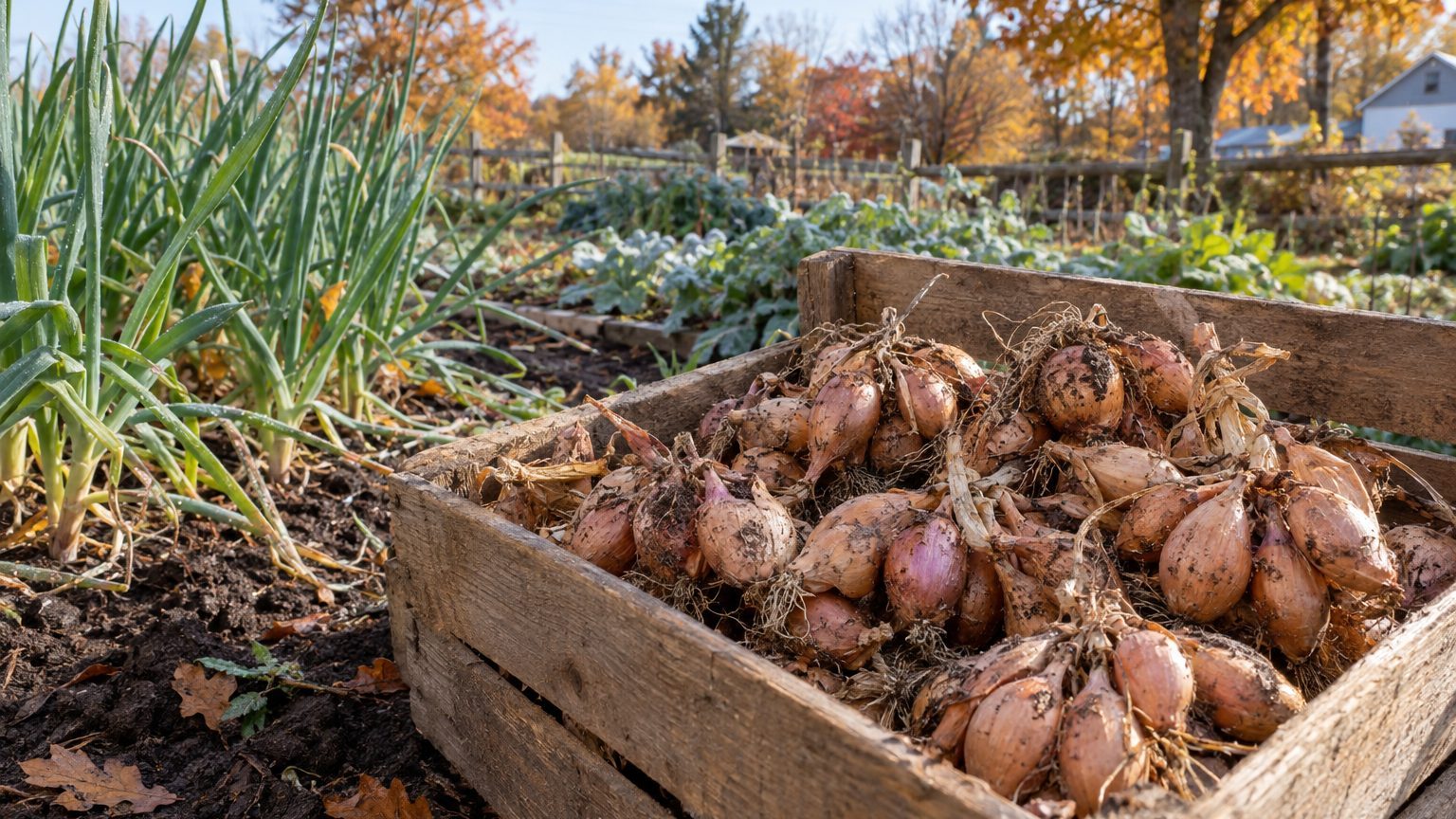

The best shallots for Wyoming are the ones that finish inside a short, cold season: multiplying shallots planted from sets in spring, and seed-grown shallots started indoors and transplanted out. Fall-planted bulbs can work in lower, sheltered spots under heavy mulch, but they carry real risk. With roughly 130 frost-free days at 6,000 feet and hard winters, a shallot has little room to be slow.
The short answer for Wyoming
Pick by type. Spring-planted multiplying shallots (the French red, gray and Dutch yellow styles sold as sets) are the safe default, and transplants grown from seed are a close second. Fall planting is the gamble, and it gets worse the higher you garden.
The reasoning starts with the calendar. In NOAA’s 1991-2020 Climate Normals, the last spring frost falls between May 7 and May 18, the band where a 32°F freeze is 30 to 70 percent likely. The first fall frost falls between September 24 and October 5, defined the same way. The reference station has about 130 frost-free days between those two dates, and higher ground has fewer. Shallots can go in before the last freeze date, but watch the plants and protect them if a hard freeze is forecast. But once the season turns, they stop growing leaves and start swelling bulbs. The leaf growth they have by then is what you watch to judge the bulb.
Winter matters too. The mean daily minimum of the coldest month is 18.1°F, and that is an average, so individual nights run well below it. A bulb in the ground has to ride out those nights with only snow and mulch for cover.
Which type of shallot should you plant in Wyoming?
Three approaches cover most gardens, and they differ mainly in how much of the short season they use.
| Type | How it starts | Timing | Fit for Wyoming |
|---|---|---|---|
| Multiplying shallots from sets | Small bulbs pushed in with the tip at or just under the surface | Spring, as soon as the soil can be worked | Best default; each set becomes a cluster |
| Seed-grown shallots | Seed sown indoors, seedlings transplanted | Sow in late winter, transplant around the last frost band | Good for cheap volume; one bulb per plant, finishes in one season |
| Fall-planted multiplying shallots | Sets planted before the ground freezes | Early to mid fall | Possible at lower, sheltered sites with deep mulch; risky at elevation |
Should you plant shallots in fall or spring in Wyoming?
Spring, for most gardeners. A fall planting gets a head start on roots, but only if the bulbs live through the winter. The exact planting window for your part of the state is worked out in When to Plant Shallots in Wyoming. In short, spring sets go in around the time the soil thaws, weeks ahead of the frost band above.
What will not work here

Late planting fails first. A set that goes in during June has no time to grow a full set of leaves before the days start telling it to bulb, so it makes a small bulb or a thin cluster. With a last freeze as late as May 18 in the reference band, and a first fall freeze as early as September 24, gardeners are tempted to wait for “safe” weather. For shallots, waiting is the bigger risk, because they tolerate the cold you are waiting out.
Can slow-maturing shallots finish in a 130-day season?
Often they cannot. Seed-grown shallots started outdoors in May, or large storage types that want a long, mild stretch to size up, run out of season before they cure. A shallot needs to finish growing, then have its tops fall over and dry down. If a freeze arrives while the tops are still green, check the necks before you store the bulbs. At higher elevations, where frost can come in any month, that problem starts earlier. Row cover or a low tunnel over the spring planting is a standard part of the plan here, as is a cover ready for early fall nights.
Why do fall-planted shallots fail at high elevation in Wyoming?
Fall planting needs the bulb to root, stay mostly dormant, and then wake up after snowmelt. In the colder zones, the trouble is the freeze-and-thaw cycle. A bare bed that thaws and refreezes can heave shallow bulbs up and out of the ground, so keep the bed mulched. Where winter nights average well under 20°F in the coldest month, a bulb with only an inch or two of soil over it has little buffer. Snow cover helps, but Wyoming wind strips many beds bare, which leaves the bulbs with nothing. A thick layer of straw or shredded leaves, put down after the ground has frozen, is the minimum. Even then, sets that go in late and have not rooted lose out.
Dry wind causes a different kind of failure. Shallots have shallow roots, and they dry out quickly in thin air and steady wind. A single deep watering once a week can leave the top of the soil dry in a windy stretch, so check the soil before you water again. Mulch around the clusters and watering that matches how fast the surface dries out do more good than a fixed schedule.
What changes across Wyoming
The USDA Plant Hardiness Zone Map (2023 edition, built on 1991-2020 normals) puts Wyoming in zones 3a through 6a. That is a wide spread, and it means there is no single answer for the state. The USDA zone rests on one number, the average annual extreme minimum temperature. It says how cold the worst night gets, and says nothing about how long the summer lasts. Both matter to a shallot.
If you garden in the north, in the mountain valleys, or at altitude, shift everything toward caution. Plant in spring only, and plant a little later, once the soil has thawed and dried enough to crumble. Count on frost arriving earlier in fall. Favor transplants or sets that you can protect, and keep row cover on hand through the whole season. Gardeners in the lower, warmer parts of the state have more flexibility. They can try a small fall planting alongside the spring one to see how it comes through, and they have a longer window for bulbs to size up and cure.
Look up your own location on the USDA map rather than guessing from a neighbor’s garden or a seed catalog. Two towns separated by a few hundred feet of elevation can land in different zones, and the zone only covers winter cold. Once you know it, Growing Shallots in Wyoming covers the full crop from soil to curing, and the zone helps you decide how much winter protection you need.
Where to check this for your own county
The best local source is University of Wyoming Extension. Its county offices work with gardeners every season, and they know which valleys get a late freeze and which slopes warm early. A recommendation from the office in your county beats a statewide one, and what you are reading here is the statewide version.
When you get in touch, look for two things. The first is a local planting calendar for onions, garlic or shallots, since shallot timing follows the same logic as those crops. Note the dates they give for spring planting and, if they offer one, for fall planting. The second is any list of varieties that have been trialled in your county, with notes on which ones overwintered and which ones sized up before frost. A variety that has done well in a trial near you is worth more than any general rating.
It also helps to ask a few direct questions. When does the soil usually become workable in your area? How often has a hard freeze come after mid-May? Has anyone had success with fall-planted shallots at your elevation? Staff and Master Gardener volunteers often have years of observations that never make it into a printed table.
Checking this against your own garden
Your own garden outranks any date printed here. Three things are worth watching, and none needs equipment.
The first is soil warmth, which you can judge by feel. Push your hand into the bed in early spring. Soil that crumbles in your fingers and feels cool but not icy is ready for sets. If it is soggy, sticky or still frozen below the surface, wait. A south-facing bed by a wall may reach that point a week or two before an open bed in a low spot.
The second is the first true leaves. Note the date green shoots break the surface after planting, and how fast they grow in the following weeks. Slow, stunted growth in a cold bed tells you the site stays cool. Next year, use row cover there or plant a little later. Fast growth tells you the spot is warm enough to try earlier.
The third is the bulbing signal in early summer. Watch for the base of the leaves to swell and, later, for the tops to bend and yellow. A seed stalk shooting up early points to stress, often a cold snap after planting. Write down the date the tops fall over. If that date is already close, you know how much room your garden has before the first fall frost, and whether a slower type is worth another try.
Common questions
Can shallots survive a Wyoming winter?
Sometimes, depending on where you garden. At lower, sheltered sites, fall-planted shallots under a thick mulch can come through. At higher elevations or in the colder zones, the freeze-and-thaw cycle and exposed beds make losses likely. Spring planting avoids the question.
Are seed-grown shallots worth trying in Wyoming?
Yes, if you can start them indoors in late winter. They make one bulb per plant and finish in a single season, which fits a short growing window. They need more attention early on than sets do.
How late can you plant shallots in spring?
The earlier the better. Shallots tolerate frost, so sets can go in as soon as the soil can be worked, ahead of the May 7 to May 18 last-frost band. Planting into June leaves too little time for leaf growth before bulbing begins.
Do shallots need row cover in Wyoming?
It helps a great deal. Frost can arrive in any month at higher elevations, and the frost-free stretch is about 130 days at 6,000 feet. A light cover protects young shoots in spring and buys a few extra weeks of growth in fall.