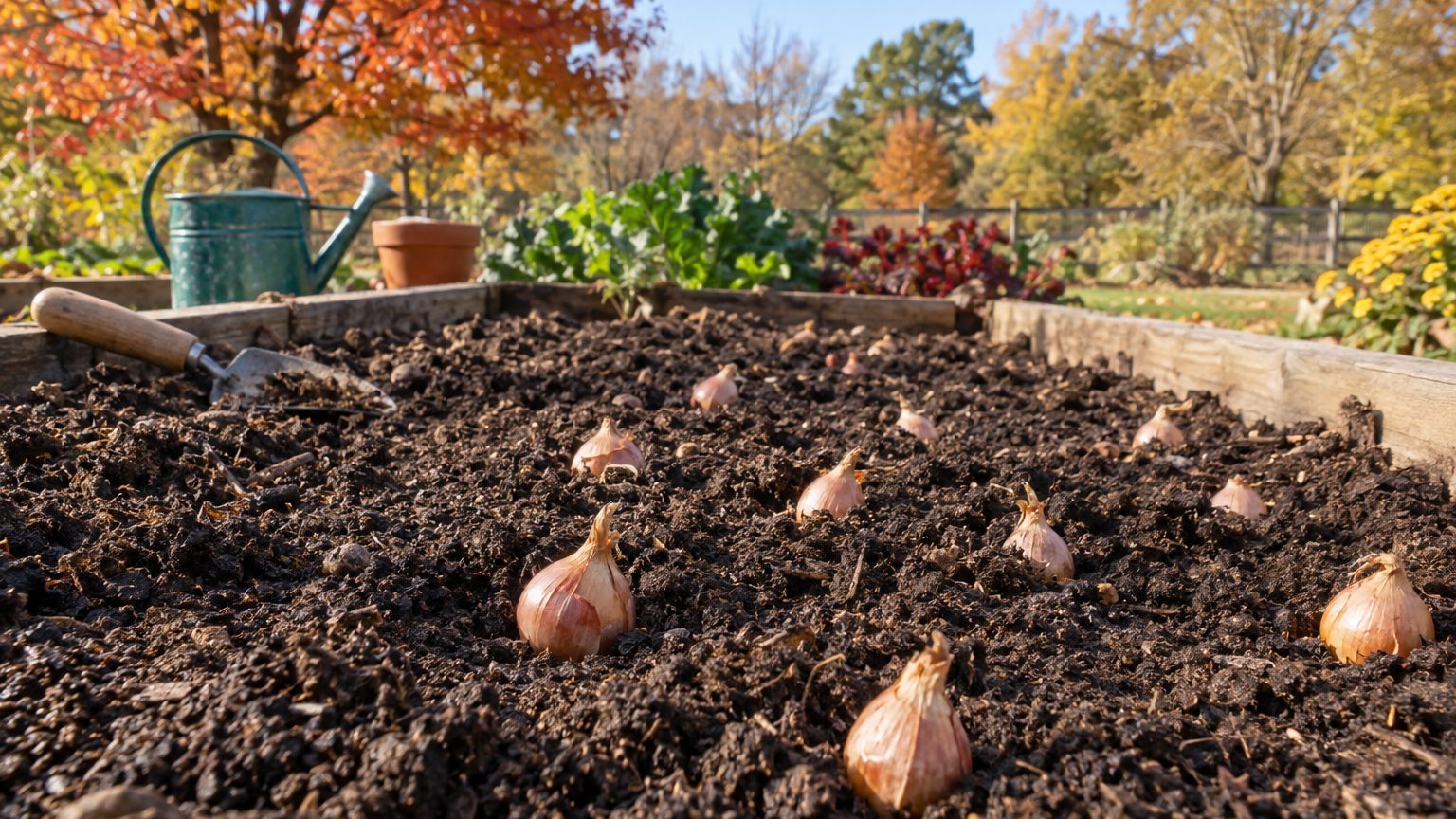

Plant shallots in Wyoming as soon as the soil thaws and crumbles in spring, usually late April into mid-May. Fall planting works too if you mulch heavily. Shallots shrug off frost, so the real limits are a short season, dry wind, and elevation. The sections below turn those limits into dates you can use.
The short answer for Wyoming
Set spring shallots out from the time the ground is workable until about the last spring frost, and set fall shallots about four to six weeks before the ground freezes hard. NOAA’s 1991-2020 climate normals put the last spring frost between May 7 and May 18, and the first fall frost between September 24 and October 5.
Those dates describe odds of a 32°F freeze. They mark the band where the chance runs from 30 to 70 percent, so a freeze after May 18 or before September 24 can still happen, just less often. The Cheyenne reference station has about 130 frost-free days between the last spring frost and the first fall frost, at roughly 6,000 feet. Frost is possible in any month at higher elevations, so season extension is part of the plan here.
When do you plant shallots in spring in Wyoming?
Sets tolerate light frost, so there is no reason to wait until May 18. Planting in the weeks before the May 7 to May 18 band lets roots grow in cool soil and gives the bulbs more of the long June and July days to size up. The one rule is to hold off while the ground is frozen or sticky. Sets pushed into cold mud tend to rot.
Shallots grown from seed need a head start. Sow them indoors in late winter and move the seedlings out in April, with row cover ready for cold snaps.
Can you plant shallots in the fall in Wyoming?
Yes, with conditions. The goal is roots, not top growth, before the ground locks up. With first frost arriving between September 24 and October 5, the usual window runs from late September to mid-October. Cover the bed with 3 to 4 inches of straw or shredded leaves after planting.
The coldest month at Cheyenne has a mean daily minimum of 18.1°F. Mulched sets handle that. The colder parts of the state are another matter, as the section on regional differences explains below. If you want the full growing picture, see Growing Shallots in Wyoming.
What will not work here

Slow shallots top the list. About 130 frost-free days sounds generous until you plant in mid-May and count to a late September freeze. Varieties bred for long, warm seasons, and seedlings started late, often finish with small bulbs that do not cure well. Choosing an early or moderate-season type matters more here than in the Midwest, and The Best Shallots to Grow in Wyoming covers that choice.
Why does waiting for the last frost date backfire?
Shallots form bulbs in response to lengthening days. Every week lost in April is a week the plant has less time to build leaves before bulbing starts, and the number of leaves sets the bulb size. A gardener who waits for May 18 “to be safe” gives up the cool weeks the crop likes best. Frost threatens the garden’s tomatoes and beans. Shallot tops can take a light freeze without harm.
Does weekly watering work in Wyoming’s dry air?
Rarely. Shallot roots stay near the surface, and low humidity plus steady wind pull moisture from the top few inches of soil quickly. One long soaking on a fixed day can leave plants stressed by midweek, then flooded on watering day. That swing causes split and double bulbs. Water whenever the top inch is dry, mulch the rows, and expect to water more often in June and July.
What goes wrong with fall planting?
Planting too early is the common mistake. Sets put in during August or early September send up tops that a hard freeze burns back, which drains the plant before winter. Bare soil is the other trap. Winter thaws and freezes, including the warm spells that chinook winds bring along the eastern slope, push unmulched sets out of the ground. A heaved set dries out and dies.
Elevation also breaks the calendar. Above Cheyenne’s roughly 6,000 feet, frost can come in any month, and a gardener who copies the May 7 to May 18 dates at a mountain-valley address will see tender shoots hit again and again. Low tunnels or row cover over the bed, put on at the first frost forecast, are standard practice, not an extra.
What changes across Wyoming
The USDA Plant Hardiness Zone Map for 2023 (built on 1991-2020 normals) places Wyoming in zones 3a through 6a. Three full zones separate the coldest places from the mildest, so there is no single answer for the state. The USDA system rests on one number, the average annual extreme minimum temperature. It tells you whether a plant survives winter, not when to put it in the ground.
For dated advice, Cheyenne is the reference point: last spring frost May 7 to May 18, first fall frost September 24 to October 5. Look up your own location on the USDA map to see where you fall in that spread. Do not assume your zone from a neighbor’s.
| Setting | Spring planting | Fall planting |
|---|---|---|
| Cheyenne reference area | Late April to mid-May, once soil is workable | Late September to mid-October, 3 to 4 inches of mulch |
| Northern Wyoming and cold basins | Later, often into May; start seedlings indoors | Earlier and riskier; heavy mulch, or skip fall planting |
| Higher elevations | Plant when soil thaws; cover beds against frost in any month | Plan on mulch and row cover; short season favors early types |
| Lower, warmer valleys | Earlier, as soon as soil crumbles | Later within the window; fall planting works best here |
A reader in the north or at altitude should shift in two directions. Spring planting slides later by the amount the soil stays frozen, and fall planting moves earlier so roots establish before the ground freezes. The choice of an earlier-maturing shallot matters more as the season shortens.
Where to check this for your own county
Start with University of Wyoming Extension, the state’s land-grant extension service. Every county has an office, and the staff there know the local frost pockets, wind, and soil.
Look for two things. The first is a local planting calendar for onions and other alliums, which gives dates for your town instead of a statewide range. The second is any record of varieties trialled in your county, since a shallot that matures at one elevation can stall at another. Ask which dates fit your elevation, whether fall planting is advised where you live, and what mulch depth they recommend.
A county recommendation beats a state one. The state calendar here gives a sensible starting range, but one county can run weeks apart from another in spring thaw and first frost. If the extension office gives a different date than you read here, follow the office.
Checking this against your own garden
Your own observations outrank every date above. Three are easy to make without any equipment.
Soil by feel. Grab a handful from 3 or 4 inches down and squeeze it. If it crumbles when you poke it, the bed is ready. If it forms a slick ball or has frozen layers, wait. A bed that crumbles a week or two before the neighbor’s drains well and warms early, usually a south-facing slope or a spot beside a wall.
First green shoots. Once sets are in, watch for the first green tips, and watch what else is waking up: dandelions, chives, and lilac buds opening. If your shoots appear well ahead of nearby gardens, your spot runs warm, and next year’s planting can move earlier. Late shoots mean cold air settles in your yard, so keep the row cover handy.
The tops in summer. When the green leaves start to yellow and flop over, the bulbs are done sizing up. Note the date. If it falls late, in September, the season is tight at your elevation, and an earlier variety or earlier planting is the fix.
Common questions
Can shallots go in the ground before the last frost?
Yes. Sets and hardened-off transplants take light frost. Plant as soon as the soil is workable and crumbly. Cover new seedlings with row cover when a hard freeze is forecast.
How deep and how far apart should shallot sets go?
Plant them pointed end up, with the tip just at the surface or up to about an inch below it, and space them about 6 inches apart. Shallow planting helps in cold soil because it warms faster and the bulb has less to push through.
Is it too late to plant shallots in June?
Late, yes. Bulbs formed from late planting are small. If you do plant in June, choose an early variety, expect modest bulbs, and use them fresh instead of curing them for storage.
Do I need to protect fall-planted shallots all winter?
Mulch is the protection. Spread 3 to 4 inches of straw or leaves after planting, and pull it back gradually in spring as shoots push through. Where winter lows run well below Cheyenne’s 18.1°F coldest-month mean, as in zone 3 areas, plan on a spring planting instead.