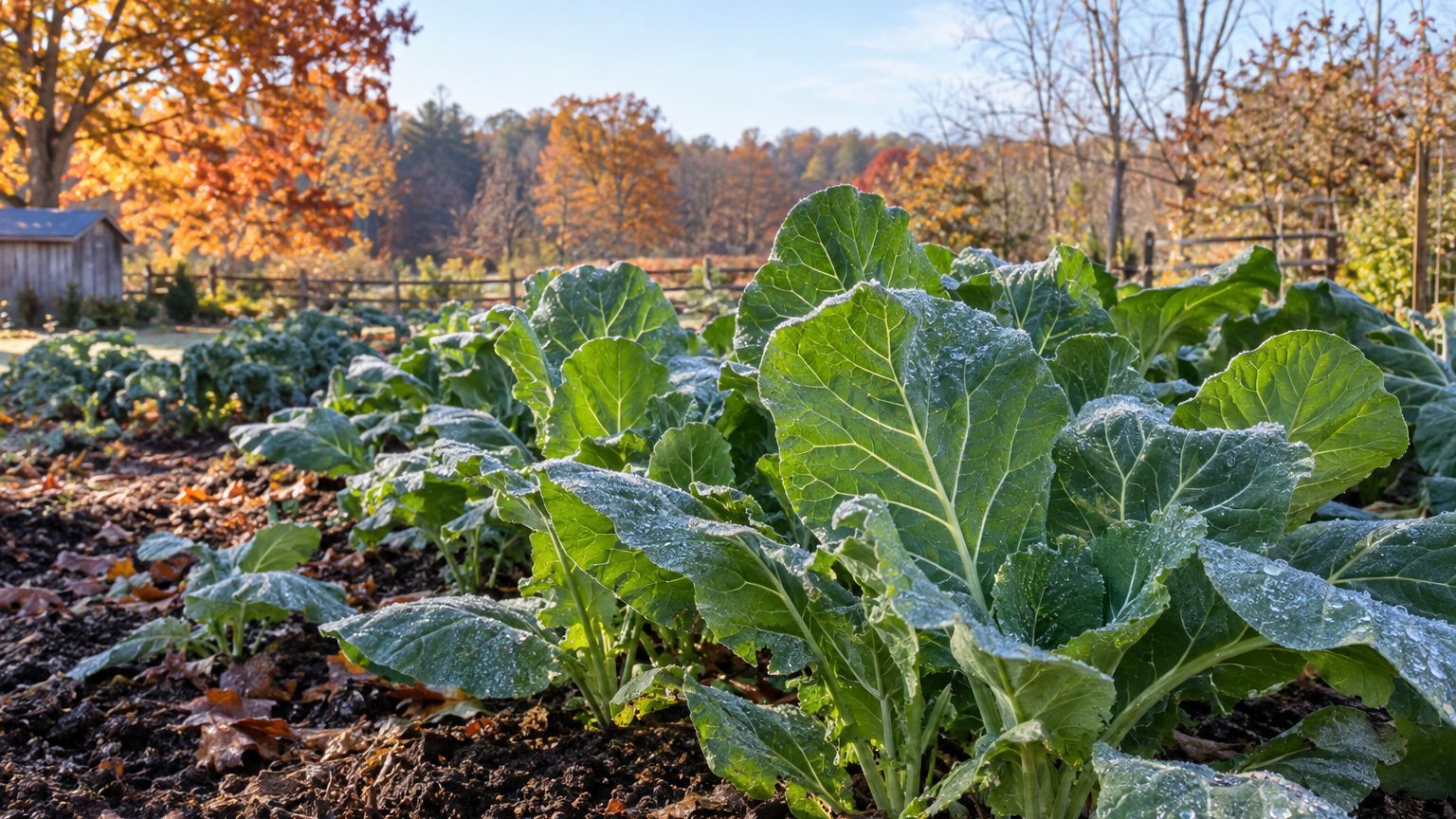

Start collard seeds indoors in mid to late March and set transplants out from early April, since collards shrug off light frost. For a fall crop, sow in mid-July to early August, about twelve weeks before the first freeze. Those dates fit the Boise valley, one of the mildest spots in Idaho. Mountain and high-desert gardens run weeks behind, and Growing Collards in Idaho covers the crop beyond timing.
The short answer for Idaho
In the Boise valley, the last spring frost falls between April 23 and May 7. Those dates come from the 1991-2020 NOAA Climate Normals and mark the span when the chance of another 32°F freeze sits between 30 and 70 percent. Earlier than April 23, a freeze is more likely than not still to come. After May 7, the odds drop below three in ten. The first fall frost falls between October 7 and October 21, by the same 30 to 70 percent measure.
When do you sow collards in spring in Idaho?
Collards tolerate light freezes, so you do not have to wait for the last frost date. Seeds started indoors about six weeks ahead land in the middle of March. Seedlings hardened off over a week can go into the ground in early April, even with a few cold nights still ahead. Plants set out after the May 7 end of the range still have time, but they reach the first hot weeks younger and smaller.
When do you sow collards for fall in Idaho?
Fall is the better season for collards, because cool nights sweeten the leaves. Count back roughly twelve weeks from the October 7 to 21 frost window and you land in mid-July. Seeds sown in the garden bed or in pots then become sturdy plants by the time nights turn cold. The table puts the Boise-valley timing in one place.
| Task | Boise-valley timing |
|---|---|
| Start seed indoors | Mid to late March |
| Set out spring transplants | Early April to mid-May |
| Last spring frost (30-70% band) | April 23 to May 7 |
| Sow for fall crop | Mid-July to early August |
| First fall frost (30-70% band) | October 7 to October 21 |
The coldest month at the Boise station has a mean daily minimum of 25.4°F. A typical January night stays above the point where a mature, hardened collard plant gets hurt, but a cold snap can drop well below that average. A plant left out all winter in the valley may come through a mild one. Do not count on it.
What will not work here

Why does a short season defeat some collards?
Boise’s frost window gives the valley a respectable season, and most of Idaho gets less. Slow, large-framed collards that need a long stretch to size up are the first to fail at altitude. A plant that is still small when the first fall freeze arrives will never reach a full harvest. Spring transplants set out after the last frost in a cold basin face the same squeeze from the other end.
The same logic breaks fall sowing in the colder zones. A July 15 sowing date is built on an October 7 to 21 frost window. If your first frost comes in mid-September, you would have had to sow in late June, and that is the hottest and driest part of the year for seedlings. In many mountain towns the fall crop is not worth attempting. Set out spring transplants early and harvest through summer.
Does a hot dry summer hurt collards?
Southern Idaho summers are hot and dry, with dry air and big swings between day and night. Seeds sown into a bed in July can crust over and dry out in a day. Watering once a week, which works fine for established plants in other regions, will lose seedlings here. A fall sowing needs light daily watering until the seedlings have a few true leaves, then deeper soaks every few days. A strip of shade cloth over the row for the first couple of weeks helps hold moisture in.
Heat also stresses spring plantings. Collards set out in May have only weeks before high summer hits. Plants that run short of water in July get tough and bitter, and some bolt. Mulch two to three inches deep and steady watering are the best defense.
The dry air does have one benefit. Fungal leaf problems that plague collards in humid climates are less common, so you can plant a little closer than Southern guides suggest. The limit then becomes how much water your soil can supply, and sandy valley soil supplies less than clay does.
What changes across Idaho
Idaho has no single planting date. The USDA Plant Hardiness Zone Map (2023, based on 1991-2020 normals) runs from zone 3b to 7b across the state. The system rests on one variable, the average annual extreme minimum temperature. It says how cold the worst night gets, not how long the growing season lasts.
Boise’s frost dates sit toward the mild end. A gardener in the north, in the mountains, or on the high plateau should expect a later last frost and an earlier first frost than the dates above. The practical shift is to move spring transplanting later and skip the fall crop in the coldest areas. Pick a fast, early collard variety, and look at The Best Collards and Greens for Idaho for choices by season length.
Altitude matters as much as latitude. Each step up the mountainside shortens the season and cools the nights. Two gardens ten miles apart can differ by weeks if one sits in a river valley and the other on a bench a thousand feet higher. Cold air drains downhill on still nights and pools in low spots, so a frost-hit hollow and a ridge lot nearby can disagree on frost dates.
The USDA map lets you search by ZIP code to find your zone. Use it to see how far you sit from the Boise reference point, and shift every date in the table accordingly.
Where to check this for your own county
The state dates here are a starting point. A county recommendation beats a state one, because county agents know the local frost pockets, soils and elevations. Your nearest office is a call or a click away through University of Idaho Extension, which runs county offices across the state.
Look for two things. The first is a local planting calendar or vegetable planting guide for your county, which will list dates for cool-season crops such as collards, kale and cabbage. The second is any report of varieties trialled in your area, since a collard that does well in a valley can fail at higher elevation. Ask whether the office has a last-frost and first-frost estimate for your town, and note which weather station it uses.
County offices also answer questions that dates cannot. Many have Master Gardener volunteers who know when local pests such as aphids show up on brassicas. They can tell you whether your soil and irrigation water suit a summer sowing. If your county sits near a state line, ask whether neighboring offices have useful advice too.
Checking this against your own garden
Your own observations outrank every date above. Three things are worth watching, and none needs equipment.
- Soil warmth by feel. Push your hand a few inches into the bed in the morning. If it feels cold enough to make your fingers ache, wait for seeds. Soil that feels cool but not chilly suits transplants. A bed that warms early marks a sheltered, sunny spot.
- The first true leaves. Seedlings first show two rounded seed leaves, then the first true leaves, which look like small collard leaves. When those appear, the plant can go outdoors. If seedlings reach that stage earlier or later than the calendar suggests, your garden runs warmer or cooler than the state average.
- Where frost shows first. On the first frosty morning, walk the yard and note which spots are white. Frost in a low corner but not on the slope tells you where cold air pools. Plant fall collards on the higher ground and keep early spring transplants out of the hollow.
Write down what you see each year. After two or three seasons, those notes will predict your own frost dates better than any chart.
The Moon calendar is a separate, older custom: see when to plant collard greens by the moon, written as tradition rather than fact.
Common questions
Can collards survive an Idaho winter?
Mature, hardened plants handle light freezes, and the Boise valley’s coldest-month mean minimum is 25.4°F. A hard cold snap can still kill plants, and many parts of the state sit in much colder zones. Treat winter survival as a bonus in the valley and do not count on it elsewhere.
Should I start collards from seed or buy transplants?
Either works. Transplants save weeks in spring, when the season is short. For a fall crop, direct sowing in midsummer is simple, as long as you keep the soil damp until seedlings emerge.
Is it too late to plant collards in September?
In the Boise valley, a September sowing will not have time to size up before the October 7 to 21 frost window. You will get baby greens at best. In colder parts of the state, the window has closed even earlier.
Do collards taste better after frost?
Yes. Cold nights mellow the bitterness. A light frost improves flavor without harming a well-grown plant, so harvest after the first few cold nights.