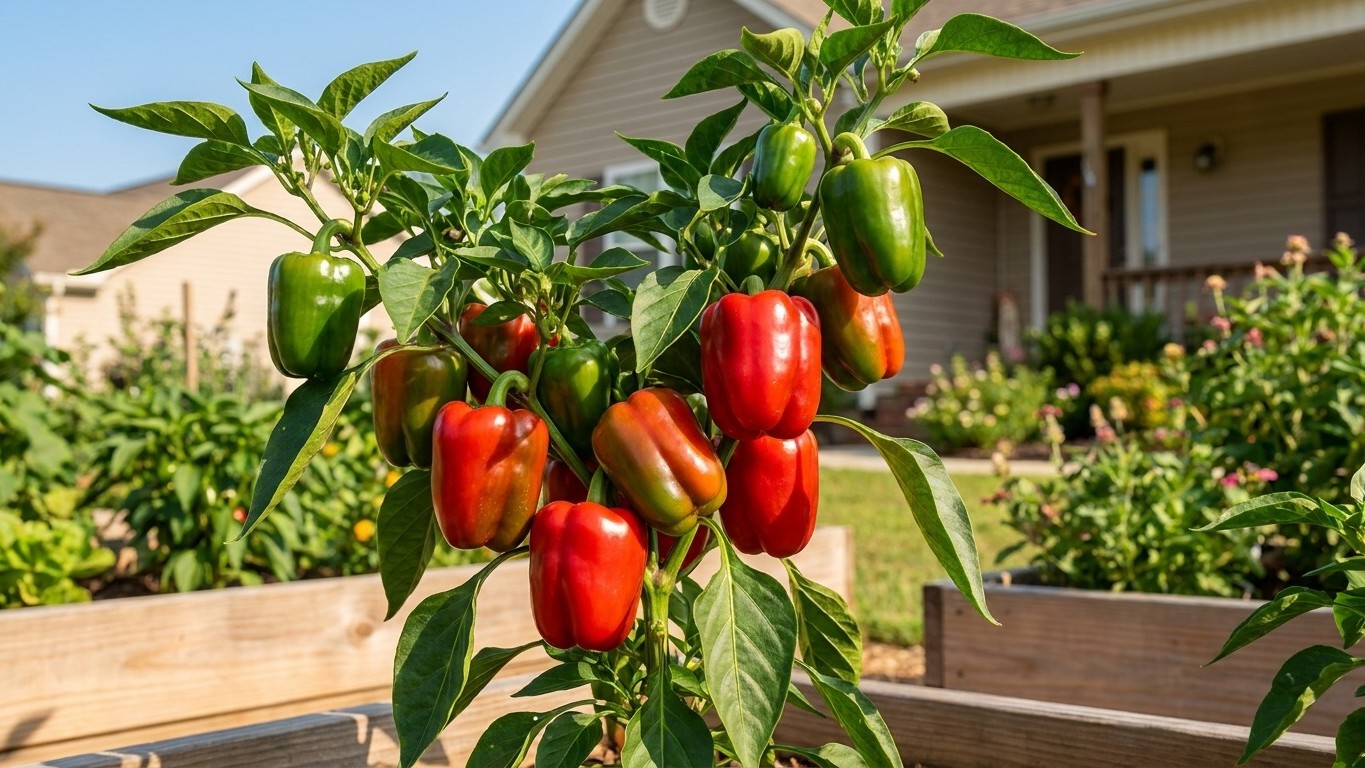

Only two of the nine pests Delaware’s extension service documents actually target pepper plants: tomato hornworm and, to a lesser extent, Colorado potato beetle. Hornworms show up once plants are flowering and fruiting, stripping leaves and gouging green pods through the hottest stretch of the season. Colorado potato beetle turns up earlier, right around transplant, though pepper is a minor host compared with potato or eggplant.
Which pests attack pepper in Delaware
The University of Delaware Cooperative Extension documents nine insect pests across the vegetable garden in this state: Colorado potato beetle, cucumber beetles (spotted and striped), harlequin bug, imported cabbageworm, Mexican bean beetle (Epilachna varivestis), squash beetle, squash bug, squash vine borer, and tomato hornworm. That’s the full, sourced list for Delaware gardens. It is not a pepper list. It’s a statewide vegetable-pest list, and most of the names on it belong to other crops entirely.
Squash bug, squash vine borer, and squash beetle feed on cucurbits, squash, pumpkin, and their relatives, and have no reason to touch a pepper plant. Cucumber beetles, both the spotted and striped forms, are also cucurbit specialists; their damage shows up on squash and cucumber leaves and blossoms, not pepper foliage. Harlequin bug and imported cabbageworm are brassica feeders, drawn to cabbage, broccoli, and kale, and they will pass over a pepper bed without stopping. Mexican bean beetle, despite the name confusion with “bean” crops that sometimes get intercropped near peppers, sticks to legumes.
That leaves two species with a real claim on pepper. Tomato hornworm feeds on the whole nightshade family, tomato, eggplant, potato, and pepper, and it’s the pest most likely to strip a pepper plant bare in a single week. Colorado potato beetle is also a nightshade feeder, but on pepper its damage is usually light and occasional. Gardeners who grow potato or eggplant nearby are far more likely to see heavy beetle pressure on those crops first.
The takeaway from the sort: nine documented pests, but only two that belong on a pepper-damage checklist. Everything else on the extension’s list is a case of mistaken identity waiting to happen if a gardener assumes every bug in the yard is after the peppers.
When each one shows up, and what it does first
Delaware’s last spring frost, based on the Wilmington reference station, falls in a window between April 3 and April 14 in most years, though suburban and rural gardens away from that airport station often see frost linger one to two weeks later. Pepper transplants should not go into the ground until after that frost risk clears and the soil itself has warmed. Transplant when the soil reaches 60 F, after frost, following guidance from Utah State University Extension on pepper culture, since transplants started 8 to 10 weeks indoors are tender and set back badly by cold soil.
Colorado potato beetle is typically the first visitor. Adults overwinter in garden soil and emerge as temperatures climb in spring, right around the time transplants go in. On pepper, the first sign is usually a scatter of small, ragged holes chewed along leaf edges on young plants, lighter than what the same beetle does to nearby potato or eggplant, where it can defoliate outright.
Tomato hornworm arrives later, once plants are established and flowering. The adult is a large gray moth that lays eggs on the underside of leaves; the caterpillars that hatch are the ones doing the damage, and they grow fast. The first sign is rarely the caterpillar itself, since its green body blends into the foliage. It’s usually missing leaves, stripped stems, and dark green or black droppings (frass) on the leaves below the feeding site, or chew marks on the shoulders of green fruit.
That feeding pressure tends to build through the same stretch of summer when Delaware averages 17.6 days a year at or above 90 F, based on NOAA climate normals for the Wilmington station. That heat load matters for a second reason that has nothing to do with insects at all, covered next.
Telling the damage apart from everything else
Not every damaged-looking pepper plant has a pest on it. Fruit set on pepper fails at both ends of the temperature scale, nights below 55 F or days above 90 F, according to Utah State University Extension, and neither failure leaves a single chew mark. A plant that flowers heavily but drops those flowers, or sets fruit that stays small and misshapen, during a run of Delaware’s hot days is showing heat stress, not insect feeding. This site does not carry Delaware’s summer night minimums, so a gardener trying to rule out the cold end of that range needs to watch their own thermometer rather than guess from the calendar.
| What you see | Likely cause | What settles it |
|---|---|---|
| Ragged holes in young leaves, at or near transplant | Colorado potato beetle | Check nearby potato or eggplant for heavier feeding from the same beetle |
| Stripped leaves, missing stems, dark frass on foliage | Tomato hornworm | Look for a thick green caterpillar, often near the damage, well camouflaged |
| Flowers dropping, fruit failing to set, no chew marks | Heat or cold stress | Cross against days above 90 F for the season and your own overnight lows |
| Yellowing between leaf veins, no chewing | Possible nutrient deficiency | Not an insect symptom; a soil test rules pests out |
| Torn or bent stems, wilting on one side | Mechanical or wind damage | Check for a physical break rather than feeding marks |
None of this replaces an on-site look. A county extension agent can confirm what’s actually feeding on a plant far faster than guesswork from a photo or a symptom list.
What actually works here, and what is a waste of time
On a growing season bounded by a mid-April frost window and a heat load that hits 90 F on close to 18 days a year, timing beats almost anything sprayed on after the fact. A physical barrier, like floating row cover, set over transplants right after they go in and removed once flowering starts, keeps Colorado potato beetle off young plants during the exact window it’s most active and costs nothing beyond the material. It has to come off for pollination, though, or fruit set suffers for reasons that have nothing to do with pests.
Hand-picking works for tomato hornworm precisely because the caterpillar is large and slow once found. Checking the undersides of leaves near frass droppings a few times a week during the hottest stretch of summer catches the problem before a plant is stripped. One caution worth knowing: hornworms carrying small white cocoons on their backs have already been parasitized by a beneficial wasp and should be left in place, since they’ll die on their own and the wasps that emerge will go after the next generation of caterpillars.
What wastes time is treating symptoms without confirming a cause. Spraying anything at a plant that’s dropping flowers from heat stress does nothing, because there’s no insect to kill. Transplanting before soil hits that 60 F mark to get a “head start” on the season also backfires, since cold-stressed transplants are slower to establish and more vulnerable once pests do show up. This site does not name products or active ingredients; what’s labeled and legal to use in Delaware changes, and that call belongs to the extension service, not a garden blog.
Where to check this for your own county
The statewide list of nine documented pests, and the pepper-specific narrowing down to two, comes from the University of Delaware Cooperative Extension. That’s the authority to return to for anything more specific than general timing, because pest pressure is never evenly spread across a state this size. What’s documented at the state level is not the same as what’s in a specific backyard, and Delaware’s three counties, New Castle, Kent, and Sussex, don’t all see identical pressure or identical timing in a given year.
Each county extension office fields exactly this kind of question, and can often confirm a pest from a description or a photo faster than trial and error in the garden. They also track local frost dates than the single Wilmington reference station this article draws from, which matters most for anyone gardening away from New Castle County.
The next useful step, once frost has cleared and pepper transplants are in the ground, is a standing habit rather than a one-time check: a walk through the pepper bed every few days from flowering onward, looking under leaves for frass or eggs before damage adds up. If something doesn’t match the two pests confirmed here, that’s the moment to call the county office rather than guess.
Common questions
Does Colorado potato beetle really damage pepper plants in Delaware?
It feeds on pepper occasionally, since pepper belongs to the same nightshade family as its preferred hosts, potato and eggplant. Damage on pepper tends to be lighter than what the beetle does to those two crops.
When should pepper transplants go into the ground in Delaware?
After the last frost, which falls between April 3 and April 14 in the Wilmington reference data, and once soil temperature has reached 60 F, per Utah State University Extension guidance. Gardens outside New Castle County often see frost clear later.
What does tomato hornworm damage look like on peppers?
Stripped or missing leaves, chewed stem tips, and dark frass droppings on the foliage below the feeding site. The caterpillar itself is large but well camouflaged against the leaves.
Why are my pepper flowers dropping with no sign of insects?
That’s most often heat or cold stress rather than a pest. Pepper fruit set fails when nights drop below 55 F or days climb above 90 F, and Delaware averages 17.6 days a year at or above that hot threshold.