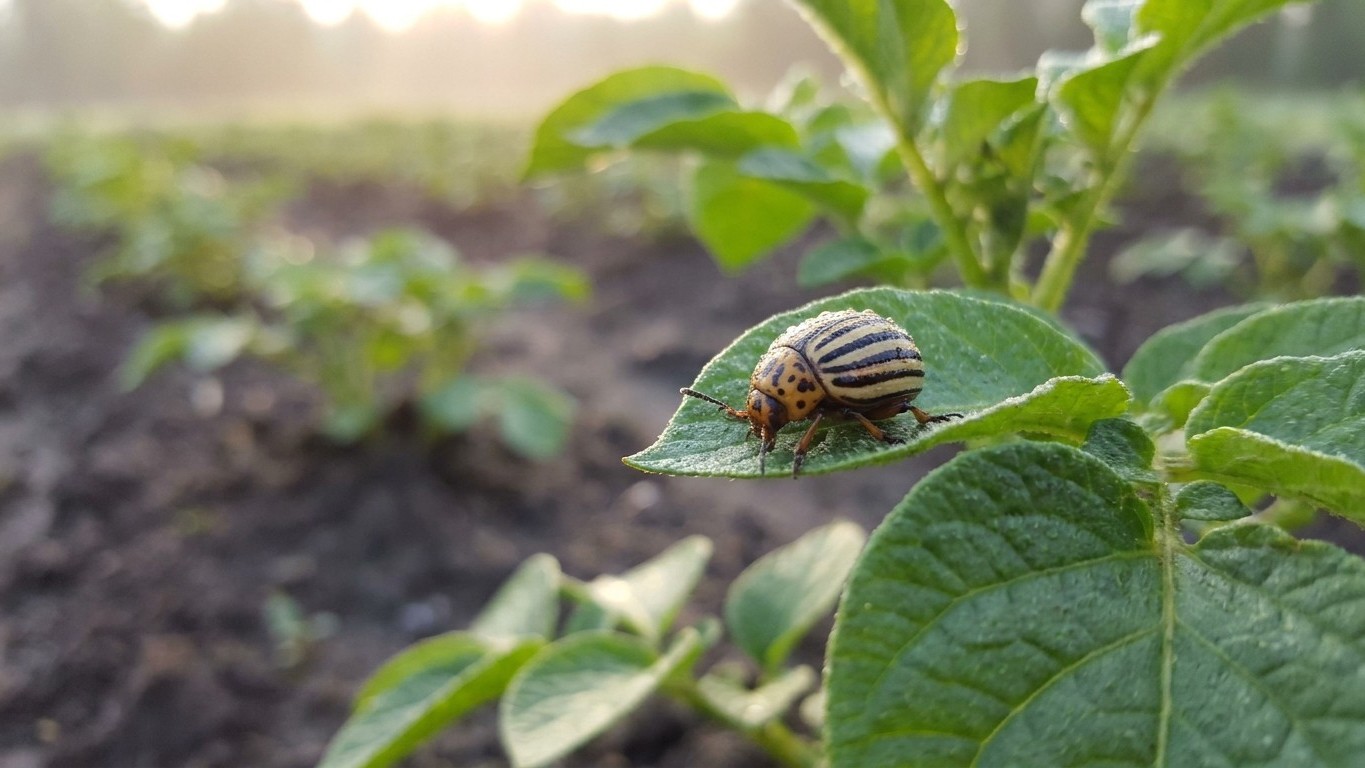

In Delaware, potato foliage answers to two confirmed feeders: the Colorado potato beetle and the tomato hornworm, both documented by University of Delaware Cooperative Extension. The beetle shows up first, chewing leaves within weeks of emergence, while the hornworm arrives later and strips foliage in bigger, faster bites. Everything else on the extension’s vegetable-pest list targets squash, beans, or cabbage family crops, not potato. Knowing which insect you’re actually looking at changes whether you reach for a row cover or just keep watching.
Which pests attack potato in Delaware

University of Delaware Cooperative Extension documents nine insect pests across the state’s vegetable garden crops: Colorado potato beetle, cucumber beetles (spotted and striped), harlequin bug, imported cabbageworm, Mexican bean beetle (Epilachna varivestis), squash beetle, squash bug, squash vine borer, and tomato hornworm. That’s the full list this service tracks for home gardens here, and it isn’t padded out further.
Only two of those nine actually feed on potato. The Colorado potato beetle is a dedicated potato pest, and it will also work over eggplant and pepper if a bed is nearby. The tomato hornworm feeds on the whole nightshade family, potato included, though it’s usually spotted on tomato vines first simply because more gardeners grow tomato than potato.
The other seven belong to different crops entirely, and putting them on a potato page would just be wrong. Cucumber beetles, squash beetle, squash bug, and squash vine borer all target cucurbits, cucumbers, squash, melons, not potato foliage. Harlequin bug and imported cabbageworm work over cabbage-family crops like broccoli and kale. Mexican bean beetle is a legume specialist that skeletonizes bean leaves and has no reason to touch a potato hill. If you see any of those seven on a potato plant, look closer, because something else is going on, or the insect is just passing through on its way to a neighboring bed.
Why the list stays short
Extension pest lists reflect what actually gets reported and confirmed in home gardens across the state, not every insect that could theoretically land on a leaf. A short, two-pest list for potato isn’t an oversight. It means the state’s documented pressure on this crop is genuinely concentrated in two species, which makes scouting simpler than it would be for a crop like squash with four separate pests to watch.
That concentration also means the payoff for learning to identify just these two insects is high. Miss a Colorado potato beetle infestation early and a bed can go from a few chewed leaf edges to skeletonized plants within a couple of weeks, because both adults and larvae feed simultaneously once populations build.
When each one shows up, and what it does first
Timing here has to run off the growing season rather than a calendar month, because Delaware’s last spring frost falls in a wide window. Near the reference weather station used for these normals, that window runs April 3 to April 14, and gardens away from the coast or at any elevation typically see frost clear later than that, sometimes by a week or two. Potato is usually planted a few weeks before that window closes, since seed pieces tolerate cool soil better than most vegetables.
Colorado potato beetle adults overwinter in soil and garden debris, then emerge and move into potato beds not long after plants push through the ground. The first sign is usually small, ragged holes along leaf margins, adult feeding rather than anything dramatic. Left unchecked, adults lay clusters of bright orange-yellow eggs on the undersides of leaves, and the larvae that hatch out are the ones that do the real damage, working through foliage from the inside of the plant outward. A gardener who checks leaf undersides once a week from emergence through early summer catches this stage before it becomes a problem.
Tomato hornworm arrives later in the season, and its first evidence is rarely the caterpillar itself. Large, pale-green larvae blend into potato and tomato foliage almost perfectly, so most gardeners notice the damage before the insect: whole leaflets missing, stripped stems, and dark green or black droppings (frass) scattered on the soil or on lower leaves beneath the feeding site. By the time frass is visible, the caterpillar responsible is usually close by and large enough to see once you know to look at the stem it’s hiding against rather than the open leaf surface.
Between these two, the practical rule is simple: early-season leaf-edge damage points to Colorado potato beetle, and mid-to-late-season leaf disappearance points to hornworm. Neither insect is subtle once populations build, but both are easy to miss in their first week or two, which is exactly when control is easiest.
Telling the damage apart from everything else
Not every damaged potato leaf means an insect is at work, and treating a nutrient problem or a disease as a pest issue wastes time and sometimes makes things worse. A handful of look-alikes show up regularly enough to be worth ruling out before assuming an insect is the cause.
| Symptom | Likely cause | What tells them apart |
|---|---|---|
| Ragged holes along leaf edges, early season | Colorado potato beetle adults | Adults or orange egg clusters visible on leaf undersides |
| Whole leaflets gone, frass on soil below | Tomato hornworm | Large green caterpillar found against the stem, often camouflaged |
| Yellowing between leaf veins, no chewing | Nutrient deficiency | No feeding marks or insects present; pattern is uniform across the plant |
| Wilting despite moist soil | Disease (bacterial or fungal wilt) or root damage | Stems may show internal discoloration when cut; no chewing damage on foliage |
| Torn or bruised leaves, one side of plant | Wind, hail, or mechanical damage | Damage pattern matches wind direction or tool contact, not scattered feeding |
The single most useful habit here is checking leaf undersides before assuming a problem is a disease, since both documented potato pests leave visible evidence there long before the damage becomes obvious from a quick glance at the top of the plant. Uneven watering and nitrogen shortfalls both produce yellowing without any chewing pattern at all, which is the fastest way to rule an insect out.
When the cause still isn’t clear after checking for insects, eggs, and frass, that’s the point to stop guessing. A local extension office can look at a sample or a clear photo and confirm what’s actually happening, which matters because treating a fungal wilt like an insect problem, or vice versa, just delays fixing the real issue.
What actually works here, and what is a waste of time
On a crop with a short list of documented pests, timing and physical barriers do more work than any spray. Floating row cover put down at planting, before Colorado potato beetle adults have a chance to find the bed, keeps them off entirely and can stay on until plants flower, since potato doesn’t need pollinator access the way squash or cucumber does. This is the single most reliable step home gardeners have available, and it costs nothing beyond the material itself.
Hand-picking is genuinely effective for both pests here, not just a token gesture. Checking leaf undersides weekly from emergence through early summer and crushing orange egg clusters before they hatch stops a Colorado potato beetle population before it needs anything stronger. Hornworms are large enough to pick off by hand once spotted, and a plant rarely holds more than a few at a time.
What’s a waste of time is spraying without confirming which insect, or any insect, is actually present. Broad insecticide use on a bed with no visible pest damage kills off the predatory insects (ladybird beetles, lacewings, parasitic wasps) that would otherwise help keep both hornworm and beetle populations down on their own. Reflexive spraying also does nothing for the look-alike problems covered above, since nutrient deficiency and wilt disease aren’t insects at all.
Crop rotation helps more than most gardeners expect. Colorado potato beetle adults overwinter in soil right where last season’s potatoes grew, so moving the bed even a modest distance forces emerging adults to travel farther to find host plants, and fewer make it. This site does not recommend specific insecticide products or active ingredients, because what’s labeled and legal changes, and only University of Delaware Cooperative Extension can confirm what’s currently registered for home use in the state.
Where to check this for your own county
Everything above reflects what University of Delaware Cooperative Extension documents at the state level, and state-level documentation is a starting point, not a guarantee about any single garden. Pest pressure varies by county, by soil, by how close a bed sits to woodland edge or last year’s potato patch, and a beetle population thriving in one yard can be a non-issue two miles away.
The most useful next step is contacting the University of Delaware Cooperative Extension office for the county where the garden actually sits. Extension staff can confirm current pest activity being reported locally, look at a photo or sample if the damage doesn’t match either Colorado potato beetle or tomato hornworm cleanly, and give guidance specific to that county’s soil and season rather than a statewide average.
Frost timing is worth double-checking locally too. The April 3 to April 14 window cited here comes from a single reference weather station, and gardens further from that station, especially inland or at higher elevation, commonly see their last frost run later. A county extension office or a local frost record is the better source for planning an actual planting date rather than relying on a single station’s normals.
If a pest problem shows up that doesn’t match the two species documented here, that’s exactly the situation worth a call rather than a guess. Extension offices exist for this, and a quick identification saves a season’s worth of guesswork over a single bed of potatoes.
Common questions
Do cucumber beetles ever damage potato plants in Delaware?
University of Delaware Cooperative Extension documents cucumber beetles as cucurbit pests, meaning cucumber, squash, and melon. They aren’t listed as potato feeders here, so beetle damage on a potato leaf points to a different cause worth checking.
Is the Colorado potato beetle the same insect at every life stage?
No. Adults are the striped beetles most gardeners recognize, but the larvae that hatch from the orange-yellow egg clusters look entirely different, soft and reddish, and they do the bulk of the leaf damage once they hatch.
Can row cover stay on potato plants the whole season?
Row cover can stay on longer for potato than for many vegetables since potato doesn’t rely on pollinators, but it should come off before flowering if the variety needs airflow, and checking under it periodically still catches problems row cover alone won’t stop.
Why does the pest list for Delaware look shorter than in other states?
It reflects what University of Delaware Cooperative Extension has documented and confirmed for home gardens here specifically. A shorter list means less has been reported and verified in this territory, not that fewer insects exist statewide.