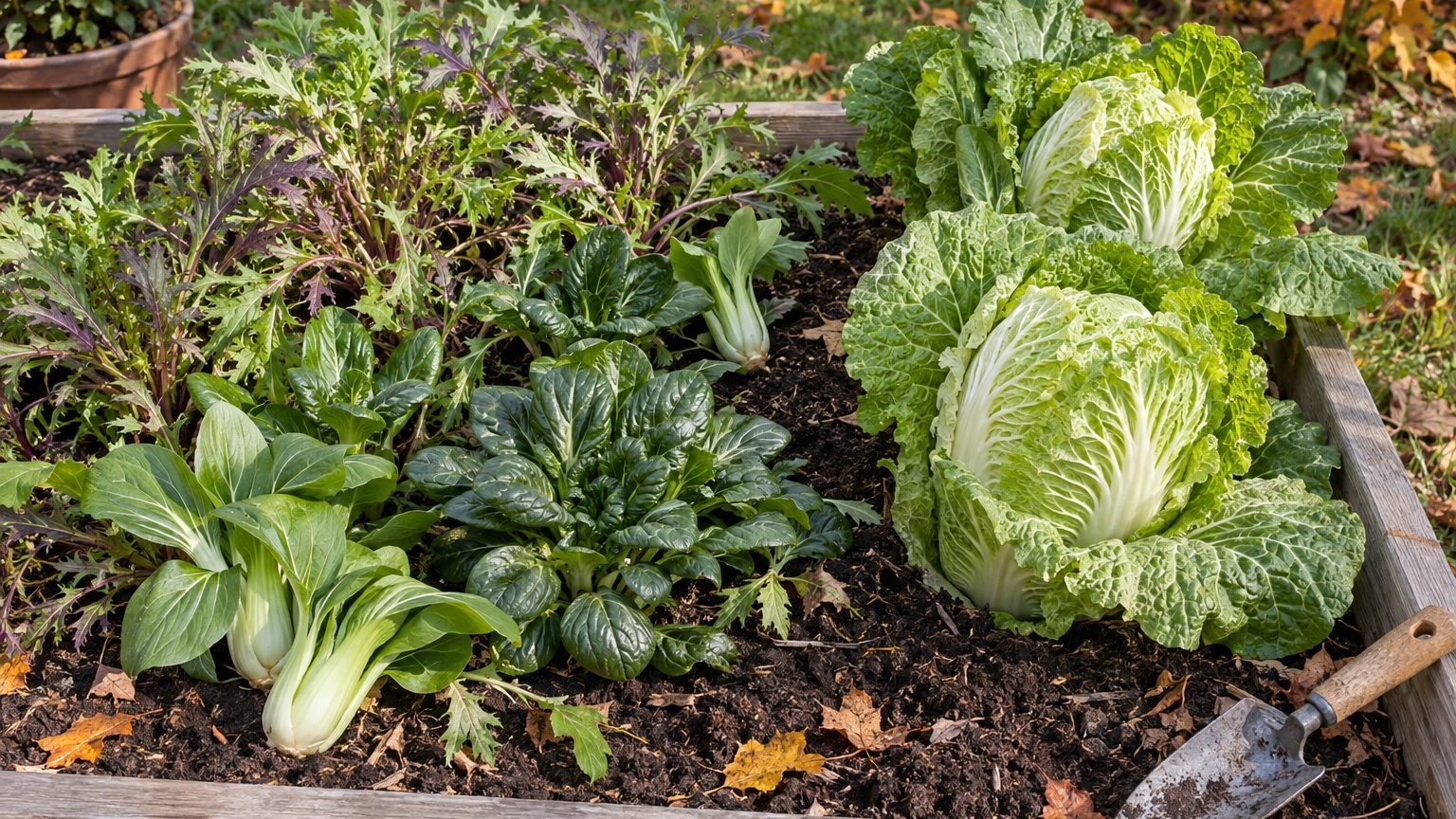

Asian greens are sold under one label but grow on very different schedules. Loose-leaf types like mizuna, tatsoi and baby bok choy can be cut within weeks of sowing. Heading types like napa cabbage need most of a season and a long stretch of cool weather. Choose by the time your garden can give them and the cold they will face.
What is actually going on
The thing to understand is growth rate and form. A loose-leaf green puts out usable leaves almost at once, and you can cut it at any size. A heading green has to grow a large frame of outer leaves first, then fold new leaves inward into a dense head. That second stage is slow and fussy about weather, which is why the two groups behave so differently in the same bed.
Why do some Asian greens finish in weeks and others take a season?
Speed decides how much weather a crop has to survive. A quick leaf is cut before summer heat or long days push it to flower. A heading type spends weeks building leaves, and if heat arrives while the head is forming, the plant sends up a flower stalk instead. Bolting makes leaves tougher and more bitter, and a bolted head never fills out.
Young plants can also bolt after a cold snap, which surprises people who sowed early to beat the heat. That is why timing matters more here than in most vegetable families. The wider guide to Growing Asian Greens: Fast, Cold-Hardy, and Prone to Bolting covers the bolting triggers in more detail.
Are all Asian greens in the same plant family?
Nearly all of them are brassicas. Bok choy, napa cabbage, tatsoi, komatsuna and choy sum belong to the same species as turnip. The Asian mustards are a separate species, and gai lan (Chinese broccoli) is the same species as cabbage, kale and broccoli. Turnip and rutabaga are brassicas too, so they are relatives of everything on this list. Water spinach and chrysanthemum greens are the exceptions, and they come from different families.
Shared ancestry means shared trouble. Flea beetles, cabbage worms, aphids and the soilborne disease clubroot attack all of them. A bed that held cabbage, kale, mustard, turnip or rutabaga last year is not a fresh bed for bok choy, so rotating a turnip into a cabbage patch rotates nothing. Follow your crop rotation guide and keep brassicas away from the same ground for several years. Floating row cover, hand-picking caterpillars and clearing old plant debris at season’s end are the practices that matter most.
In the garden
The table below sorts the family by the questions a gardener asks first. Time needed is given in relative terms because it shifts with variety and weather. Your state extension service lists the varieties trialled near you, and those results beat any general rule.
| Type | Time needed | Cold tolerance | How it is eaten | Late sowing? | When it goes wrong |
|---|---|---|---|---|---|
| Mizuna | Weeks for baby leaves | Very hardy | Salads, soups, stir-fries | Yes | Bolts in warm, long days. Leaves turn tough and sharp, and flea beetles pepper them with holes. |
| Tatsoi | Weeks for baby rosettes | Very hardy | Raw or wilted | Yes | Bolts in heat. Crowded rosettes hold water and rot at the center. |
| Komatsuna | Weeks | Hardy | Stir-fries, soups | Yes | Stems coarsen when cut late. Heat sends it to flower. |
| Bok choy | Weeks as baby, longer full size | Tolerates light frost | Stir-fried, braised, in soup | Yes, sown for fall | Bolts in heat or after a cold snap on young plants. |
| Choy sum | Moderate | Fairly hardy | Stems and buds, steamed | Yes | Open flowers make stems tough and bitter. |
| Asian mustards | Weeks | Hardy, varies by type | Cooked, pickled | Yes | Heat makes them harsh. Old leaves turn stringy. |
| Gai lan | Moderate | Tolerates light frost | Stems and buds, steamed | Sometimes | Thick, woody stems when heat arrives. |
| Napa cabbage | Most of a season | Light frost, hard freeze can damage heads | Raw, kimchi, braised | Only if it can head in cool weather | Loose or hollow heads from heat or crowding. Sown too late, it never fills before a hard freeze. |
| Water spinach | Warm-season crop | None, frost kills it | Stir-fried | No | Stalls in cool soil and dies at the first frost. |
Which Asian greens suit a late sowing?
The fast, hardy leaves are the safe choice for late sowing. Mizuna, tatsoi, komatsuna, mustards and bok choy all mature as days shorten and nights cool, which is the weather they like. Cold also makes many of them taste sweeter, as Why These Greens Taste Better After Frost explains. Napa cabbage is the risky one, since it needs both a long runway and cool weather while the head fills.
How can you tell a crop is going wrong?
Look at the center of the plant. A tight cluster of leaves means the plant is still in its leafy stage. A rising center, elongating stems or tiny flower buds means it is bolting, and you should harvest everything usable right away. Bok choy is the most sensitive of the group, and Bok Choy: The One That Bolts If You Look At It Wrong goes through what sets it off.
What it depends on where you are
Some of this holds across the country. Loose leaves finish faster than heads, all of these crops dislike heat, and all of them share brassica pests. Those rules work in Maine and in Arizona alike.
Which parts of the answer change with your climate?
Season length, summer heat and summer rainfall decide the rest. Where summers are short and cool, a spring sowing may have time to head before the heat. Where summers run long and hot, spring is a narrow window and fall is the main season. In the Deep South and the desert Southwest, many gardeners grow these greens through the mild months and skip summer entirely. Rainfall matters because even moisture keeps leaves tender, and a dry spell followed by a downpour can split heads and stress plants into bolting.
A site that never reads as one thing also shifts the answer. A bed with afternoon shade stays cooler than a bed against a south wall, and a garden in a frost pocket gets cold snaps earlier than one on a slope. Those details are yours to judge, and a few sowings will teach you more than any general chart.
Where do you find local timing and varieties?
Start with the state pages on this site, which cover the planting windows and conditions for individual states. Then call or visit your county extension office, or look up your state extension service online. They know which varieties have been trialled in your soil and climate, the local pest calendar, and whether clubroot is a known problem nearby. Use those local sowing windows and treat any general guidance as a starting point.
The mistake that costs the most
The costliest error is sowing the whole family in one bed on one date. It looks efficient. The bok choy, the mizuna and the napa all go in together in spring, and every row gets the same watering and the same hope.
Because these crops finish at different speeds, one sowing date gives each of them a different outcome. The loose leaves come up and bolt as the days lengthen. The napa cabbage starts building leaves just as the heat arrives, then flowers before it forms a head. Soon the bed is full of tall flower stalks and a few tough leaves, and the whole planting is lost at once.
What should you do instead?
Sow the fast leaves in small batches every couple of weeks, so one failed batch never takes the whole supply. Cut baby leaves early and often, because a plant that is harvested young seldom has time to bolt. Aim the long crops at the cool end of the year. Napa cabbage and full-size bok choy do best when sown so that the heads form in cooling weather, which in many regions means a late summer sowing.
Plant the heading types where they have not followed other brassicas, and give them room, since crowded heads stay loose and invite rot. Put the quick leaves in the gaps between slower plants, then take them out before the larger plants need the space. A few sowings spaced across the season do more good than one big planting.
Common questions
Which Asian green is ready first?
The loose-leaf types cut young, such as mizuna, tatsoi, komatsuna and baby bok choy, are ready first. Cutting them small gets food on the table within weeks and lets you resow.
Can you grow Asian greens through summer?
Most of them bolt in summer heat. Shade, steady moisture and fast harvesting help a little. Water spinach is the exception, since it prefers warm weather and dies in frost.
Are turnips and rutabagas related to Asian greens?
Yes. Turnip and rutabaga are brassicas, and they share pests and diseases with bok choy, cabbage, kale and mustard. Count them as brassicas when you plan a rotation.
How do you check a stored napa cabbage head?
Peel back the outer leaves and look at the cut base and the inside. A soft patch, a weeping spot or a moldy crown means the head should go in the trash. A firm outside doesn’t settle the question, so cut it open and look.