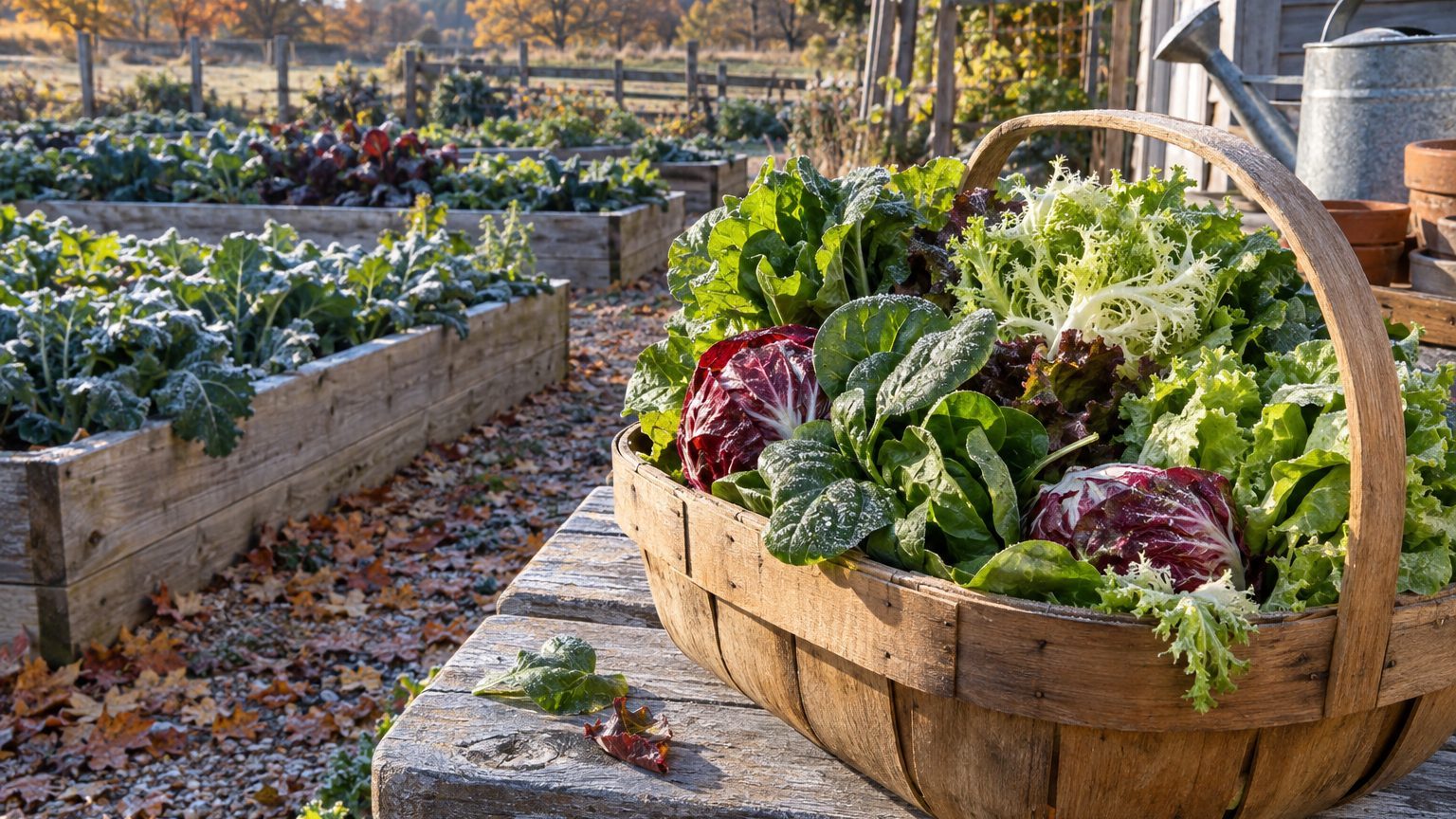

Cold makes many winter salad greens taste sweeter, because the plant turns stored starch into sugar to keep its leaves from freezing. Some greens also lose their bite, while others turn thick and chewy. Which way a crop goes depends on its type, on how many cold nights it has had, and on whether it was still growing. Everything below is about salad sown in beds and containers.
What is actually going on
Why does cold make winter greens taste sweeter?
Water inside a leaf cell freezes at 32°F, and ice crystals that form in the wrong place burst the cell wall. A plant can’t heat itself, so it changes what the water is mixed with. As days shorten and nights cool, hardy greens start breaking down starch and building up sugars in the cell sap. Sugar dissolved in water lowers its freezing point, the same way salt on a road keeps slush from turning to ice. The leaf is making its own antifreeze, and your tongue happens to read antifreeze as sweetness.
The change is gradual. It takes a run of cold days and nights, not one chilly evening, and it reverses. If a warm spell comes through, the plant burns those sugars for energy and the leaves taste flatter again. A spinach leaf cut after a week of cold weather and a leaf cut after a mild afternoon can taste like two different crops.
Why do some greens get less bitter while others turn tough?
Sweetness is only part of the flavour. Chicories such as radicchio, endive and escarole carry bitter compounds, and extra sugar balances them, so the same head tastes rounder after cold weather than in warm weather. Mustards and arugula work differently. Their peppery heat gets harsher when the plant is stressed by heat or drought, and cool, steady conditions keep it milder.
Toughness has its own cause. Growth slows as temperatures drop and daylight shortens. When day length falls under roughly ten hours, most salad crops nearly stop making new leaf. What you cut in midwinter grew mostly in fall, and it comes with thicker cell walls and a waxier surface. Those leaves are sweet and also a little chewier, which is why a tender lettuce-type leaf feels so different from a hardened one. How far each crop can go before sugar stops being enough is covered in How Much Cold Each of These Takes.
In the garden
Which winter salad crops get sweeter and which get tougher?
The pattern follows the type of plant. Hardy leafy greens gain from cold. Tender ones get damaged by it. The table shows what the cold does to each group, when to cut it, and what you see when something is off.
| Crop type | What cold does | Best time to cut | If it goes wrong |
|---|---|---|---|
| Spinach and other hardy leafy greens | Leaves thicken and turn noticeably sweeter | After several cold nights, in the afternoon | Picked after a warm spell, the leaves taste flat. Sown too late, they stay tiny and never size up |
| Kale and collard types | Sugars build and the leaf mellows | Outer leaves after a hard cold snap | Picked in early fall, the leaves are strong and rubbery |
| Small rosette greens (corn salad, claytonia) | Stay mild and tender at low temperatures | Whole rosette or outer leaves, any mild day | Soggy, crowded beds rot at the crown |
| Mustards and arugula | Heat softens, leaves turn milder | Young leaves, before they bulk up | Left too long, they turn coarse and pungent, and in a warm spell they bolt |
| Chicories (radicchio, endive, escarole) | Bitterness balances against rising sugar | After a few frosts, once heads feel firm | Heads harvested early are sharply bitter, and heads hit by a hard freeze turn brown and slimy |
| Tender lettuce | Tolerates only light frost | Before hard freezes, or under cover | Frozen leaves turn glassy, then collapse into mush |
When is the best time to cut winter salad greens?
Wait until the leaves have thawed and the day has warmed a bit. Frozen leaves snap, and handling them bruises the cells, which turn dark and slimy within a day. Midday to early afternoon is usually the safe window. Take outer leaves and leave the growing center, and the plant keeps producing slowly through the cold months.
Cut after several cold nights in a row, not after the first one. A few days of mild weather will drain some of the sweetness, so if the forecast is turning warm, the sugary harvest is the one you take before it arrives. Mind the plant families as well when you plan beds for next fall. Spinach, kale, mustards, chicories and corn salad belong to different families, and Rotating Winter Salads: They Are Not One Family sorts out which crop can follow which.
What it depends on where you are
What changes the flavour from one garden to the next?
The mechanism is the same everywhere. Cold raises sugar and slows growth. The timing is local, and three things move it. Season length decides how big a plant gets before the light fades, and a plant that is nearly full size when growth stalls gives you months of picking. Summer heat shapes the late-summer sowing, since lettuce and several other greens won’t germinate well in hot soil, and plants that start under heat stress carry that harshness into fall. Summer rainfall decides how much slug and mildew pressure the beds face when the cool weather arrives.
Where winters are mild, such as the Deep South and much of the Pacific coast, many greens keep growing all winter. They get less of the sweet hardening effect and more of the steady cutting. In the northern states and high country, plants hold in a half-dormant state under snow or covers, and sweetness peaks when they are cut after the coldest stretch. Both are real winter salad. The flavour just arrives on different schedules.
Where do you find varieties and dates for your own county?
Your state’s cooperative extension service runs variety trials in local conditions, and its county office can tell you what has grown well near you and when planting windows close. Check there for variety names instead of trusting a seed catalog written for the whole country. The state pages on this site cover the regional picture, and Winter Salads: What Grows When Lettuce Will Not lays out the full set of crops. A neighbor who gardens through winter is worth asking too, because a local gardener already knows which beds hold heat and which ones flood.
The mistake that costs the most
Smothering the crop is the error that costs the most flavour. A gardener sees a cold forecast, seals a low tunnel or cold frame, and leaves it shut for weeks. The plants stay warm and humid, so they never get the long run of cool nights that triggers the sugar switch. They grow soft, pale and bland, and the damp air under a closed cover invites gray mold on the leaves. A crop that spent the winter wrapped up can taste like the crop picked in September.
Cover is meant to blunt the worst nights, not remove winter. For hardy greens, use a light row cover for wind and ice, and close heavier cover only when the forecast drops below what that crop tolerates. The cold-tolerance page lists those limits for each type. On any day above freezing, open the ends or lift the cover so air moves through and the plants feel real cold at night.
Tender lettuce is the exception. It needs the cover, and you accept less sweetness from it. Matching the cover to the crop is what keeps the flavour. A bed of spinach under heavy plastic and a bed of hardy greens under a vented, light cover will taste noticeably different by January, and the vented bed will have the better salad.
Common questions
Does one frost make winter greens sweeter?
One frost starts the process but doesn’t finish it. The sugar buildup follows a stretch of cold days and nights, and the change is strongest after several frosts in a row. A single frost followed by warm weather won’t change the taste much.
Why do my winter greens still taste bitter?
The usual cause is cutting too early or too late. Chicories picked before the weather turned cold carry their full bitterness, and mustards left past their young stage turn coarse and strong. Plants that went through drought or heat stress in late summer also start out harsher. Give the cold more time, and cut younger leaves.
Do greens grown under glass or in a greenhouse taste the same?
They taste milder and less sweet if the space stays warm. Sugar builds in response to cold, so a heated or tightly closed greenhouse holds it back. An unheated structure that follows the outdoor temperature gives much of the same sweetening, with less leaf damage.
Is it a problem to cut leaves that froze overnight?
Frozen leaves are brittle, and cutting them bruises the tissue, so wait until they thaw on their own. Greens that thaw slowly in daylight usually recover their texture. Leaves that stay limp and dark after thawing were damaged by the freeze and won’t improve, so trim them off and let the plant send up new growth.