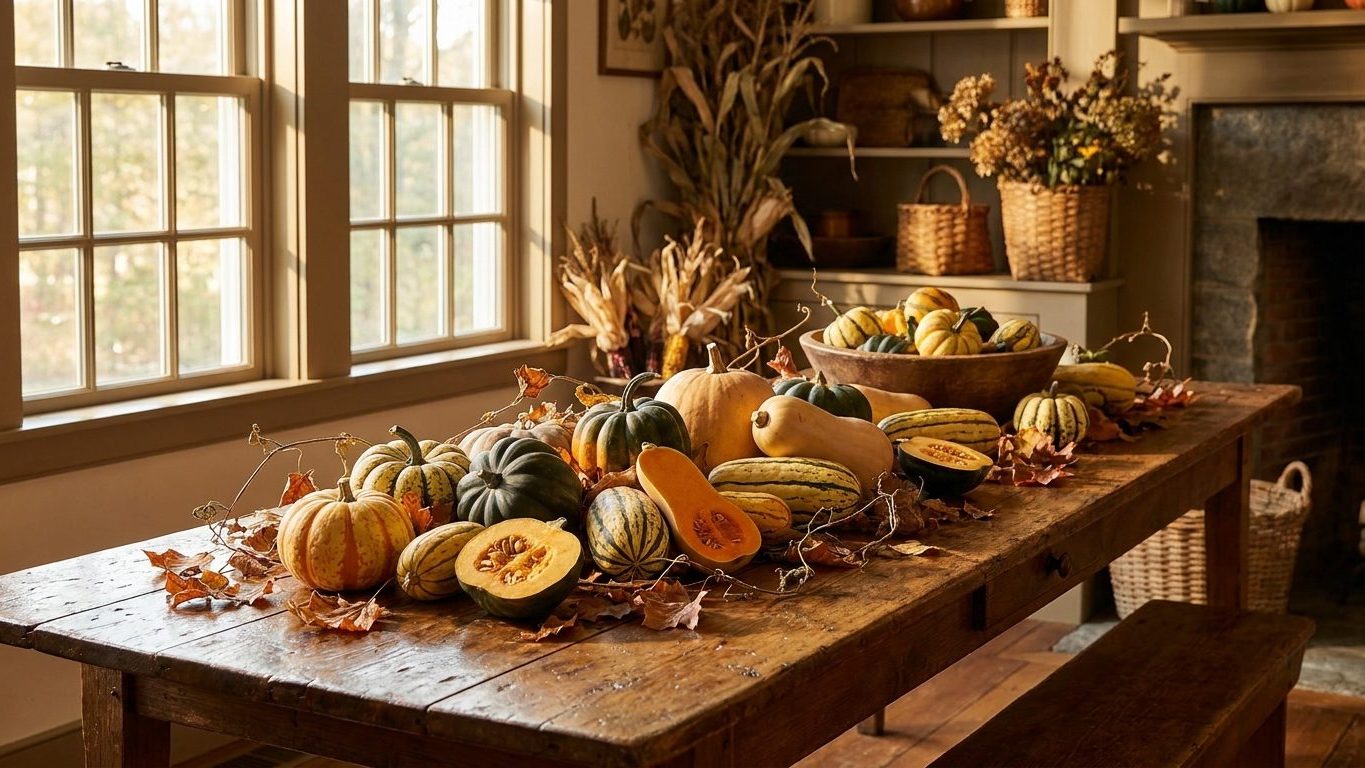

Winter squash rewards patience more than skill. The plant needs three to four months of warm soil, sun, and space before the fruit is ready to cut from the vine, and then it needs another two weeks of careful curing before it goes anywhere near a pantry shelf. Rush either stage and the squash rots instead of keeping.
What makes a squash a winter squash
The line between summer and winter squash has nothing to do with when you plant them. Both go into the ground around the same time, once soil has warmed in late spring. The difference is when you take them out. Summer squash, like zucchini and yellow crookneck, gets picked while the skin is still soft and the seeds inside are barely formed, usually within a week of the flower fading. Winter squash stays on the vine until the rind has hardened into something closer to a shell, the vine itself has started to die back, and the seeds inside are fully developed. That extra time on the plant is what allows a winter type to be cured and stored for months rather than eaten within days.
Pumpkins belong to this same group botanically. A pumpkin is a winter squash by every definition that matters: full maturity on the vine, a hard rind, a cure before storage. What separates a carving pumpkin from the types covered on this page is purpose, not biology. Growers select pumpkin varieties for shape, size, and stem strength rather than for how the flesh cooks, and the growing calendar around Halloween sets a harvest deadline that has nothing to do with peak eating quality. This site treats carving pumpkins on their own page for exactly that reason.
| Trait | Summer squash | Winter squash |
|---|---|---|
| Harvest stage | Immature, days after flowering | Fully mature, vine dying back |
| Skin | Thin, tender, edible | Thick, hard, inedible |
| Storage | Days in the refrigerator | Weeks to months after curing |
| Typical use | Sautéed, grilled, raw | Roasted, baked, soup |
One test tells you more than any calendar: press a thumbnail into the rind. On a mature winter squash it should barely dent, if at all. A stem that has gone corky and dry, rather than green and pliable, is the second sign the fruit is done growing. Because named varieties within each type vary by how they were bred for local disease pressure and season length, the specific cultivars worth planting differ from state to state. Your state’s cooperative extension service publishes trial results for the types that actually perform in your climate, and that list is worth checking before you commit garden space to a crop that ties up a bed for most of the summer.
Acorn, butternut, delicata, hubbard and the rest
Not every winter squash asks the same amount of the calendar, and the differences matter more than most seed catalogs let on. Some types finish in time for gardeners with a shorter frost-free window, while others need nearly the whole growing season and reward you with fruit that keeps well past the holidays.
| Type | Season needed | Fruit size | Keeping quality | Kitchen use |
|---|---|---|---|---|
| Acorn | Shorter | Small, one meal each | Weeks, not months | Roasted halves, stuffed |
| Delicata | Shorter to mid | Small, oblong | Weeks, eaten fairly soon | Roasted, skin left on |
| Butternut | Mid to long | Medium, elongated | Long, among the best keepers | Soup, purée, baking |
| Buttercup or kabocha type | Mid to long | Medium, dense flesh | Long | Roasted, dense and sweet |
| Hubbard | Long | Large, sometimes very large | Long, a traditional winter keeper | Baked, mashed |
| Spaghetti squash | Mid | Medium, oblong | Moderate | Baked, flesh pulled into strands |
That keeping-quality column is the one worth reading twice before you plant. Acorn and delicata types have thinner rinds and softer flesh, and they’re best treated as a fall crop to work through over a few weeks rather than a pantry staple you count on in March. Butternut, hubbard, and the dense-fleshed kabocha and buttercup types have thicker rinds and drier flesh, which is exactly what lets them sit in a cool room for months without breaking down. If your goal is a squash you’re still eating at the end of winter, plant toward that end of the table rather than the front.
Note the type before you buy seed, not just the variety name on the packet, since two packets both labeled winter squash can behave completely differently in storage. As with the broader category, the exact varieties within each type that hold up best against regional pests and diseases vary widely, and your state extension service is the more reliable source than a seed catalog written for a national audience.
Whether your season is long enough
Winter squash is not a forgiving crop for a short growing season. The plant needs a long stretch of warm days to grow vine, set fruit, and then ripen that fruit fully before the first fall frost, because a squash pulled green never finishes maturing off the vine the way a tomato does. An immature winter squash won’t cure properly, and it won’t keep, no matter how carefully you handle it afterward. That single fact separates this crop from most of what else grows in a home garden.
Gardeners working with a shorter frost-free window have real options, but they involve tradeoffs. Choosing types from the shorter end of the season table, acorn and delicata rather than hubbard, buys back several weeks. Starting seed indoors and setting out transplants rather than direct-seeding does the same, effectively borrowing time from before your last frost date. Warming the soil ahead of planting, with black plastic mulch or a low tunnel, gets the vine growing faster once it’s in the ground, and a floating row cover over young plants can add a further margin of warmth and protection from early pests. None of these tricks turns a 70-day window into a 120-day one, but stacked together they can make the difference between a garden that ripens squash and one that doesn’t.
There’s also an honest answer for gardens where none of that adds up. In very short-season regions, at high elevation, or in a garden that regularly sees frost into late spring and again in early fall, winter squash may simply not be worth the bed space it demands for an entire growing season. Check your local average frost-free window against a season-length category before committing, and if the numbers don’t work, that garden space is often better used on a crop with a faster return. The USDA’s plant hardiness zone map is a starting reference for where you sit nationally, though the more useful, closer-to-home numbers come from your state’s cooperative extension office, which tracks frost dates and season length specific to your county.
Reading a winter squash crop that is going wrong
Winter squash tends to fail in a handful of recognizable ways, and most of them trace back to moisture, timing, or a pest that arrived without much warning. None of these symptoms is a certain diagnosis on its own, but each points toward a likely cause worth investigating further.
| What you see | Likely cause | Where it’s addressed |
|---|---|---|
| Fruit rotting where it touches the soil | Ground contact holding moisture against the rind | Blossom-end and fruit rot guide |
| A vine collapsing overnight | Vine borer damage or a bacterial wilt carried by cucumber beetles | Pest and disease pages for this crop |
| Fruit that never hardens | Harvested too early, or excess nitrogen keeping the plant in leafy growth | Season-length and harvest timing above |
| Squash that spoil in storage | Skipped or shortened cure, or a bruise from rough handling | Curing and storage guide |
Ground contact is the easiest of these to prevent and the most common to see. Slipping a piece of cardboard, a shingle, or even an overturned pot lid under a developing fruit keeps it off damp soil through the wettest stretch of late summer. A vine that wilts and collapses within a day or two, rather than yellowing gradually, points more toward vine borer or bacterial wilt than toward drought, and it’s worth checking the base of the stem for a small entry hole before assuming the plant just needs water. Check under every fruit for ground contact by midsummer, since that single habit prevents more rot than any spray applied afterward. Squash that looked fine at harvest but soften or spot within a few weeks in storage almost always trace back to how they were cured, not how they were grown, which is where the process after harvest matters as much as everything that came before it.