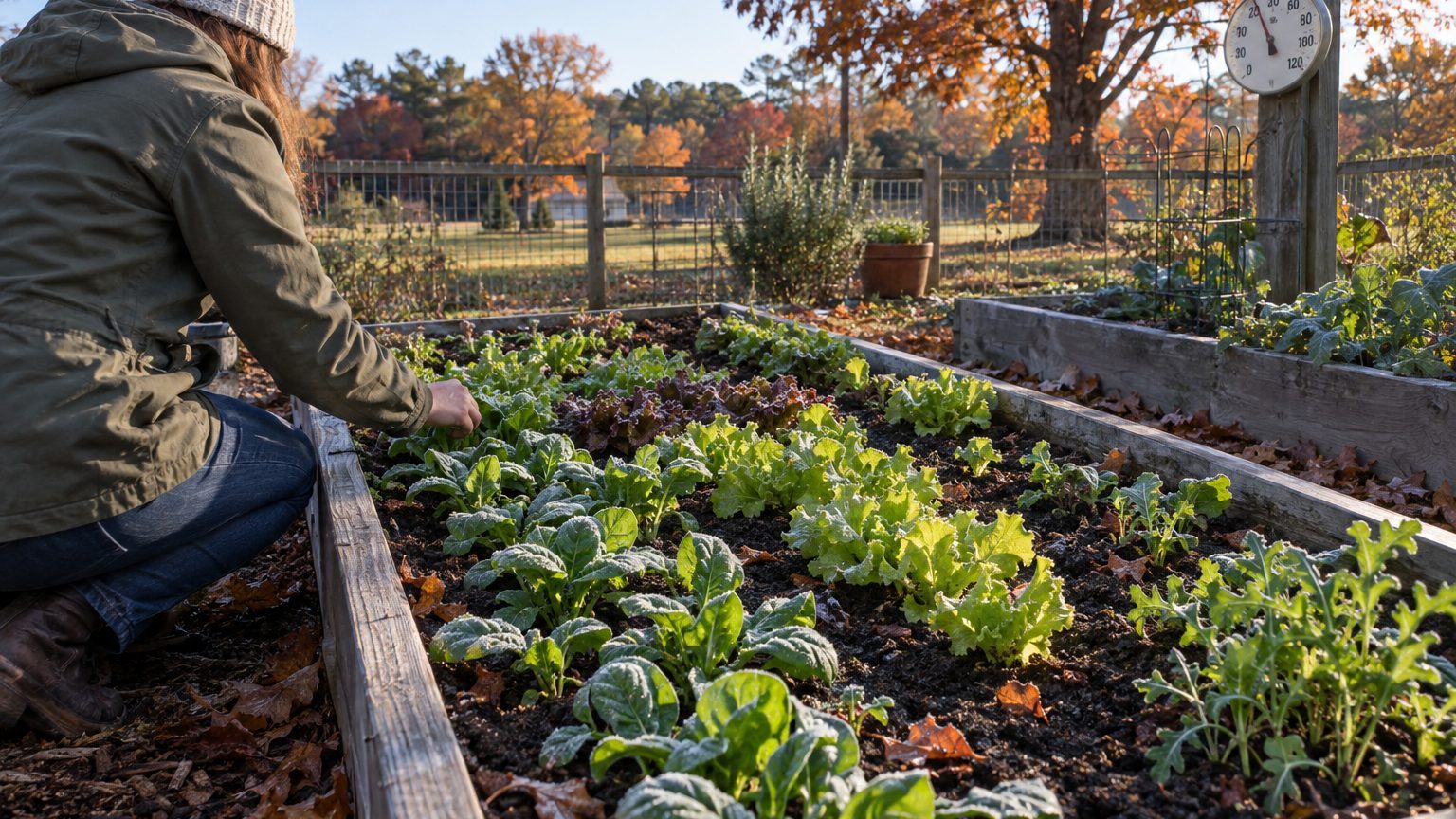

Sow winter salads in Georgia from early fall into the weeks around the first fall frost, which falls between November 13 and December 1 in the Atlanta reference data. A shorter second window opens in late winter, ahead of a last spring frost between March 11 and March 29. Those dates describe Atlanta, not the whole state. Here is how to read them and where your own county will differ.
The short answer for Georgia
Sow from early October through the first fall frost window, November 13 to December 1, and again in late winter before the last spring frost window, March 11 to March 29. As of early October 2026, the fall window is open.
Those dates need careful reading. They come from the NOAA NCEI 1991-2020 Climate Normals for the Atlanta station (NOAA NCEI data) and mark the span where the probability of a 32°F freeze sits in the 30 to 70 percent band. They are not a deadline. In some years the first freeze arrives before November 13, and in others it holds off past December 1.
| Frost event | Date range (Atlanta station) | What the range is a probability of |
|---|---|---|
| Last spring frost | March 11 to March 29 | A 32°F freeze, in the 30-70% band |
| First fall frost | November 13 to December 1 | A 32°F freeze, in the 30-70% band |
Fall sowing
Count backward from the frost window. Check the days to maturity on the seed packet, then sow early enough that seedlings have real leaves before cold weather slows them down. The mean daily minimum of the coldest month at the Atlanta reference station is 35.6°F. That is above freezing on average, so hardy greens keep growing through a typical Georgia winter, only slowly. Averages hide the cold snaps, though, and one night in the low 20s matters more than a month of mild ones. Which types shrug off that kind of night is covered in The Best Winter Salads for Georgia.
Late-winter sowing
The spring window works on the same logic, run in reverse. Sow while freezes are still possible and let the plants size up before warm weather pushes them to flower. This page does not have crop-by-crop dates for Georgia in its verified data, so it gives the frost windows and leaves the day-by-day schedule to the extension service covered below.
What will not work here
Several common habits fail in Georgia, and the frost numbers explain why.
Timing mistakes
Sowing in September heat is the first. The earliest first-frost date is November 13, so early fall is still warm, and lettuce seed sown into warm soil germinates poorly. Cooler weather rewards patience. Sowing late fails too. Seed that goes in after the first fall frost window has closed sits as a seedling while short, cold days slow everything, and you may get little to eat before spring. The mild average winter (35.6°F mean minimum in the coldest month) tempts people to assume anything can be sown at any time. It cannot.
Spring sowing has its own cutoff. A “winter” salad sown after the last spring frost window ends on March 29 will meet Georgia heat before it makes a harvest, and it bolts. Slow-maturing types sown in late fall have the same problem in the other direction: they run out of growing weather.
Copying Atlanta’s dates
The Atlanta station is an urban airport, a heat island. North Georgia and the mountains freeze several weeks earlier in fall, so a gardener there who sows on Atlanta’s schedule can lose seedlings to a freeze before they have true leaves. The coastal plain runs milder, so a calendar built for the north undersells it.
Close spacing in a humid climate
Georgia’s winters are mild enough that leaves stay wet and the air stays humid, which suits fungal disease. Crowded rows hold moisture against the foliage and slow drying after rain or dew. Thin seedlings to the spacing on the packet, even when it looks sparse, and water the soil rather than the leaves.
Dense mulch right up against stems also traps moisture where it does harm. Keep it back an inch or two from the crowns.
What changes across Georgia
Georgia does not have one winter. The USDA Plant Hardiness Zone Map (2023, built on 1991-2020 normals) runs from 6a to 9b across the state, so there is no single answer to when to sow. The Atlanta dates sit near the middle of that spread. They are a reference point, not a rule.
The zone system is built on one variable, the average annual extreme minimum temperature. That tells you what survives the coldest night of the year. It says nothing about when the first freeze arrives or how long the cool season lasts, and for winter salads those matter more. Use the zone as a rough sorting tool and the frost dates as the calendar.
Here is how the shift runs in practice:
- North Georgia and higher elevations: freezes arrive several weeks earlier in fall than the Atlanta data suggests. Sow earlier, plan on row cover sooner, and expect a later start in spring.
- Around Atlanta: the dates in this article apply most directly, remembering the heat-island effect at the airport station.
- The coastal plain: milder winters stretch the useful season, so more of the cold months stay open for growing.
To find where you fall in that range, look up your location on the USDA Plant Hardiness Zone Map. This page will not guess your zone for you, and a zone label still will not tell you your frost dates.
Where to check this for your own county
Start with University of Georgia Extension, the state’s land-grant extension service. Find your county office through the site and look for two things: a local vegetable planting calendar, and the varieties that have been trialled in your county rather than in a distant test plot.
A county recommendation beats a state one, and this page is the state one. Georgia spans mountains, Piedmont and coastal plain, so a single statewide answer can only be an average. County agents see local frost records, local soils and local disease pressure, and they know which lettuces and greens actually held up last winter.
When you contact the office, ask for the average dates of the first and last 32°F freeze near you, and ask whether they have a fall leafy-greens sowing schedule. Both are quick questions for an agent.
One note on sources: the verified data for this page includes lawn maintenance calendars from Clemson Cooperative Extension. Those cover turfgrass in South Carolina, not salad crops in Georgia, so they are not used here. For the wider picture, see Winter Salads for Georgia Gardens.
Checking this against your own garden
Your own yard outranks every date above. Three observations cost nothing and tell you more about your microclimate than a regional table can.
Soil warmth by feel. Push your hand into the bed in the morning. If the soil still feels warm, like a held mug, it is likely too warm for lettuce seed to germinate well. If it feels cool and damp, the timing is right. A bed against a south-facing wall will stay warm longer than one in open shade, which tells you where to sow first and where to wait.
The first male flowers on spinach. In spring, spinach plants that bolt send up flower stalks, and the male plants usually go first. When they appear, your season is ending. Note the date. If it arrives earlier than the March window suggests, your garden warms faster than the reference station, and next year’s late-winter sowing should go in sooner.
The first true leaves. Seedlings open a pair of seed leaves, then the first true leaves, which look like the mature plant. Slow arrival of those leaves points to soil that is too cold, too hot or too shaded. If they are weeks late in one corner and on time in another, you have mapped your own warm and cold spots.
Write the dates down once or twice. By the second season they will beat any calendar.
Common questions
Can I still sow winter salads in December in Georgia?
You can, but expect slow growth. The first fall frost window ends December 1 in the Atlanta data, and seed sown after that grows slowly in short, cold days. Row cover or a cold frame helps. This page does not have a verified cutoff date, so ask your county extension office.
Does Atlanta’s calendar work for the whole state?
No. The dates come from one Atlanta station, which is an urban airport heat island. North Georgia and the mountains freeze several weeks earlier in fall, while the coastal plain runs milder. Treat the Atlanta dates as a middle reference.
Will a freeze kill my winter salads?
It depends on the type and the night. The mean daily minimum of the coldest month is 35.6°F, above freezing, but single nights can fall below it. Hardier greens tolerate a freeze, while tender types need cover. See The Best Winter Salads for Georgia for the choice by type.
Can I sow winter salads in spring?
Yes, in late winter, ahead of the last spring frost window of March 11 to March 29. Sow too late and warm weather sends the plants to flower before they reach a useful size.