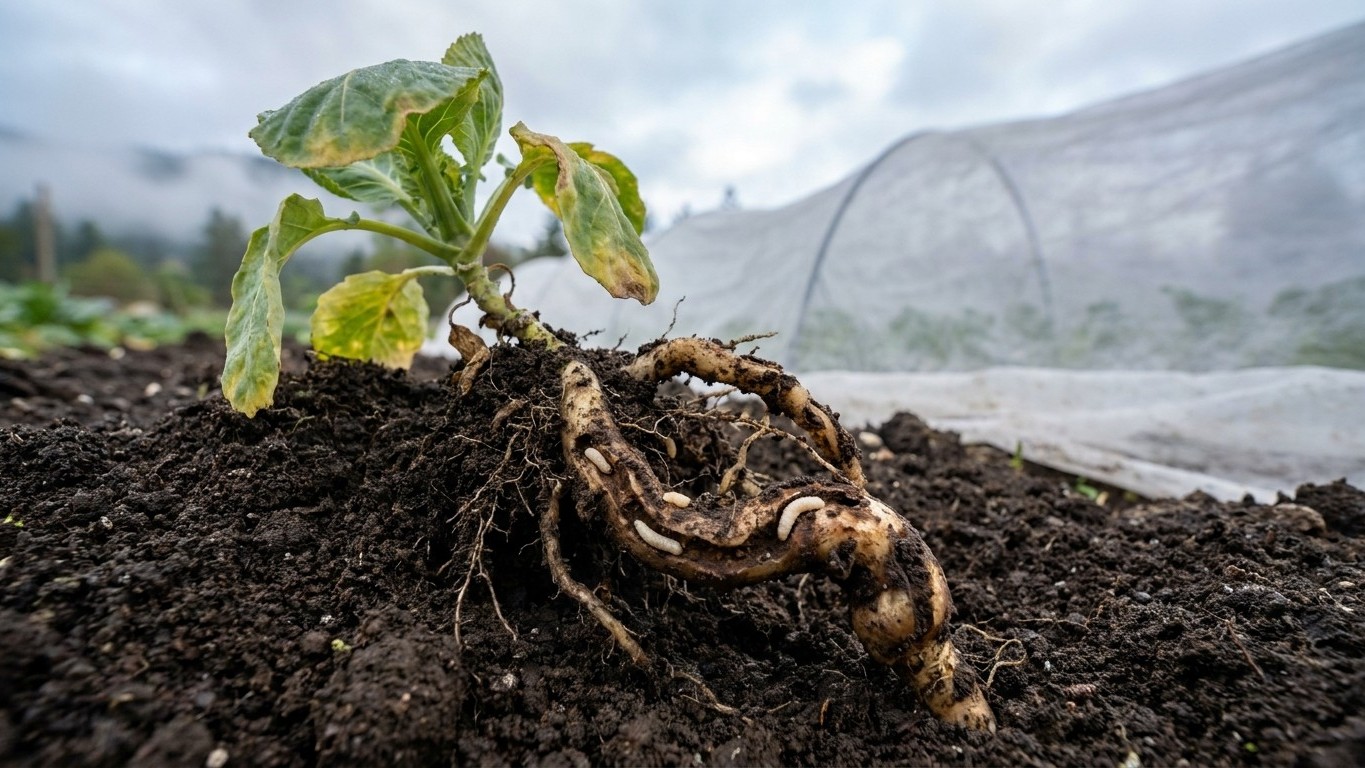

Set sweet potato slips outdoors in Idaho from late May into early June, once the last freeze has passed and the soil has warmed. In Boise, the last 32°F freeze falls between April 23 and May 7. Sweet potatoes need warmer ground than that date suggests. Colder parts of the state start later still.
The short answer for Idaho
Plant sweet potato slips from late May to early June, after the last freeze and when the soil feels warm. In a low valley like Boise, the last spring frost falls between April 23 and May 7, and the first fall frost between October 7 and October 21.
Those dates come from NOAA’s 1991-2020 climate normals for the Boise station. They are freeze probabilities: the band between the two dates is when the odds of a 32°F freeze run from 30 to 70 percent. Nobody can name a single day when the last freeze will happen. April 23 still carries a real risk, and May 7 carries less of one.
Sweet potatoes are tropical plants. Slips set into cool soil stop growing and wait for warmth, so the practical start date sits one to three weeks after the freeze band closes. A bed under black plastic warms faster and can justify planting earlier. Bare ground in a valley garden is ready once the soil has warmed.
How much season do sweet potatoes need before fall frost?
Most varieties take a long season, counted from the day the slip goes into the ground. A slip transplanted in the first week of June reaches maturity in the fall. The fall frost band opens October 7. Varieties at the quick end of the range fit that window, and slower ones crowd it. Frost blackens the vines, and the roots should be dug soon afterward. Variety choice therefore matters as much as the planting date, and The Best Sweet Potatoes to Grow in Idaho covers which types suit a short season. For the wider picture of the crop, start with Growing Sweet Potatoes in Idaho.
What will not work here
Long-season varieties are the first casualty. A type that wants 120 days, planted in early June, finishes right around October 7, the opening of the fall frost band. In any garden colder than Boise, the frost arrives before the roots have sized up. The result is a crop of thin, pencil-like roots.
Early planting fails for a different reason. Setting slips out in April, or in the first days of May, puts them inside the freeze window. Even if a frost never comes, the soil is too cool and the slips sit idle for weeks. A late cold snap can kill the tops, and the plant has to regrow from the crown.
Weekly watering fails because of the dry summer. Boise averages about 1.1 inches of rain across June, July and August combined. June brings 0.75 inches, July 0.21 and August only 0.17. The station also logs 47.5 days a year at or above 90°F, so soil dries fast. A weekly soak works on heavy clay and falls short on sandy or gravelly ground, where the water drains away within a day. Slips need frequent light watering until new leaves show. After that, deeper watering works better. These are normals for one valley station, so a rain gauge on the plot tells you what actually fell.
Curing can also fall short. Dug roots sweeten best after a spell in warm, humid air. An unheated garage in late October is often too cold, so a warm room indoors does the job better.
Finally, high-elevation gardens meet all of these problems sooner. Boise is a low valley, and most of Idaho is higher and colder, with a far shorter growing season. A gardener at 5,000 feet who follows the Boise dates will lose the crop to frost.
What changes across Idaho
Idaho spans USDA hardiness zones 3b to 7b (USDA Plant Hardiness Zone Map 2023, built on 1991-2020 normals). The map rates a place by its average annual extreme minimum temperature, and that figure covers a wide spread here. No single planting date works for the whole state.
Sweet potatoes die at the first frost, so the zone number does not tell you whether they will survive winter. It does show how cold a location is overall, and colder places have later springs and earlier falls. The Boise window of late May to early June is the best case for a low valley. Gardens in the north, in the mountain valleys and on high plateaus start later and finish earlier.
A gardener in a colder zone should shift in four ways:
- Choose the fastest varieties available.
- Start slips indoors early enough that they are ready when the ground warms.
- Use black plastic mulch, which warms the soil sooner.
- Add a low tunnel or row cover for the first month and again in September.
A south-facing slope or a spot beside a wall can add warmth. A low pocket where cold air settles can cost you weeks. Two gardens in the same town can differ by more than a zone does.
Look up your own zone on the USDA Plant Hardiness Zone Map by ZIP code rather than assuming one from a neighbor or a regional label.
Where to check this for your own county
The best next stop is University of Idaho Extension. It runs county offices across the state, staffed by educators who know the local frost patterns and soils.
A county recommendation beats a state one. What you are reading is the state-level picture, built around a low valley station, and it cannot account for your elevation or your town’s cold-air pockets. Your county office can.
When you contact the office or browse its pages, look for two things:
- The local planting calendar, with the average last spring frost and first fall frost for your area.
- The varieties trialled in your county, meaning which sweet potato types have been grown and harvested there.
If sweet potatoes have not been trialled locally, ask about nearby counties at a similar elevation, and ask whether black plastic or tunnels are recommended. Master Gardener volunteers attached to many extension offices can also share what has worked for growers near you.
Checking this against your own garden
Your own observations outrank every date above. Three things are worth watching, and none needs equipment beyond your hands.
Soil warmth. Push your hand into the bed in the morning. If it feels cool, wait. Soil that feels mild all the way down, after several warm days and nights, is ready. A bed that warms earlier than your neighbors’ tells you that you have a warm microclimate, perhaps a sheltered, south-facing spot. A bed that stays cool is worth covering with plastic.
The first new leaves on the slips. After planting, slips wilt for a few days and may shed a leaf or two. New leaf growth means the roots took hold. Yellowing and stalled leaves mean the soil or nights are still too cold, and a cover can help.
Where frost shows first. On the first frosty mornings of fall, and the last ones in spring, note which parts of the yard turn white. Those low spots are cold-air pockets. If the frost turns up on your sweet potato bed, plan to harvest earlier or move the crop to higher ground next year.
If you follow the almanac, here is when to plant sweet potatoes by the moon. It is a tradition, not a proven method.
Common questions
Can I plant sweet potatoes in Idaho in April?
Not outdoors. In Boise, the freeze odds do not clear until a date between April 23 and May 7, and the soil is still cool after that. Slips can be started indoors in April, but they belong in the garden in late May or June.
When should I start sweet potato slips indoors?
Start them before the planting date. For a late May planting, that means beginning in early spring. Place a sweet potato in water or damp potting mix in a warm spot, and snip off the shoots as they grow.
When do I harvest sweet potatoes in Idaho?
Harvest when the roots reach a usable size, and before the first hard freeze. In Boise, the first fall frost falls between October 7 and October 21. Dig before the vines are blackened, or soon afterward, because cold soil damages the roots.
Do I need black plastic to grow sweet potatoes in Idaho?
In a low, warm valley, plastic is optional but helpful. In colder zones and at higher elevations it is closer to a necessity, because it warms the soil sooner and gives a short season the extra weeks it needs.