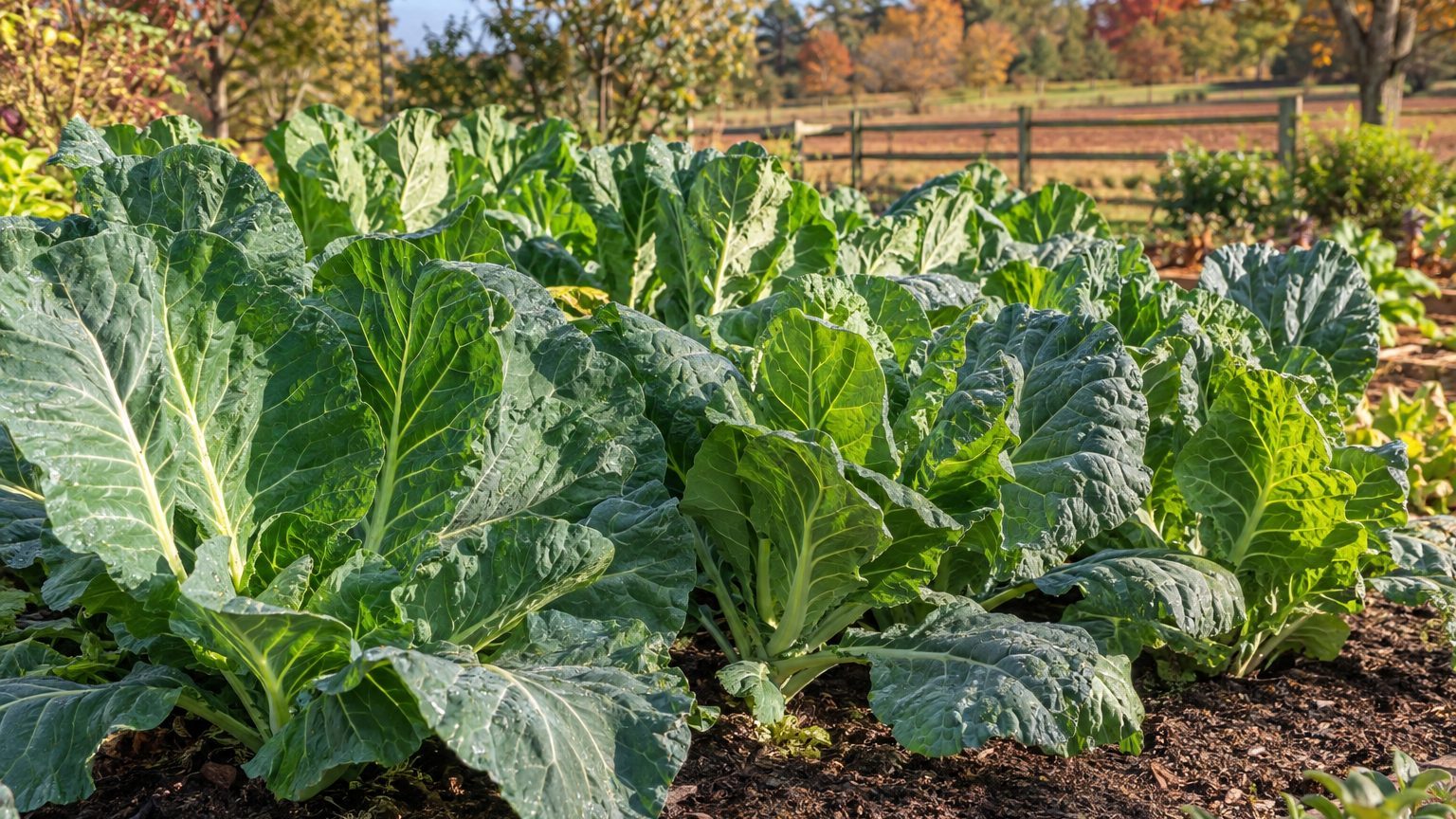

For most Illinois gardens, a compact, cold-tolerant collard such as Vates is the safest pick for spring and fall. The tall traditional Southern types suit a fall crop set out in midsummer. Collards handle heat better than most of the cabbage family, and a frost sweetens the leaves. The variety you choose depends mostly on how many weeks you have before the first hard freeze.
The short answer for Illinois
Chicago’s airport weather station puts the last spring frost between April 11 and April 22. That is the band where the chance of a 32°F freeze falls between 30 and 70 percent. The first fall frost lands between October 24 and November 3 by the same measure. Those are reference-city dates. Suburban and rural gardens usually see the last spring frost one to two weeks later and the first fall frost one to two weeks earlier. The gap is wider on higher ground. Collards shrug off light frost, so transplants can go out a few weeks ahead of the last-frost band, which the When to Plant Collards in Illinois guide lays out in detail.
Which collard type fits Illinois?
Sort by type first and by brand second. Compact open-pollinated collards reach harvest sooner and tolerate cold well. Tall traditional types give big leaves but need the longest runway. Loose-heading types want a long, cool stretch.
| Type (example) | Best Illinois use | Watch for |
|---|---|---|
| Compact, cold-hardy (Vates) | Spring and fall crops, northern gardens | Smaller plants, so space them closer to 18 inches |
| Tall traditional (Georgia Southern) | Fall crop started in midsummer, southern Illinois | Slow to size up; a late start leaves small plants at first freeze |
| Loose-heading (Morris Heading) | Fall crop with a long, cool finish | Needs the full fall season to form its heads |
Packet descriptions vary by seed company, so read the days to maturity and choose the shorter counts if your season is tight.
What other greens pair well with collards?
Kale, mustard greens and turnip greens thrive in the same spring and fall windows. Mustard and turnip greens finish fastest, which makes them a good gap filler while collards take their time. Kale matches collards for cold tolerance, so the two can share a bed and a row cover.
What will not work here

Start with the slowest tall collards sown in spring. They reach harvest size in July heat, so watch the leaves closely for cabbageworms and aphids. Plants stay in the garden but the leaves get chewed and tough. A compact variety planted early gives a cleaner harvest before the worst of the pest season.
A late fall crop fails for the opposite reason. Rural beds may see freezing weather by mid-October, and day length shrinks fast after that. Collards set out in September are still small when growth slows to a crawl in November. Transplants should go in during midsummer so they have a couple of months of growth behind them when the freeze band opens on October 24.
Can collards survive an Illinois winter?
The mean daily minimum of the coldest month is 18.8°F at the Chicago reference station. That means plenty of nights fall below it, so watch how your plants fare through the coldest spells. Unprotected collards in northern Illinois usually do not come through to spring. In the milder south, a deep straw mulch or a heavy row cover sometimes carries plants through, but plan on the fall harvest as the main event.
Why do collards struggle in a humid Illinois summer?
Illinois summers are warm and muggy, and leaves that stay wet invite black rot and leaf spot. Crowded plants stay wet longest. Space compact types about 18 inches apart and big traditional types closer to 24 inches, and water at the soil line in the morning. Dry spells bring the opposite trouble. Plants watered unevenly produce tough, bitter leaves, so keep the soil evenly moist through July and August, from rain or the hose.
Cold, wet soil in early spring is the last trap. Seed sown into it sits and rots, especially in heavy clay. Transplants handle those conditions much better than direct-sown seed.
What changes across Illinois
The USDA Plant Hardiness Zone Map (2023 edition, built on 1991-2020 data) places Illinois across zones 5a to 7b. That is six half-zones, so there is no single answer for the state. The system rests on one variable, the average annual extreme minimum temperature, so it speaks to winter survival and says little about planting dates. Look up your own location on the map rather than guessing from a neighbor’s garden.
Gardeners at the cold end, in the northern part of the state, should lean toward compact, cold-hardy types. They should start spring transplants indoors and set the fall crop a bit earlier, because frost arrives sooner there than at the Chicago reference station. Mulch generously for late-season harvests, since collards that sit under snow or straw often stay edible longer.
Gardeners in the warmer south have a longer fall. They can use the tall traditional types, and some will carry plants through a mild winter under mulch. Their trouble is the long humid summer, so spacing and pest watching matter more. A reader in the middle of the state should expect to land between those two plans and shift accordingly.
Where to check this for your own county
University of Illinois Extension runs county and regional offices that know local soil, frost pockets and pest timing. Start there and look for two things. The first is the local planting calendar for cool-season vegetables, which gives spring and fall windows for your area. The second is any vegetable variety trial run in your county or a nearby one, since a collard that performed in trials down the road is a better bet than one chosen from a catalog.
Master Gardener volunteers attached to the county office can also tell you what failed in local gardens last year, which is often the most useful information of all.
A county recommendation beats a state one every time. Illinois stretches far enough north to south that a single statewide date is only a starting point, and the reference-city frost dates above come from one airport. Treat the state guidance as the frame and the county office as the final word.
Checking this against your own garden
Your own beds outrank every date in print. Three observations will tell you more about your microclimate than any chart.
- Soil feel in early spring. Squeeze a handful from a few inches down. If it crumbles and feels cool rather than icy, it is ready for transplants. A south-facing bed by a wall will reach that point days before a shaded one.
- First true leaves on your seedlings. Seedlings first show two rounded seed leaves, then the true leaves with the collard shape. Set plants out once they carry several true leaves. If they come on slowly in your indoor spot, you need a warmer shelf or a later transplant date.
- The first frost on your own lawn. Note the morning you first see white on grass or car windshields. Compare it with the October 24 to November 3 band. A date a week or two earlier tells you to start fall plants sooner and favor compact types.
Write the dates in a notebook. After two seasons, your own record will predict your garden better than any regional table.
Common questions
What is the best collard variety for Illinois?
Vates is a dependable all-round choice because it is compact and cold-hardy. Georgia Southern suits a midsummer-planted fall crop, especially in southern Illinois.
Can I grow collards in Illinois in both spring and fall?
Yes. Spring transplants go out a few weeks before the last frost, and the fall crop goes in during midsummer. Fall leaves are usually sweeter and suffer fewer pests. Details are in Growing Collards in Illinois.
Do collards taste better after frost?
Yes. Leaves picked after a light frost taste milder and sweeter. A hard freeze can still damage leaves.
How far apart should I plant collards in Illinois?
Plan 18 inches for compact types and up to 24 inches for large traditional ones. Humid summers make disease worse in crowded beds, so wider spacing helps.