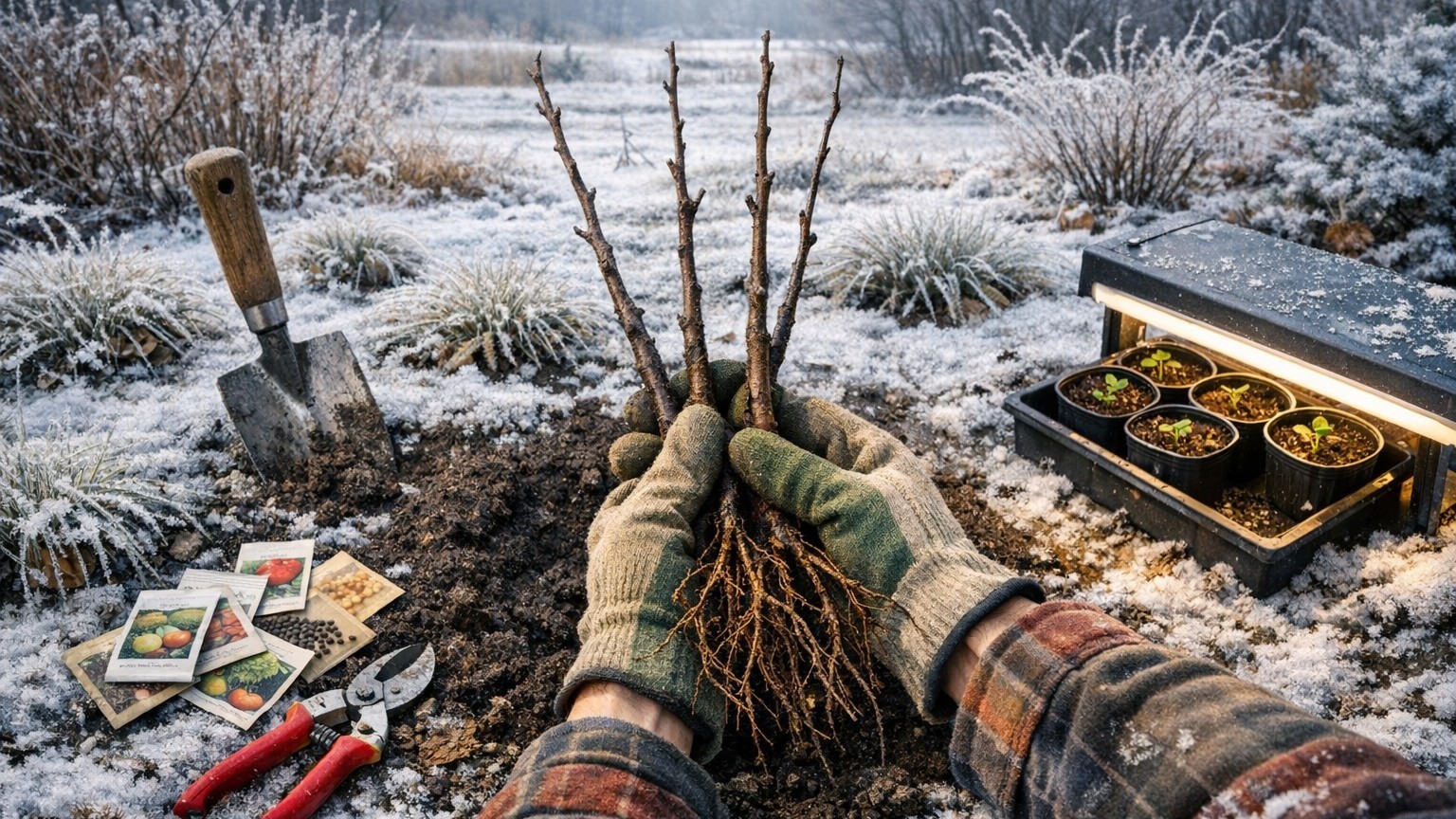

January in Indiana is not a planting month for the open garden. Soil across the state sits frozen or waterlogged, and the ground won’t be workable again until closer to the frost window that runs April 9 to April 21 in the Indianapolis area. What January is good for: dormant pruning, seed ordering, bare-root planting during a thaw, and starting the earliest seeds under cover so transplants are ready the moment soil temperatures allow.
What goes in the ground in January

The honest answer for most of Indiana is nothing goes into open soil this month. The state sits in USDA Hardiness Zone 5b-7a, and even in the milder southern counties, January ground is either frozen solid or saturated from freeze-thaw cycles, both conditions that rot roots and kill germination before it starts. Soil temperature, not the calendar, decides when planting resumes, and January soil rarely climbs past the mid-30s to low 40s Fahrenheit even on a sunny afternoon.
There are exceptions, and they matter. If a stretch of open, unfrozen ground shows up during a mid-winter thaw, that’s a window for bare-root fruit trees, roses, and cane berries, all of which go dormant and tolerate a cold snap once planted, as long as the roots make contact with soil rather than sitting in ice. Garlic and shallots are usually tucked in during fall, but if a fall planting was missed and the ground softens enough to dig a trench, a late garlic planting in January can still produce, though yields run smaller than a properly timed fall crop.
Cold frames and low tunnels
Gardeners running cold frames or low tunnels from fall can keep hardy greens (spinach, mache, claytonia) and some alliums limping along under cover, but this is maintenance of an existing planting, not new sowing. Peas are sometimes pushed into a cold frame in very late January in the warmer pockets of southern Indiana, but this is a gamble against the soil, not a reliable date on a calendar.
Indoors, this is the month for forcing. Rhubarb crowns dug and brought into a dark, cool basement or garage will push tender stalks in a few weeks. Belgian endive (chicory) roots lifted from the garden and forced in a dark box produce pale, crisp heads that taste nothing like the bitter summer leaf. Both are real harvests from a month when the outdoor garden gives nothing.
What to start under cover
Seed starting in January works backward from the frost window, not forward from January 1. With the last spring frost falling April 9 to April 21 around Indianapolis, a gardener counts back from that range to decide what needs a head start now.
Onions and leeks need 10 to 12 weeks indoors before transplanting, which puts a January start squarely in the right window for an April transplant date. Slow, tough crops like celery and celeriac also want an early start, typically 10 to 12 weeks before the frost date, because they germinate unevenly and grow slowly at first. Some gardeners begin peppers late in January as well, since peppers often need 8 to 10 weeks of indoor growth and are notoriously slow to size up under indoor light.
Tomatoes, squash, and cucumbers are not January crops. Started this early, they turn into leggy, rootbound plants weeks before the soil is warm enough to receive them, and a rootbound tomato rarely recovers its full vigor even after transplanting. That’s the first failure mode: starting too early and fighting overgrown seedlings for a month before the ground is ready.
The second failure mode runs the other direction. Skip onions and leeks entirely in January and start them in March instead, and the plants never catch up to full size before summer heat sets in, because alliums size up during the cool, long days of spring, not the compressed heat of early summer. Both mistakes come from ignoring the arithmetic and going by feel instead. Counting backward from the local frost date, not forward from the calendar month, is what keeps the timing honest.
Light and heat matter more than the calendar
January daylight in Indiana is short and weak, so anything started this month needs supplemental light, ideally 14 to 16 hours under a grow light, or the seedlings stretch and weaken regardless of when they were sown. A heat mat under the tray speeds germination of alliums and celery, both of which are slow starters in cool rooms.
What is ready to pick
Outdoors, January gives little. Most home gardens in Indiana have nothing standing in the open ground worth harvesting this month, and it’s honest to say so rather than pad a list with crops that won’t have survived the cold.
What does still feed a household are the crops tucked under cover before the hard freezes set in. Kale, planted in late summer and left standing, often survives under snow cover and actually sweetens after repeated frost, since cold triggers the plant to convert starches to sugars. Leeks left in the ground with a heavy mulch layer are diggable through most of the winter in the milder parts of the state, as long as the ground isn’t frozen solid the day you go looking. Cold-frame spinach, mache, and claytonia can be cut a little at a time all month if the frame has held its heat.
Indoors, sprouts and microgreens are the fastest fresh food a gardener can produce in January, ready in 5 to 10 days from seed on a windowsill or under a small light, no soil required for sprouts and just a shallow tray for microgreens.
The other January job on the food side is inspection, not harvest. Stored squash, potatoes, and onions need a walk-through every few weeks. A soft spot on a squash, a sprouting eye on a potato past its dormancy, or a soft neck on a stored onion are all signs that crop needs to be used or composted before it takes its neighbors down with it. Winter squash stored at room temperature is especially prone to sudden soft rot, and one bad squash left in a bin can spread mold to everything touching it within days.
The jobs that matter this month
January carries more real work than its bare garden suggests, and skipping it costs the whole season ahead rather than just the month.
Dormant pruning of fruit trees, grapevines, and cane berries is a January task precisely because the plant is asleep and the branch structure is visible without leaves in the way. Cuts made now heal before spring sap flow starts, and pruning wounds made during dormancy are far less likely to invite disease than cuts made once growth resumes. Apple and pear trees, in particular, benefit from a January shaping cut that would stress the tree if done in active growth.
Seed ordering belongs in January for a simple reason: the varieties that sell out first are usually the ones worth having, and by February the popular disease-resistant tomato and the reliable sweet corn variety are often already gone from the seed racks. Ordering early also gives time to plan garden layout around what actually arrives rather than settling for a substitute.
Soil testing is worth doing in January too, since results take a couple of weeks to come back and amendments like lime need months to shift pH before spring planting. A test now means the numbers are in hand before the rush of March.
Compost piles don’t stop working in cold weather, they just slow down, and turning the pile on a mild January day keeps the microbial process from stalling out completely. Tool maintenance (sharpening pruners and hoes, oiling wooden handles, cleaning rust off shovel blades) is the kind of task that always gets pushed aside during the growing season, which makes January the only realistic window to get to it. Bed repairs, fence checks, and trellis fixes also go faster now, before there’s anything growing that a repair crew might trample.
What not to do in January
The most common January mistake in Indiana is trusting a warm afternoon. A 55-degree day in the middle of winter feels like spring, but soil temperature lags well behind air temperature, and a warm-season seed dropped into soil that’s still in the 30s or low 40s will simply rot rather than germinate. Wait for the soil, not the thermometer on the porch.
A close second is uncovering cold frames or removing mulch too early after a mild stretch. A five-day warm spell in January is not spring, and plants or crowns exposed too soon are then caught by the next freeze with no protection left in place. Once a cold frame lid comes off or mulch gets raked back, putting it back before the next cold night is the only fix, and gardeners who skip that step lose the very crops they were trying to protect.
Fertilizing dormant plants is another January error, particularly nitrogen. A dormant tree or shrub has no active growth to use that nitrogen, and a late-winter feeding can push a flush of tender new growth right before a hard freeze, which then kills the new tissue and weakens the plant going into spring. Feeding, where it’s needed at all, waits until growth actually resumes.
Pruning too hard, too early is a subtler mistake. Cutting fruit trees is fine in January, but pruning right after an extreme cold snap can expose fresh wood to more damage before the tree has recovered. Watching the forecast for a few relatively stable days before making major cuts avoids adding stress to an already stressed plant.
Checking this against your own county
Everything above is built around Indianapolis, and Indiana is bigger and more varied than one weather station. Southern counties along the Ohio River run milder and see their last frost earlier and their first fall frost later than the Indianapolis average, sometimes by a couple of weeks or more. Northern Indiana, especially near Lake Michigan, deals with lake-effect snow and cold that can push those windows the other direction. Elevation shifts things too, even within a single county.
Treat the Indianapolis-based dates here as a starting point, not a fixed instruction. For a planting calendar built around local conditions, and for a soil test or a call with someone who tracks frost data by county, the Purdue Extension is the resource built for exactly that question.
Common questions
Can you plant anything outdoors in Indiana in January?
Almost nothing new goes into open ground this month across most of the state. The realistic exceptions are bare-root fruit trees or canes planted during a rare thaw when soil is workable, and a late garlic planting if a fall planting was missed. Everything else waits for warmer soil.
What vegetables can survive winter in an Indiana garden?
Kale, leeks, spinach, mache, and claytonia are the crops most likely to still be standing under mulch, snow, or a cold frame in January, especially in the milder southern counties. They were planted in late summer or fall, not this month.
When should Indiana gardeners start onion and leek seeds indoors?
Onions and leeks need 10 to 12 weeks of indoor growth before transplanting, so counting back from the April 9 to April 21 frost window around Indianapolis puts a January start in the right range for most of the state.
Is it too early to prune fruit trees in Indiana in January?
No, dormant pruning in January is well timed, since the tree is fully asleep and wounds heal before spring sap flow begins. The one caution is avoiding major cuts right after an extreme cold snap, which can add stress to already stressed wood.