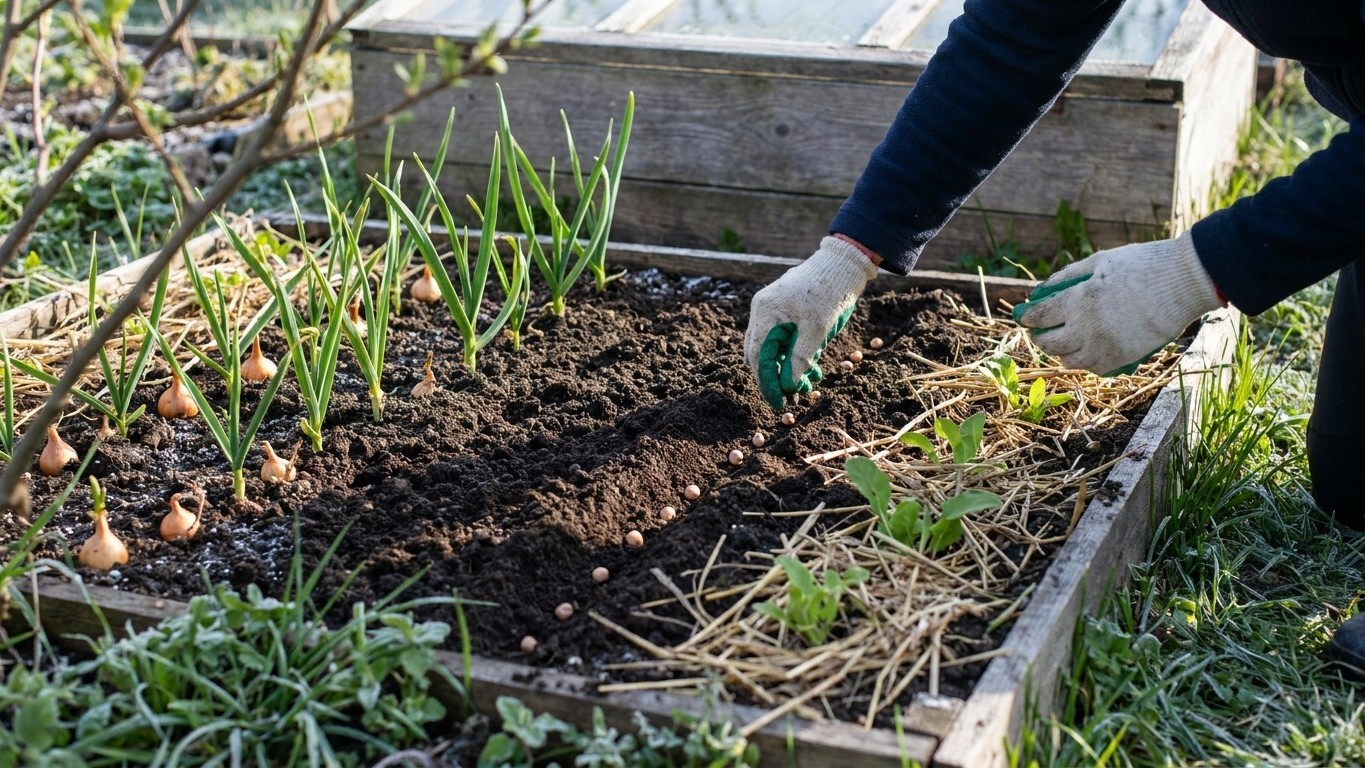

March in Indiana falls before the state’s last spring frost window of April 9 to April 21 (Indianapolis average), so this is a month for hardy crops and cold soil, not tomatoes and peppers. Garlic and onions already in the ground keep growing, peas and spinach can go into workable soil, and cold frames stretch what’s possible. Everything else waits for the ground, and the calendar, to catch up.
What goes in the ground in March

The frost window at the Indianapolis reference station runs April 9 to April 21, based on NOAA’s 1991-2020 climate normals. That means every day in March sits ahead of that range across most of the state, sometimes by a full month in the north. The real gatekeeper isn’t the date on the wall, though. It’s soil temperature. Seeds sown into soil still in the 30s or low 40s Fahrenheit either rot or sit dormant for weeks, so the smarter question is what tolerates cold ground and the occasional hard freeze that still follows.
Garlic and shallots planted the previous fall are already pushing green shoots and need nothing more than a light feeding once growth resumes. Onion sets and onion transplants can go into workable soil, since they shrug off a light frost. Peas are the classic March crop here: their germination floor is low enough that a dry, crumbly bed is all they need, and a late cold snap rarely sets them back. Spinach and other cold-hardy greens can be direct-sown toward the back half of the month, especially in southern counties where soil warms first.
Bare-root fruit trees, cane fruits like raspberries, asparagus crowns, and rhubarb divisions belong in the ground now too, while they’re still dormant. This is also the window for forcing rhubarb or Belgian endive indoors from roots dug earlier.
| Category | Status in March | Notes |
|---|---|---|
| Garlic, shallots, onion sets | Safe | Tolerates hard frost, already growing |
| Peas, spinach | Safe, weather permitting | Needs soil dry enough to crumble, not squeeze |
| Bare-root trees, canes, asparagus | Safe | Plant while dormant |
| Lettuce, brassica transplants | Gamble late in month | Keep row cover ready for a late freeze |
| Beans, squash, corn | No | Cold soil rots seed outright |
What to start under cover
Count backward from the frost window instead of a fixed date, and the arithmetic works differently depending on the crop. Tomatoes and peppers need roughly six to eight weeks indoors before they’re ready to set out, and since transplanting them outdoors waits until after that April 9-21 range, the latest reasonable sowing date under lights lands in early March for anyone who hasn’t already started. Push it later than that and the plants may still be too small when warm weather finally settles in for good.
Cool-season transplants run on a shorter clock. Broccoli, cabbage, and lettuce started under cover need four to six weeks before they go into the garden, and because these crops can handle a few weeks of cold ground before the last frost date itself, early-to-mid March sowings line up for transplanting in early April in much of the state, later farther north.
The two ways this goes wrong are opposite problems. Start too early, say back in January for a plant meant to go out in May, and it turns rootbound and leggy on a windowsill long before the garden is ready. Start too late, and the seedling never builds the root mass or stem strength to handle transplant shock when the weather window finally opens. Both mistakes trace back to skipping the backward count and going by feel instead.
Cucumbers, squash, and melons are worth starting under cover only near the end of March, and only for gardeners planning to transplant them a few weeks after the frost window closes rather than direct-sowing later.
What is ready to pick
Outdoors, March offers little that wasn’t already in the ground by fall. Kale and leeks that overwintered under mulch or a low tunnel are often the first fresh harvest of the season, and their flavor actually improves after repeated cold exposure. Parsnips left in the ground all winter can be dug as soon as the soil softens enough to lift them without snapping the roots.
Cold frames extend this list considerably. Lettuce, mâche, arugula, and spinach that spent the cold months under glass or plastic are usually ready to cut by the time outdoor beds are still bare. Indoors, sprouts and microgreens fill the gap in a matter of days rather than weeks, which makes them the most reliable fresh green this early in the season.
The bigger job this month is checking what’s already stored. Squash kept in a basement or root cellar should be inspected for soft spots near the stem, an early sign it’s turning. Potatoes that have started sprouting eyes are still edible but won’t keep much longer, and onions gone soft at the neck should be used first. Rhubarb forced indoors from dormant roots is often ready to harvest by late in the month, giving gardeners something genuinely fresh well ahead of the outdoor season.
The jobs that matter this month
Dormant pruning of fruit trees, grapevines, and cane berries has a real deadline: once buds swell and break, the plant is spending stored energy on wood that pruning would otherwise redirect into fruit. Cutting now, while everything is still asleep, is the single highest-return task on the March list.
Seed ordering belongs on the same list, and later is genuinely worse here than most other garden chores. Popular varieties of tomatoes, peppers, and specialty greens sell out from suppliers well before planting season, so placing an order in March instead of waiting often decides which varieties are even available.
Soil testing and amending pays off precisely because the ground is workable but nothing is growing yet. Lime takes months to shift pH, so applying it now, based on a test rather than a guess, gives it time to act before the growing season needs it. Turning finished compost into beds while they’re empty avoids disturbing roots later.
Tool maintenance is easy to skip and expensive to skip repeatedly. Cleaning rust off pruners and sharpening blades now means faster, cleaner cuts once the real workload starts. Bed edges, trellises, and fencing damaged by winter weather are worth repairing before plants are in the ground and harder to work around.
Finally, walk through stored crops one more time. A single soft potato or moldy onion left in a bin can spread rot to everything touching it, and catching that now saves the whole batch.
What not to do in March
The most common mistake is trusting the air instead of the soil. A stretch of 60-degree afternoons doesn’t mean the ground has caught up, and direct-sowing beans, squash, or corn into soil still in the 40s just leaves seed sitting there to rot before it germinates. Wait for the frost window itself, not an early warm spell, before committing warm-season crops to open ground.
Working wet soil is a close second. Tilling or even walking heavily on ground that’s still saturated compacts it, and that compaction can affect drainage and root growth for the entire season. If a handful of soil squeezes into a mud ball rather than crumbling, it isn’t ready.
Pulling mulch or row cover off too early after a mild stretch is a mistake that shows up later. Purdue notes there’s still roughly a 10% chance of a 32-degree freeze event after the published spring frost date at the Indianapolis reference station, which means an even higher chance of one before it. Crowns and new growth exposed on the strength of one warm week can take real damage from the freeze that follows.
Nitrogen timed wrong is the quieter error. Feeding lawns or perennials before growth has genuinely resumed either leaches away before roots can use it or pushes soft, frost-tender growth right when a cold night can still hit. Wait for visible active growth, not the calendar, before the first feeding.
Checking this against your own county
A statewide frost window is a starting point, not an instruction for a specific yard. Indiana’s north, shaped in part by Lake Michigan’s moderating effect, and its south, which warms and cools weeks apart from the Indianapolis reference point, can differ by a fortnight or more in both spring and fall. Elevation and local terrain shift things further still. For a planting calendar tuned to a specific county, and for current soil and frost guidance, the Purdue Extension service is the better source to check before committing seed to ground.
Common questions
Can I plant grass seed in Indiana in March?
Cool-season grass seed can be overseeded once soil is workable, but germination is slow in cold ground and a proper fall seeding usually outperforms a March attempt. Late March is workable in southern counties; the north often needs to wait.
Is it too early to plant tomatoes outdoors in Indiana in March?
Yes. The last spring frost window runs April 9 to April 21 at the Indianapolis reference station, and tomatoes are killed outright by frost. They belong indoors under lights this month, not in open ground.
What vegetables can handle a March frost in Indiana?
Garlic, onions, peas, spinach, and other hardy greens tolerate a light freeze without damage. Anything in the squash, bean, or nightshade families cannot.
When should I start seeds indoors based on Indiana’s frost date?
Count backward from the April 9-21 window: six to eight weeks for tomatoes and peppers, four to six weeks for broccoli, cabbage, and lettuce. That arithmetic, not a fixed date, decides the right week to start.