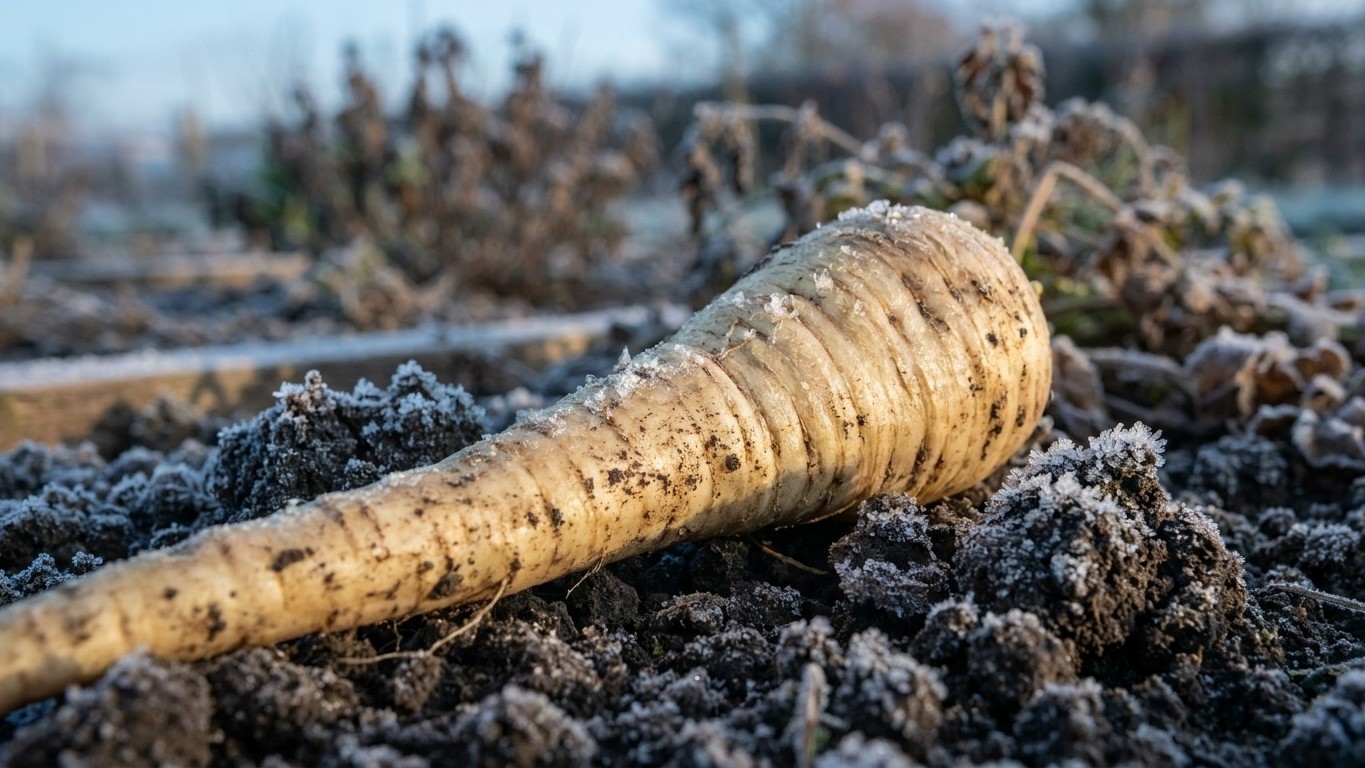

University of Kentucky Extension Entomology documents ten pests for the state, but only two of them, Japanese beetle and brown marmorated stink bug, are generalist feeders broad enough to land on a parsnip’s ferny top growth. The rest target azaleas, shade trees, or cucurbits and never touch a root vegetable bed. Both show up sometime during the frost-free stretch between the last spring frost (March 24 to April 4) and the first fall frost (November 2 to November 12), feeding on foliage rather than the root itself.
Which pests attack parsnip in Kentucky

University of Kentucky Extension Entomology’s list of documented pests for the state runs to ten: Azalea lace bug, Bagworm, Brown marmorated stink bug, Eastern tent caterpillar (Malacosoma americanum), Fall webworm, Japanese beetle, Spotted cucumber beetle, Squash bug, Squash vine borer, and Striped cucumber beetle. That’s the full list this territory has documentation for, and no more names belong on it.
Most of that list has nothing to do with a parsnip row. Azalea lace bug feeds only on azalea foliage, an ornamental shrub with no relation to a root vegetable. Bagworm builds its spindle-shaped cases on conifers and shade trees, never on ferny vegetable tops. Eastern tent caterpillar (Malacosoma americanum) strips cherry, apple, and other flowering trees each spring, and fall webworm spins its silk nests high in hardwood canopies, both well above anything growing in a garden bed. Squash bug, squash vine borer, striped cucumber beetle, and spotted cucumber beetle are cucurbit specialists: they key in on squash, cucumber, melon, and pumpkin and have no reason to cross into a bed of carrot-family roots.
That leaves two. Japanese beetle and brown marmorated stink bug are both generalist feeders with wide host lists, meaning neither specializes on one crop family the way a squash bug does. A broad host range is the only reason either insect ever lands on parsnip at all, they aren’t drawn to it specifically, they just don’t discriminate. Japanese beetle chews foliage into a lacy skeleton, while brown marmorated stink bug pierces stems and leaves to feed on plant fluids. Neither is a parsnip specialist, and neither shows up in most seasons in numbers that threaten the root itself, but both are worth knowing on sight since they’re the only two names on Kentucky’s documented list that could plausibly turn up in a parsnip patch.
When each one shows up, and what it does first
Parsnip is sown directly in the ground, not transplanted, and the seed can take 14 to 21 days to germinate before any green shows above the soil, according to Utah State University Extension. That stretch matters here: a bare row that still looks empty three weeks after sowing isn’t necessarily a pest problem, it may simply not have sprouted yet. Confusing a slow germination window with an early insect strike is the most common misread at this stage.
Once the parsnip tops are up and the frost-free window is running, that stretch between March 24 to April 4 on one end and November 2 to November 12 on the other, Japanese beetle is the one to expect first in most seasons, since it feeds during the warmest stretch of the growing season rather than at either edge of it. What shows up first is foliage damage: leaves skeletonized between the veins, left papery and see-through, with the beetles clustered on the topmost leaves in daylight.
Brown marmorated stink bug tends to move into a garden later, often working its way in from field edges or nearby structures where it overwinters, and it stays active through the back half of the frost-free stretch before searching for shelter again as the first fall frost approaches. What it does first isn’t a chewed leaf, it’s a stippled or cloudy patch on the leaf surface or stem where the insect has pierced the tissue to feed, sometimes with a faint discoloration ring around the puncture. Neither insect targets the parsnip root directly at this stage; the root keeps sizing underground through the full 100 to 120 days it needs from seeding while the damage stays on top growth.
Telling the damage apart from everything else
A lot of what looks like insect damage on parsnip isn’t insect damage at all. A forked or split root has two separate possible causes here, and they aren’t the same thing: heavy or stony ground that deflects the taproot as it grows, and overwatering that encourages the root to branch instead of driving straight down. Neither has anything to do with Japanese beetle or brown marmorated stink bug, both of which feed on foliage, not roots.
| What you see | Likely cause | What distinguishes it |
|---|---|---|
| Lacy, skeletonized leaves with beetles visible in daylight | Japanese beetle feeding | Tissue chewed between veins, insects clustered on upper leaves |
| Stippled or cloudy spots on leaves and stems | Brown marmorated stink bug feeding | Puncture marks; look for the shield-shaped insect itself |
| Row stays bare 2-3 weeks after sowing | Normal germination lag | Parsnip seed needs 14 to 21 days to sprout before any damage is even possible |
| Root is forked or split | Heavy or stony soil, or overwatering | No leaf damage accompanies it; check soil texture and watering schedule separately |
| Root grew well but tastes bland or starchy | Not enough frost exposure yet | Sweetness comes from several weeks of frosty weather, not a mild winter or the hardiness zone itself |
None of this replaces an actual look at the plant. A county extension agent can tell the difference between insect feeding, a nutrient issue, and simple mechanical damage from a hoe or a buried rock, something a symptom list can’t substitute for on its own.
What actually works here, and what is a waste of time
Physical exclusion works better than almost anything else on a crop like parsnip, and the reason is specific to this vegetable: it’s grown for the root, not a fruit that needs pollination. A floating row cover can stay on for the entire root-growing season without cutting off pollinators the plant doesn’t need, something that isn’t true for squash or cucumber, where a cover has to come off once flowers open. Setting that cover down at sowing, before Japanese beetle or brown marmorated stink bug ever finds the row, keeps both off the foliage without spraying anything.
Handpicking Japanese beetles works too, best done early in the morning when the beetles are sluggish from the cool overnight air and easy to knock into a container. It’s tedious, not glamorous, but it’s an actual control method with no waiting period and no need to know what’s registered for home use in the state.
What’s a waste of time is reacting after the leaves are already skeletonized or stippled. Both insects move in from the surrounding landscape all season long, and a treatment timed to damage already done misses the insects that arrive the following week. Any decision about a registered treatment, timing, and rate belongs with University of Kentucky Extension Entomology or the county extension office, since this site doesn’t recommend products and what’s legal to apply in a home garden changes.
Where to check this for your own county
Everything above comes from University of Kentucky Extension Entomology’s statewide documentation, which describes what’s been recorded across Kentucky, not what’s necessarily active in one particular backyard. Pest pressure inside a single state varies by county, by how close a garden sits to woods or structures where brown marmorated stink bug overwinters, and by how many Japanese beetle grubs came through the lawn the previous year.
The next step is a call or visit to the county extension office, not a guess based on this page alone. Kentucky’s extension offices are organized by county specifically so a gardener can get an answer tuned to local conditions rather than a statewide average. Bringing an actual sample, a leaf with the damage on it, sealed in a bag, gets a faster and more accurate answer than a verbal description over the phone.
If a garden sits in a rural stretch of Jefferson County or similar, keep in mind that NWS Louisville has noted the reference station behind these frost dates runs later in spring and earlier in fall than the surrounding rural county, meaning a rural garden should plan on a tighter frost-free window than the dates above suggest. That’s one more reason a local office, not a statewide chart, has the final word on timing for a specific address.
Common questions
Does University of Kentucky Extension Entomology document carrot rust fly or carrot weevil on parsnip?
No. Neither appears on the documented list for this territory. The list runs to ten species total, and neither carrot rust fly nor carrot weevil is one of them. A county extension office can confirm if either is suspected in a specific garden.
Why does my parsnip taste bland even though the plant grew well all season?
Parsnip converts its stored starch to sugar through exposure to several weeks of frosty weather, according to Utah State University Extension, not through living in a particular hardiness zone. A root pulled before that frost exposure happens will taste starchy no matter how well it grew.
Should I hold off sowing parsnip until Japanese beetles are gone for the season?
No. Parsnip needs 100 to 120 days from seeding, plus the 14 to 21 days just to germinate, so delaying sowing to dodge a foliage-feeding beetle usually costs more growing time than the beetle costs in damage. The two documented insects here feed on leaves, not the swelling root.
Will a floating row cover stop brown marmorated stink bug completely?
It reduces exposure, but this insect is a generalist that moves in from surrounding structures and vegetation all season, so a cover with gaps at the soil line or edges left unsecured still lets some through. Sealing the edges at sowing time matters more than the cover material itself.