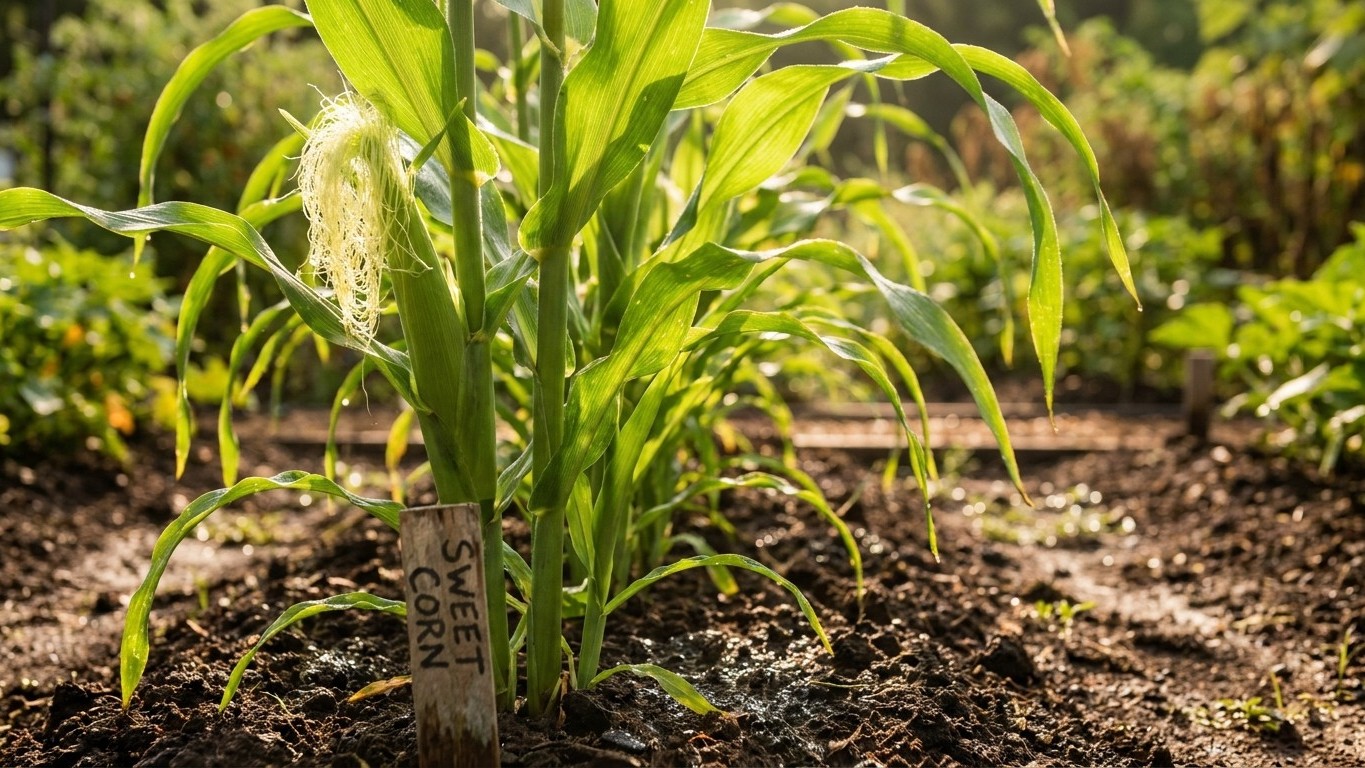

Yes, sweet corn ripens reliably in Kentucky. The state’s growing season runs long enough, and its summer heat is strong enough, to carry a 60- to 90-day crop from planting to harvest with room to spare. The tighter question isn’t whether corn will ripen, but when the soil is actually ready for seed, and that date lands well after the last frost, not on it.
The short answer
Here’s the detail that trips up a lot of gardeners: the last spring frost in this region falls between March 24 and April 4, according to NOAA’s 1991-2020 climate normals for the Louisville reference station. But sweet corn doesn’t care about frost. It cares about soil temperature, and Utah State University Extension is specific about the threshold: soil needs to be above 60 F before seed goes in the ground. That’s a separate clock from the frost date, and it runs later. Cold, wet soil in early spring will rot corn seed before it ever sprouts, frost or no frost.
That gap between “frost is over” and “soil is warm enough” isn’t published as a fixed number of days for this area, so don’t treat it as a fixed date on the calendar. What you can do instead is check the ground itself, either with a soil thermometer pushed a couple inches down or by waiting until the surface has had several stretches of genuinely warm days in a row. In practice, that means most Kentucky gardeners are planting corn later in spring than the frost date alone would suggest, and that’s fine, because the back end of the season has plenty of slack to absorb it.
The first fall frost here arrives between November 2 and November 12, per the same NOAA dataset. Count from a reasonable soil-warm planting date to that fall frost window and you’re looking at a stretch of well over four months, far beyond the 60 to 90 days sweet corn actually needs from planting to harvest. Even accounting for the lag before soil hits 60 F, there’s no version of a typical Kentucky spring and fall that squeezes out a normal-season sweet corn crop.
One more number matters here, and it’s not about frost at all. The reference station averages 37.2 days a year at 90 F or above. That’s not a description of a mild Southern summer, it’s a measure of real heat load, and it shapes how you manage the crop once it’s up. Corn germinates and grows fast in that kind of heat, but it also demands more water to keep pace, and seedlings planted into soil that’s already baking can struggle if watering lags behind. The climate here supports ripening. It just asks for attention to moisture once the heat sets in.
One caveat worth repeating: NWS Louisville has noted that this urban station tends to run milder in early spring and later into fall than the surrounding rural Jefferson County. If you’re gardening outside the city, in a low spot or an open rural field, expect a tighter window than these dates suggest, and lean toward the later end of the spring frost range and the earlier end of the fall one when you plan.
Does a late variety fit here?
Sweet corn varieties aren’t named in the source data behind these numbers, and none will be named here either, but the maturity classes they fall into (roughly 60 days on the fast end, up to 90 on the slow end) can be checked against Kentucky’s actual calendar. The math works out differently depending on which end you’re planting.
A 60-day variety
A fast-maturing 60-day type has an easy path in this state. Even allowing for soil that doesn’t hit 60 F until well after the March-to-April frost window closes, there’s still a stretch of roughly six months before the first fall frost arrives in early-to-mid November. A 60-day crop uses a fraction of that time. That slack is useful beyond just “does it fit.” It means a 60-day variety can go in the ground on the later, safer side of soil-warming, without any real risk of running out of season, and it leaves room for a second planting a few weeks behind the first if you want corn coming ready across more of the summer instead of all at once.
A 90-day one
A slower 90-day variety asks more of the calendar, but Kentucky still has enough season to spare. Working backward from a first fall frost in the November 2 to November 12 range, a 90-day crop needs to be in the ground by roughly early August at the latest to finish before frost risk climbs, and that’s a planting date most gardeners here clear with plenty of margin, since soil is long past 60 F by midsummer. The tighter constraint isn’t the fall end, it’s making sure a 90-day variety isn’t planted too late in a season of successive plantings, chasing a fresh batch of corn into August or September without checking the math first. Planted at a normal spring or early-summer date, though, a 90-day variety fits this territory without trouble. It’s a late planting date, not the variety length itself, that causes problems here.
What goes wrong here
The failures that show up in Kentucky sweet corn patches tend to trace back to three specific mistakes, and only one of them has anything to do with the climate directly.
- Soil sown too cold. Planting on the calendar date of the last frost, rather than waiting for the soil itself to clear 60 F, is the most common cause of poor germination. Seed sits in cool, damp ground and rots before it sprouts. The fix is patience: check the soil, not just the forecast, and hold off until it’s genuinely warmed, even if that means planting a few weeks after the frost date has passed.
- A variety too late for the season. This isn’t a frequent failure given how much slack Kentucky’s frost-free stretch provides, but it does happen with late successive plantings, when a 90-day variety goes in too far into summer and runs out of days before the first fall frost. The remedy is to count backward from the November frost window before committing a late planting date, rather than after.
- Sweetness lost to cross-pollination. This one has nothing to do with soil or frost. Standard (su), sugary enhanced (se), and supersweet (sh2) sweet corn types will cross if they tassel at the same time nearby, and the result is starchy, disappointing corn instead of sweet corn. There’s no published isolation distance to lean on here, only the timing rule: don’t let different types tassel together. Stagger planting dates so tasseling windows don’t overlap, or grow only one type in a given season, and plant in blocks of three or more rows rather than single thin rows, which helps pollination succeed within a single type.
Common questions
Can I plant sweet corn right after the last frost in Kentucky?
Not quite. The last frost typically falls between March 24 and April 4, but soil needs to warm past 60 F before corn seed goes in, and that happens later. Planting on the frost date alone risks seed rotting in cold ground.
How many days does sweet corn need to mature here?
Sweet corn needs 60 to 90 days from planting to harvest, depending on variety. Kentucky’s frost-free stretch, from soil-warm planting to the first fall frost in early-to-mid November, comfortably covers either end of that range.
What ruins the sweetness of sweet corn?
Cross-pollination between standard, sugary enhanced, and supersweet types is the main cause. If different types tassel at the same time near each other, the corn loses its sweetness. Stagger planting so tasseling doesn’t overlap.
Does Kentucky’s summer heat affect corn planted here?
Yes. The reference station averages 37.2 days a year at 90 F or above, a real heat load that speeds growth but raises water demand. Corn planted into hot, dry soil needs consistent watering to keep up with that heat.