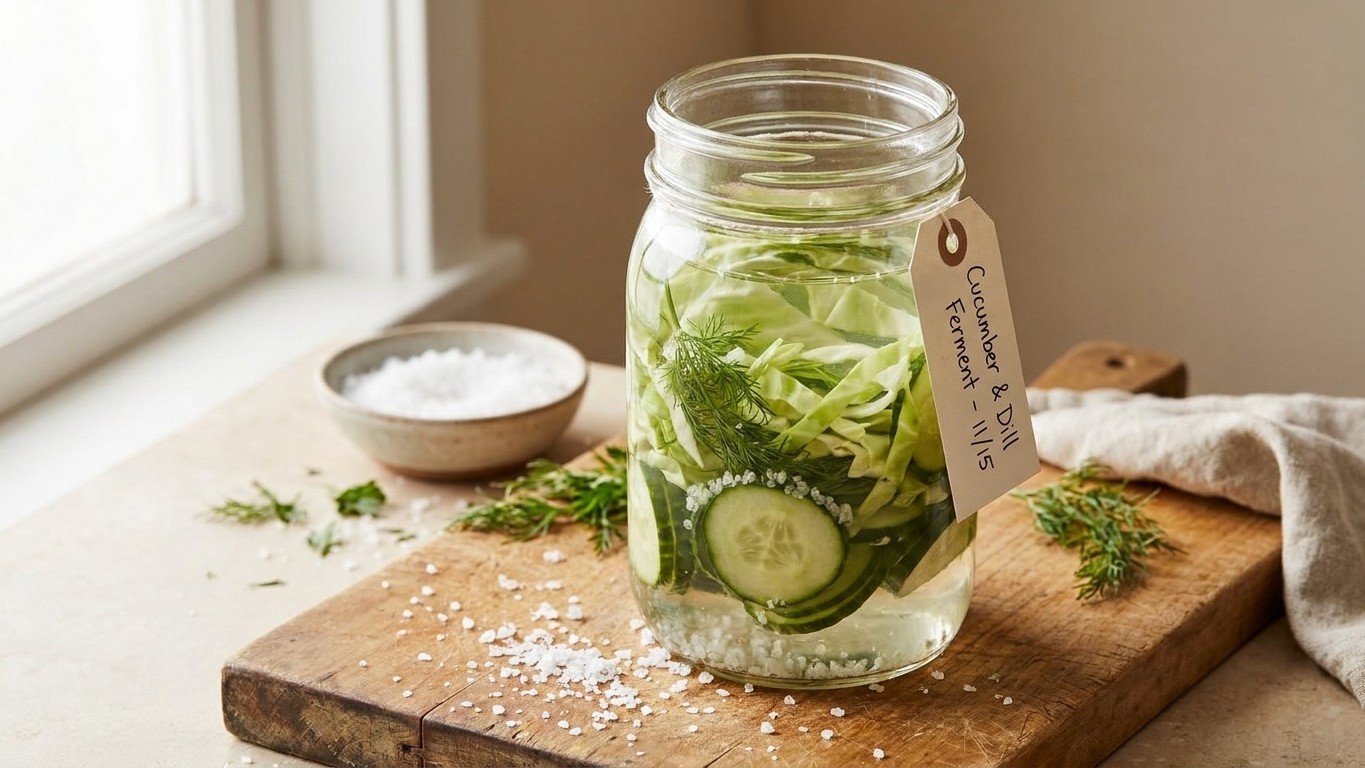

Salt in a ferment isn’t there for taste. It’s there to control which microorganisms get to grow, and which ones don’t. According to the National Center for Home Food Preservation at the University of Georgia, “in fermented foods, salt favors the growth of desirable bacteria while inhibiting the growth of others.” That single sentence is the whole reason a fermentation recipe calls for salt at all.
The short answer

The National Center for Home Food Preservation states it plainly: salt favors the desirable bacteria in a ferment while holding back the ones you don’t want. That’s the job. Not seasoning, not crunch, not preservation in the way a refrigerator preserves food. Salt is a selective tool that tips the microbial competition in one direction before fermentation even gets going.
This is why the NCHFP is direct about not improvising the amount. “Do not attempt to make sauerkraut or fermented pickles by cutting back on the salt required,” the center warns. Less salt doesn’t mean a milder ferment. It means a different population of organisms gets the advantage, and that population isn’t the one a tested recipe was built around.
The timeline matters here too. Regular dill pickles and sauerkraut ferment and cure for about three weeks. Refrigerator dills, which follow a different process, take about one week. Salt is doing its selective work across that entire window, not just at the start. Every day of that three-week cure, the salt level is still shaping which bacteria dominate the jar or crock.
Why this isn’t the same as canning acid
Fermentation is unusual among home food preservation methods because the food makes its own acid. That’s the mechanism behind why sauerkraut ends up on the acid side of pH 4.6 while the raw cabbage it started as does not. Salt sets up the conditions for that acid-producing process to happen correctly. Change the salt, and you change whether the food reliably reaches that acid threshold at all. This is a different concern than the acid rules for vinegar-based pickles, where the guidance is not to alter vinegar, food, or water proportions in a recipe or use a vinegar of unknown acidity. Different mechanism, same underlying idea: the ratios in a tested recipe aren’t arbitrary.
What actually decides it
Salt’s effect on a ferment comes down to a few overlapping mechanisms, and understanding them lets you reason about any fermented food, not just the one in front of you.
Osmotic pressure
Salt draws water out of plant cells through osmosis. That’s why shredded cabbage or cucumbers release liquid and eventually sit submerged in their own brine. This isn’t cosmetic. The water leaving the plant tissue is also being pulled away from many of the microorganisms living on the surface of that food, including some that would otherwise spoil it. A weaker osmotic pull means less of that water leaves, and less of that protective effect happens.
Microbial selection
Different bacteria tolerate salt differently. Some spoilage organisms and pathogens are relatively sensitive to it. The lactic acid bacteria responsible for a proper ferment are comparatively tolerant. Salt at the level a tested recipe specifies creates an environment where the tolerant, acid-producing bacteria have room to multiply while the more sensitive competitors are held back. This is exactly what the NCHFP means when it says salt favors desirable bacteria while inhibiting others. It’s a competition, and salt decides who’s allowed to compete at all.
Acid production and pH
As the lactic acid bacteria that salt favored begin multiplying, they produce lactic acid as a byproduct. That acid is what drives the pH down over the fermentation period, the same process that takes sauerkraut below pH 4.6. If salt levels are off, the selection process that was supposed to favor those acid producers doesn’t happen the way the recipe assumes. The food might still look fermented. It might smell fine. But the internal chemistry that’s supposed to happen during those three weeks of curing isn’t guaranteed to follow the same path.
None of these three mechanisms work in isolation. Osmotic pressure sets the stage, microbial selection plays out over the fermentation period, and acid production is the outcome that makes the food safe and stable. Salt is the variable that ties all three together, which is exactly why a tested recipe’s salt amount isn’t a suggestion.
How to do it
- Choose a recipe from a tested source for the specific food you’re fermenting, since salt requirements vary by food.
- Prepare the food (shredding, slicing, or leaving whole) exactly as that recipe directs.
- Measure and add the salt called for in the recipe, whether it’s mixed directly with the food or dissolved into a brine.
- Pack the salted food or submerge it in the brine, making sure it stays under the liquid throughout fermentation.
- Set the container to ferment in the conditions the recipe specifies, undisturbed except for the checks it directs.
- Let the ferment cure for the length of time the recipe calls for, keeping in mind that regular sauerkraut and dill pickles typically cure for about three weeks while refrigerator dills take about a week.
- Check the food’s appearance, smell, and texture against what the recipe describes as done.
- Move the finished ferment to the storage method the recipe specifies once fermentation is complete.
What goes wrong
- Cutting the salt to make it “healthier” or milder. This is the mistake the NCHFP specifically warns against. Less salt changes which bacteria win the competition during fermentation, and that can mean the food never reaches the acid level it’s supposed to. The remedy is simple: follow the salt amount in a tested recipe exactly, every time.
- Food floating above the brine. Any piece exposed to air is exposed to mold and spoilage organisms that the salted brine below the surface was supposed to keep in check. Keep the food weighted or otherwise held under the liquid for the full fermentation period.
- Cloudy or scummy brine that looks alarming. Some surface film during fermentation is a known part of the process for certain ferments, but it needs to be distinguished from actual spoilage. When in doubt about what you’re seeing, compare it against the description in a tested recipe or NCHFP guidance for that specific food rather than guessing.
- Assuming a shorter cure time is fine because the food “tastes ready.” Taste isn’t a reliable stand-in for the acid development that’s supposed to happen over the full curing period, which runs about three weeks for regular sauerkraut and dill pickles. Stick to the timeline in the recipe.
- Substituting a different salt type without checking. Some salts contain additives that can interfere with the fermentation process or cloud the brine. If a recipe specifies a particular salt, don’t swap it for whatever is in the pantry without confirming it’s suitable.
Where the exact figures come from
Salt levels, container types, and fermentation conditions vary by recipe, and the only way to get a figure that’s actually been tested for safety is to go directly to the source. The National Center for Home Food Preservation at the University of Georgia publishes tested guidance for specific fermented foods, and that’s the reference to check before starting.
An untested salt level isn’t just a matter of flavor. Because salt is the mechanism that decides which bacteria dominate a ferment, a figure pulled from a random source or estimated by eye can allow the wrong organisms to thrive instead of the ones a safe ferment depends on. That risk doesn’t announce itself with a bad smell or an off taste. Follow the tested figure for the food in front of you, not a number from a different recipe or a different food entirely.
Common questions
Does more salt always make a ferment safer?
No. Safety comes from following the tested amount for that specific food, not from adding extra. A tested recipe already reflects the salt level needed for the right bacteria to win out.
Can I tell by taste if the salt level was wrong?
Not reliably. Taste doesn’t reveal whether the acid-producing bacteria the salt was supposed to favor actually dominated the ferment. That’s why the salt amount comes from tested guidance rather than personal preference.
Is the salt’s job the same in every fermented food?
The mechanism is the same, drawing out water and favoring salt-tolerant, acid-producing bacteria over others, but the amount needed differs by food. That’s why each food has its own tested recipe rather than one universal salt rule.
Why does fermentation take about three weeks for some foods but only about a week for others?
Regular sauerkraut and dill pickles ferment and cure for about three weeks, while refrigerator dills take about a week because they follow a different process. The salt is still doing selective work throughout whichever timeline applies to that food.