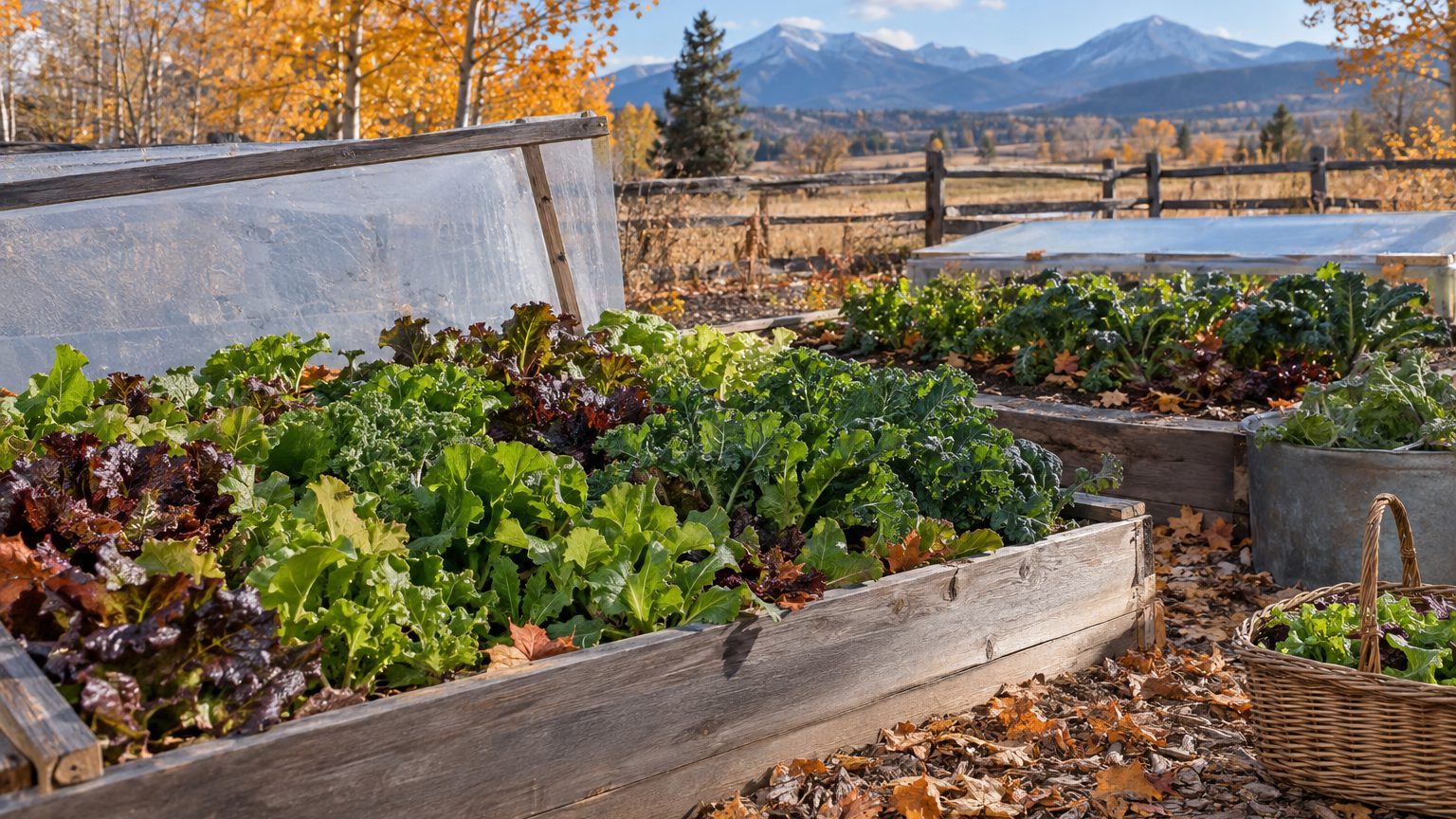

Growing winter salads in Massachusetts comes down to timing against two dates at Boston Logan: a last spring frost between April 1 and April 8, and a first fall frost between November 3 and November 14. Sow hardy greens in late summer or early fall, then protect them once the cold sets in. The winter low, not summer heat, decides what survives.
When the soil is warm enough in Massachusetts
The frost date and what it really tells you
At Boston Logan, the last spring frost falls between April 1 and April 8, based on NOAA’s 1991-2020 Climate Normals (32F freeze probabilities, 30-70% band). Treat that as a probability, not a promise. Some years the last freeze comes earlier, some years later, and no calendar date overrules a cold snap.
Logan sits on the waterfront in the middle of a city, which makes it the mildest spot in the state. Inland suburbs and the Berkshires get their last frost noticeably later in spring, and their first frost earlier in fall. If you garden in Worcester County or out west, shift every date in this article toward the harder end.
Frost is a proxy. What winter salads need is warm soil, and soil lags behind air. It warms after the frost risk ends, not at the same moment. A bed can be frost-free on paper and still sit cold and wet enough that seed rots or sulks for weeks.
Reading the bed instead of the calendar
A cheap soil thermometer settles the question better than any date. Push it a couple of inches down in the morning, when the reading is lowest, and check it over several days rather than once. For the germination range of each crop, UMass Extension publishes guidance written for Massachusetts conditions, and that beats a number copied from a seed packet written for the whole country.
For winter salads, the soil question gets answered twice. In spring, cool-season greens will germinate in soil that tomatoes would hate, so early sowings can go in as soon as the bed is workable and not waterlogged. The sowing that matters for winter, though, happens in late summer and early fall, when the ground still holds summer warmth and seeds come up fast. Ground that is cooling is easier on young greens than ground that is warming into a wet April.
Wet soil is the common mistake. Squeeze a handful: if it forms a sticky ball that stays packed, wait. Raised beds drain sooner and warm sooner, which is a real advantage in heavy New England clay.
How long the season lasts here
The arithmetic
Count from the last spring frost to the first fall frost, and Boston Logan gives a window of 209 to 227 days. The short end runs from April 8 to November 3. The long end runs from April 1 to November 14. Those are the best-case numbers for the state, because Logan is the mildest station in it.
Inland, the same subtraction produces a shorter figure, since spring frost lingers and fall frost arrives early. I won’t put a number on it, because this page has no verified dates for those places. Your local extension office or your own garden notes will give you the real count.
What that length allows
A window of roughly seven months allows succession sowing. You can put in a first round of greens in spring, a second in midsummer for fall cutting, and a final one in late summer or early fall that carries into winter under cover. Each round has room to reach harvest size before the next one is needed, which is why a long season is mostly a calendar of staggered sowings. The Winter Salads: What Grows When Lettuce Will Not guide covers the crops, and this site’s succession sowing guide lays out the spacing between rounds.
A short window works the other way. If frost arrives early in your yard, the first sowing may be the only one that reaches full size, and transplanting becomes a calculation. Transplants save weeks in the bed, but every move disturbs roots, and leafy greens that get checked early often bolt or stall. In a tight season, direct sowing in place usually costs less than the setback. In a long one, a transplant that loses a week still has time to recover.
Heat and water in Massachusetts
Where the summer numbers stand
This page does not carry a verified count of days above 90 F or a summer rainfall total for a Massachusetts station, so it will not quote either. Putting a made-up figure on a page about growing food would only mislead you. What can be said honestly is that Massachusetts is a northern territory, and heat is not where winter salad decisions get made.
When summers run cool and damp, the trouble is different from the scorched-bed problem southern gardeners fight. Humid, still air favors mildew on leaves. Ripening slows. Disease moves through crowded seedlings faster than it would in dry weather. Spacing, airflow, and watering at the soil line rather than overhead matter more here than shade cloth does. A gardener in Texas has the opposite problem, as the Winter Salads for Texas Gardens page shows.
The cold makes the decisions
The number that matters is the mean daily minimum of the coldest month: 23.1 F at the Boston reference station, from NOAA’s 1991-2020 normals. That is an average of the nightly lows, not a record low, and plenty of nights run colder. Inland and at elevation, the typical winter night is colder still.
That figure sorts the crops into three groups. The hardiest greens may stand uncovered in mild coastal spots. A second group needs a cover (a cold frame, a low tunnel, or row fabric) to stay in edible condition rather than turn to mush. A third group, the tender lettuces, cannot manage the winter at all. USDA’s 2023 Plant Hardiness Zone Map puts the state anywhere from zone 5a to 7b, built on the average annual extreme minimum, so check your own ZIP code, not the state range.
Frost also sets the other end. The first fall frost, between November 3 and November 14 at Logan, marks roughly when growth slows to a crawl as the light fades. A late sowing has to reach useful size before then. Count back from that date using the days-to-maturity printed on the seed packet, and add a cushion for shortening days. Colder neighbors have the same math: see Winter Salads for Michigan Gardens for a state with a harder winter.
Which winter salads suit Massachusetts
Choose by type. The facts for this state point to three criteria, in this order: cold tolerance, disease resistance in humid weather, and speed to harvest size before the first frost.
| Type | Cold handling here | Main watch-out |
|---|---|---|
| Hardy leafy greens (spinach, mâche, claytonia) | Often hold with a light cover; some stand bare near the coast | Wet soil in fall |
| Hardy brassica greens (kale, mustards) | Tolerate cold well; a cover keeps leaves cleaner | Mildew in damp, crowded beds |
| Arugula and other quick salad greens | Fast to size, but need cover in deep cold | Sowing too late to size up |
| Chicories and endive | Moderate hardiness; protection extends the harvest | Slow growth as light fades |
| Tender lettuces | Poor choice for a Massachusetts winter | Cold damage below the coastal average |
A damp climate makes disease resistance the first thing to look for on a seed label, ahead of flavor or leaf shape. Resistance to mildew matters more than any trait that helps in drought. Spacing and airflow can do the rest, since crowded rows hold moisture and spread problems.
This page names no varieties, and that is deliberate. The cultivars that perform well in Massachusetts are the ones trialled in Massachusetts soil and weather, and this page does not have those trial results. A name pulled from a national catalog might fail in your frost pocket. UMass Extension is the place for locally tested recommendations, and its staff can tell you what holds up at your elevation and exposure.
Common questions
When can I sow winter salads in Massachusetts?
Late summer into early fall is the main window, timed so seedlings reach useful size before the first fall frost (November 3 to November 14 at Boston Logan). Spring sowings of cool-season greens can go in once soil is workable, but check soil, not just the last frost date.
Do I need a cover over winter?
For most types, yes. The coldest month averages a daily minimum of 23.1 F at the Boston reference station, and inland nights run colder. Only the hardiest greens may stand bare, and only in mild spots. A cold frame or low tunnel keeps leaves in edible condition.
Do the Boston dates work in the Berkshires?
No. Logan is the mildest station in the state. Inland suburbs and the Berkshires see frost earlier in fall and later in spring, so your window is shorter and your sowing dates should move earlier.
Which varieties should I buy?
Ask UMass Extension for the ones trialled in Massachusetts. Buy by type first, then pick for disease resistance. Seed packets also print days to maturity, which is the number to count back from your first frost.