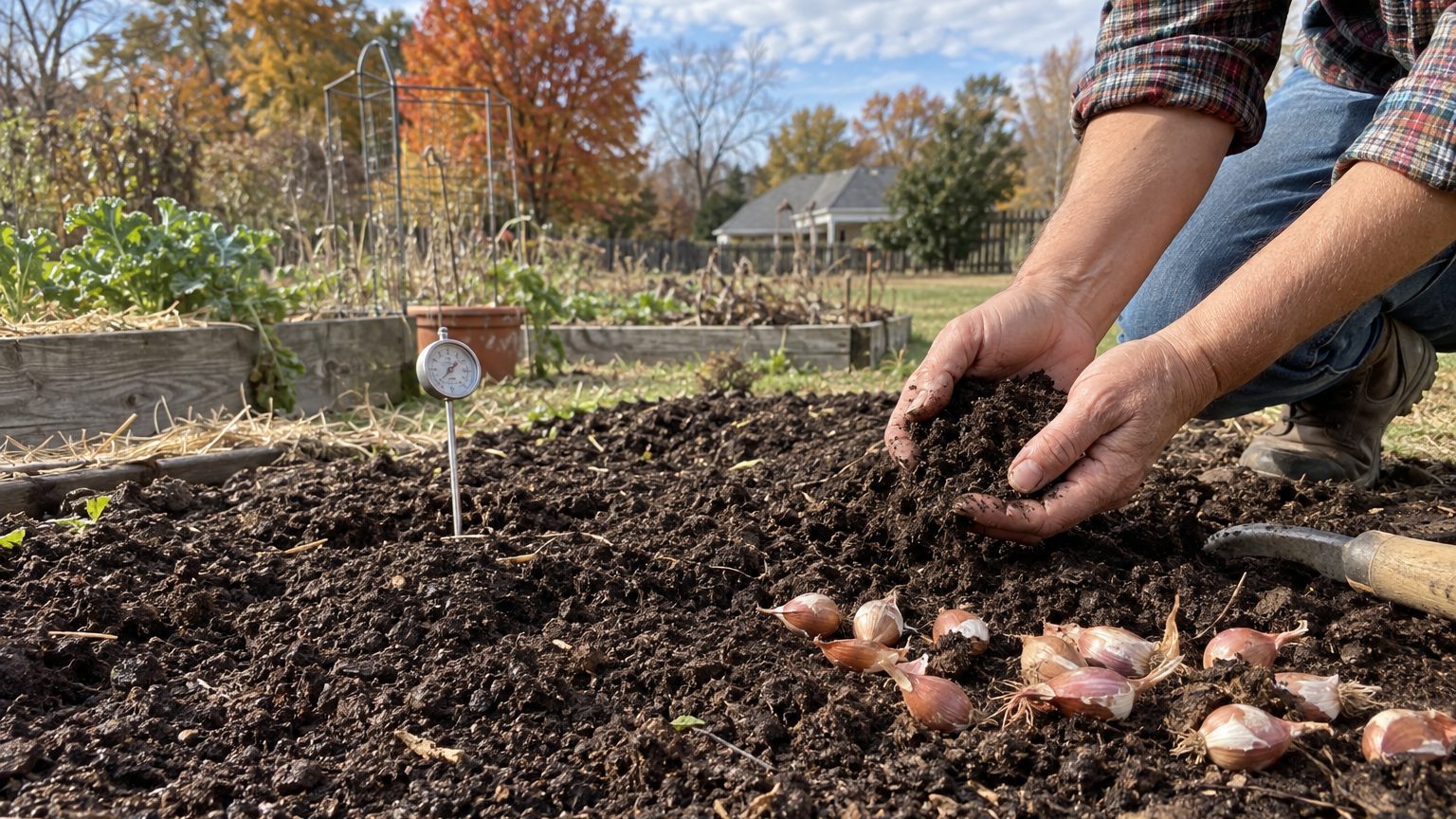

In most of Michigan, spring planting is the safer default. Shallot sets go in once the soil has actually warmed, not when the calendar says so. Autumn planting can pay off with bigger, earlier bulbs, but only where winters stay mild enough to spare the ground from deep, soggy freezes. The rest comes down to frost dates, winter lows, and a summer that runs cooler and damper than most shallot advice assumes.
When the soil is warm enough in Michigan
MSU Extension’s frost-free dates put the last spring frost around April 30 in the Detroit area, and early to mid May across most of the Lower Peninsula. Treat that as a probability, not a promise: some years the last frost comes earlier, some years a late one shows up after the tomatoes are in.
A frost date is also only a proxy. Shallots care about the soil, and soil warms after the frost risk ends, not with it. Cold air can lift in a week. A garden bed holding winter’s water takes longer, especially heavy clay in the thumb or low ground near the lakes. So the working rule is to treat April 30 as the earliest sensible point to start checking, not the day to plant. Push a hand trowel into the bed. If the soil crumbles instead of smearing, and it no longer feels chilled and waterlogged, it’s ready. A soil thermometer gives you a firmer reading, and your county extension office can tell you the threshold it recommends for alliums in your area.
Sets planted into cold, saturated ground sit idle, and idle bulbs rot. A week of patience costs very little. A bed of mush costs the whole planting.
What carries over from garlic, and what doesn’t
Shallots share a lot with garlic: autumn planting logic, curing, storage, and allium rotation. The garlic section of this site covers those practices in depth, so there’s no point repeating them here. What differs for shallots is the multiplication. One planted set produces a cluster of bulbs rather than a single head, so spacing matters more, and crowded clusters hold moisture around the necks. Set them shallow, with the tip near the surface, and give each one room.
On rotation, keep shallots out of any bed that held onions, garlic, or leeks in the last few seasons. Allium diseases linger in the soil.
Curing is where food safety enters. Pull the bulbs once the tops fall and brown, and dry them somewhere airy and out of the rain. Before you store any, inspect each one. A soft neck or a moldy base ends the question: that bulb goes in the compost, not the pantry. A bulb that looks fine on the outside isn’t proof it’s sound, so check the neck and base by touch as well as by eye. For the broader picture, Growing Shallots: One Bulb In, a Handful Out covers the crop from set to harvest.
How long the season lasts here
MSU Extension’s Michigan Garden Calendar gives a first fall frost of October 6 to October 21 for zone 6a. Pair that with an April 30 last spring frost in the Detroit area and the frost-free window runs from about 159 to 174 days. Two caveats: the fall range is for zone 6a, and the spring date is Detroit’s, so this is a pairing of two sources, not a single station’s record.
Move the start to mid May, as in much of the Lower Peninsula, and the window shrinks by roughly two weeks. Northern Michigan sits in colder hardiness zones (the USDA map runs from 4a to 6b across the whole state), so its season is shorter again. This page doesn’t carry frost dates for those areas, so check your own county.
What does the length allow? In the southern Lower Peninsula, a window near the top of that range leaves room for a second planting, such as a later batch of sets, or green shallots pulled young for fresh use while the main crop sizes up. Staggering plantings spreads out the harvest and hedges against one bad stretch of weather. The succession sowing guide on this site walks through spacing the batches.
Where the window is nearer the short end, the first planting is effectively the only planting. Shallots need time to bulb up, and a second batch started late risks being caught small and green by fall frost. That also changes the transplant question. Starting seed-grown shallots indoors and transplanting them can buy time, but every transplant takes a root check, because lifted plants with torn roots stall, and stalled plants lose the weeks you were trying to gain. In a long window you can afford that setback. In a short one, a set planted straight into the bed is usually the better bet.
For comparison, Growing Shallots in Massachusetts deals with a northern state on the other side of the Great Lakes, and Growing Shallots in Utah shows how a dry, high-elevation season rewrites the same decisions.
Heat and water in Michigan
This page doesn’t have a verified count of days above 90 F or a summer rainfall total for a Michigan station, so it quotes none. Guessing would be worse than leaving the gap. What can be said honestly is that the hot-climate playbook (shade cloth, heavy mulch against baking soil) isn’t the main concern for most Michigan gardeners. The more common trouble in a cool, damp summer is the opposite kind: mildew on the foliage, slow ripening, and disease that moves through crowded plantings. Watch the bed after prolonged wet spells and give the tops room to dry.
The winter figures are better documented, and they decide the autumn-versus-spring question. NOAA’s 1991-2020 climate normals for Detroit show a mean daily minimum of 19.2 F in the coldest month. That’s an average of nightly lows, not the record cold, so a bad night will go well below it. The USDA Plant Hardiness Zone Map (2023) is built on the average annual extreme minimum instead, and it puts Michigan anywhere from zone 4a to 6b. Detroit is one reference point. Your garden may sit in a different zone.
Here is how that plays out:
- Hard freezes with wet soil: autumn-planted sets rot, or heave out of the ground as it freezes and thaws. Spring planting is the safer call.
- Milder winters, well-drained soil: autumn planting gets roots established early and tends to give the larger, earlier bulbs it’s grown for.
- In between: a deep mulch after the ground first freezes can help, but it won’t rescue a bed that sits wet.
Drainage matters more than the calendar. A raised bed or a sloped site can turn a risky autumn planting into a reasonable one, while a low spot that holds water in March is a poor home for shallots in any season. In summer, water at the base rather than overhead, and ease off as the tops begin to fall so the bulbs finish drying. A bed that stays damp into harvest invites the same neck and base problems that spoil stored bulbs.
Which shallots suit Michigan
This page names no varieties, and that is the right answer. The cultivars that matter are the ones trialled in Michigan soil and Michigan summers, and this page doesn’t have those trial results. A name picked from a national catalog is a guess, and Michigan is too varied, from zone 4a to 6b, for one guess to fit. For a list that means something, go to Michigan State University Extension and ask which shallots have been trialled near you.
What this page can do is tell you which types to look for, based on the climate facts above. Think of it as three filters:
- Short season: favor the earliest-maturing types, especially in the northern Lower Peninsula and colder zones, where the frost-free window is shortest. Sets planted straight into the bed beat transplants here.
- Cool, damp summer: disease resistance comes first. Look for types described as tolerant of mildew and neck rot, and plan for wide spacing and good airflow.
- Warm spell at ripening: where summer heat does arrive, choose types that handle it and give the roots some shade from neighboring plants or a light mulch.
Beyond those filters, the choice between multiplier sets and seed-grown shallots matters. Sets are the simpler route, and they’re the only sensible one for a short season. Seed-grown types can suit a larger planting but need an earlier start and the transplanting care described above. Skin color and bulb shape (round or elongated, red or gold) are mostly questions of kitchen use, and they shouldn’t override earliness or disease tolerance.
If you plan to plant in autumn, check that the type has a track record of surviving local winters. Extension staff can tell you whether it does, and whether spring is the safer bet in your county.
Common questions
When should I plant shallots in Michigan?
Start checking the soil after the last spring frost: around April 30 in the Detroit area, early to mid May across most of the Lower Peninsula, according to MSU Extension. Plant when the soil crumbles and has warmed, not on a fixed date.
Can I plant shallots in the fall in Michigan?
It can work where winters are milder and the soil drains well. Where the ground freezes hard and stays wet, autumn-planted sets are likely to rot or heave, and spring is the safer call.
Can I plant shallots where garlic grew?
Avoid it. Shallots and garlic are both alliums, so follow the same rotation rules for the whole family. The garlic section of this site covers allium rotation in detail.
How do I know a cured shallot is safe to store?
Inspect each bulb. A soft neck or a moldy base means the bulb goes out, however good the rest of it looks. A sound look alone is not proof, so check by touch as well, and don’t promise yourself a keeping time.