
For most Mississippi gardeners, the best unusual roots fall into two groups: hardy perennial roots such as Jerusalem artichoke and horseradish, and fall-sown cool-season roots such as daikon, rutabaga and salsify. Ginger and turmeric are a third, riskier option. The state’s long frost-free stretch and mild winters suit all three. Heat and humidity decide which individual crops earn a bed.
The short answer for Mississippi
Choose by type, not by variety name. The reference-city figures here come from Jackson, in the NOAA 1991-2020 Climate Normals. The last spring frost there falls between March 6 and March 22, and the first fall frost between November 7 and November 22. Both are probabilities of a 32°F freeze, taken from the 30-70% band. They mark the window where a freeze goes from unlikely to likely, so treat them as a coin-flip zone rather than a guarantee. Between the two bands lie roughly eight months without a freeze, which is long by national standards.
Those dates describe Jackson’s airport, though. Suburban and rural gardens typically see the last spring frost one to two weeks later and the first fall frost one to two weeks earlier, so check your own county. The coldest month averages a daily low of 36.6°F at the reference station, so a typical winter night stays above freezing. Individual nights still dip below it.
| Type | Examples | Fit in Mississippi | What drives it |
|---|---|---|---|
| Hardy perennial roots | Jerusalem artichoke, horseradish | Strong | Mild winters; they overwinter in the ground |
| Fall-sown cool-season roots | Daikon, rutabaga, salsify, scorzonera | Strong | Long, mild fall and winter growing window |
| Long-season tropical roots | Ginger, turmeric | Workable with an early start | Need most of the freeze-free months; tops die at the first freeze |
| Slow, heat-sensitive roots | Parsnip, celeriac | Difficult | Long growth that runs into humid summer |
This page does not have summer temperature or rainfall figures for Mississippi, so the heat reasoning here rests on the freeze data and the hardiness zone. For the wider picture of what grows here, see Growing Unusual Root Crops in Mississippi.
What will not work here
Spring-sown parsnips and celeriac are the usual casualties. Both are slow, and both want cool weather for most of their growth. With the last spring frost as early as March 6 to March 22 at Jackson, warmth arrives quickly, and these crops spend their long middle stretch in humid heat. You get hairy, small or bolting plants, not the fat roots in the seed packet photo. A fall sowing gives them a better chance, but they stay a gamble.
The mild winter works against crops that count on sustained cold. With an average January low of 36.6°F, roots that sweeten after repeated hard frosts get fewer of them here. A fall-grown parsnip or salsify can still taste good. Just don’t expect the sugary flavor that northern growers describe after a deep freeze.
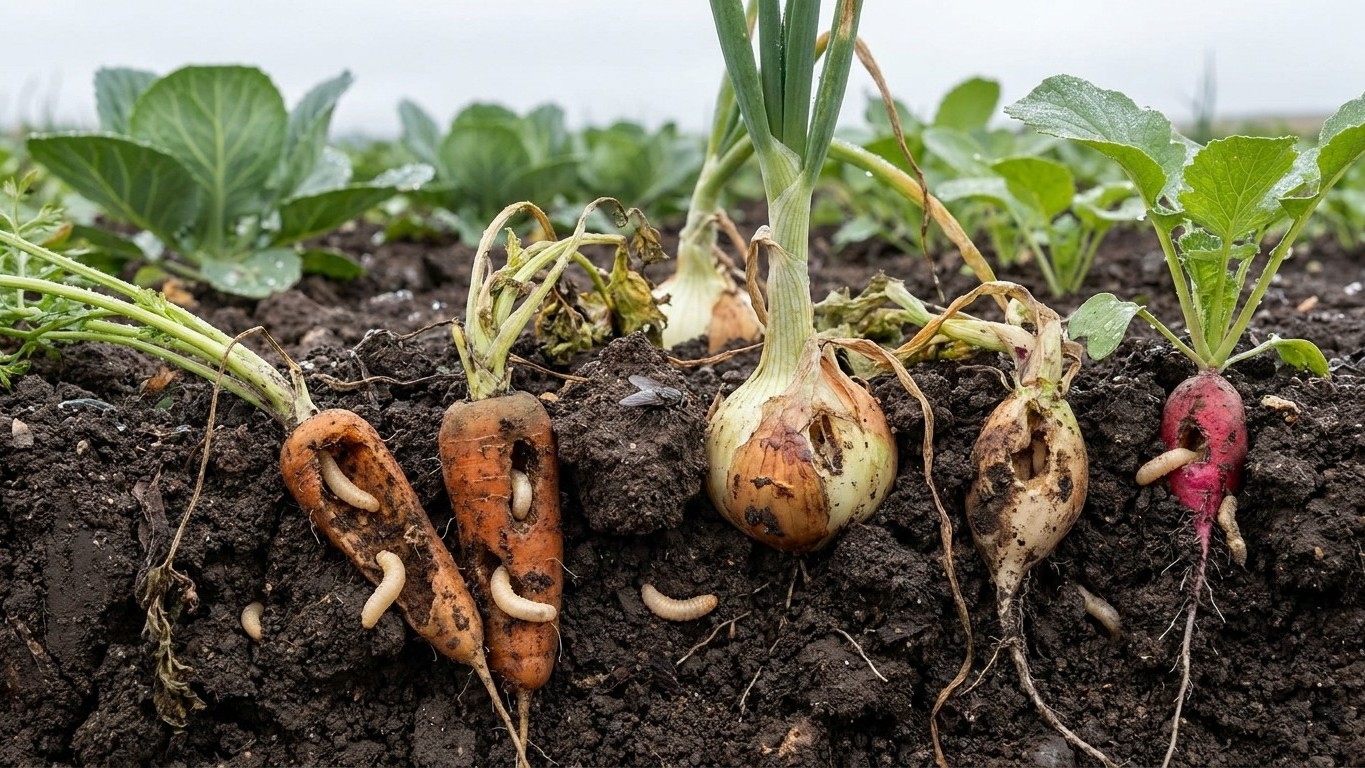
Humidity punishes close spacing. Crowd roots together and leaf canopies stay damp, which invites fungal disease, and soil that stays wet through a rainy stretch invites rot. Dense plantings of long roots in heavy, poorly drained soil are among the most common ways to lose a crop here. Wider spacing, raised beds and amended soil cost little and prevent most of it.
The long season also sets a trap. Ginger and turmeric will use every frost-free week you give them. They are usually started indoors well ahead of the last frost and set out once the danger passes. Because the first freeze falls between November 7 and November 22 at the reference station, and a rural garden may see it a week or two sooner, harvesting too late means losing the crop to the first freeze. Containers that can move indoors remove the risk.
Then there is the plant that works too well. Jerusalem artichoke thrives in Mississippi’s long season and mild winters, and any tuber left in the soil can sprout the next year. Give it a bed you can live with permanently or a deep container.
What changes across Mississippi
There is no single answer for the state. The USDA Plant Hardiness Zone Map (2023 edition, built on 1991-2020 normals) places Mississippi across zones 7b to 9a, four half-zone steps. A garden near the Gulf and one in the northern hills are not working with the same winter. Jackson serves only as the reference city for the dates above. Other parts of the state differ, and this page cannot say by how much.
The zone number reflects one variable only, the average annual extreme minimum temperature. It tells you whether a perennial root survives winter. It says nothing about when frost ends, how humid July gets, or how soggy your soil stays. Two gardens in the same zone can need different planting dates.
Gardeners toward the cooler, northern end should shift in three ways. Expect the last spring frost later and the first fall frost earlier than the Jackson figures, with the gap widening at elevation. Start ginger and turmeric indoors earlier, or skip them for containers. Sow fall roots a little sooner so they size up before hard cold. The perennial roots (Jerusalem artichoke, horseradish) need no adjustment.
Gardeners toward the warm Gulf end have the reverse problem. Winters are gentler, so tropical roots get more room, but summer heat and humidity linger, and the cool-season crops have less time before the next heat. Don’t assume your zone from a neighbor’s or a relative’s. Look up your own location on the USDA map, and treat the result as one input among several.
Where to check this for your own county
The best next stop is Mississippi State University Extension, the state’s land-grant extension service. Mississippi has county offices staffed by people who know the local soil, rainfall patterns and pest pressure, and none of that fits on a state-level page like this one.
When you get there, look for two things. First, a local planting calendar for vegetables and root crops, ideally tied to your county’s frost dates rather than a statewide average. Second, any variety trials run in your county or nearby, which show how particular varieties performed under local conditions. A variety that does well in a trial two counties over is a safer bet than one that looks good in a catalog. If the extension site lacks something for a rarer crop like salsify or turmeric, call or email the county office. That is exactly what they are for.
A county recommendation beats a state one, and this page is the state one. It gives you the types, the reasoning and the Jackson reference dates, but it cannot see your drainage, your slope or your late-March cold pocket. For dated sowing windows by crop, see When to Plant Unusual Roots in Mississippi, then adjust those windows against what your county office says.
Checking this against your own garden
Your own observations outrank every date on this page. Three are worth watching, and none needs an instrument.
- Soil warmth by feel. Push your hand into the bed in the morning. If it feels cold and damp, wait. Soil that feels pleasantly warm is ready for warm-season roots and tubers. Compare a sunny, south-facing bed with a shaded one. The gap shows you how much your microclimate differs from the regional average.
- The first male flowers on squash or zucchini. Male blooms typically show up before female ones, and their arrival signals that real warmth has settled in. If yours appear well after a neighbor’s, your garden runs cool and your tropical roots need an extra head start.
- The first true leaves on direct-sown seedlings. After the seed leaves come the true leaves. If they emerge slowly or look pale, the soil is too cool or too shaded. If they race ahead, you can sow the next batch sooner.
Write the dates down for one season. By the second year, your notes will say more about your microclimate than any regional table.
Common questions
Can I grow parsnips in Mississippi?
You can try, but they are among the hardest roots here. Spring plantings run into heat and humidity before the roots size up. Fall sowing improves the odds, but the mild winter means less cold-driven sweetness. Treat parsnips as an experiment, not a staple.
Are ginger and turmeric realistic?
Yes, with an early indoor start. They need most of the freeze-free months, and the Jackson reference figures show about eight. The tops die at the first freeze, and rural gardens may see that sooner than the November 7 to November 22 band. Containers you can move indoors are the safest approach.
Is Jerusalem artichoke too aggressive to plant?
It can spread, since any tuber left in the soil can resprout. Plant it where spreading is acceptable or confine it to a deep container. It is among the most dependable unusual roots for the state’s mild winters.
Do the Jackson frost dates apply to my garden?
Treat them as a starting point. They come from the Jackson reference station, and suburban and rural gardens typically see the last spring frost one to two weeks later and the first fall frost one to two weeks earlier. Confirm with your county extension office before you commit to dates.