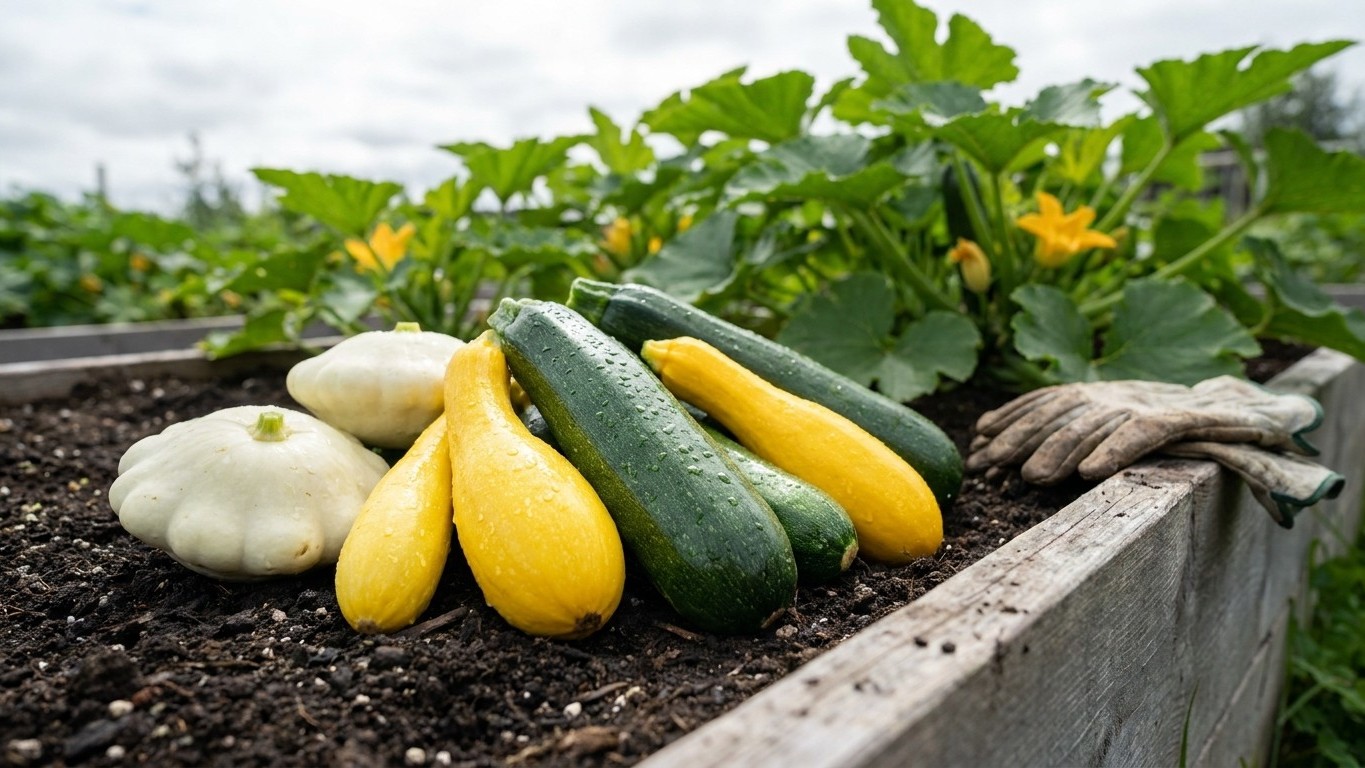

Nevada’s summer squash success comes down to matching squash type to two extremes: a hardiness zone range that spans from harsh mountain cold to blistering low desert heat, and a summer stretch where 90-degree days pile up while rain barely falls. Compact, fast bush varieties beat long-vining types almost everywhere in the state, but the reasons shift depending on which end of Nevada you’re gardening in.
The short answer for Nevada
Choose bush-type summer squash over vining types, and choose it for opposite reasons depending on where you garden. Nevada’s USDA hardiness zones run from 4a to 10a, a range so wide it covers both frigid mountain valleys and the scorching floor of the Mojave. That spread alone rules out picking a single “best” squash by variety name for the whole state. Instead, the decision has to be made by type, weighed against the two forces every Nevada garden shares in some form: a season that can close early at elevation, and heat that can shut plants down in the low desert.
At the reference station used for Nevada’s official heat data, the average year brings 131.3 days above 90 degrees Fahrenheit. That is not an average summer temperature, it is a count of how many days evaporation, blossom drop and heat stress become the main threat to a squash plant rather than frost. In that kind of stretch, fast, heat-set bush zucchini and yellow crookneck types that finish their fruiting cycle quickly have an advantage: they get a harvest in before the worst heat wave stalls pollination, and a gardener can succession-sow a second round once temperatures ease.
At elevation, in the cooler and higher parts of the state where the hardiness zone drops toward 4a and 5a, the calculation flips. There, the limiting factor is not heat but a frost-free window that can be short and unpredictable. A slow-maturing squash that needs a long, uninterrupted stretch of warm nights is a poor bet if a county’s growing season is compressed. Bush types again come out ahead, simply because they mature faster and give a margin of safety on both ends of the season.
| Squash type | Where it fits in Nevada | Why |
|---|---|---|
| Bush zucchini / yellow crookneck | Low desert and high desert alike | Fast maturity dodges both early heat shutdown and short frost-free windows |
| Bush pattypan / scallop | Higher elevation, shorter-season counties | Compact habit, quick turnaround before fall frost risk returns |
| Long-vine trailing summer squash | Not recommended statewide | Needs more consistent water and a longer uninterrupted warm stretch than most of Nevada reliably offers |
What will not work here
Long-vine, slow-to-mature summer squash types are the first thing to cross off the list almost anywhere in Nevada. In the cooler, higher-elevation counties where the hardiness zone runs 4a to 6a, a variety that needs an extended, unbroken warm season is gambling against a frost-free window that can close faster than a gardener expects. In the hot low desert, the same slow vining habit runs into a different wall: by the time it would be setting fruit, the garden is deep into a stretch that averages 131.3 days above 90 degrees a year, and heat that intense causes blossom drop and stalled pollination well before frost is ever a concern.
Watering on a once-a-week schedule is the second thing that fails here, and it fails for a reason specific to Nevada’s numbers. Summer rainfall across June, July and August totals only about 0.7 inches, with June averaging a nearly rain-free 0.04 inches. There is no meaningful rainfall cushion to fall back on between waterings. Pair that with 131 days a year of 90-degree heat driving evaporation out of the soil, and a weekly watering schedule that might work fine in a wetter, milder state simply cannot keep pace. Squash roots sit shallow, and shallow roots in sandy desert soil dry out fast under that kind of heat load.
Varieties bred for humid, rainfall-fed regions, the kind that lean on ambient moisture and tight spacing, are a mismatch too, though for a different reason than in a humid state. It’s not fungal pressure from stagnant air that gets them here, it’s the opposite problem: those varieties are often selected without much drought tolerance built in, because their home climate never demanded it. Dropped into a Nevada summer with 0.04 inches of rain in June, they show stress symptoms, wilting and stunted fruit, well before a locally adapted bush type would.
None of this is guesswork specific to one backyard. It follows directly from the numbers: a short season defeats a slow squash, and a hot, dry summer defeats anyone treating irrigation as optional.
What changes across Nevada
A hardiness zone range of 4a to 10a is not a rounding error, it’s evidence that Nevada is not one growing region but several stacked on top of each other. The USDA Plant Hardiness Zone Map builds this classification on a single measure, the average annual extreme minimum temperature, and on that measure alone the gap between Nevada’s coldest mountain pockets and its low desert floor spans six full zones. That is the difference between a garden that might see hard freezes well into spring and one where frost is a minor, late-arriving concern some years and barely a factor at all in others.
What that means in practice is that there is no single Nevada planting date, no single Nevada squash variety, and no single answer to “when do I start.” A gardener in the higher, colder parts of the state needs to think in terms of a compressed window: start seed indoors or wait for reliably warm soil, choose the fastest-maturing bush type available, and plan for the season to close earlier than it would in the low desert. A gardener at the hot end of the zone range needs to think about the opposite problem: pushing planting to avoid the worst of the 90-degree stretch, or timing a second sowing for when that heat load eases later in summer.
This page can describe the shape of that range, but it cannot tell an individual reader which zone they’re standing in. Zone lines shift with elevation, slope and local terrain in ways a state-level figure can’t capture. The right move is to check the current USDA Plant Hardiness Zone Map directly for a specific address, then use that zone number, not a guess based on which part of the state feels hottest or coldest, to judge how much margin a squash variety’s maturity time actually needs.
Where to check this for your own county
The University of Nevada Cooperative Extension is the source built for exactly this gap between state-level facts and one garden’s reality. A state page, this one included, can only describe ranges and averages. A county extension office works from local trial data and local growing conditions, and that is a meaningfully different, more reliable kind of answer.
Two things are worth looking for specifically once there. First, a local or county-level planting calendar, if one is published for the area in question. That calendar will reflect the actual frost-free window for that specific elevation and microclimate, rather than the wide statewide zone spread described above. Second, look for any list of summer squash varieties that extension staff or local Master Gardener programs have actually trialled in that county’s soil and climate. A variety proven to perform in Washoe County conditions is a stronger bet than a generic recommendation pulled from a seed catalog written for a national audience.
It’s worth saying plainly: a county recommendation beats a state one every time, and this page is the state one. Everything above, the zone range, the heat-day count, the rainfall figures, is true of Nevada broadly and useful for understanding why bush types make sense over vining ones. But it cannot replace a planting date or variety list built specifically around one county’s recorded conditions. Treat this article as the reasoning, and the extension office as the local specifics that reasoning depends on.
Checking this against your own garden
Even a solid county recommendation is still a generalization, and the most reliable information available to any gardener is what’s happening in the actual soil and plants in front of them. Three signals are worth watching, and none require anything more than paying attention.
Soil warmth by feel comes first. Summer squash seed germinates poorly in cold soil no matter what the calendar says, so before sowing, press a hand a few inches into the bed in the morning. Soil that still feels cool and damp rather than warmed through signals the ground hasn’t caught up to air temperature yet, a common gap in Nevada’s high desert where nights stay cold even as days warm fast.
The first flush of male flowers is the second signal, and it tells a different story. Summer squash typically produces several rounds of male flowers before the female flowers, the ones with a tiny swollen squash shape at the base, appear and start setting fruit. Seeing male flowers only, with no females yet, isn’t a problem, it’s a normal early stage, but a long delay before females appear can point to heat stress suppressing fruit set, especially during a run of 90-degree-plus days.
First true leaves round out the picture. The rounded seed leaves that emerge first aren’t the plant’s real foliage, the jagged, more recognizably squash-shaped true leaves that follow are. Their timing and vigor, slow and pale versus fast and dark green, reflect that specific bed’s combination of soil temperature, sun exposure and watering more accurately than any regional average ever could.